REVIEW · TERCEIRA
Ebru Marble Art / Ancient technique of marble painting on water
Book on Viator →Bookable on Viator
Three hours of swirling paint on water. This small-group Ebru class on Terceira turns water marbling into a hands-on, calm afternoon with Inci, where pigments float, move, and then transfer onto paper and other materials. I love how relaxing it feels—potted plants, natural light, and plenty of time to play. I also love the clear, step-by-step guidance as she demonstrates, then lets you do your own dotting and swirling. One heads-up: the workshop needs good weather, and it’s in an outdoor, garden-like setting.
The structure is simple and smart. You start by choosing your colors, then practice Ebru on paper first so you can learn basic designs before making pieces you’ll actually keep. After that, you paint a few items like wood, paper stone, or ceramic, so your results aren’t just a one-off sheet of paper.
If you pick the fabric option, you’ll shift from paper-and-objects to cloth. You choose from fabrics in the studio and make something like a scarf or a home decoration such as table napkins or cushion covers—great if you want your art to be part of everyday life, not just framed on a wall.
In This Review
- Key Things I’d Pay Attention To
- Entering the Workshop at Porto Martins (and Why the Setting Matters)
- Ebru in Plain Terms: Floating Color Meets Earth Pigments
- Picking Your Colors and Starting on Paper (The Best First Step)
- From Water to Keepsakes: Wood, Paper Stone, and Ceramic
- The Fabric Option: Scarves and Home Decor Made from Your Marbling
- How the 3 Hours Usually Feel (and Why Small Groups Help)
- Price and Value: Is $89.36 Worth It?
- Who Should Book This Ebru Marble Art Class?
- Should You Book Ebru Marble Art on Terceira?
- FAQ
- How long is the Ebru marble art experience?
- Where does the workshop start?
- What do I create during the class?
- Can I make something on fabric instead of only paper and objects?
- How many people are in the group?
- Is the class held in outdoor conditions?
- What happens if I need to cancel?
Key Things I’d Pay Attention To
- A small max group size (6): more personal feedback when you’re learning the technique
- Paper first: practice your designs before you move onto wood, paper stone, or ceramic
- You’ll work with the floating paint: dotting and swirling are part of the fun
- Take-home pieces: you’ll leave with your own Ebru art on multiple materials
- Optional fabric project: scarf or home décor using the marbling pattern
- Outdoor, tranquil studio vibe: trees, potted plants, and natural light set the tone
Entering the Workshop at Porto Martins (and Why the Setting Matters)
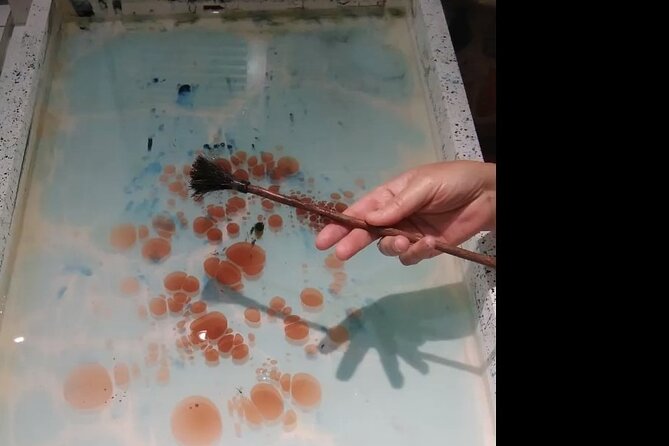
This experience takes place in Terceira, Portugal, with the meeting point at M509 128, 9760 Porto Martins. It starts at 2:00 pm, and the activity ends back at the same meeting point—easy to plan around because you’re not hunting for a second drop-off.
What you’ll notice first is the atmosphere. The studio is described as open-air, quiet, and surrounded by trees, with potted plants around you and natural light coming through. That sounds like a nice detail, but it actually matters for Ebru. When you’re trying a technique that depends on how paint behaves on water, you want a calm environment where you can focus on small movements—swirls, dots, timing—without feeling rushed.
The group size is capped at 6 travelers, which is one reason people seem to walk out smiling rather than stressed. In a tiny class, you get demonstrations, then you can try again quickly. You’re not waiting your turn for long stretches. You’ll also have time to ask questions without feeling like you’re holding up the line.
Finally, this isn’t presented as something only for one type of visitor. People talk about doing it with family, and it also sounds like a class where men can enjoy the hands-on creativity too. If you’re curious about making art but don’t want a lecture, this setup tends to fit.
Ebru in Plain Terms: Floating Color Meets Earth Pigments
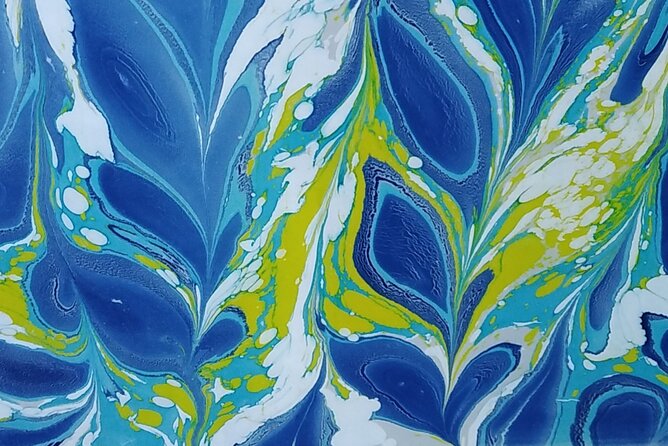
Ebru is an ancient style of painting that uses a magical interaction between water and natural earth pigments. In practice, what stands out is how the paint behaves. Instead of mixing right away like you might expect, the colors stay on top as a floating film. You can see it before anything transfers to paper or other surfaces.
Your instructor also gives you the mental model you need without turning it into a chemistry class. You’ll get demonstrations first, then you’ll learn basic actions like dotting and swirling the floating paints. That’s the key: the designs happen because you manipulate what’s already floating on the water.
This is also why the experience works even if you’re not an artist. Ebru isn’t about drawing perfect lines from scratch. It’s about playful control—little movements that create patterns. The patterns then print themselves when you lift the paper (or apply the design to another surface). That hands-on moment—when you remove the paper and see what actually transferred—is described as especially satisfying.
One more thing that’s useful for you to know: because the results come from the interaction of water and pigment, no two prints should look exactly the same. If you like variation and don’t need perfection, you’ll probably have a great time.
Picking Your Colors and Starting on Paper (The Best First Step)
You begin with choosing your colors, which immediately gives you ownership over what you’re making. Then you practice Ebru on paper first. This “practice first” approach is more valuable than it sounds. It helps you understand the technique and the rhythm before you switch to more “special” materials like wood, ceramic, or paper stone.
On the paper phase, your learning is mainly about basics: how to handle the floating paint, how to create patterns using simple gestures, and how the transfer looks when you lift the paper away. Inci guides you through the steps, showing what to do, then letting you try. People specifically mention that after the demonstrations, they got to do dotting and swirling on their own.
Here’s the practical benefit for your planning: if your first attempt doesn’t land exactly how you imagined, you’re still on paper. You’re building skill and confidence without risking a more time-consuming or sentimental item too early.
Also, doing it on paper gives you something tangible right away. You can see your progress during the class. That matters in a short, three-hour workshop, because motivation depends on quick feedback.
From Water to Keepsakes: Wood, Paper Stone, and Ceramic
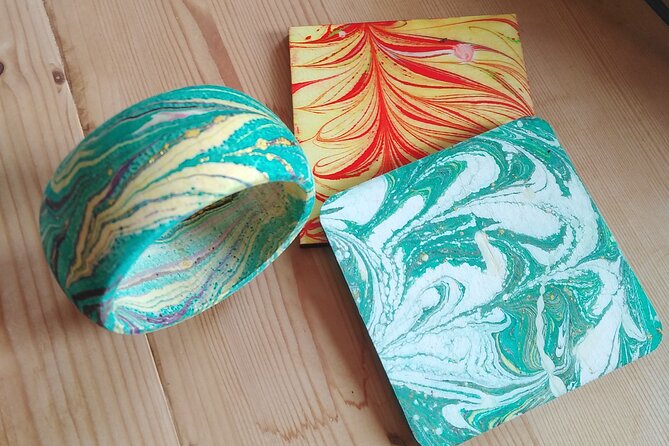
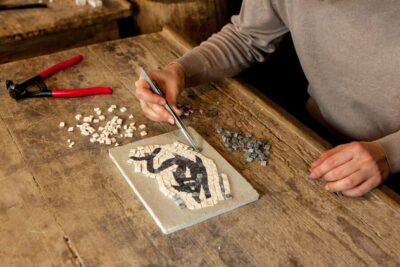
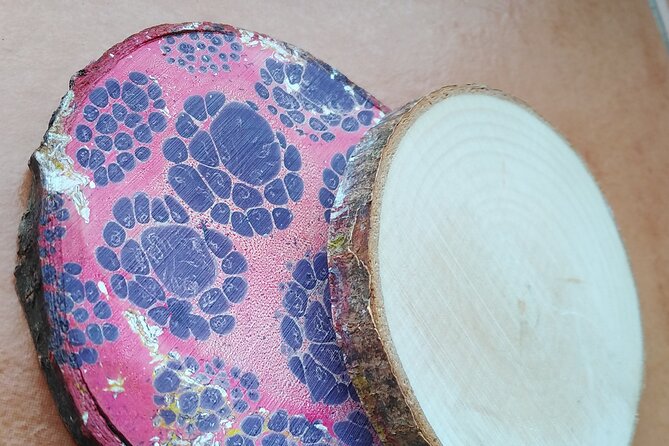
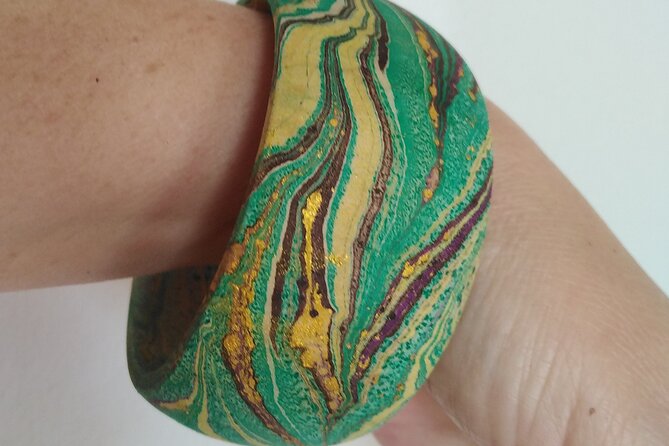
After paper practice, you move on to “real” projects. You’ll paint wood, paper stone, or ceramic pieces as part of the class. The exact mix can vary, but the point is consistent: you’ll create designs that aren’t limited to flat paper.
This is where Ebru becomes more than a novelty. When you see your marbling transferred onto a curved or textured surface (like wood or ceramic), you start appreciating how the pattern sits in a physical object. It also gives you options for what to take home and where to use it.
In reviews, the most memorable moments tend to be the transfer itself: the paint stays floating on the water, then you extract it onto your chosen material. People describe that as fascinating because the colors look bright once adhered to the surface. Inci is patient during this phase, guiding each step and creating a relaxed pace so you can focus on the technique instead of rushing.
If you’re deciding between paper-only and multi-material creation, this class clearly emphasizes the multi-material part. You’ll likely leave with more than one usable keepsake, not just a single sheet.
The Fabric Option: Scarves and Home Decor Made from Your Marbling
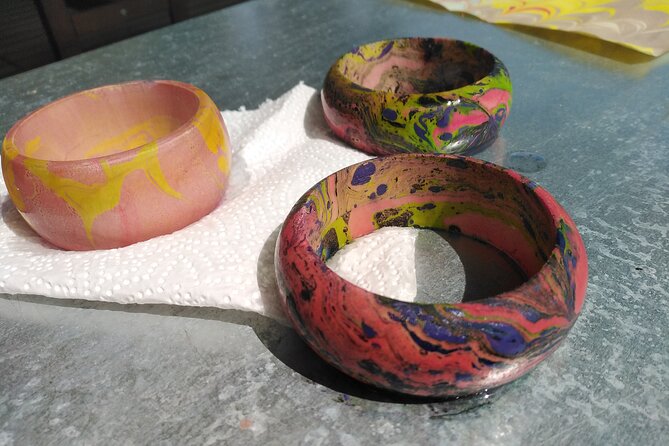
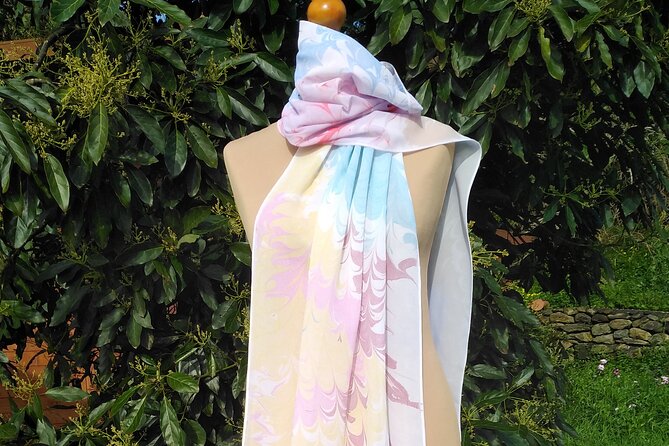
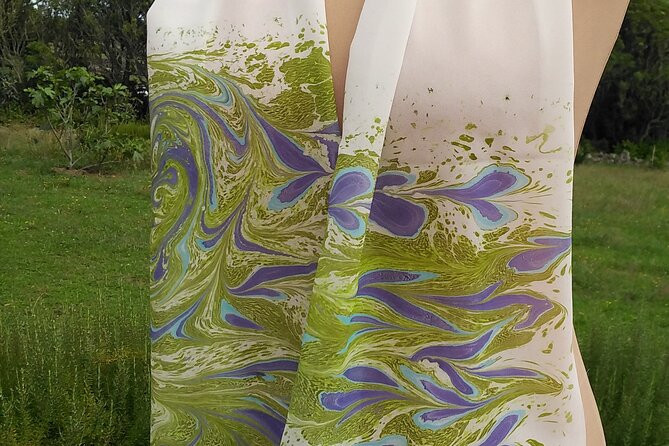
If you book the option that includes fabric, your class becomes a little more personal—and a little more practical. Instead of transferring designs onto wood or ceramic, you’ll choose from fabrics in the studio and create items like a scarf or home decorations such as table napkins or cushion covers.
This part is appealing for a simple reason: you get art that’s functional. A paper print can be framed or stored. A scarf or cushion cover is ready to live with you. If you’re bringing home a souvenir but don’t want another postcard in your luggage, this is the smarter direction.
The class setup also supports creativity. You’re not just copying a design. You’re selecting your own colors, working with floating pigment, and making patterns you’ll see as part of the final item. Because fabric is a different surface, your patterns may feel different once transferred, which adds variety to the experience.
One caution: the fabric choice is an add-on. If you’re trying to keep things simple, consider whether you want a garment or décor piece specifically. If you do, it’s a great use of the technique. If you don’t, you may prefer the classic paper-and-objects approach.
How the 3 Hours Usually Feel (and Why Small Groups Help)
The workshop is listed at about 3 hours. That’s a sweet spot for learning a technique that has multiple steps: paper practice, then a few additional pieces, plus time for demonstrations.
The pace matters. Inci’s style, as described by multiple people, is patient and engaging. She demonstrates, then encourages you to test the method yourself. That structure reduces the guesswork. You’ll know what step you’re on, and you won’t be left wondering what to do next.
With a maximum of 6 travelers, the class doesn’t feel like a factory. You’re more likely to get help when you need it—especially if you’re trying to get your swirling pattern to behave.
And because the workshop is in a calm outdoor space with trees and natural light, the time can feel more relaxed than you’d expect from an “activity.” You’re there to make something, not just watch.
One more practical note: confirmation is received at booking time, and the ticket is mobile. That means you can plan with less paperwork.
Price and Value: Is $89.36 Worth It?
At $89.36 per person for roughly 3 hours, the price can feel like a splurge—until you match it to what you actually get. This isn’t just a show. You choose colors, practice the technique, and create multiple take-home pieces (paper first, then items like wood/paper stone/ceramic, plus an optional fabric project).
You’re also paying for the teaching and the time of the instructor. Inci provides demonstrations and stays involved as you work through dotting, swirling, and the transfer steps. In a small group, that personalized coaching is a big part of the value.
So the real question isn’t whether it’s “cheap.” It’s whether you want a hands-on skill and finished art in one afternoon. If you want a memorable Azores workshop you can touch and use later, this is strong value.
If you’re just looking for a quick photo opportunity and zero creative effort, it’s probably not the best fit. This class rewards people who enjoy making choices and trying a process.
Who Should Book This Ebru Marble Art Class?
This works best if you want to slow down and make something with your hands during your time on Terceira. You don’t need art experience. The class is designed around learning basic designs through practice and guided steps, then producing actual pieces you can take home.
It’s also great if you like activities that are social but not chaotic. The max group size supports conversation and shared creativity without feeling like a crowded tour.
If you’re the kind of traveler who loves crafts, enjoy color, or just want a break from driving from viewpoint to viewpoint, you’ll probably love this. It’s also a good family-friendly idea in the sense that it can be enjoyed across ages—the class has worked for people coming with adult children and sharing the process.
On the other hand, if you dislike taking direction and want total freedom, you might feel slightly constrained at first because there’s a guided sequence (paper practice first, then other materials). Also, since the activity requires good weather, you’ll want a bit of flexibility in your schedule.
Should You Book Ebru Marble Art on Terceira?
If you’re choosing between another guided outing and a hands-on creative class, I’d lean toward this. You get a unique technique—Ebru (water marbling)—in a calm outdoor setting, and you leave with personal creations on more than one surface. The small group size and Inci’s patient teaching style are exactly what make the experience feel fun, not intimidating.
Book it if you want to make a real keepsake and enjoy learning by doing. Consider a different option if you’re set on a very passive activity, or if your dates are tight and weather changes would cause you stress.
FAQ
How long is the Ebru marble art experience?
It lasts about 3 hours.
Where does the workshop start?
The meeting point is listed at M509 128, 9760 Porto Martins, Portugal.
What do I create during the class?
You practice Ebru on paper first, then paint a few items such as wood, paper stone, or ceramic.
Can I make something on fabric instead of only paper and objects?
Yes. If you choose the fabric activity option, you select from fabrics in the studio and make an item like a scarf or home decoration such as table napkins or cushion covers.
How many people are in the group?
The maximum group size is 6 travelers.
Is the class held in outdoor conditions?
The experience requires good weather, which suggests outdoor conditions are part of the setup.
What happens if I need to cancel?
You can cancel up to 24 hours in advance for a full refund, and if it’s canceled due to poor weather you’ll be offered another date or a full refund.