REVIEW · ANTALYA
Antalya: Hiking in Termessos Ancient City
Book on GetYourGuide →Operated by Antalya Local · Bookable on GetYourGuide
Termessos feels like a secret on a mountain. A half-day small-group hike takes you to Antalya Province’s Eagle’s Nest ancient city, one of Turkey’s best-preserved sites with UNESCO World Heritage Tentative List status. You get nature time, plus ruins that still feel raw and readable.
I especially love how Önder turns stone and silence into a story you can follow, stopping at the places where daily life actually happened. One consideration: you are walking on uneven, sometimes slippery ground and the tour is not suitable for wheelchair users or mobility impairments, so comfortable shoes and decent stamina matter.
In This Review
- Key highlights you will feel on this hike
- Termessos: Antalya’s Eagle’s Nest ancient city
- 4 hours of hiking and ruins: the flow you can expect
- Theatre on the mountain: the key structures you will actually walk to
- Temples and public spaces: Artemis, Hadrian, agora, bouleuterion
- Fortifications, necropolis, and rock tombs
- Packing, footwear, and how strenuous it really feels
- Price: what $62 gets you (and what it doesn’t)
- Should you book this Termessos hiking tour with Önder?
- FAQ
- How long is the Antalya Termessos hike tour?
- Where do we meet for pickup?
- Is the entrance ticket included in the $62 price?
- Does the tour include transportation from Antalya?
- Is there a lot of climbing involved?
- What should I bring?
- Can I eat or drink in the vehicle?
- Is this tour suitable for wheelchair users?
Key highlights you will feel on this hike
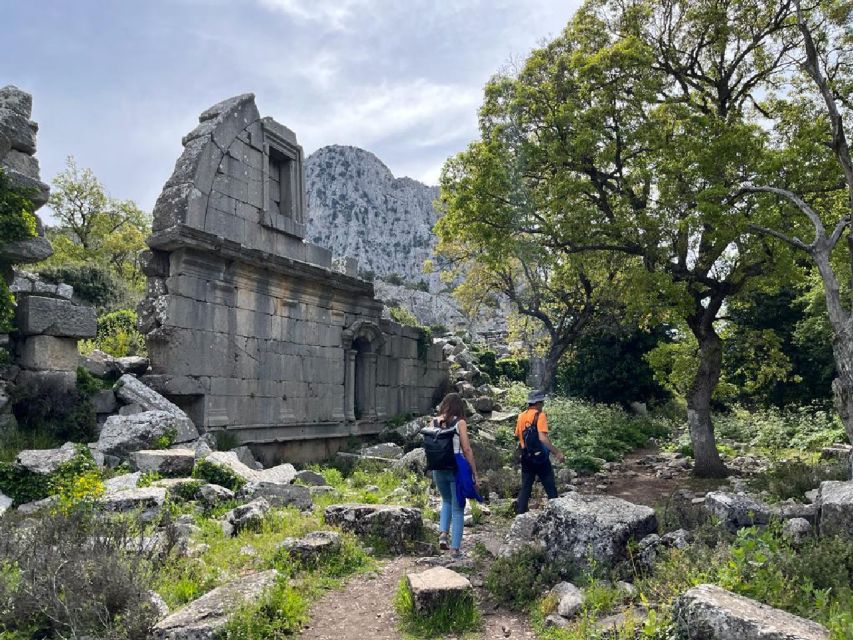
- A boutique group on a national-park trail, far from the crowds
- Termessos set between two peaks on Gulluk Mountain at 1050 m, often compared to Turkish Machu Picchu
- Mountain theatre views at a position that locals describe like an eagle’s nest
- Stops that match real ancient life, not just one postcard ruin
- English-language guiding with teaching-style explanations from Önder, plus photo help and extra Antalya tips
Termessos: Antalya’s Eagle’s Nest ancient city
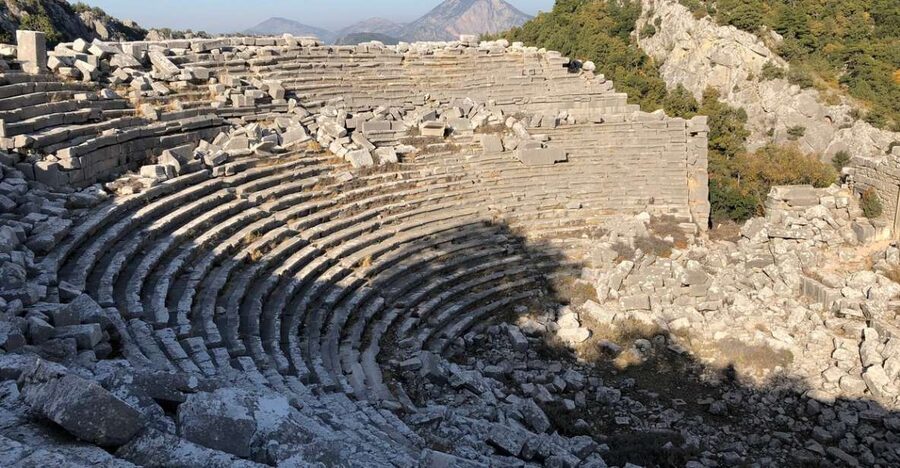
Termessos sits on Gulluk Mountain in the Taurus range, built between two peaks. That top-of-the-world setting is part of why people call it the Turkish Machu Picchu. It’s also why the whole place feels different from the big, flatter ruins elsewhere in Turkey. You are hiking in a mountainous national-park setting, then stepping into an archaeological site that’s still clearly arranged like a city—streets, civic buildings, and monuments with enough context that your brain can map it.
This is one of the better-preserved ancient cities around Antalya, and it’s on the UNESCO World Heritage Tentative List. That doesn’t mean it’s polished like a theme park. In many areas, the ruins still read as real structures that have endured time, weather, and even visible earthquake damage. So instead of just staring at walls, you start noticing how spaces connect: where people gathered, where ceremonies happened, how water worked, and how the city defended itself.
And yes, the setting helps. Termessos is literally elevated. Even in cooler months, you feel that altitude and mountain air. The payoff is the view from the theatre area and the sense that you’ve moved away from modern noise.
You can also read our reviews of more tours and experiences in Antalya.
4 hours of hiking and ruins: the flow you can expect
The tour is designed as a short, focused experience. Duration is about 4 hours, built for a practical half-day: you start from Antalya, get transportation to Termessos, explore on foot, then return to the city center.
You’ll meet at OPET GAS STATION. It matters more than you’d think because the tour runs on a schedule that helps you get out of the city before morning traffic gets heavy. The tour info asks you to arrive 10 minutes early, and that’s good advice. If you miss the pickup window, the whole day tightens fast.
You’ll also want breakfast before you go. You cannot eat or drink in the vehicle, and food/drinks are not allowed in the car. That’s why I treat breakfast as part of planning, not a detail.
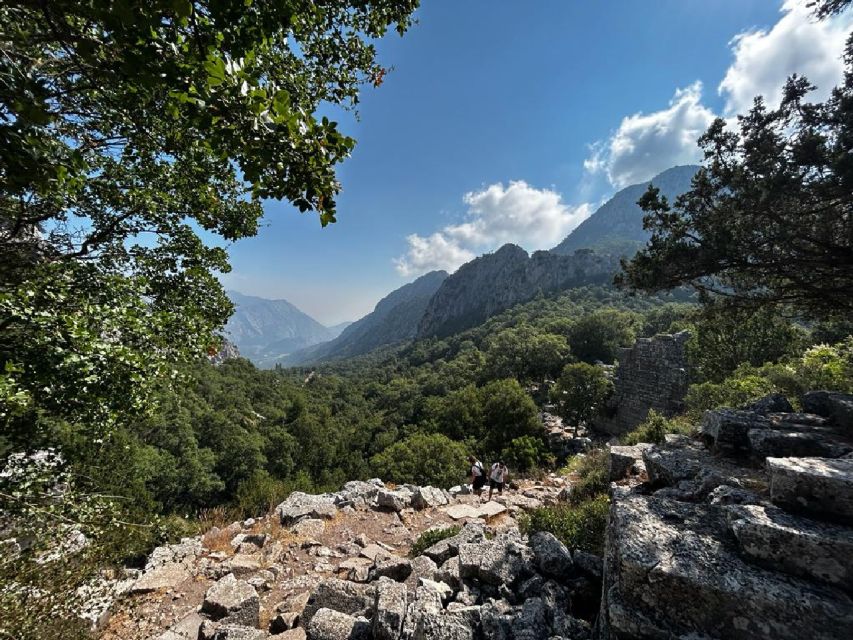
Once you reach Termessos, you buy your entrance ticket at the gate. The tour offers skip-the-ticket-line access, but the ticket itself isn’t included in the price—so keep a little cash or a credit card handy. Then the walking begins. The route is described as having a pathway so you don’t have to do technical climbing, but the ground is still uneven and outdoors, with sections that feel like a steady uphill stroll on natural terrain.
Theatre on the mountain: the key structures you will actually walk to
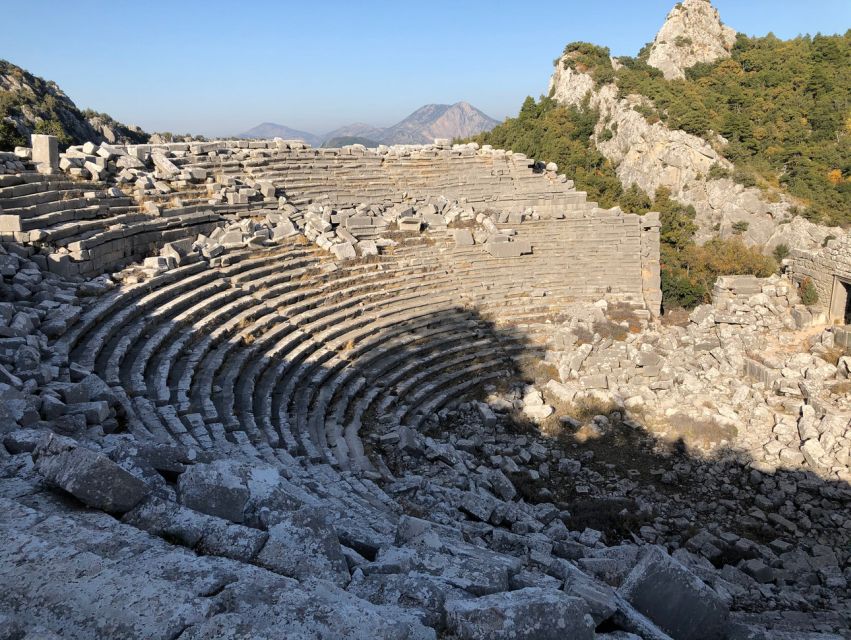
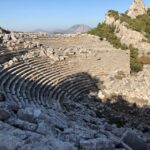
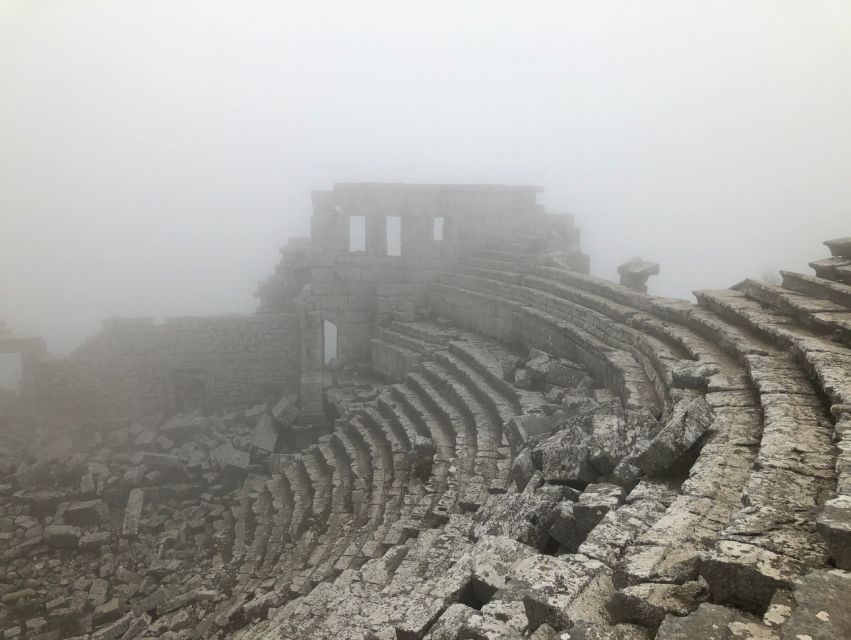
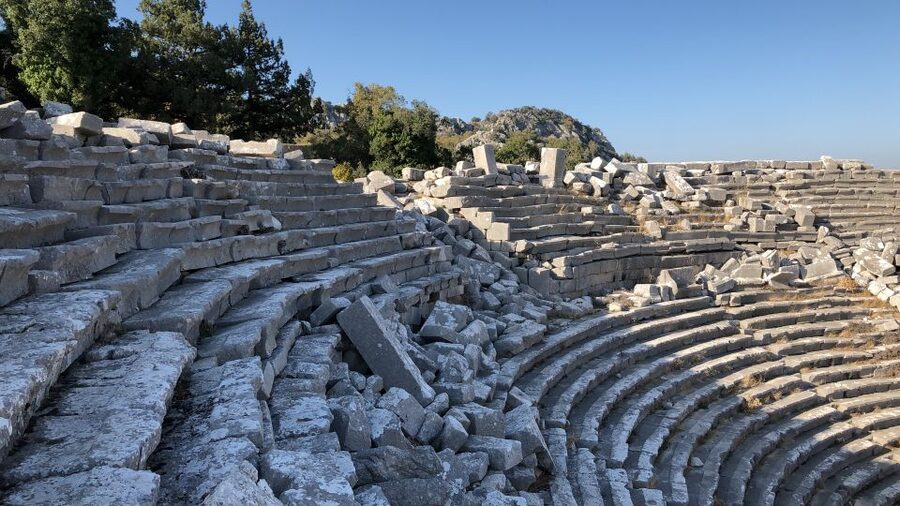
Termessos has a way of rewarding attention. The main early stop for many people is the ancient theatre. It’s built into the mountain setting, which is why it often gets called Eagle’s Nest. When you reach that viewpoint and look down into the ruin-streets below, it suddenly makes sense how the theatre worked as the city’s showpiece.
From there, the tour moves through the parts of the city that show what life looked like. You’ll explore ruins including:
- The ancient theatre area, where your guide ties together location and function.
- The gymnasium, a civic space that helped shape social life and athletics.
- Cisterns, which are your clue that this city had to manage water in a mountainous environment.
- The agora, a gathering place for commerce and conversation.
- The bouleuterion, the civic council space where politics and public decisions would have taken place.
What I like here is that you don’t just see monuments—you see systems. Cisterns make the city feel practical. The gymnasium and agora make it feel human. And the theatre makes it feel staged, like the mountains themselves provided the backdrop.
Also, this site isn’t usually packed. Many tours arrive early, and that helps you experience the ruins at a calmer pace. You’ll still see enough to feel satisfaction, but you aren’t fighting other groups for viewpoint angles.
One small reality check: the theatre and the best panorama spots mean extra walking and changes in footing. If you’re the type who gets annoyed by slippery rocks, plan to slow down and take your time.
Temples and public spaces: Artemis, Hadrian, agora, bouleuterion
This tour does a nice job of balancing entertainment ruins with sacred and political spaces. In other words, you see both the where and the why.
A highlight is the Temple of Artemis and Hadrian. This stop gives you context for how Roman influence blended with earlier traditions in the region. You’ll also connect the temple area to the broader street and public-space layout you’ve already started to understand.
Then you move through civic and social zoning. The luxury street is a good concept anchor here. Even without perfect reconstruction, the idea is clear: some streets and structures signal wealth and status. The agora is where that status played out in daily life—people meeting, buying, discussing. The bouleuterion helps you picture governance as a physical place, not an abstract concept.
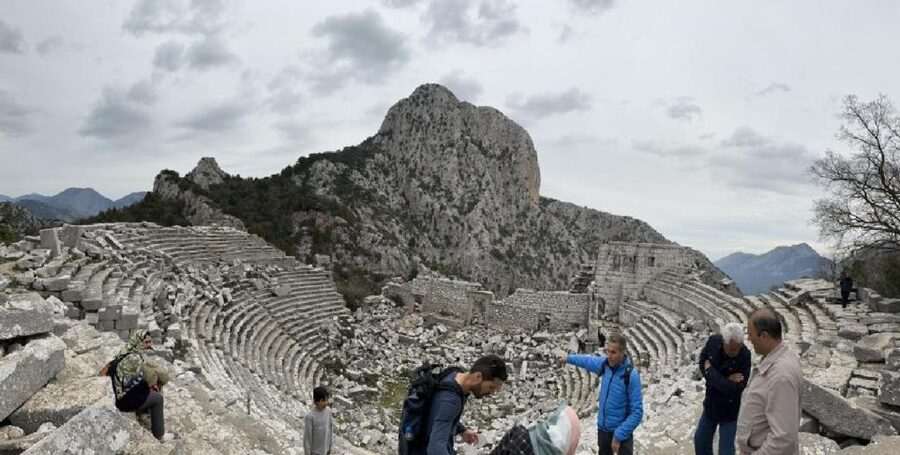
Önder’s guiding style makes this easier. He tends to explain what you’re looking at in plain language, then adds the cultural links so the ruins don’t feel like random stone piles. In practice, that means you spend less time guessing and more time noticing patterns: civic buildings cluster one way, water infrastructure another, and the theatre sits where it dominates the experience.
If you care about archaeology for more than photos, this portion is the heart of the value. It turns Termessos from scenery into a functioning city in your imagination.
Fortifications, necropolis, and rock tombs
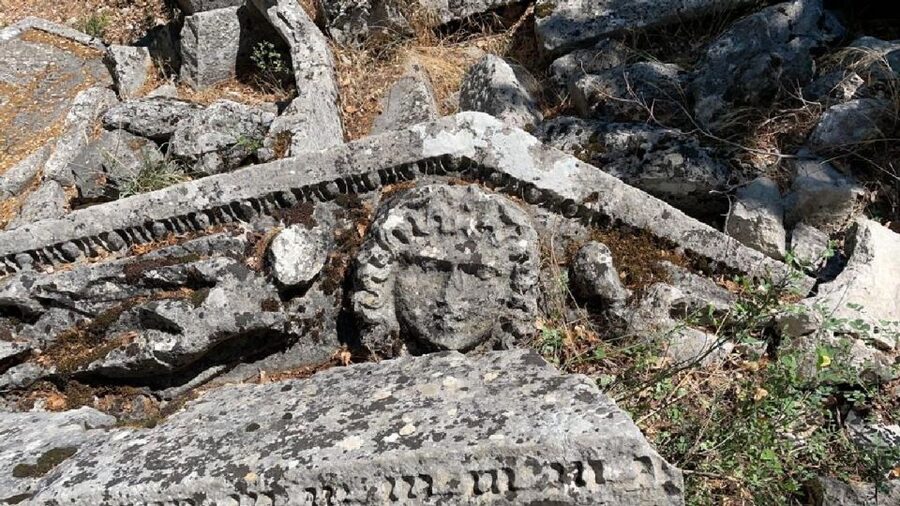
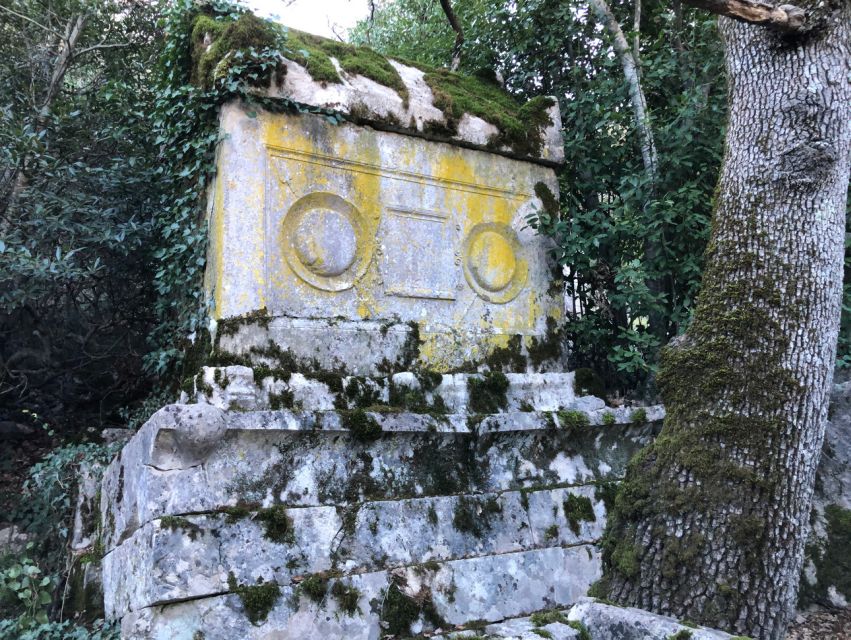
Termessos wasn’t only built for living. It was built to last—and to defend. As you continue, you’ll see city fortifications and gates, along with necropolis areas and rock tombs.
The gates and fortifications make the location logic click. A mountain city with clear sightlines and defensible approaches isn’t just pretty. It’s strategic. When you walk these edges, you feel how the terrain helps the city do its job.
The necropolis and rock tombs shift the mood. The tone becomes quieter and more reflective. This is one of the reasons I like this tour format: the itinerary doesn’t stay on the most dramatic structures only. You get that full city arc—public life, sacred space, defense, and final resting places—within a half-day.
This also helps you understand why Termessos is considered so significant. Many sites focus on one category of remains. Here, you can build a bigger picture by walking through multiple parts of the urban system.
One practical note: tomb and necropolis areas can mean more uneven ground. Bring shoes with grip and treat footing as part of the experience.
Packing, footwear, and how strenuous it really feels
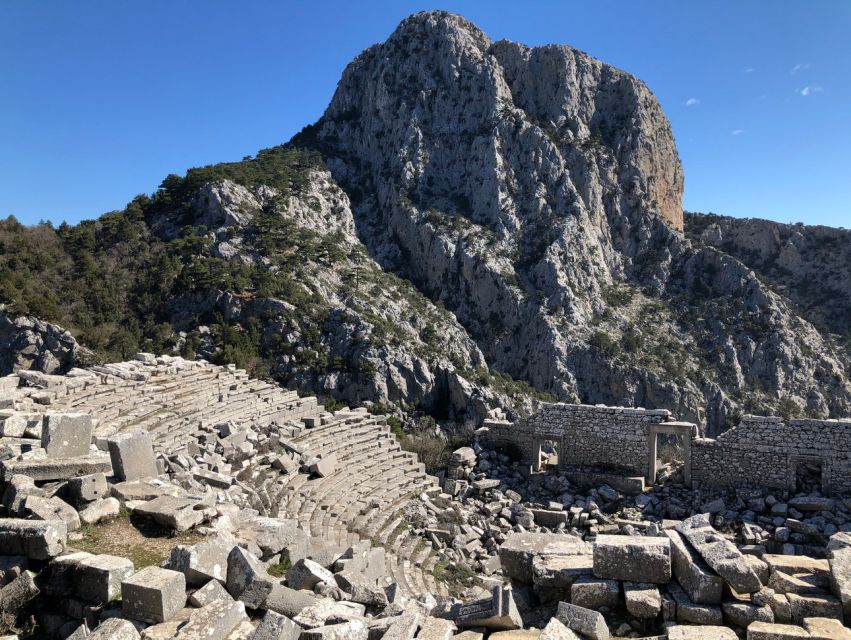
This is an outdoor hike in a mountainous region. The good news is the route includes a pathway and you are not expected to do technical climbing. The real-world note: “pathway” still means uneven terrain. Some surfaces can be slippery, and you’ll be on rocky ground in natural light.
Bring:
- Water (you may get thirsty)
- Comfortable shoes with solid traction
I’d also add one personal rule: if you like stability, trekking poles can help on uneven, slippery spots. That’s a common practical suggestion for this kind of terrain, and it can make you steadier on the uphill sections.
Don’t wear high heels. Also, keep in mind the tour rules for the vehicle: no drinks or food in the car, and no alcohol/drugs. If you want snacks, the guidance suggests you can eat them at the site—so keep that in mind for your energy level.
Finally, be honest about fitness. If you have mobility impairments, the tour is not suitable. If you’re pregnant, it’s also listed as not recommended. For everyone else: pace matters. Stop when you need to. Önder’s style is attentive and people-centered, so you shouldn’t feel rushed.
Price: what $62 gets you (and what it doesn’t)
At $62 per person for a 4-hour experience, the price sounds straightforward, but the value is in what’s included.
Included:
- A live English guide
- Transportation from and back to designated meeting points
Not included:
- Entrance tickets (you purchase at the gate)
- Food and drinks in the vehicle (plan around that)
So you’re not only paying for a ticket to an archaeological site. You’re paying for a guide who helps you read Termessos as a city—plus transport that saves you time and hassle getting there from Antalya.
That matters because Termessos is one of those places where self-guided walking can feel like scattered stone unless you already know what you’re looking at. With guidance, the structures become understandable faster. And with a small group, you generally move at a human pace.
The other value factor is timing. Early starts help you experience the ruins with fewer crowds and more calm. That’s not just comfort. It lets you concentrate on details like city layout, water systems, and the way the theatre dominates the mountain approach.
If you already have a rental car and you love solo exploring, you might lower costs. But for most people, paying for transport plus a strong guide is the easiest way to get the most from those 4 hours.
Should you book this Termessos hiking tour with Önder?
If you want a half-day plan that mixes outdoor hiking with meaningful ancient ruins, I’d book it. It’s a strong fit when you like small groups, want real interpretation (not just standing near rocks), and you appreciate a site that feels less crowded than the big-name stops.
I would skip it if you’re expecting a fully flat walk, need wheelchair access, or you’re looking for a no-steps, no-slippery-ground outing. Also, if you hate the idea of buying an entrance ticket at the gate after pickup, factor that into your prep.
If you do book, go in thinking of Termessos as a city you can understand by walking it. With the guide’s storytelling and the mountain setting, you should leave with a clear mental map, not just a pile of photos.
FAQ
How long is the Antalya Termessos hike tour?
It lasts about 4 hours.
Where do we meet for pickup?
The meeting point is OPET GAS STATION.
Is the entrance ticket included in the $62 price?
No. You purchase your entrance ticket at the gate. The tour info says you can pay by credit card or use Turkish Lira.
Does the tour include transportation from Antalya?
Yes. You are picked up from Antalya and dropped back into the city center, from and to designated meeting points.
Is there a lot of climbing involved?
The tour is in a mountainous region, but you do not have to climb; there is a pathway. You should still expect uphill walking on uneven ground.
What should I bring?
Bring water and wear comfortable shoes.
Can I eat or drink in the vehicle?
No. Food and drinks are not allowed in the vehicle, so plan breakfast before the tour.
Is this tour suitable for wheelchair users?
No. It is not suitable for wheelchair users or people with mobility impairments.