REVIEW · ALABAMA
F.D. Reese Historical Tour
Book on Viator →Operated by Alan and Marvin Reese · Bookable on Viator
Family-guided history beats any textbook. In the F.D. Reese Historical Tour, Alan and Marvin Reese (grandsons of F.D. Reese) connect you to Selma’s Civil Rights story in a personal, practical way. I especially like that you get access to Reese’s former home and original artifacts, not just photos on a wall, and that the stops are tied to specific events the guides can explain with lived-in family context.
One possible drawback: the whole experience moves quickly in about 1–2 hours, so you’ll get a focused hit of the story rather than a long, museum-style session. Also, since you’ll be outside for major parts (including crossing the bridge), you’ll want to plan around weather.
In This Review
- Key Things to Know Before You Go
- Why This Tour Feels Different in Selma
- Meeting Point at 1566 Marie Foster St: You Start at the Source
- Price and What You Actually Get for $104.99
- Clark Elementary School: The Start of the Teachers March
- Dallas County Courthouse: Where Pressure Meets Power
- Brown Chapel AME Church: Mass Meetings and Tough Obstacles
- Edmund Pettus Bridge: Crossing Bloody Sunday With a Guide
- Ebenezer Baptist Church: Where F.D. Reese Pastored for 50 Years
- Timing, Group Size, and How to Plan Your Day in Selma
- Should You Book the F.D. Reese Historical Tour?
- FAQ
- Where does the tour start?
- How long does the F.D. Reese Historical Tour take?
- How much does it cost?
- What ticket type do I receive?
- Who leads the tour?
- What places are included on the tour?
- Is admission included for the stops?
- Is the tour outdoors?
- What are the cancellation terms?
Key Things to Know Before You Go
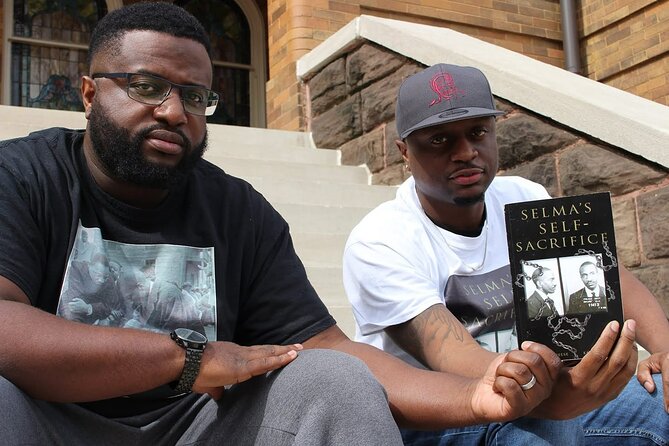
- Family-led guides: Alan and Marvin Reese share the story as descendants of F.D. Reese
- Stop-to-the-point route: you visit major sites linked to the Selma Movement in a tight timeframe
- Reese’s home plus original artifacts: you don’t just look—you’re shown items with family meaning
- World Teachers March origin points: Clark Elementary School and the Dallas County Courthouse are part of the narrative
- Brown Chapel AME Church details: you learn how Reese helped make it a mass-meeting hub and the obstacles around Dr. King’s presence
- Edmund Pettus Bridge crossing: you’re guided across as Bloody Sunday and related moments are explained
Why This Tour Feels Different in Selma
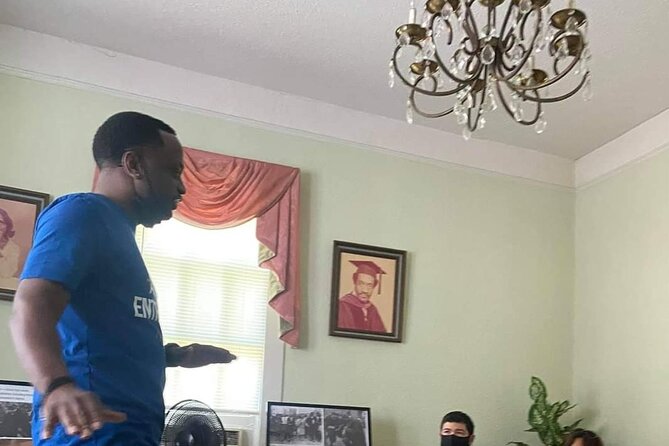
If you’ve ever visited a Civil Rights site and wished someone could turn the facts into a clear story, this is the kind of tour that fixes that. What makes it click is the way Alan and Marvin Reese connect the big events—teachers marching, mass meetings, Bloody Sunday—to a person you can actually picture: F.D. Reese.
This tour isn’t trying to be a generic lecture. It’s more like walking through the Selma story with family members who can point to locations and say, this mattered for this reason, at this moment. That approach makes the history easier to hold onto after you leave.
You’ll also get a rare kind of access: Reese’s former home and original artifacts. That detail matters. Seeing everyday objects and family memorabilia can help you understand the stakes behind the public headlines.
The experience is also compact. That can be a plus if you’re short on time, like when you’re budgeting one focused afternoon in Selma. You just shouldn’t expect a slow, meandering pace.
Meeting Point at 1566 Marie Foster St: You Start at the Source
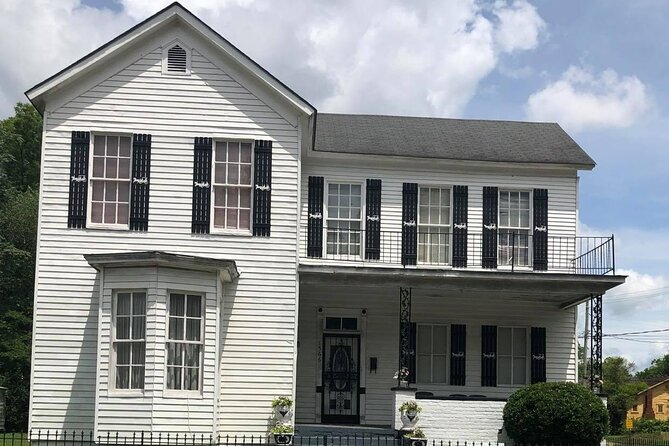
The tour starts at 1566 Marie Foster St, Selma, AL 36703. From there, you return to the meeting point at the end. That simple loop is helpful: you’re not juggling multiple transfers or wondering where you need to be next.
A key element here is that the experience often begins with you meeting the guides at Reese’s home. In practice, that means you’re not starting cold. You’re starting with context—pictures, memorabilia, and the kind of materials that put a face on the movement.
The vibe is “living history.” When your guides are the descendants, you can ask questions that go beyond dates and names—questions about what a role looked like day-to-day, and what it meant to build change in real time.
Also, small groups can happen. On a few departures, you might end up with just two people on the tour, and the guides will still run the full route. That’s the kind of setup that usually turns a standard tour into something more personal.
Price and What You Actually Get for $104.99
The tour costs $104.99 per person and runs about 1–2 hours. At first glance, that might sound like a lot for a short outing. But here’s where the value comes from: you’re paying for a guide-led, story-driven route across multiple major Civil Rights locations, with key admissions included.
You’ll visit several places where admission tickets are included as part of the experience—Clark Elementary School, the Dallas County Courthouse, Brown Chapel AME Church, and the Edmund Pettus Bridge crossing. Plus, you get entry to Reese’s former home and access to original artifacts. That combo—family storytelling plus multi-site access—helps justify the price for many visitors, especially if you want a guided route and not a DIY scavenger hunt.
The other value piece is clarity. Sites like these can be powerful but confusing if you only skim plaques. With a guide connected to the narrative, the sequence matters—and that’s often the difference between seeing locations and actually understanding why they mattered.
Clark Elementary School: The Start of the Teachers March
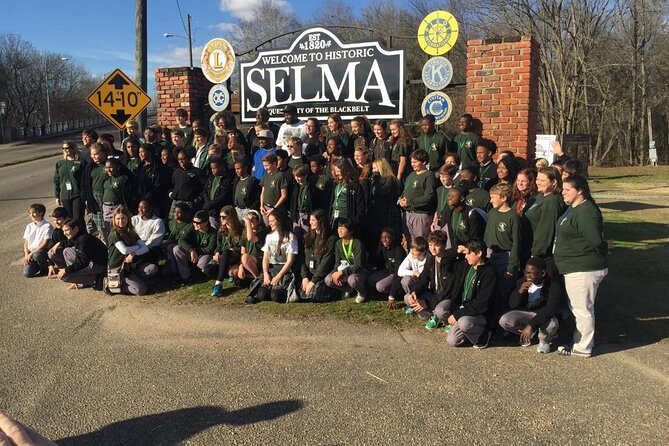
Your first stop is Clark Elementary School. Here, the guides talk about the start of the 1st ever World’s Teachers March and how that moment launched something much bigger than a school-day event.
This stop is special because it reframes the Civil Rights story in an unexpected way. Instead of starting with the biggest violence or the most famous church service, you start with teachers and organized movement. That perspective matters if you want the real mechanics of change—how people coordinated, how they made demands, and how they turned education and organizing into collective action.
Time is tight at each stop—about 15 minutes here—so the goal is not to read every sign in detail. It’s to understand the role of this location in the bigger story. If you tend to love slow looking, you’ll need to balance your curiosity with the schedule. The tour is designed to keep the momentum going.
A practical note: this is a good early stop if you’re mentally ready for history. Once the story gets rolling, everything that follows makes more sense.
Dallas County Courthouse: Where Pressure Meets Power
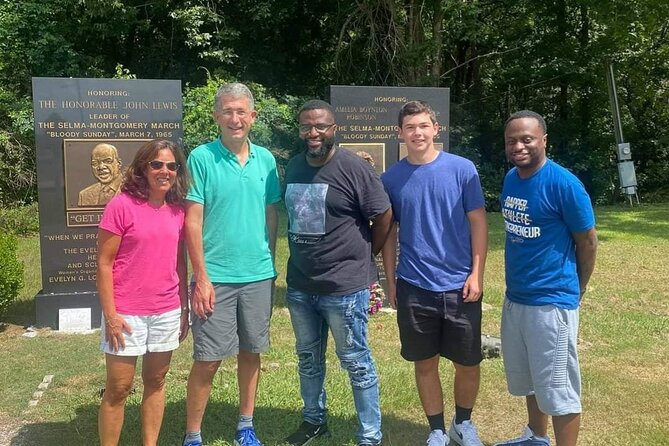
Next up is the Dallas County Courthouse. The guide explains the connection between the Teachers March and this courthouse setting, again tying the story to that first major moment of coordinated action.
Why this stop works: courthouses are where systems show themselves. They’re not just buildings. They’re where decisions get made, where resistance gets tested, and where legal power collides with people demanding fairness.
At around 15 minutes, you’ll get the key points without getting stuck in a long architectural lecture. The courthouse stop helps you see that the movement wasn’t only about protests—it was also about challenging the structures that controlled daily life.
If you want to make the most of it, keep an eye on what your guide emphasizes: the sequence of actions around the March, and how this courthouse became part of the struggle’s pressure points.
Brown Chapel AME Church: Mass Meetings and Tough Obstacles
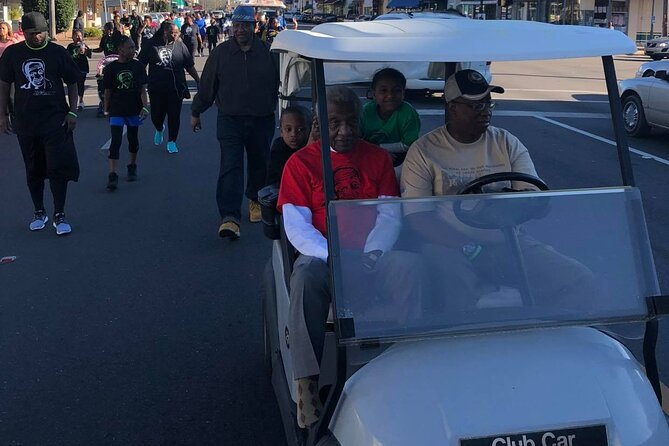
The tour then heads to Brown Chapel AME Church. This stop is one of the most emotionally loaded on the route. The guides focus on the significance of how F.D. Reese helped organize Brown Chapel so it became the location where mass meetings were held.
They also explain the obstacles Reese had to overcome to help bring Dr. King to the church.
This stop matters because it highlights two ideas at once: organizing takes work, and leadership often depends on access and permissions you don’t control. You’re seeing how a church became more than a worship space. It became a meeting point for strategy, morale, and public resolve.
Like the other main stops, you’ll have about 15 minutes here. That’s enough time to understand what the church meant in the movement, but not enough to do a long, independent exploration. If Brown Chapel is a place you want to linger, treat the tour as your launchpad—then plan extra time on your own afterward.
Edmund Pettus Bridge: Crossing Bloody Sunday With a Guide
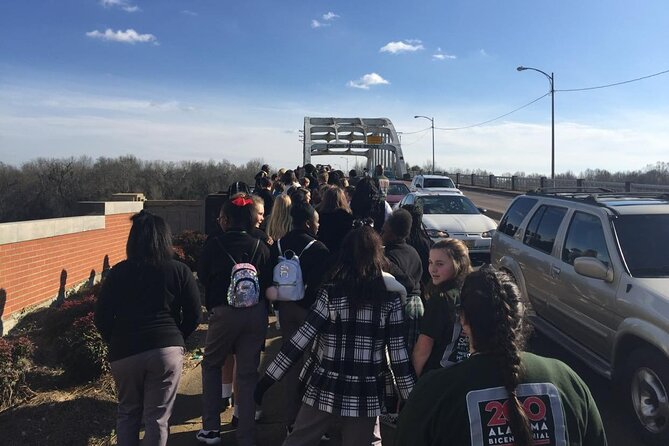
One of the most memorable parts is the Edmund Pettus Bridge. Your guide accompanies you across the bridge, and you learn about Bloody Sunday and more as you move through the space.
Crossing bridges changes how history lands. From a distance, you can read about violence and resistance. On the bridge itself, the details feel more immediate. Even in a short 20-minute segment, the experience tends to make the story physical in your mind.
This stop is also where weather matters most. The tour requires good weather, and since the bridge crossing is outdoors, you’ll want the forecast to cooperate. If conditions aren’t right, you should expect the tour to adapt—either a rescheduled date or a refund in the situations where the provider cancels due to weather.
If you’re the type who likes to take photos, do it with intention. Capturing a moment is fine, but your guide’s explanation is the real value here. Let that come first, then capture what you can.
Ebenezer Baptist Church: Where F.D. Reese Pastored for 50 Years
Finally, you’ll visit Ebenezer Baptist Church, where F.D. Reese pastored for 50 years. This stop is shorter—around 10 minutes—and admission is free as part of the tour.
This is a different side of F.D. Reese than you might expect. The earlier stops focus on organizing and key Civil Rights landmarks. Ebenezer brings you back to the long-term pastoral role: sustained leadership, community ties, and the kind of influence that often starts before the world notices.
Because this segment is brief, the best way to handle it is to be present and listen for how your guide connects his pastoral work to his Civil Rights leadership. The point isn’t to rush. It’s to leave with a fuller picture: he wasn’t only a public figure during crisis moments. His work stretched over decades.
Timing, Group Size, and How to Plan Your Day in Selma
The tour typically runs 1 to 2 hours, and it has a maximum group size of 100 travelers. That cap matters because it affects how personal the experience feels. Even with that maximum, the guides’ descendant-led approach helps you stay oriented and connected to the story.
The tour ends back where it started, so you can plan the rest of your day without extra logistics. Also, most people can participate, and service animals are allowed.
One planning trick: if you’re trying to see multiple Selma sites in a day, give this tour enough room so it doesn’t get squeezed. The route is fast by design. If you chain too many things back-to-back, you’ll spend more time rushing than learning.
Should You Book the F.D. Reese Historical Tour?
I think you should book this tour if you want Civil Rights history with a clear narrative, and especially if you care about being guided through Selma’s key places by people connected to the story. The combination of Reese’s home, original artifacts, and major landmarks like Brown Chapel and the Edmund Pettus Bridge makes it a high-impact use of your time.
You might skip it (or pair it with extra independent time) if you’re looking for a slow-paced, stand-alone museum experience. This tour is designed to move. It will teach you a lot, but it won’t linger for long at every site.
If you’re on a tight schedule, you’ll likely love that it’s structured, easy to follow, and packed into a manageable window. And if you want Selma to feel real—not just historic—this family-led approach is the reason.
FAQ
Where does the tour start?
The tour starts at 1566 Marie Foster St, Selma, AL 36703, USA, and it ends back at the same meeting point.
How long does the F.D. Reese Historical Tour take?
It runs about 1 to 2 hours.
How much does it cost?
The price is $104.99 per person.
What ticket type do I receive?
The tour uses a mobile ticket.
Who leads the tour?
The tour is led by Alan and Marvin Reese.
What places are included on the tour?
You’ll visit Clark Elementary School, the Dallas County Courthouse, Brown Chapel AME Church, the Edmund Pettus Bridge, and Ebenezer Baptist Church.
Is admission included for the stops?
Admission ticket is included for Clark Elementary School, the Dallas County Courthouse, Brown Chapel AME Church, and the Edmund Pettus Bridge. Ebenezer Baptist Church is listed as free for admission.
Is the tour outdoors?
A key outdoor part is crossing the Edmund Pettus Bridge, and the experience requires good weather.
What are the cancellation terms?
You can cancel for a full refund up to 24 hours in advance. If the provider cancels due to poor weather, you’ll be offered a different date or a full refund.