REVIEW · ANURADHAPURA
Anuradhapura Heritage Mountain bike / bicycle Tour
Book on Viator →Operated by Rides Hub · Bookable on Viator
Anuradhapura moves faster on a bike. This 4½-hour mountain-bike tour blends UNESCO heritage sights with quieter roads, so you get history, temples, and real local rhythms in one easy loop. It’s guided by Saranga, an English-speaking guide from the Anuradhapura area, and it’s built for a calm, unhurried pace that still gets you lots of iconic stops.
Two things I like a lot: you’ll ride past major monuments and waterworks without feeling like you’re sprinting from site to site, and the tour includes hands-on cultural context plus a stop for local vegetarian food at Hela Bojun. A third plus is the bike quality; you’ll ride mountain cycles from brands like Giant, Trek, and Louis Garneau.
One consideration: the UNESCO-area entrance ticket is listed as not included (and temple visits may require you to cover your knees). So you’ll want to plan for the right clothing and confirm ticket needs before you arrive.
In This Review
- Key highlights of this Anuradhapura heritage bike tour
- Why biking the Anuradhapura UNESCO zone feels different than walking
- Meeting at Rides Hub and getting your mountain bike set
- The ride plan: 10 km, moderate fitness, and the pacing that keeps it enjoyable
- A realistic expectation of the day
- Stop-by-stop: Jetavanaramaya to Sri Maha Boodhi on two wheels
- Jetavanaramaya stupa: size you feel before you measure it
- Samadhi Statue at Mahamevnāwa Park: meditation shown in stone
- Abayagiriya stupa and monastery ruins: multiple traditions in one big complex
- Twin Baths (Kuttam Pokuna): ancient plumbing, ancient daily life
- Eth Pokuna (Elephant Pond): the reservoir scale behind the city
- Sandakada pahana (Moonstone): the carved staircase detail
- Basawkkulama Tank: ancient irrigation on a big timeline
- Main Refectory of Abayagiri Monastery: how big religious life could be
- Ruwanweli Maha Seya: one stupa, two royal names, and deep devotion
- Sri Maha Boodhi Temple: a living link tied to Gautama Buddha
- Food and fuel: vegetarian lunch at Hela Bojun
- Price and value: $25 for bike, guide, water, and real stops
- What to pack for temple stops and a comfortable ride
- Should you catch this tour at sunset?
- Who this Anuradhapura mountain bike loop suits best
- Should you book this Anuradhapura Heritage Mountain bike tour?
- FAQ
- How long is the Anuradhapura heritage mountain bike tour?
- Is this a private tour?
- What’s included in the tour price?
- What’s not included?
- Do I need special clothing for temples?
- What physical fitness level is required?
- Where does the tour start and end?
Key highlights of this Anuradhapura heritage bike tour
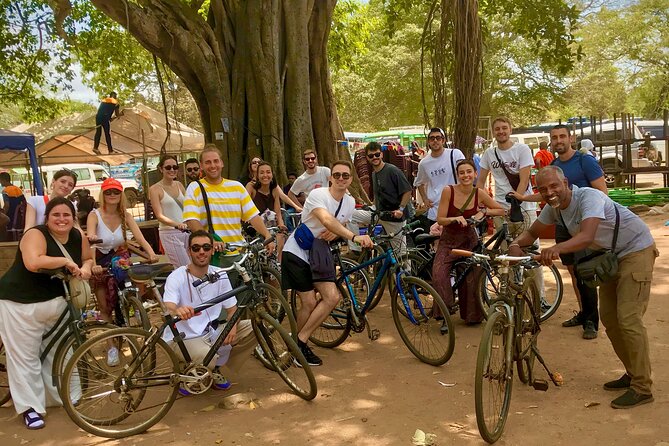
- A 10 km loop designed for about 4½ hours, with time at each of the main ruins and sacred spots
- English guide Saranga, focused on culture and religion, not just a quick site rundown
- Hidden-route riding through quieter areas where you can notice daily life, not only big landmarks
- Major stupa and monastery stops like Jetavanaramaya and Abayagiriya, plus the lakes and tanks that powered ancient Anuradhapura
- Lunch included: vegetarian meal cooked by local people at Hela Bojun
- Mountain bikes from Giant, Trek, and Louis Garneau, plus bottled water and parking fees covered
Why biking the Anuradhapura UNESCO zone feels different than walking
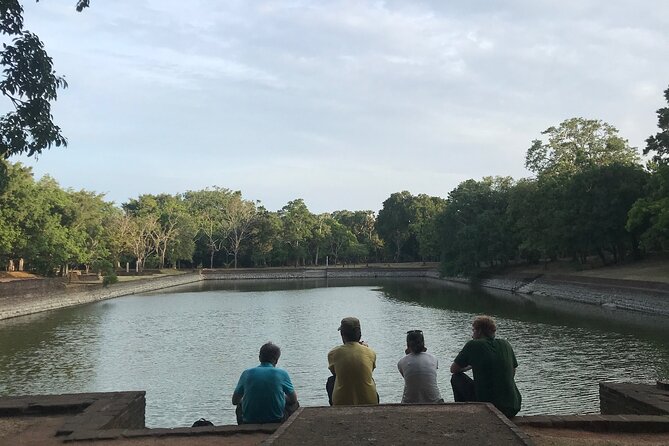
Anuradhapura is famous for ruins, tanks, and sacred architecture—but walking can turn into a shuffle of short visits. This bike tour changes the rhythm. You cover ground efficiently, yet the stops are paced so you can actually look closely at carvings, statues, and the layout of religious sites.
The biggest difference is how the monuments connect to the natural and human side of the city. You’re not just viewing temples as objects in a landscape. You’re moving through the heritage area like it’s a living place—past parks, bathing ponds, reservoirs, and the kind of roads where you might see rice fields and calmer stretches between the big-name sites.
And since the tour is private, your group sets the pace. That matters here. Some of the best moments are the slow ones: a statue detail, a stupa scale that’s hard to grasp on foot, or a chance to witness a ceremony if timing lines up.
You can also read our reviews of more tours and experiences in Anuradhapura.
Meeting at Rides Hub and getting your mountain bike set
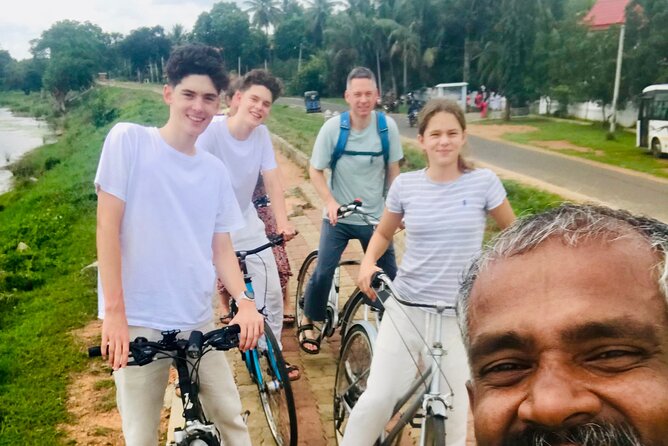
The tour starts back where it began: at Rides Hub, near Hubwela mada gedara, Garage waththa near the old car park, address No:116/1 Watawandana Rd, Anuradhapura. You’ll ride from there and return to the same meeting point.
This is a private tour/activity, so only your group participates. That usually means less waiting around and more time in the right places, especially when you want a clearer explanation from your guide.
Bikes are mountain cycles supplied by the operator, with common brands including Giant, Trek, and Louis Garneau. You’ll also get bottled water and parking fees covered. For a tour at this price, it’s one of the reasons it feels like a good deal: you’re not paying extra for the core convenience items.
Finally, you’ll get a mobile ticket and confirmation at booking time. Bring that on your phone, but also be ready to show it if anyone at the meeting point asks.
The ride plan: 10 km, moderate fitness, and the pacing that keeps it enjoyable
This loop is about 10 km and runs roughly 4 hours 30 minutes. It’s listed for moderate physical fitness, which is an important clue. This isn’t a hardcore training ride. It’s practical sightseeing on a bike—enough movement to feel active, not so much that you’re exhausted before the best monuments.
Expect repeated short stop windows—many are around 10–30 minutes—so your energy stays steady. That’s why the pace feels right. You get time at each major site, then move on before the heat and crowds (if any) become the main event.
There’s also a weather note: the activity requires good weather. If the conditions are poor, you’ll be offered a different date or a full refund, so it’s worth checking the forecast before you commit.
A realistic expectation of the day
- You’ll spend part of the time looking closely at sacred places and ruins.
- You’ll spend part of the time riding between them, often on quieter routes.
- You’ll finish back where you started, with lunch and water already handled.
If you’ve ever done heritage tours that felt like a race, this is designed to avoid that.
Stop-by-stop: Jetavanaramaya to Sri Maha Boodhi on two wheels
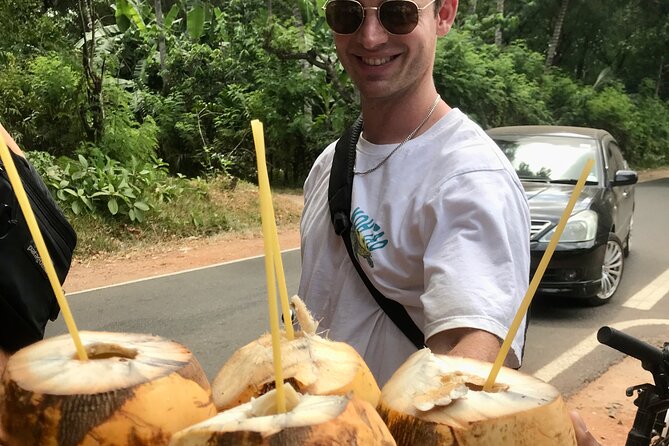
Below is what you’ll experience as you cycle through Anuradhapura’s most meaningful highlights. Times are the on-tour stop lengths, so you can plan how much you want to linger.
Jetavanaramaya stupa: size you feel before you measure it
Your first major stop is Jetavanaramaya. It’s tied to big numbers: at 122 meters (400 ft) it was once the world’s tallest stupa, and when it was built by King Mahasena of Anuradhapura (273–301) it was also the third tallest structure in the world. Even if you’ve seen stupa photos, the scale hits different in person—especially when you pause long enough to notice the mass and how it dominates its surroundings.
Time on site: about 15 minutes.
Admission: listed as free in the stop details.
Samadhi Statue at Mahamevnāwa Park: meditation shown in stone
Next up is the Samadhi Buddha statue at Mahamevnāwa Park. The key detail here is the posture: the Buddha is shown in Dhyana Mudra, the hand position associated with meditation. This stop is less about ruins and more about symbolism—how art and religious practice express the idea of stillness.
You’ll have time to slow down and look at the figure without the pressure of rushing to the next big landmark.
Time on site: about 20 minutes.
Admission: listed as included.
Abayagiriya stupa and monastery ruins: multiple traditions in one big complex
Then the tour shifts into major ruin territory with Abayagiriya. This was a major monastery site connected with Mahayana, Theravada, and Vajrayana Buddhism, and it’s described as one of the most extensive ruins in the world. You’re not just looking at a single monument; you’re seeing a place that once held religious activity across different traditions.
Ruins can feel flat if you rush. On a bike tour with set stop time, you can step back, take in the layout, and understand why people built and rebuilt spiritual centers here.
Time on site: about 20 minutes.
Admission: listed as included.
Twin Baths (Kuttam Pokuna): ancient plumbing, ancient daily life
A favorite stop for many people is Kuttam Pokuna, also called the Twin Baths. These are well-preserved ancient bathing tanks. The important context is that they were built by the Sinhalese in the ancient Kingdom of Anuradhapura, so this isn’t only sacred architecture—it’s also practical infrastructure for bathing and daily rituals.
Because the ponds are so well preserved, the site is easy to understand visually: two basins, stillness, and stonework that shows the planning behind ancient water use.
Time on site: about 20 minutes.
Admission: listed as included.
Eth Pokuna (Elephant Pond): the reservoir scale behind the city
After bathing tanks, you move to a bigger water story with Eth Pokuna, the Elephant Pond. It’s an ancient reservoir with dimensions roughly 159 meters long. This is one of those stops that changes how you think about heritage sites: you start seeing water systems as part of the culture, not just background scenery.
In a city like Anuradhapura, water management is what makes long-lasting religious and civic life possible. On this tour, you’ll keep returning to that theme—monuments plus the systems that sustained them.
Time on site: about 20 minutes.
Admission: listed as included.
Sandakada pahana (Moonstone): the carved staircase detail
Now for a detail stop: Sandakada pahana, also called the Moonstone. It’s a carved semi-circular stone slab, typically placed at the bottom of stairs and entrances. Even with limited time, this is worth paying attention to because it’s one of the most recognizable decorative features in Sri Lankan temple design.
If you’ve ever walked past carvings without noticing what they’re for, this is the opposite. You’re on a schedule, but the stop is long enough to notice the structure of the carving and why it’s positioned where people enter sacred space.
Time on site: about 25 minutes.
Admission: listed as included.
Basawkkulama Tank: ancient irrigation on a big timeline
Next is Basawkkulama Tank, tied to some of the most complex irrigation systems of the ancient world. The tour notes that earliest examples of Sri Lanka’s irrigation works date back to about 430 BCE, during King Pandukabhaya’s reign, and were under continuous development.
This is a calm stop that rewards a curious mindset. When you’re riding heritage routes, it’s easy to focus only on temples. Here, you’re reminded that Anuradhapura’s power wasn’t only spiritual—it was also engineering.
Time on site: about 20 minutes.
Admission: listed as free.
Main Refectory of Abayagiri Monastery: how big religious life could be
You’ll also see the Main Refectory of the Abayagiri Monastery. A key point explained here is the historic account from the Chinese traveler monk Fa-Hien, who visited in the 5th century and wrote that the monastery housed up to 5,000 monks. That detail gives the refectory meaning: this wasn’t a small retreat; it was large-scale, organized community life.
Time on site: about 10 minutes.
Admission: listed as included.
Ruwanweli Maha Seya: one stupa, two royal names, and deep devotion
Then comes Ruwanweli Maha Seya, a major stupa in Anuradhapura. It was built by King Dutugamunu (137 BC – 119 BC) and completed by his younger brother, Ki… (the stop description cuts off, but it clearly names the royal completion). This is one of the sites where scale and sacred attention can feel very present, even among ruins.
If you’re the type who likes to photograph architecture, do it here. If you’re more of a quiet observer, this is still a strong pick: you can sit for a bit and let the stupa become the center of your attention.
Time on site: about 30 minutes.
Admission: listed as included.
Sri Maha Boodhi Temple: a living link tied to Gautama Buddha
The finale is Sri Maha Boodhi Temple, centered on the Jaya Sri Maha Bodhi fig tree (Ficus religiosa). The tour description frames it as a sacred living link to Gautama Buddha. In practical terms, this stop is different from the ruins: instead of imagining what’s gone, you’re standing in a living sacred space that continues to matter.
Time on site: about 30 minutes.
Admission: listed as included.
Food and fuel: vegetarian lunch at Hela Bojun
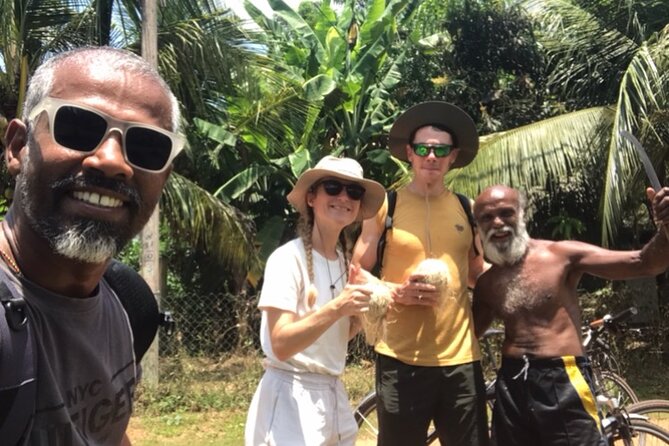
This tour includes meals, with local people cooking vegetarian food at Hela Bojun. For me, this is part of the value. You get to keep your day moving without searching for food between temples, and you also get a chance to eat what locals cook, not only what’s convenient for tourists.
You’ll also have bottled water provided. That doesn’t sound exciting, but it matters in warm weather and keeps the ride from turning into snack-hunting.
If you’re someone who prefers light meals during active sightseeing, the vegetarian lunch format is usually easier to digest than heavy restaurant fare.
Price and value: $25 for bike, guide, water, and real stops
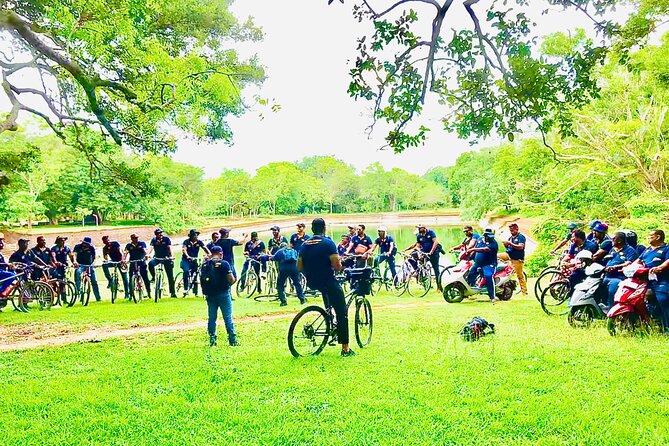
At $25 per person, this is one of the more accessible ways to see Anuradhapura’s heritage zone by bike. The key is what’s included: mountain bike, guide tour, bottled water, parking fees, and a local vegetarian meal at Hela Bojun.
The part to watch is admissions. The tour lists Entrance fee – Unesco ticket as not included, at $30 USD per person (and $15 USD for under age 13). That doesn’t automatically make the tour bad value, but it changes the total cost of your day.
So how do you judge it? Think of the $25 as paying for the bike experience, the English-language guiding, and the time-planned stop sequence. The UNESCO-area ticket is a separate category you should budget for. Because some individual stop details mention free or included entry, you’ll want to ask your guide or confirm at booking what you need to show for each gate.
What to pack for temple stops and a comfortable ride
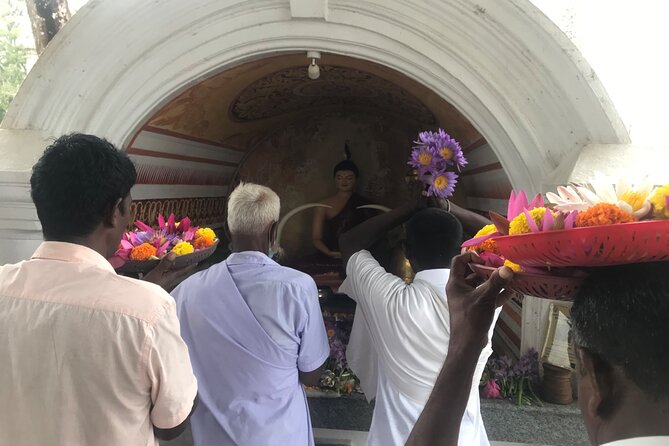
You’ll be visiting temples, so plan for respectful dress. The tour specifically says to bring a wraparound cloth if your knees aren’t covered. That’s a simple thing, and it prevents awkward last-minute shopping.
On the practical side:
- Wear comfortable footwear for short walks at ruins.
- Bring sun protection (hat/sunglasses), since the day is partly outdoors.
- If you have your own helmet, you might want to bring it, but the bike and gear provided will be the baseline.
Also keep your phone charged enough for your mobile ticket.
Should you catch this tour at sunset?
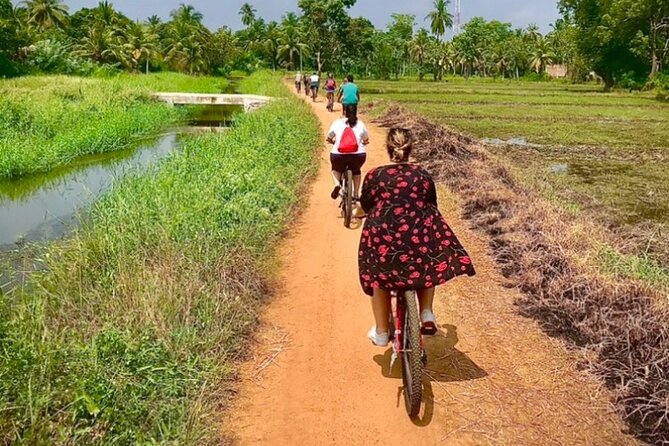
There’s a timing note from people who liked the experience: cycling through scenic stretches and catching ceremonies around sunset can happen if your schedule matches the day’s flow. Even if sunset doesn’t align perfectly, the tour’s stop mix still makes evenings feel meaningful, because you’ll end at Sri Maha Boodhi Temple, where sacred attention is the main focus.
If you’re flexible with your dates, choose a day with decent weather so you don’t lose the ride time.
Who this Anuradhapura mountain bike loop suits best
I think this works especially well if you:
- Want exercise without turning the day into a grind
- Like heritage sightseeing with explanations about Buddhism and architecture
- Prefer a private guide who can adjust the pace
- Want more than monuments: the tour includes the waterworks theme (tanks, ponds, irrigation), which makes Anuradhapura feel more complete
It may be less ideal if you:
- Have trouble riding a bike for a 10 km loop at a moderate level of fitness
- Don’t want to plan around the UNESCO ticket cost and temple clothing requirements
Should you book this Anuradhapura Heritage Mountain bike tour?
Yes—if you want a well-paced way to connect Anuradhapura’s big-name monuments with the systems that supported the city (water, tanks, baths, irrigation). The combination of a private English-speaking guide (Saranga), a planned 10 km route, and included vegetarian lunch at Hela Bojun makes the $25 base price feel practical.
Before you confirm, do two quick checks:
1) Budget for the UNESCO ticket since it’s listed as not included, and confirm how admissions apply to each stop on your exact date.
2) Pack a wraparound cloth if your knees won’t be covered at temples.
If those boxes are handled, this is the kind of tour that leaves you with more than photos—it gives you a clearer picture of how sacred life worked here, on wheels.
FAQ
How long is the Anuradhapura heritage mountain bike tour?
It runs for about 4 hours 30 minutes (approx.) and covers a 10 km loop.
Is this a private tour?
Yes. It’s listed as a private tour/activity, so only your group participates.
What’s included in the tour price?
The tour includes bottled water, parking fees, use of a mountain bicycle, a guide tour, and a local vegetarian meal cooked at Hela Bojun.
What’s not included?
The tour lists entrance fee for the UNESCO ticket as not included ($30 USD per person, and $15 USD for under age 13).
Do I need special clothing for temples?
Yes. Since temples are part of the route, bring a wraparound cloth if your knees aren’t covered.
What physical fitness level is required?
It’s suggested for moderate physical fitness level.
Where does the tour start and end?
It starts at and ends back at the meeting point: Rides Hub, Hubwela mada gedara, Garage waththa near old car park, No:116/1 Watawandana Rd, Anuradhapura.