REVIEW · EILAT
From Eilat: Petra Ancient City Tour and Buffet Lunch
Book on GetYourGuide →Operated by Consolidated Tour Operators · Bookable on GetYourGuide
Petra in one day sounds intense, but it works. I like that this tour gives you a true guided walkthrough of Petra (not just a quick stop for photos), and I also like the English-speaking guide who helps you understand what you’re seeing as you move through the site. The one drawback to know up front is that it’s a long day with a border crossing, so you’ll want to be ready for a lot of time on the road before you get your big Petra moment.
You’ll start in Eilat with pickup, then cross into Jordan and head to Petra through desert scenery and the dramatic rock country en route (you’ll even pass viewpoints associated with Wadi Rum). Inside Petra, the route is classic and efficient: you go in via the Siq canyon, hit major carvings and tomb areas, then finish at the most famous focal point—the Treasury—before walking on to the Street of Facades and Petra Theater.
There’s also a practical theme here: this is a walking tour in an ancient, outdoor place. If you’re not comfortable with uneven stone and steady steps, you should read the “Not suitable” note carefully and consider an easier option.
In This Review
- Key highlights you can actually plan around
- From Eilat to Petra: border work and road time
- Approaching Petra via Valley of Moses: why this route feels different
- Entering the Siq: Petra’s intro that never gets old
- The Treasury and Street of Facades: how to make the famous part count
- Buffet lunch in the Valley of Moses: fuel without losing momentum
- Price and logistics: what $293 buys you (and what you still pay)
- Who this tour fits best
- Tips to make your Petra day trip smoother
- Should you book this Petra tour from Eilat?
- FAQ
- What’s included in the tour price?
- How much are the border crossing taxes and Jordan entry visa?
- Do I need to bring my passport?
- Do I need to send passport information before the tour?
- How long is the day trip?
- Is the tour suitable for people with mobility impairments?
Key highlights you can actually plan around
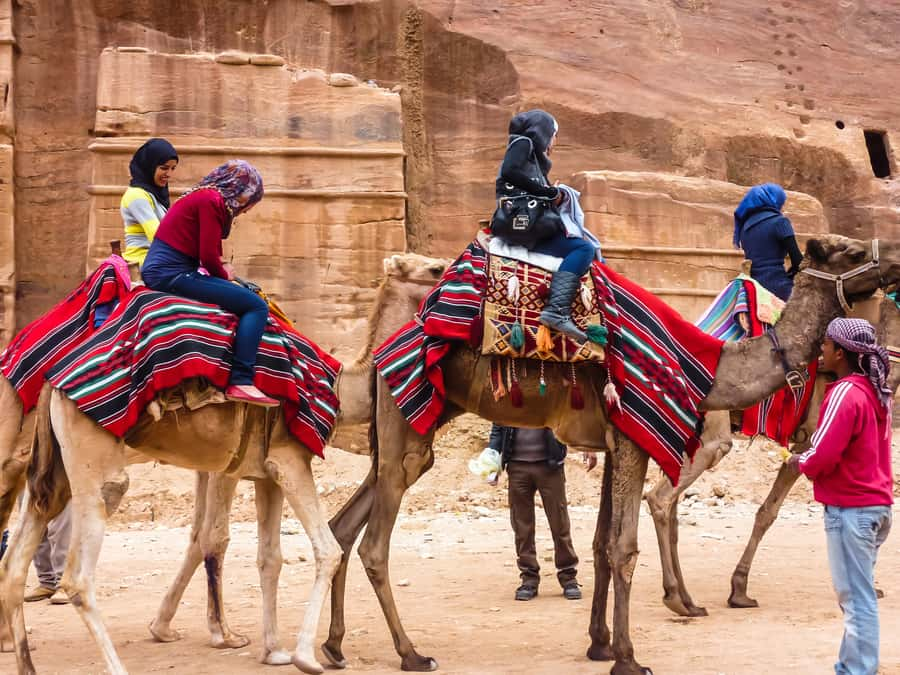
- Siq canyon entry with the big-name stops like the Obelisk Tomb and the rock-cut sections such as the Silica Quarries and Jinn blocks
- Clear guidance on what the carvings mean, including ancient art tied to deities worshiped in the city
- Petra’s defensive engineering with a huge stone dam you’ll see along the route
- Treasury time with context, not just sightseeing—then onward to the Street of Facades and Petra Theater
- Buffet lunch in the Valley of Moses area, so you’re not searching for food after the main walking
From Eilat to Petra: border work and road time
The day starts with pickup from your accommodation in Eilat, then a short drive to the transport setup. The big “event” early on isn’t Petra—it’s the border crossing between Israel and Jordan. This matters because it adds real time, and it also adds paperwork.
Here’s the part you should treat seriously: to arrange border procedures, you must copy or scan the passport data page for each passenger and send it to the local supplier by email or fax. The details have to be exact. If the information doesn’t match cleanly, authorities can turn people back at the border. Translation: don’t wait until the last minute to scan. Do it early, check spelling and numbers twice, and use a real scan (not blurry screenshots).
Once you’re through, the rest of the morning is all about getting into the high-drama setting of southern Jordan. The drive passes towering mountain views and distinctive rock formations associated with the Wadi Rum area. Even if you’re visiting Petra for the first time, this approach helps you understand why these ruins were built where they were. Petra isn’t random stone in the desert—it’s surrounded by big, protective terrain.
If you’re sensitive to long days, plan your energy accordingly. A 12-hour total duration includes pickup, travel, border steps, the guided walk, and lunch. You’re not staying overnight. That means you’ll experience Petra in a “best-of” format: impressive, but time is still time.
Approaching Petra via Valley of Moses: why this route feels different
As you get closer, you’ll head toward the Valley of Moses area before entering the archaeological site. That matters because it changes the vibe of your first minutes. Instead of arriving and immediately smashing into ruins, you build a bit of context about where Petra sits—cut into rock and reached through a canyon.
The tour route then takes you straight to the signature entrance: the Siq canyon. I love this moment because the Siq does two jobs at once. First, it guides your senses—tight canyon walls, changing light, and a sense of anticipation. Second, it sets up the history lesson your guide will keep threading through the walk. When you go in with someone who can explain what you’re seeing, the stone starts to feel less like a background and more like a story.
And yes, the views along the way are part of the point. This is one of those sightseeing days where scenery and ruins overlap. You’ll get huge views of the surrounding mountains and rocky country, and you’ll understand that Petra’s fame isn’t only about one building. It’s about the whole setting.
Entering the Siq: Petra’s intro that never gets old
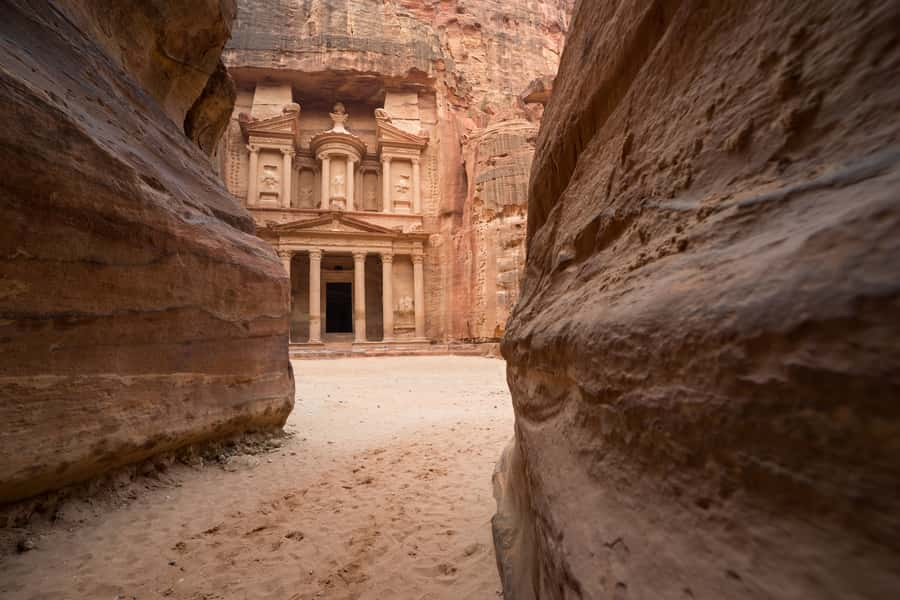
Once you’re inside the Siq, your guide’s job becomes easy, because your senses do most of the work. As you walk the canyon, you’re not just passing by monuments. You’re moving through the main access corridor that ancient travelers used too.
The tour includes several specific stops you’ll want to look at with a “slow eyes” mindset:
- Obelisk Tomb: A striking marker that gives you a quick sense of scale and design before you go deeper.
- Silica Quarries: These show how the site wasn’t only about temples and tombs. Petra’s rock-cut world also connects to extraction and shaping materials.
- Jinn blocks: A memorable rock-cut stretch that helps you understand how Petra’s named sections give modern visitors a foothold for navigating what can otherwise feel like endless stone.
One of my favorite parts here is when the guide ties the physical layout to meaning. The tour also mentions ancient art carved into rock walls, including depictions of deities worshiped within the city. That’s not just decorative. It’s the visual “religion on stone” you only really notice when someone points it out and tells you what to look for.
Then you’ll hit a more practical, less-photogenic highlight: a huge stone dam built to protect the city from floods. It’s a strong reminder that Petra was engineered for survival. People think of Petra as a postcard, but the ruins still show real-world planning—water control, protection, and adapting to harsh seasonal changes.
By the time you reach the end of the Siq, you’ll feel like the canyon has delivered you to a stage. And that’s exactly when Petra does its best work.
The Treasury and Street of Facades: how to make the famous part count
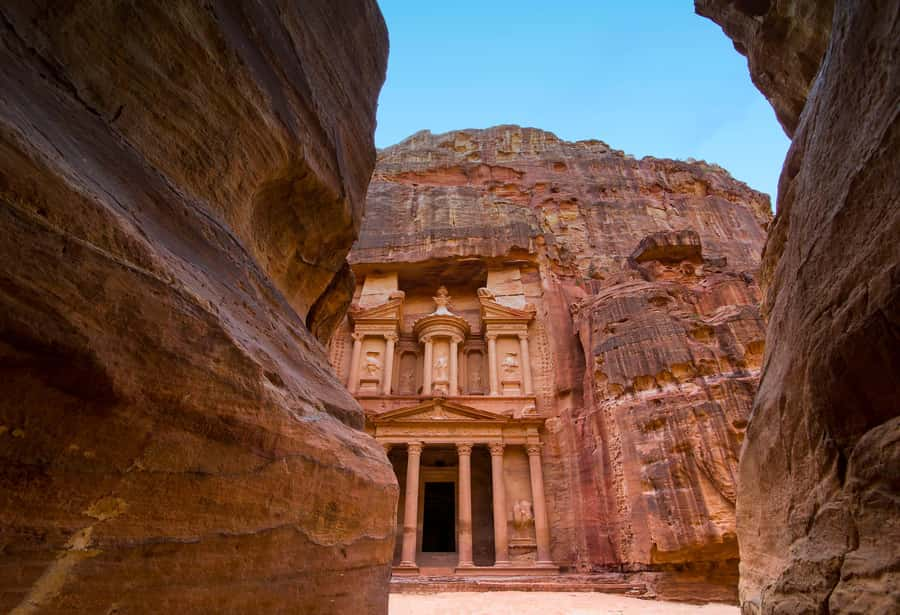
When the Siq opens up, the first big payoff is the Treasury. It’s the most famous and mysterious part of Petra, and the tour’s approach is smart: you’re not just arriving at a single photo spot. You’re arriving after a guided build-up.
That changes how you look at it. You’ll be primed to notice the details on the façade, and you’ll also be hearing stories about the site’s history as you move. The guide leads you onward rather than letting you wander in a fog of awe.
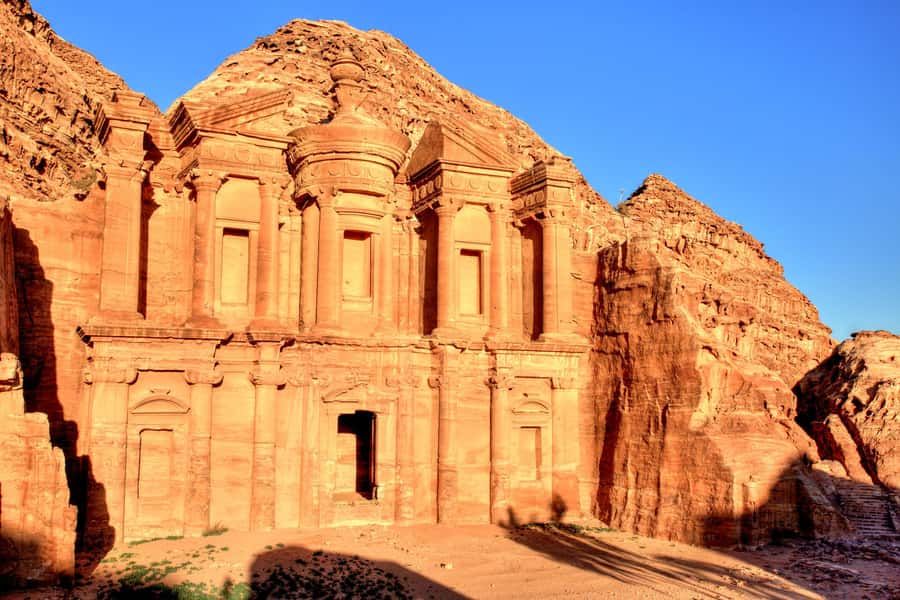
Next comes the Street of Facades. This is where Petra shifts from a one-stop spectacle to an extended visual experience. Facades repeat the theme of carved grandeur, but they also show variety—different proportions, placements, and artistic choices. With a guide keeping you oriented, you’re less likely to miss the “why” behind the layout and more likely to notice how people used the city’s central corridor as a stage.
Then the tour brings you to Petra Theater. Even if you don’t know ancient theater architecture already, it’s the kind of place where seating and stone shape tell you what the site expected from crowds. It’s also a great check-in point for your body: you’ll have done a lot of walking already, and now you can reset your legs while still staying in the main flow of sights.
One practical consideration: this portion of Petra is the heart of the “crowd zone.” If you’re traveling for maximum calm, plan to focus on the guide-led interpretation rather than trying to linger indefinitely at the most iconic frames. In a day trip format, you’ll get a better experience by listening first and snapping photos second.
Buffet lunch in the Valley of Moses: fuel without losing momentum
After the main walking, the tour takes you back toward the Valley of Moses area for lunch. This is a good decision in a one-day schedule. You’re not hunting for food far away from the ruins. You’re also not starving through the late afternoon.
The lunch is a buffet at a local restaurant. Buffet style is always a trade-off—less tailored than a plated meal, but usually easier and faster for a group. The tour includes lunch as part of the package, which matters for value because Petra day trips can rack up extra costs quickly once you start paying separately for entrances and meals.
One helpful detail from past experiences: some days include free bottled water during the bus ride and additional water at the restaurant. I wouldn’t count on a specific amount as guaranteed, but it’s a strong signal that hydration is on the operator’s radar. Either way, I recommend packing your own water bottle too, just so you’re not relying on whatever the moment provides.
As for what you’ll actually do right after lunch: you’re still in “get-you-back” mode. The day is structured to get you back to Eilat, so the lunch break is there to recharge you, not turn the day into a long lunch-and-linger day.
Price and logistics: what $293 buys you (and what you still pay)
At $293 per person for a 12-hour day trip, this is not a cheap excursion. But it also isn’t just a bus ride with a vague stop. The price is doing real work in your favor.
What’s included:
- Pickup and drop-off in Eilat
- Transportation
- English-speaking guide
- Entrance fees
- Lunch
The biggest extra cost you should plan for is Jordan border admin: $130 per person for border crossing taxes and the Jordan entry visa, paid on the day of the tour. That’s a big enough amount that it changes how you compare prices. If you’re only looking at the listed price, you’ll feel surprised when you add the visa.
So is it good value? For me, it comes down to this: if you want Petra without handling transport, without managing an independent entry plan, and without getting lost in a site that can feel like stone maze, this structured format is worth paying for. Petra is one of those places where a guide saves time and improves understanding, especially when the route hits multiple specific carved points.
What about the “drawback math”? You trade a slice of time inside Petra for convenience and guidance. This day trip is best for people who want a strong, organized overview of Petra rather than for those who want to slowly explore every corner on their own schedule.
Who this tour fits best
This Petra day trip from Eilat is a smart match if you:
- Want an English-speaking guide to explain rock-cut monuments as you walk
- Like a structured route with named stops, rather than wandering until you find something
- Prefer not to plan cross-border logistics on your own
- Value a included lunch and entrance fees to keep the day predictable
It may not fit you if:
- You have mobility limitations. The tour is not suitable for people with mobility impairments, and Petra’s walking surfaces and canyon entry are not built for wheelchairs or limited walking comfort.
- You’re the kind of traveler who needs lots of quiet time at one spot. With a full day schedule, the pace is meant to cover the main route.
The best mindset is: think of this as a guided “Petra highlight walk” with real context. You’ll feel the scale more than you’ll try to master every side trail.
Tips to make your Petra day trip smoother
If you do this tour, plan around practical reality—stone, sun, and long hours.
- Wear comfortable walking shoes. This isn’t a stroll.
- Dress for weather and be ready for shifts in temperature when you’re moving between canyon shade and open areas.
- Bring your passport and keep it accessible.
- Do the passport scan steps early so you don’t risk border problems. Exact info matters, and the operator needs authentic scanned copies for processing.
And one more small but important mindset: Petra is so famous that it can make your brain go on photo autopilot. Counter that by using the guide’s explanations as your “anchor.” When you know what you’re looking at—tombs, quarries, carvings tied to worship, defensive water planning—you enjoy the place longer, even if you can’t stay for days.
Should you book this Petra tour from Eilat?
I’d book it if you’re short on time, want a guided route through the Siq and the Treasury, and you like the comfort of pickup, entrance fees, and lunch already sorted. The cross-border step and the travel time are real, but the structure is what lets you see Petra efficiently without turning your trip into an administrative project.
I wouldn’t book it if you need lots of independent flexibility once you’re there, or if your walking ability is limited. In those cases, you’ll get more satisfaction from an option designed for slower pacing or easier mobility.
If you’re on the fence, use this rule: if Petra is your “must-see” and you’re okay with a big day effort, this is a strong way to do it from Eilat.
FAQ
What’s included in the tour price?
Pickup and drop-off in Eilat, transportation, an English-speaking guide, entrance fees, and lunch are included.
How much are the border crossing taxes and Jordan entry visa?
The border crossing taxes and the Jordan entry visa cost is $130 per person, paid on the day of the tour.
Do I need to bring my passport?
Yes. You should bring your passport.
Do I need to send passport information before the tour?
Yes. To arrange border crossing procedures, you must copy or scan the passport data page for each passenger and send it by email or fax to the local supplier, with exact details.
How long is the day trip?
The duration is 12 hours.
Is the tour suitable for people with mobility impairments?
No. It is not suitable for people with mobility impairments.