REVIEW · GALLE
Galle Fort Heritage Walk by a Certified Heritage Interpreter
Book on Viator →Operated by Galle Fort Heritage Walk by a Certified Heritage Interpreter. · Bookable on Viator
Galle Fort tells stories best on foot. This heritage walk with a certified interpreter helps you understand what you’re looking at, from colonial trade to today’s UNESCO layers, with plenty of time for questions. You also get special access that most people miss, like entry to a private museum area and the hidden gunpowder magazine.
What I like most is how the tour keeps the pace tight—2 hours to 2 hours 20 minutes—without turning it into a checklist. I also really value the focus on real context at each stop, so the fortifications feel connected instead of random. One possible consideration: you are walking and you’ll move between multiple sites, so plan for comfort (shoes, sun cover, and a small water plan), especially in daytime heat.
In This Review
- Key highlights
- Why a heritage guide matters at Galle Fort
- The route in plain language: from Black Fort to Galle’s lighthouse story
- Old Town fortifications and Queen Victoria’s palace area
- Dutch Reformed Church: why it took over 50 years
- Galle Fort Clock Tower and the UNESCO logic
- Galle Dutch Fort: street planning with a purpose
- Courts Square: what left Sri Lanka and why it mattered
- The special access you actually care about
- Price and value: what $45 buys in understanding
- Who this tour is best for (and who might skip it)
- Quick practical tips before you go
- Should you book the Galle Fort Heritage Walk?
- FAQ
- What is the Galle Fort Heritage Walk duration?
- How much does the tour cost?
- Is this tour private?
- What kind of ticket do I get?
- Does the price include admission?
- What special access is included?
- Which stops are included in the walk?
- Is private transportation included?
- Are service animals allowed?
- What is the cancellation window for a full refund?
Key highlights
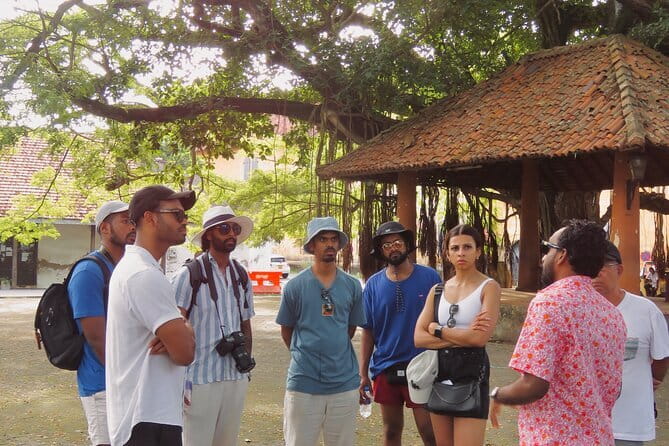
- Certified Heritage Interpreter who can answer your questions as you go
- Private walking tour with just your group, so the pace fits your interests
- Admission included at each planned stop, plus entry to a private museum
- Hidden access to see the gunpowder magazine area
- UNESCO context tied directly to the clock tower and fort layout
- Fast but not rushed coverage of major Galle Fort landmarks
Why a heritage guide matters at Galle Fort
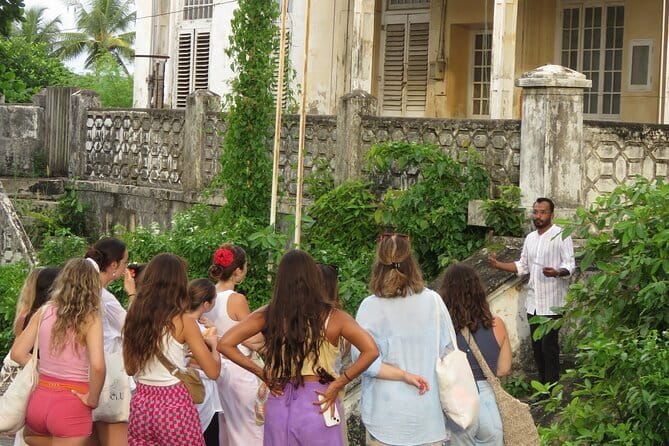
Galle Fort is the kind of place where the walls look simple until someone explains what they were built to do. This tour is built for that moment—when the stones stop being scenery and start feeling like evidence.
The big win is the certified heritage interpreter. Instead of handing you dates and moving on, your guide can connect the dots between trade, religion, architecture, and how power worked on this coastline. You’re not stuck staring at plaques, either. The format encourages you to ask questions, and you get the kind of answers that make you look closer once the group moves on.
The second win is time. At $45 per person, the tour is not trying to replace museums or a full day of wandering. It’s designed to give you a strong orientation in one go—covering major landmarks—then handing you enough context that the fort becomes easier to explore on your own afterward.
The route in plain language: from Black Fort to Galle’s lighthouse story

The walk starts with Black Fort, tied to a fascinating theme: Galle as an Asia-to-world meeting point during the colonial era. At this stop, you’re not just told it was important—you learn why. The interpreter frames it as a place where goods moved alongside people, ideas, and culture, making the fort feel like an active marketplace rather than a static monument. The stop is about 20 minutes, so it’s enough time to get the story without dragging.
Next comes the Galle Fort Lighthouse, with a darker, more specific tale: the story of how Asia’s first lighthouse was burned down. That detail is the kind of thing you remember later, especially when you’re standing in the fort’s coastal angles and thinking about how fragile navigation and control were. This is another around 20 minutes, and it’s a good second stop because it shifts you from trade networks to maritime survival and strategy.
A small practical note: because the themes change fast—commerce, then navigation—you’ll get more out of the tour if you let the guide set a rhythm. Don’t worry about writing everything down. Let the interpreter do the sorting; you’ll feel the connections by the end.
Old Town fortifications and Queen Victoria’s palace area
After the lighthouse, the walk heads into the Old Town of Galle and its fortifications. This is where the fort starts to feel like a living footprint: layers of defenses, buildings, and changing ownership over time.
One highlight here is the chance to explore Queen Victoria’s palace area. Even if you’ve seen photos of the fort, this kind of stop helps you understand why rulers and administrators chose this site—control of the harbor, access to trade routes, and a setting that supported authority.
Expect about 15 minutes here. That’s long enough to get the meaning behind what you’re seeing, but not long enough to turn it into a slow museum day. If you love architecture and city planning, you may want to pause and look around at street angles after the group passes, because the fort layout can be easier to “read” once you know what question to ask.
Potential drawback at this stage: if you’re expecting every building to feel like a deep museum exhibit, the pacing can feel brisk. The strength is interpretation, not a long sit-down.
Dutch Reformed Church: why it took over 50 years

The next stop is the Dutch Reformed Church, and the story centers on time—specifically, why its construction took over 50 years. That single fact does a lot of work. It suggests local commitment, resources, planning, and changing circumstances over decades. Instead of treating the church like a pretty stop, your interpreter helps you read it as a snapshot of effort stretched across generations.
This is a shorter visit at about 10 minutes, which works well because you’re moving from one landmark to the next. You’ll get the big context quickly, then you’re back on your feet.
If you’re the type who likes to know why a place took so long to build, this will be satisfying. If you’re more interested in views and photos, you can still enjoy the moment—but you might feel like the interpretation matters more than the visual alone.
Galle Fort Clock Tower and the UNESCO logic

Then you reach the Galle Fort Clock Tower, and the conversation shifts again. Here, the guide connects two things that often get separated in guidebooks: the fortress being recognized as a UNESCO World Heritage site, and how the port functioned as a key colonial-era hub.
This stop is about 20 minutes, long enough for the interpreter to explain why UNESCO recognition isn’t just about beauty—it’s about the fort as a historical system. Fortifications, planning, and strategic location all combine into a site with global value.
I like this stop because it gives you a lens. After you hear the explanation, you start noticing the fort’s logic—how sightlines, coastal position, and construction choices support control and defense. Even if you never become a “fort person,” you’ll leave understanding why Galle Fort matters beyond Sri Lanka.
Galle Dutch Fort: street planning with a purpose

The walk continues to Galle Dutch Fort, described as a small village within the larger fortress. This is one of the most interesting parts of the route because it’s not only about famous landmarks—it’s about how everyday space was organized.
You’ll learn about the intricate planning of the streets and why each area exists. The interpreter’s focus here is the idea of “function.” A tight street grid isn’t just charming; it can be about movement, defense, access, and community life inside walls.
This stop is around 20 minutes. It’s a good length for what it is: a chance to think like a planner for a few minutes, then walk away with a sharper sense of how the fort was lived in.
If you enjoy wandering with purpose, you’ll appreciate this. If you’re mainly interested in the big photographed sites, this might feel more subtle—but it’s exactly the kind of stop that makes the fort feel real.
Courts Square: what left Sri Lanka and why it mattered

The final major stop in the walk is Courts Square in Galle. Here the theme is trade, with stories of vast quantities of goods exported from Sri Lanka—specifically goods, gems, and herbs. This is where the tour pulls together the earlier trade narratives and brings them to ground level: what people were trying to move across oceans, and what made this location valuable.
Expect about 15 minutes at this stop. It’s a good ending because it leaves you with tangible categories—gems, herbs, commodities—rather than only abstract history. Then your brain can connect those categories to what you saw earlier: the trading hub idea at Black Fort, the maritime story at the lighthouse, and the port significance around the clock tower.
The special access you actually care about

One of the most practical reasons to do this specific walk is the included access that goes beyond standard sightseeing.
You don’t just see exterior landmarks. The package includes entry to a private museum and access to see a hidden gun powder magazine area. That last detail matters because most visitors won’t stumble into those kinds of spaces on their own, and it’s the kind of physical context that makes fort history feel less theoretical.
In real terms, special access also changes how you pay attention. When you can step into a lesser-seen part of the fort system, you start asking better questions: How was storage handled? What did control look like in daily operations? Your guide can answer those questions on the spot.
Price and value: what $45 buys in understanding
At $45.00 per person, you’re paying for three things at once: a licensed guide, included site entry, and the special-access parts of the experience.
If you’ve ever done “walk and read” tours, you know the hidden cost is your time. You spend energy figuring out what something is, then you lose the story. This tour is built to reduce that friction. You cover multiple key highlights in about 2 to 2 hours 20 minutes, so you get a fast understanding of why Galle Fort looks the way it does.
Is it the cheapest way to see Galle Fort? No. But it can be one of the most efficient ways to get your bearings fast—especially if you’re only in town for a limited number of hours or you want something more meaningful than a self-guided loop.
Also, the tour is private, meaning it’s only your group. That matters for value because you can keep asking questions without worrying about slowing a big crowd.
Who this tour is best for (and who might skip it)
This walk suits you if you:
- want UNESCO context tied to real places, not lectures
- enjoy asking questions and getting clear answers
- prefer a structured route with time for interpretation
- want special access like the museum area and gunpowder magazine without planning it yourself
You might choose something else if you:
- only want photo stops with minimal explanations
- hate guided timing and prefer total freedom
- are looking for a full museum day (this is a walk-length heritage experience)
For most people, though, it hits a sweet spot: it’s short enough to fit into a sightseeing schedule, but it’s not “quick and forgettable.”
Quick practical tips before you go
A walking heritage tour is still a walking heritage tour. To make it smoother:
- Wear comfortable shoes for uneven fort surfaces and stairs.
- Bring water and sun protection, since you’re outdoors for most stops.
- Have at least a couple of questions ready. Even simple ones—who built what, what changed over time, what UNESCO actually recognizes—will lead to better answers.
If you’re the kind of traveler who likes to understand where money, ships, and power went, this itinerary will feel especially satisfying.
Should you book the Galle Fort Heritage Walk?
Yes—if you want the fort to make sense, not just look impressive.
This tour is a strong value because the certified interpreter turns major landmarks into a connected story, you can ask questions freely, and you get included access to areas most people don’t see, including the gunpowder magazine and a private museum entry. At two hours to two hours 20 minutes, it’s also a smart way to get orientation without eating your whole day.
If your travel style is more “wandering with no structure,” you might feel constrained. But if you want real understanding fast, this is an easy decision.
FAQ
What is the Galle Fort Heritage Walk duration?
The tour lasts about 2 hours to 2 hours 20 minutes.
How much does the tour cost?
The price is $45.00 per person.
Is this tour private?
Yes. It’s a private tour/activity, so only your group will participate.
What kind of ticket do I get?
You receive a mobile ticket.
Does the price include admission?
Yes. Each listed stop includes an admission ticket, and the tour also includes entry to a private museum.
What special access is included?
The tour includes access to see the hidden gun powder magazine.
Which stops are included in the walk?
The walk includes Black Fort, Galle Fort Lighthouse, Old Town of Galle and its Fortifications (including Queen Victoria’s palace area), Dutch Reformed Church, Galle Fort Clock Tower, Galle Dutch Fort, and Courts Square in Galle.
Is private transportation included?
No, private transportation is not included.
Are service animals allowed?
Yes, service animals are allowed.
What is the cancellation window for a full refund?
You can cancel up to 24 hours in advance for a full refund. If you cancel less than 24 hours before the start time, the amount paid is not refunded.