REVIEW · ROME
Private tour of Ostia, the ancient city harbor, by van with a PhD archaeologist
Book on Viator →Operated by Rome in tours · Bookable on Viator
Ostia feels different when you understand it. A private van ride plus a PhD archaeologist guide turns the ruins at Ostia Antica from random walls into a working Roman harbor city. Two things I especially like: you get skip-the-line entry, and your guide helps you connect what you’re seeing—like the forum, baths, and sacred spots—to why Ostia mattered. One possible drawback: the walking time on site is roughly 3 hours, so if you want extra museum-style time, you may feel a little rushed.
I also like the pacing of a small-group, private format. With pickup included and the option of headsets (for groups of 6+), you can ask questions without constantly leaning in and missing the next landmark. And because you’re based out of Rome, it’s a clean day trip that doesn’t steal your whole vacation.
Still, consider that this is a true walking tour. It’s not a sit-and-stare experience, and the weather can matter—especially if you go in hotter months—since most of your time is spent moving between parts of the site.
In This Review
- Key highlights to plan around
- Why Ostia Antica Works So Well as a Rome Day Trip
- Price and Logistics: What $528.09 Per Person Really Buys
- From Your Hotel to the Archaeological Park: Van Pickup Done Right
- Entering Ostia Antica: Gate, Walls, and the Necropolis
- Walking the Decumanus: Warehouses, Streets, and Built-In Clues
- Everyday Life Stops: Caupona, Insulae, and Thermopolium
- Theater, Squares, and Trade Associations: Where Community Shows Up
- The Military Camp and the City’s Controls: Castrum
- The Civic Core: Forum, Capitolium, and Sacred Power
- Ending the Walk: What You’ll Take Away From the Harbor City
- What’s Included (and What You Need to Handle Yourself)
- Who This Private Ostia Tour Is Best For
- Should You Book This Ostia Antica Van Tour?
- FAQ
- How long is the Ostia Antica private tour?
- What does the tour include at Ostia Antica?
- Is the admission ticket included?
- Do you skip the line?
- Is pickup from my accommodation included?
- Is this a walking tour?
- Are headsets provided?
- Is there free cancellation?
Key highlights to plan around
- PhD archaeologist guide: you’re not just collecting photos; you’re getting real interpretation
- Skip-the-line ticketing: less waiting, more actual sightseeing time
- A focused 3-hour walk inside Ostia Antica: enough for the essentials without dragging all day
- Route covers both daily life and power: necropolis, baths, theater, forum, and temples
- Van pickup and return from your accommodation area: easier than public transit with luggage and heat
- Headsets for 6+ people: clearer listening when groups get bigger
Why Ostia Antica Works So Well as a Rome Day Trip
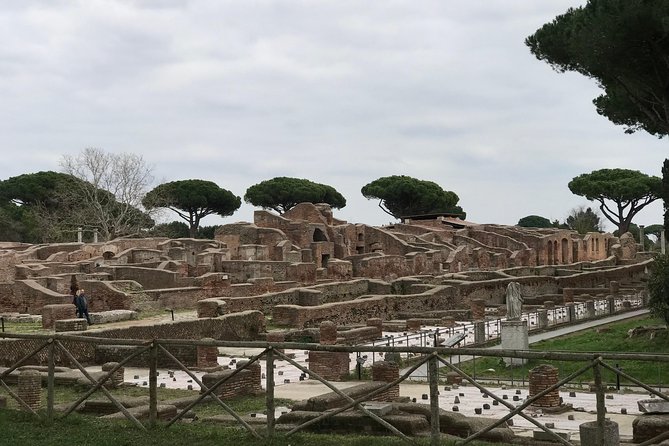
Ostia Antica is one of those places where Rome’s story shows up in a practical way. Instead of only seeing emperors and monuments at a distance, you get a Roman city that handled trade, daily routines, and administration right by the harbor.
This tour leans into that. Your guide helps you understand Ostia’s role in the rise of the Roman Empire, so the ruins don’t feel like disconnected piles. You’ll see major public spaces like the forum and the Capitolium, but you’ll also walk through parts of everyday life such as housing areas and small commercial spaces.
Another reason I like this day-trip format is the tone of the experience. Many people find Ostia Antica calmer than the biggest headline sites, and that matters because you move at a human pace. A private guide also makes it easier to slow down where your curiosity wants to go.
You can also read our reviews of more tours and experiences in Rome.

Price and Logistics: What $528.09 Per Person Really Buys
At $528.09 per person, this isn’t a budget bargain. What you’re paying for is a full private setup: pickup and transport by a luxury car or van, a local guide plus a PhD archaeologist guide, ticket fees, and headsets for larger parties.
In plain terms, the value shows up when you compare what you get to doing it independently. You’re not spending time coordinating transit, matching entry times, or trying to figure out what a site area is supposed to mean. Here, your guide’s job is to interpret the necropolis, the city walls, and the main streets so you can read the place as a city.
Duration also matters. The tour is listed at about 4 hours. Driving time is about 1.5 hours round trip, which means you’re left with roughly 2.5 hours at Ostia Antica in total. In other words, it’s focused rather than endless.
From Your Hotel to the Archaeological Park: Van Pickup Done Right
One of the best parts of this style of tour is that you don’t have to wrestle with getting out of Rome. Pickup is offered, and the driver takes you to the site and then back to your accommodation after the visit.
If your hotel is outside the defined pickup area, you’re told to contact customer support to find a solution. I like that this is addressed upfront, because Rome has tons of neighborhoods where logistics can get messy fast.
Also, the meeting point is kept close to public transit. That’s useful if you ever need an alternate plan or you’re meeting someone who’s already near a transit line.
Finally, since it’s private, only your group participates. That helps a lot if you like asking questions, taking photos without a long bottleneck, or moving at your own speed through a complex site.
Entering Ostia Antica: Gate, Walls, and the Necropolis
Your walking route starts once you reach the Parco Archeologico di Ostia Antica, and the first impression matters. You’ll see the entrance gate, parts of the city walls, and then move into the core street network.
Starting with the city boundary is smart. It helps you understand how Romans shaped space. When you see walls and the gate area early, the city feels less like a set of ruins and more like an organized place with boundaries, control points, and zones for different functions.
You’ll also visit the necropolis. That’s a big deal because it adds a layer beyond politics and commerce. Even if you only spend part of your walk there, you get the sense that life in Ostia also included how people faced death, memory, and burial practices.
If you like Roman cities as systems—who lived where, who worked where, and how movement flowed—you’ll probably get a lot out of this opening phase.
Walking the Decumanus: Warehouses, Streets, and Built-In Clues
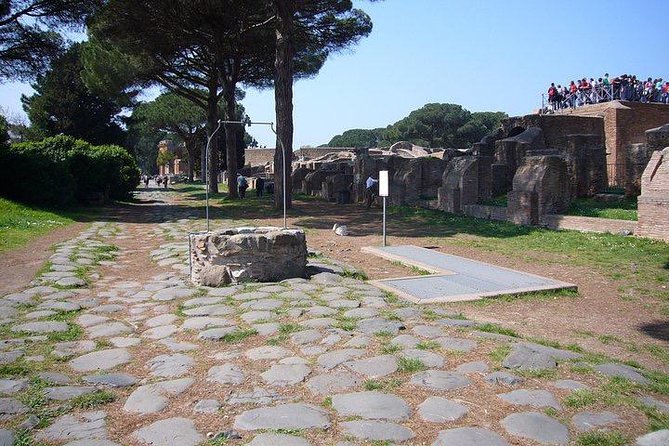
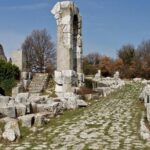
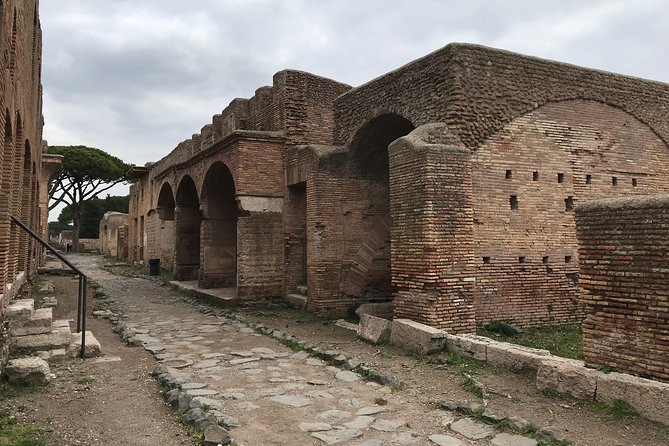
Next up is the Decumanus, the site’s main street. Walking this kind of central axis is one of the easiest ways to get your bearings fast. Your guide can point out what you’re looking at and why it’s placed where it is.
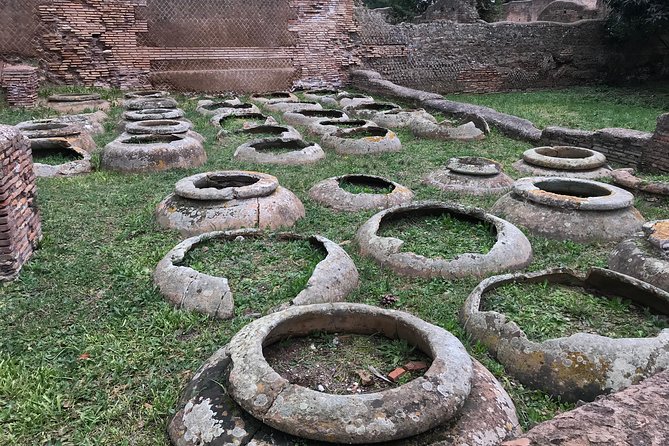
From there, you move into areas that help explain Ostia’s economic engine. You’ll see warehouses, plus spaces tied to the city’s everyday rhythm. In a harbor city, “how goods moved” isn’t an abstract concept—it’s built into layout choices and building purposes.
A couple of stops that can really click with first-timers are the bath of the charioteers and the bath of Neptune. Baths weren’t just about cleanliness. They were social space, conversation space, and a place where status and routine often met. Seeing multiple bath areas helps you understand that public life wasn’t optional in Roman cities.
One practical note: because this is a walking route, you’ll want comfortable shoes. Uneven surfaces are part of the experience, and you’ll walk enough to feel it in your legs by the time you reach the civic core.




Everyday Life Stops: Caupona, Insulae, and Thermopolium
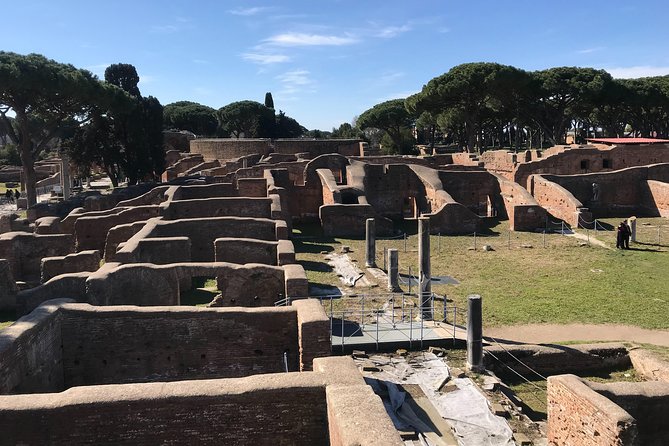
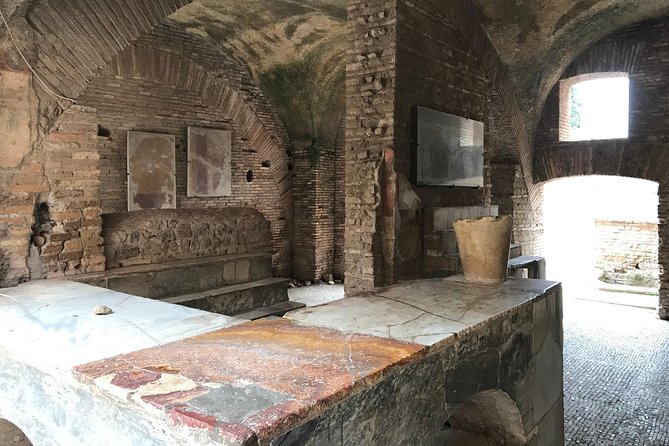
This is the part where Ostia turns into a real city instead of a postcard. You’ll visit a caupona, which is a tavern setting, and you’ll also see insulae, the housing system used by the middle class.
That pairing is useful because it helps you picture social life and daily living. A tavern space tells you where people gathered. Insulae tell you where people lived—so you can connect routines rather than viewing buildings in isolation.
You’ll also pass by a thermopolium, a restaurant-like setting. Think of it as a clue to food culture: fast meals, regular stops, and the ways people kept moving through their day. Even without a “kitchen walkthrough,” the presence of these commercial spaces is evidence that Ostia served more than wealthy residents—it served the working side of Roman life too.
If you’re the type who loves details like how streets connect to daily needs, this section is often the most satisfying. It’s also where a guide with a serious research background can make a difference, because interpretation matters once you’re standing in front of old walls.
Theater, Squares, and Trade Associations: Where Community Shows Up
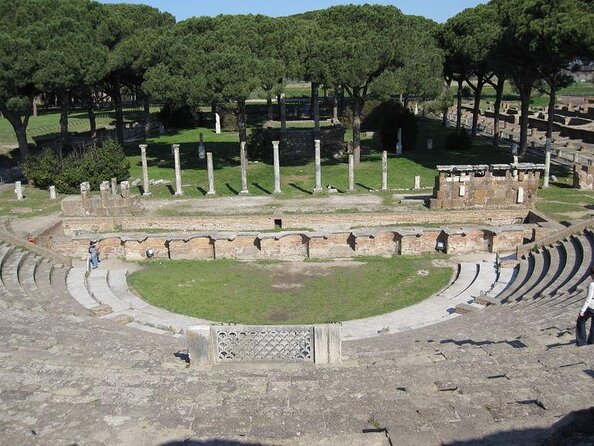
The route includes the theater and the square of the guilds. Those two together help explain that Ostia wasn’t only run by officials—it also had organized communities.
The theater is a signal that public entertainment and gathering mattered, not just in Rome’s center but in a harbor city as well. And the square of the guilds hints that working groups had identity and meeting spaces.
Seeing these social landmarks after the housing and commercial stops gives you a fuller picture. You start to recognize how Romans blended work, leisure, organization, and civic life.
If you’re traveling with teens or someone who thinks ruins are boring, this is often where their interest can flip. It’s easier to understand why a theater existed than to guess at ruins with no context.
The Military Camp and the City’s Controls: Castrum
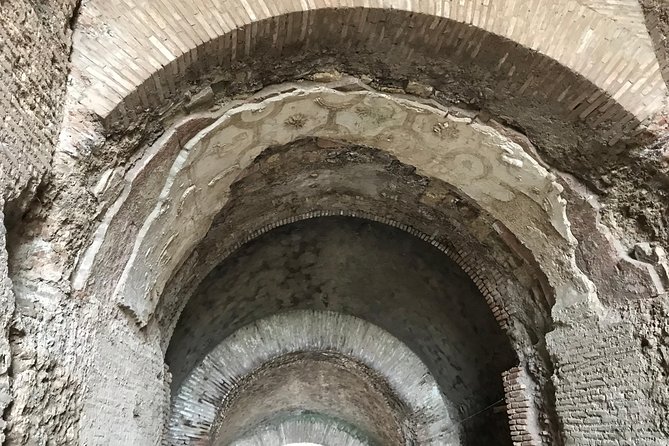
You’ll also see the castrum, the military camp. Including this stop is a smart move because it shows that Ostia wasn’t only about commerce. Security and control mattered, especially for a city tied to imports, exports, and movement.
The castrum section is also a reminder that cities in the Roman world had multiple roles at once. You’re not just looking at “pretty structures.” You’re reading a functioning layout where defense and administration were built into the city plan.
The Civic Core: Forum, Capitolium, and Sacred Power
Now you get to the big brain part of Ostia: the forum and the Capitolium. This is where Roman civic life really shows, at least in terms of architecture and layout.
You’ll see the Capitolium, which is the temple of Jupiter, Juno, and Minerva. That matters because it’s not just a temple stop for photos—it’s a statement about authority and belief in a central location. Then you’ll also visit the so-called shrine of the Lares Augusti, and the temple of Augustus and Rome.
When you step through these sacred landmarks after seeing daily-life zones, the city stops feeling one-dimensional. You can sense how public belief was part of how society organized itself.
One caution: this section can be where you want to linger and ask more questions. The tour duration is set, so if you’re especially interested in religion and politics, keep your questions ready. Your guide can answer on the fly, but the clock is still moving.
Ending the Walk: What You’ll Take Away From the Harbor City
By the end of the route, you’ve covered a lot of ground without being dragged around all day. You’ve seen the city walls, the central street (Decumanus), public spaces like the theater and forum, and specialized zones such as the necropolis and castrum.
That mix is what makes this tour worth considering. Ostia Antica is often talked about as a “less crowded Rome” option, but the real win is interpretive: the guide helps you connect functions. When you can connect harbor city layout to daily life and to imperial power, the ruins make sense.
Also, since the guide includes a PhD archaeologist, you’re more likely to get explanation than just pointing. If you love asking why something is where it is—or what a building tells you about people—this style tends to land well.
What’s Included (and What You Need to Handle Yourself)
This tour includes the ticket fees and the local guide plus the PhD archaeologist guide, along with transportation and any required entry. For larger groups, you also get headsets so you can hear clearly.
What’s not included is food and souvenirs. That’s normal for a walking archaeology day trip. I’d treat it like you’re having a half-day excursion: plan water, plan snacks if that’s your style, and don’t expect an on-site meal stop built into the schedule.
You also skip the line. That can save real time, especially if you’re arriving around a busy window.
And because this is listed as “all included, no extra fees,” you’re less likely to get surprise add-ons mid-day.
Who This Private Ostia Tour Is Best For
This is a great fit if you want:
- a clear, guided walk through the essentials of Ostia Antica
- interpretation from someone with serious archaeological training
- a day trip that’s private, so your questions set the pace
It’s also a good pick for history lovers who don’t want to spend their day decoding signage and guessing at context. If you’re the kind of traveler who reads plaques and still wants more, a PhD archaeologist guide is exactly the right match for your curiosity.
On the other hand, if you know you want a longer stay at Ostia Antica—more time in a museum setting, more sitting breaks, or a slower pace—this might feel short. You’re getting a focused route, not a multi-half-day marathon.
Should You Book This Ostia Antica Van Tour?
I’d book it if you care about understanding what you see, not just where you can stand for photos. The combination of private transport, skip-the-line entry, and a PhD archaeologist guide makes the experience efficient and more meaningful.
Skip it only if you’re the type who needs extra time on site beyond the planned walk, or if you want the day to include extra stop-and-snack pacing. This tour is built for a smart 4-hour window with a strong emphasis on the main parts of the ancient city.
If you want a day trip that feels like Roman life—street by street—this one is a very solid bet.
FAQ
How long is the Ostia Antica private tour?
The tour lasts about 4 hours, with the on-site visit timed at roughly 3 hours.
What does the tour include at Ostia Antica?
You’ll visit major areas such as the necropolis, city walls and entrance gate, the Decumanus (main street), warehouses, the baths of the charioteers and Neptune, the caupona (tavern), insulae (middle-class housing), the theater, the square of the guilds, the castrum (military camp), the forum, the Capitolium, the shrine of the Lares Augusti, the Temple of Augustus and Rome, and the thermopolium.
Is the admission ticket included?
Yes. Admission ticket fees are included.
Do you skip the line?
Yes. This tour includes skip-the-line entry.
Is pickup from my accommodation included?
Pickup is offered. If your accommodation is beyond the defined area, you’ll need to contact customer support to find a solution.
Is this a walking tour?
Yes. It’s a walking tour, and the driver will take you to the attraction and back to your accommodation after the visit.
Are headsets provided?
Headsets are included for a party of 6 pax or more.
Is there free cancellation?
Yes, you can cancel for free up to 24 hours in advance for a full refund.