REVIEW · TRENTINO ALTO ADIGE
Hiking tour in the World Natural Heritage Unesco Dolomites
Book on Viator →Bookable on Viator
The Dolomites look bigger than your photos. This guided hike circles Peitlerkofel (Sass de Putia) and treats you to wide-open views, a high pass moment at Würzjoch, and a climb up to 2,300 meters at the Peitlerscharte. It’s one of those rare trips that feels like a proper mountain day without demanding extreme fitness.
Two things I really like about this experience: the guide’s relaxed pacing and the way the route is built for great photo angles all around the walk. I also like that you’re not stuck with a rigid plan, because you can ask to shorten or adjust the hike if conditions or your comfort level changes.
One thing to consider: it’s weather-dependent. If conditions aren’t good, the tour won’t run as planned, so you’ll want backup flexibility and decent trail-ready gear.
In This Review
- Key highlights you’ll actually care about
- Why Peitlerkofel feels iconic in the UNESCO Dolomites
- Starting in Brixen: logistics that keep the morning stress-free
- The circumnavigation plan: from Würzjoch to Peitlerscharte
- Stop 1: Peitlerkofel Rundwanderung
- Stop 2: South Tyrol Dolomites
- The guide makes or breaks this kind of hike
- South Tyrol details: where language meets the mountain
- How hard is it really? Fitness, pacing, and breaks
- Price and value: what $352.68 buys you in the Dolomites
- Weather and gear: the simple checklist for a smooth day
- Should you book this Peitlerkofel Dolomites hike?
- FAQ
- How long is the hiking tour?
- What fitness level do I need?
- Where does the tour start and what time does it begin?
- Is pickup available?
- Is lunch included?
- What’s included in the price?
- Is this a private tour?
- What language is the tour offered in?
- What happens if the weather is bad?
- Is there free cancellation?
Key highlights you’ll actually care about
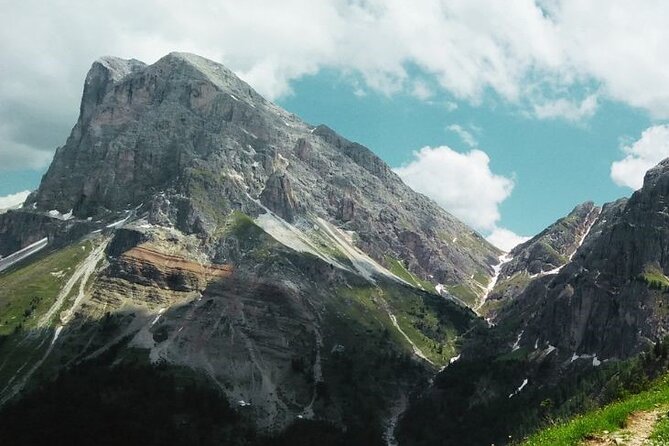
- Circular route around Peitlerkofel (Sass de Putia) with big panoramic payoff
- Würzjoch pass crossing at the language border between German and Rhaetian (Ladin) groups
- Peitlerscharte high point at 2,300 m for a real summit moment without a technical climb
- Private English-speaking guide with pace-matching and options to shorten or change the route
- Built-in comfort: air-conditioned vehicle and bottled water included
Why Peitlerkofel feels iconic in the UNESCO Dolomites
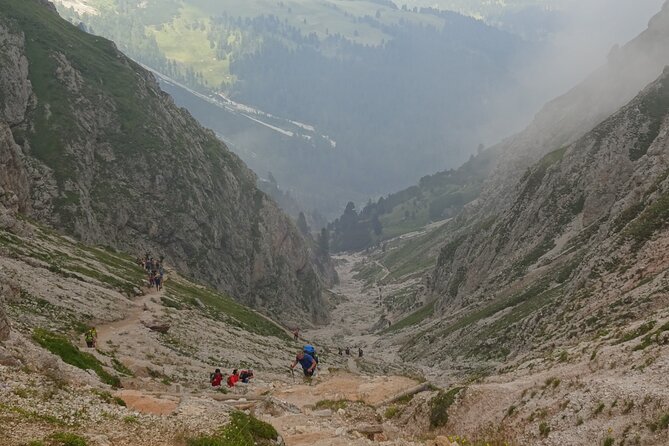
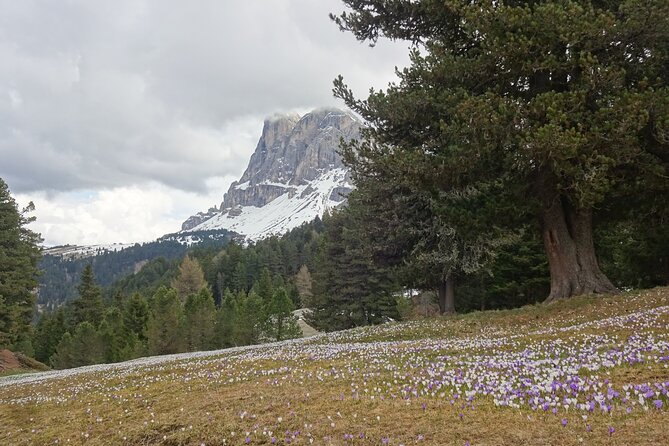
If you come to the Dolomites for dramatic peaks, Peitlerkofel delivers. This walk is designed as a circumnavigation, so you don’t just “see one view.” You keep getting fresh angles as the route wraps around the mountain. That matters because it turns a hike into a long string of photo opportunities, not one big picture and then the rest is quiet hiking.
You’ll also get the special kind of context that makes mountains more than scenery. Würzjoch is highlighted for a reason: it’s an important pass that sits at the border between German and Rhaetian (Ladin) language areas. On a day that’s about moving on foot, that cultural geography gives you something extra to notice while you’re looking outward.
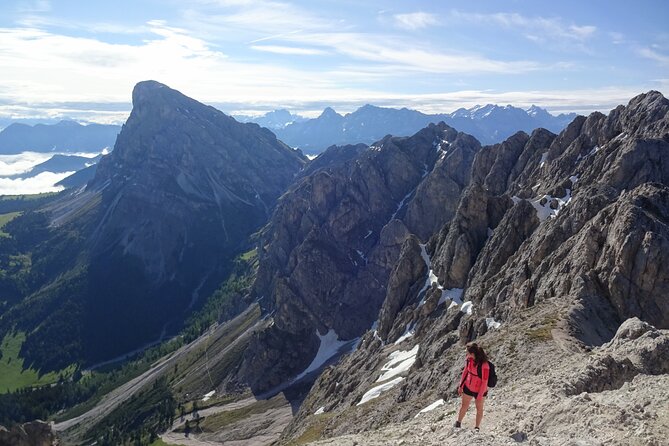
And then there’s the high point. Reaching Peitlerscharte at 2,300 m adds a “we went somewhere real” feeling. It’s not described as technical, but it does give you that altitude boost that sharpens the views and makes the effort feel worth it.
Starting in Brixen: logistics that keep the morning stress-free
Most mountain days fail before the first step if the start is chaotic. This one is built to be easy. The tour starts at 8:30 am in the 39042 Brixen area, and pickup is possible in Bolzano/Bozen for an extra 120 Euro paid in cash to the guide.
You’re also getting a comfort win up front: an air-conditioned vehicle and bottled water are included. That might sound minor, but it changes how you feel when the day starts—especially if you’re traveling in warmer months or you’re not used to driving in mountain regions.
Because it’s a private tour/activity, you’ll only be hiking with your group. That helps a lot on a route with optional shortening or changes, since you’re not trying to match someone else’s pace while the group gets split.
The circumnavigation plan: from Würzjoch to Peitlerscharte
The core experience is a circumnavigation of Peitlerkofel (Sass de Putia) on foot. The hike is described as easy to moderate, and that matters if you’re trying to plan your Dolomites trip around average fitness. You’re not being pushed into a “only for expert hikers” lane, but you are walking enough that sturdy boots and good effort count.
You’ll pass Würzjoch, an important mountain pass crossing tied to the German and Rhaetian (Ladin) language groups. In practice, what this means for you is that the guide has a good reason to pause and point things out beyond the next bend. Those language-border stories add texture without slowing you down too much.
Then you work toward the top highlight: the Peitlerscharte at 2,300 meters. The climb is the day’s emotional peak. Even if you take your time, you’ll feel the mountain get bigger around you as you gain altitude. And since the itinerary is a circular route, you’re not “climbing and returning the same way.” You’re moving through a loop that constantly re-shapes the scenery.
Stop 1: Peitlerkofel Rundwanderung
This is the main action. Expect a loop walk around the mountain with frequent chances to pause for photos and for those quick mental check-ins that make a hike feel memorable. Because it’s circumnavigation, you’ll see the Dolomites all around rather than only in one direction.
Stop 2: South Tyrol Dolomites
This part is about widening your view and soaking in the broader South Tyrol mountain setting. It’s not described as a separate landmark visit with a single named attraction, so treat it like time built into the day for enjoying the region’s signature look—big rock walls, steep ridgelines, and that Dolomites clarity that makes the terrain feel close.
The guide makes or breaks this kind of hike
This is one of those tours where the human factor is a big deal. The guide, Georg, is repeatedly praised for being communicative and accommodating from the start—especially with meeting location. That’s not a small detail. A smooth pickup means you can actually enjoy the morning instead of thinking about logistics while you’re already dressed for hiking.
What I’d call the “value” part is how the guide manages the walk. Georg is described as patient going uphill and proactive about the group’s comfort. You’re not just led from point to point. You’re guided in a way that leaves room for small breaks, and you’ll be asked if you want to stop for a drink or snack break.
That pace matching is key on a moderate hike. If you’re the kind of hiker who likes to keep a steady rhythm, great—you’ll be met there. If you need to slow down, you won’t feel rushed. And if the day feels better than expected, you can ask about extending or changing the hike.
South Tyrol details: where language meets the mountain
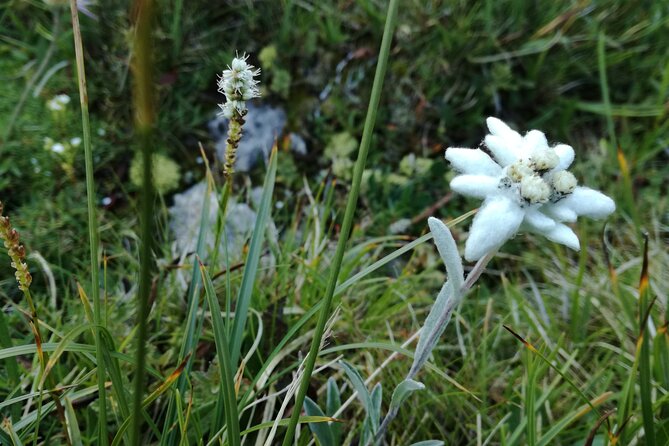
One of the easiest ways to understand South Tyrol is to stand somewhere that forces you to notice borders. Würzjoch is that kind of place, and it’s built into the route for a reason. Standing at a pass at the junction of German and Rhaetian (Ladin) language areas gives the day a subtle but meaningful edge.
That cultural angle pairs well with the way the hike is framed. You’re not only looking outward at cliffs and ridges. You’re also learning how communities sit within these mountain lines. And because the guide tells stories while you’re walking, the information lands more naturally than it would in a lecture-style moment.
Another standout detail from the experience: a traditional shared finish called Marende with South Tyrol delicacies. That kind of simple, local meal is perfect after a mountain day because it’s social and grounded. It also helps the day feel complete, not just “walk, photo, done.”
How hard is it really? Fitness, pacing, and breaks
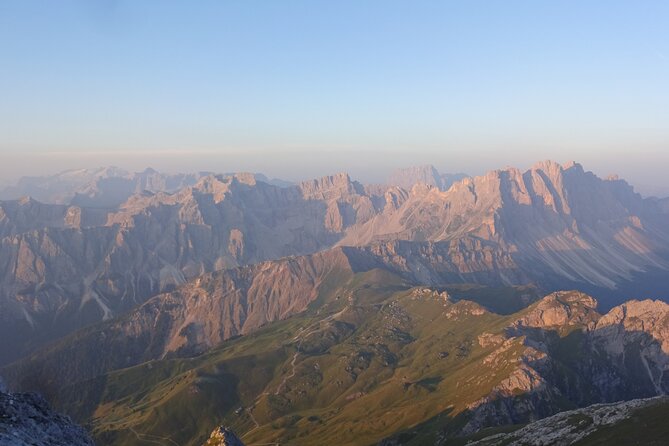
The tour is for people with moderate physical fitness. “Easy to moderate” is usually where most people feel safe—until the altitude and time together surprise them. Here, the duration is about 6 hours, so even a moderate hike can be tiring if you go in unprepared.
Your best strategy is practical: wear comfortable, grippy hiking shoes and plan for steady effort. The guide’s job is pace and flow, and that includes adjusting to you. If you want breaks, you’ll get them. If you want to push a bit, you can talk that through.
I’d also treat this as a day to bring the basics seriously. You’ll be outside for hours, and even when the hike is not described as extreme, you’ll still want a water bottle and a camera ready for fast pull-outs. The experience strongly leans into the photo opportunities, so don’t plan on using your phone alone if you care about quality shots.
Price and value: what $352.68 buys you in the Dolomites
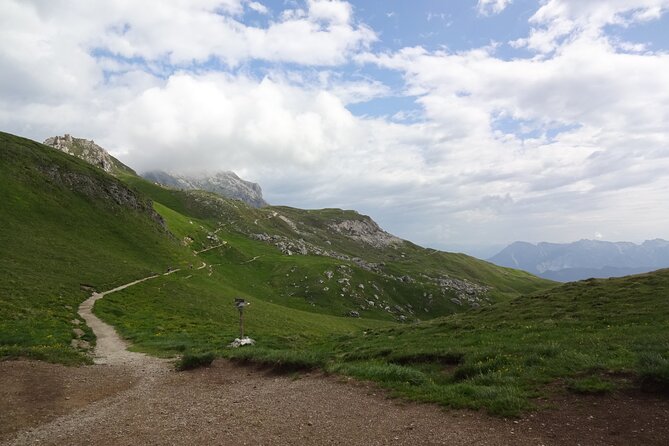
At about $352.68 per person, the first question is whether this is just a guided hike or if you’re paying for convenience and quality. In this case, you’re buying more than “someone who points things out.”
Included items matter:
- Air-conditioned vehicle for the day’s start and movement
- Bottled water to cover one basic need
- All fees and taxes handled
And what’s not included is clear: lunch. That means you should plan to either eat on your own or use the day’s timing to get food at the finish if you choose that option. The presence of the Marende in the experience is a strong hint that there can be a meaningful local food moment at the end, but don’t count on lunch being provided in the standard packaged way—plan for at least one meal on your own.
There’s also the private-group angle. A private tour costs more than a shared-bus hike, but you’re paying for pace control, flexibility to shorten or change, and a guide who can focus fully on your group.
If you’re comparing to DIY, consider what’s hard about the Dolomites day: parking, finding the trail quickly, and timing a route that fits an average fitness level. If you’d rather spend energy on the views instead of route-planning, this price starts to make sense.
Weather and gear: the simple checklist for a smooth day
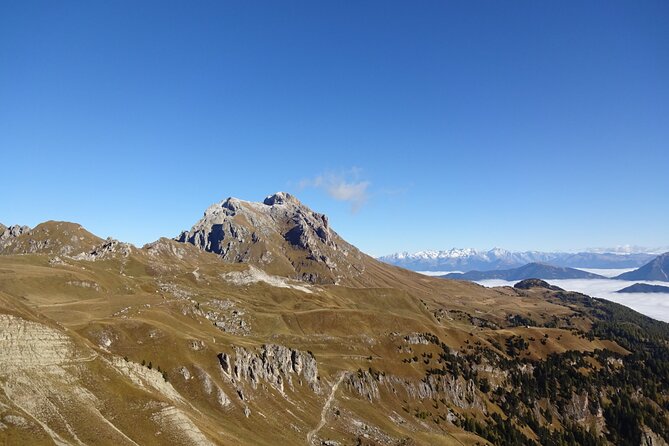
This hike requires good weather. That’s normal for mountain hiking, but it still affects your trip planning. If you’re traveling in shoulder season or you’re flexible with dates, this kind of tour can work well because the provider can offer a different date or a full refund if it’s canceled due to poor weather.
Gear-wise, stay sensible:
- Wear comfortable hiking shoes
- Bring a water bottle (even though bottled water is included)
- Bring a camera if you like photos, because the route is designed for them
If you’re coming from outside South Tyrol and the logistics feel complicated, this tour helps. It’s near public transportation, so you’re not stuck needing a private car just to start.
And if you’re traveling with a companion animal, the experience notes service animals are allowed. That’s one less question to solve on your end.
Should you book this Peitlerkofel Dolomites hike?
Book it if you want a Dolomites hiking day that’s approachable, well-paced, and guided with local stories. This route gives you the kind of mountain variety that makes you feel like you did more than one viewpoint stop—Würzjoch for pass-and-border context, and Peitlerscharte at 2,300 m for a real high point.
Skip it (or pick another option) if you’re very sensitive to schedule changes or you hate weather-related uncertainty. Since the hike requires good conditions, you’ll want to have at least some flexibility in your travel dates.
If your goal is a guided walk that balances effort with big photo views—and you’d like it finished with South Tyrol flavor—this one is a strong choice.
FAQ
How long is the hiking tour?
The tour lasts about 6 hours.
What fitness level do I need?
It’s described as easy to moderate, suitable for people with average to moderate physical fitness.
Where does the tour start and what time does it begin?
The start is in 39042 Brixen, South Tyrol, Italy, with a start time of 8:30 am.
Is pickup available?
Yes. Pickup is possible at Bolzano/Bozen for an extra 120 Euro paid in cash to the guide. Pickup details are based on the meeting points provided.
Is lunch included?
No. Lunch is not included.
What’s included in the price?
Included items are an air-conditioned vehicle, bottled water, and all fees and taxes.
Is this a private tour?
Yes. It’s a private tour/activity, meaning only your group will participate.
What language is the tour offered in?
The tour is offered in English.
What happens if the weather is bad?
The experience requires good weather. If it’s canceled due to poor weather, you’ll be offered a different date or a full refund.
Is there free cancellation?
Yes. You can cancel up to 24 hours in advance for a full refund. If you cancel less than 24 hours before the start time, the amount paid is not refunded.