REVIEW · ATHENS
Ancient Athens E-Bike Tour
Book on Viator →Operated by AyoToursAthens · Bookable on Viator
Standing bikes make Athens feel fast.
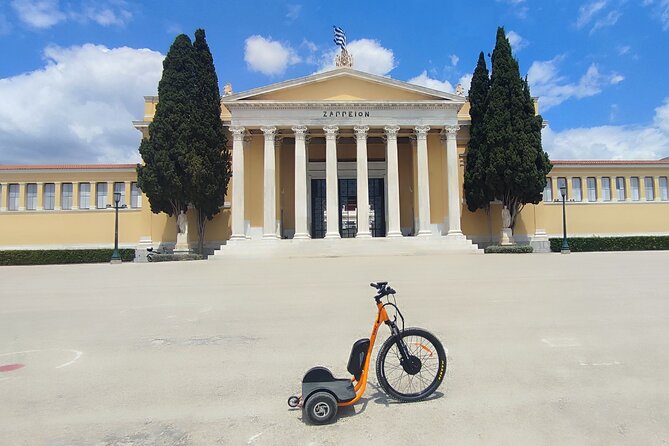
This Ancient Athens E-Bike Tour is a smart way to hit major sites without turning your day into a long slog on foot, and I like how the ride is easy and comfortable—you stand, balance, and glide while the guide handles the pace. You also move through the Acropolis area and central ruins with a small group, which keeps things relaxed and lets you ask questions when something catches your eye.
One thing to plan for: archaeology tickets are extra. The tour price is $72.09, but key stops like the Acropolis area cost separate admission, and the day still runs only as long as the route allows—about two hours—so you’ll want to be ready to move.
In This Review
- Key highlights that make this tour worth your time
- How a standing trikke turns Athens into a quick, fun circuit
- Theatre of Dionysus, Odeon of Herodes Atticus, and the Acropolis close-side views
- Pnyx and the National Observatory: where democracy meets early science
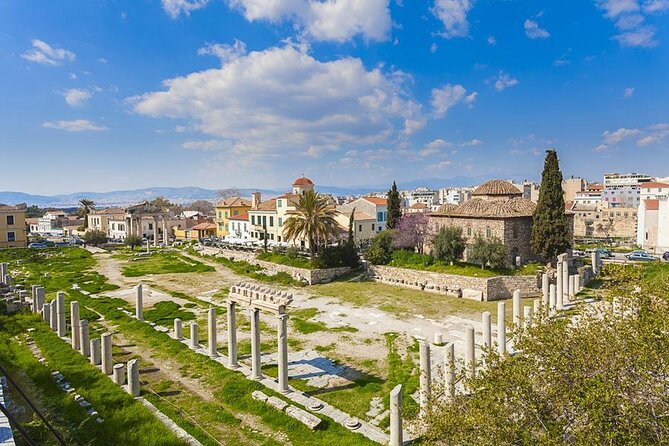
- Ancient Agora, Kerameikos, and the Roman Agora with the Tower of the Winds
- Monastiraki and Plaka: end where Athens still eats, shops, and chats
- Guides make it: how Dimitris and Kevin shape the tour feel
- Tickets, timing, and value: does $72.09 make sense?
- Should you book this Ancient Athens E-Bike Tour?
- FAQ
- How long is the Ancient Athens E-Bike Tour?
- What does the tour price include?
- Are archaeological tickets included in the price?
- What are the main sites visited during the tour?
- How big is the group?
- Where is the meeting point?
- What happens at the end of the tour?
Key highlights that make this tour worth your time
- Standing e-bike / trikke style rides help you cover big distances fast without constant walking
- Acropolis-area viewpoints get you close to the action without spending hours on transit and stairs
- Small group size (max 12) keeps the guide’s attention on your side of the ride
- A clean mix of eras: Classical Greece (Pnyx, Agora) plus Roman landmarks (Roman Agora)
- Easy sightseeing rhythm with short stops and practical guidance on what to look for
- Helmets + costumer insurance are included, so you start with the right safety basics
How a standing trikke turns Athens into a quick, fun circuit
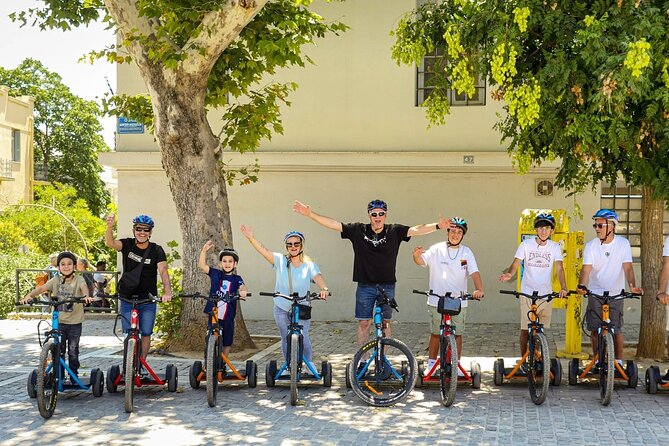
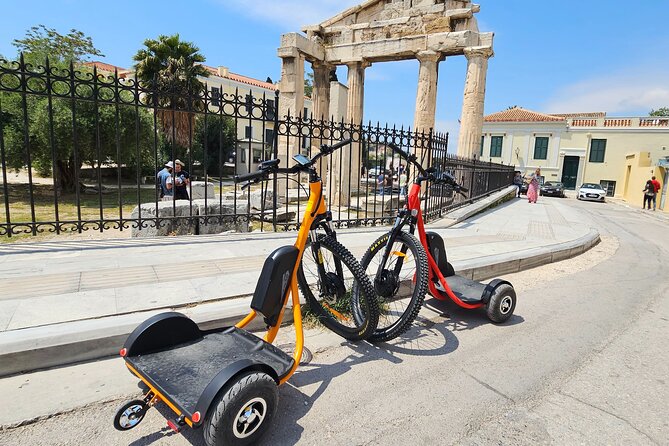
Athens has a special talent for wearing you out. Hills, long distances, and summer heat can make even a short sightseeing day feel like hard work. This tour solves that problem by putting you on a standing, motor-assisted trikke-style e-bike. You’re not pedaling your way up and down curbs. You’re mainly steering, enjoying the scenery, and letting the guide sequence the route.
The result is that you can see more than you’d expect in about two hours, while still having time to stop, look up, and understand what you’re seeing. And because you’re standing (not sitting hunched over), your view stays open. That matters around the Acropolis area, where angles and sightlines are half the story.
Safety is part of the setup too: helmets are included, and there’s insurance coverage listed with the tour. In practical terms, that means you’re not just renting a gadget and hoping for the best.
You can also read our reviews of more tours and experiences in Athens.

Theatre of Dionysus, Odeon of Herodes Atticus, and the Acropolis close-side views
The tour starts by working your way through the Acropolis hillside zone, where Athens’ drama and power show up in stone. You’ll first reach the Theatre of Dionysus, often described as the key theatre space tied to the beginnings of Greek theatre. The admission for this stop is listed as 20€, and it’s also noted that the Acropolis Hill ticket includes the Theatre of Dionysus, so there’s a strong chance you’ll only need to buy one main ticket depending on what you hold.
Next comes the Odeon of Herodes Atticus, a Roman theatre still used for performances today. Expect to see it from the outside and have a guide-led moment to connect the setting to what it was built to remember. Admission is listed as 20€, and again the Acropolis Hill ticket is described as including it, so you can reduce ticket juggling if you plan ahead.
Then it’s time for the big one: the Acropolis. You won’t be wandering the entire complex for hours, but you will get a close-side look that helps you orient yourself—especially if you’re picturing the Parthenon up on top. The Acropolis Hill admission is listed at 20€ and, once you’ve been pointed toward the right angles, you’ll understand why visitors obsess over this specific viewpoint from below.
Practical tip: since these stops are time-boxed (about 10 minutes each here), arrive ready with whatever ticket approach you’re using. If you need to sort phone admissions on the spot, you’ll chew up your time and end up with less time for photos.
Pnyx and the National Observatory: where democracy meets early science

After the theatre-and-Acropolis stretch, the tour shifts gears to ideas—politics and observation.
You’ll stop at Pnyx, described as the place where democracy started. Admission here is listed as free, and you get about 15 minutes. This is one of those stops where a short time can still make a difference, because Pnyx isn’t just a pretty hill. It’s where you can connect the physical space to the concept: gathering, speaking, and civic life.
Then comes the National Observatory of Athens area. This is the first observatory of Athens, and the stop is tied to the hill of Nymphs within an archaeological park setting. Admission is listed as included on the tour, and you’ll get around 15 minutes here. Even if you’re not a science person, it helps to see how the city’s future-minded thinking was rooted in earlier observation and study.
What I like about pairing Pnyx with the observatory stop is that it keeps the tour from feeling like only “look at old buildings.” You’re learning Athens as a place that organized power and knowledge—not just a museum outside your window.
Ancient Agora, Kerameikos, and the Roman Agora with the Tower of the Winds
Now you move from the high-drama civic stage into everyday life: markets, crafts, and public space.
The tour includes Ancient Agora of Athens for about 20 minutes. Admission is listed as 4€. This is where the “ancient Greece” label becomes concrete: the Agora was a major market space, tied to daily movement, debate, and commerce. Even with limited time, the guide-led pacing helps you identify what matters most instead of getting lost in a field of ruins.
Next is Keramikos, the archaeological area connected with ceramics. It’s free, and the stop is about 10 minutes. This is a great palate cleanser after the Agora because it gives you a craft-and-production lens—your brain shifts from politics to making things.
Then you reach the Roman Agora, built by the Romans in the 2nd century A.D. Admission is listed as free, and you’ll get about 10 minutes. The key feature called out here is the Tower of the Winds, a structure that adds a different flavor to the Roman period—public information, weather, and time all wrapped into one recognizable landmark.
If you want one takeaway from this middle stretch: Athens wasn’t only philosophers and temples. It was people building goods, trading, moving through shared spaces, and using monuments for practical public life.
Monastiraki and Plaka: end where Athens still eats, shops, and chats
You finish in the city’s lived-in heart—places that feel less like a ruin visit and more like a real neighborhood afternoon.
First is Monastiraki, described as the second most crowded square in Athens and considered the heart of the city for restaurants and bar options. Admission is listed as included and the stop runs about 10 minutes. This is a useful stop because it helps you connect the archaeological Athens you just saw with the modern Athens you’ll actually walk through afterward.
Then it’s Plaka, the traditional neighborhood set up like a picture-postcard of old Athens—described as looking like a Greek island. Admission is listed as free, about 10 minutes. You’ll get enough time to enjoy the streets and start planning your next steps.
Smart move: decide what you want from dinner before the ride ends. With Monastiraki and Plaka right there, it’s easy to turn the tour into a smooth lead-in to your evening meal.





Guides make it: how Dimitris and Kevin shape the tour feel
This tour isn’t only about the sights. It’s about what the guide helps you notice.
Dimitris is mentioned as a standout guide, with an emphasis on making people comfortable and steering you toward the right viewpoints. He’s also described as personal in style—more like a helpful acquaintance than a distant instructor. One of the best benefits is the way the guide adjusts if you’ve already seen certain areas, so you don’t feel like you’re being herded through a script.
Kevin is also named as a guide in glowing feedback, with the comment that the tour delivers a mix of history plus practical, up-to-date local insights you’re unlikely to find in a guidebook. The point isn’t to memorize dates. The point is to leave with mental anchors: where things were, why they mattered, and how to recognize the next thing you encounter on your own.
That’s also why the short stop times work. A guide who can explain the significance quickly keeps you from wasting those 10 to 20 minutes just trying to figure out what you’re looking at.
Tickets, timing, and value: does $72.09 make sense?

The base tour price is $72.09 per person, for about two hours. You’ll have a maximum group size of 12 travelers, and you’ll get the gear basics: helmet and use of trikke, plus listed insurance coverage. Mobile ticket delivery is included, and the tour is offered in English.
Now for the part that affects real value: admission tickets for archaeological sites are not included.
Here’s the practical way to think about it:
- Acropolis Hill ticket: 20€
This is the big one, and the description notes it includes both Theatre of Dionysus and Odeon of Herodes Atticus.
- Ancient Agora: 4€
This one is small but worth budgeting for.
- Free stops are listed for Pnyx, Keramikos, Roman Agora, and Plaka.
- Included admission is listed for National Observatory of Athens and Monastiraki.
So if you buy the Acropolis Hill ticket (20€) and then add Ancient Agora (4€), you’re budgeting about 24€ in extra admissions—based on the prices given. In plain terms, the tour fee buys you the ride, the guidance, the pacing, and the ability to hit multiple zones without doing it as separate taxi-and-walk marathons.
You’ll also want to remember a reality check: the tour is short. If your goal is deep time inside museums or lingering for long photo sessions at every stop, you’ll likely want to pair this with extra independent time. The tour works best as a high-impact overview that gives you direction.
Should you book this Ancient Athens E-Bike Tour?
Book it if you want an efficient, guided way to connect major Athens highlights in about two hours, especially if heat or steep walking routes would slow you down. The standing trikke format is the real “value multiplier,” letting you see the Acropolis area, Agora zones, and classic neighborhoods without turning the day into a grind.
Skip it (or plan extra time) if you’re looking for long, slow visits or you don’t want to handle paid admissions on top of the tour price. The route is built for movement and interpretation, not for museum-style staying power.
If you’re the type who likes to get your bearings fast—then wander on your own after—this is one of the easiest ways to do that in central Athens.
FAQ
How long is the Ancient Athens E-Bike Tour?
It runs for about 2 hours.
What does the tour price include?
The tour includes use of trikke (standing e-bike), helmet, and costumer insurance. You also receive a mobile ticket, and it’s offered in English.
Are archaeological tickets included in the price?
No. Tickets to the archaeological areas are not included.
What are the main sites visited during the tour?
You’ll stop at highlights including the Theatre of Dionysus, Odeon of Herodes Atticus, the Acropolis, Pnyx, the National Observatory area, the Ancient Agora, Keramikos, Monastiraki, Roman Agora (with the Tower of the Winds mentioned), and Plaka.
How big is the group?
The tour has a maximum size of 12 travelers.
Where is the meeting point?
The meeting point is Leof. Andrea Siggrou 22, Athina 117 42, Greece.
What happens at the end of the tour?
The activity ends back at the meeting point.
If you want, tell me your travel month and whether you plan to visit the Acropolis complex separately—I can help you estimate the most sensible ticket plan for this route and your extra time.