REVIEW · PRAGUE
World War II History Tour of Prague’s Old Town
Book on GetYourGuide →Operated by Rosotravel - Czech · Bookable on GetYourGuide
Prague looks the same; the past doesn’t. This private WWII walk through Prague’s Old Town gives you the Czech perspective on German occupation, with a History Expert-Guide who makes the story click street by street. I especially liked how the tour links famous sights to the war’s real mechanics—deportations, resistance work, and what changed in 1945.
Two standout parts for me: the Josefov stop in the Old Jewish Quarter, where you see synagogues tied to Nazi plans for Jewish cultural objects, and the Old Town Square segment that shows the physical scars of the May 1945 Prague Uprising. One consideration: this is heavy material, including the Holocaust and details about resistance interrogations and torture, so go in ready for dark history, not casual sightseeing.
In This Review
- Key highlights you’ll care about
- WWII Prague, told from the street-level “Czech perspective”
- Where you start: Nám. Franze Kafky and a smart first orientation
- Josefov in 1941: the Old Jewish Quarter, Maisel Synagogue, Spanish Synagogue
- Old Town Square landmarks with May 1945 meaning
- Petschek Palace and the Gestapo: resistance work, interrogations, torture
- Wenceslas Square: mass demonstrations and a change in meaning
- What the 4-hour option adds: Heydrich Terror Memorial in the crypt
- Price and value: is $104 per person worth it?
- Who should book this WWII Old Town tour (and who should pass)
- A quick word on pacing, attention, and your best way to prepare
- Should you book this Prague Old Town WWII history tour?
- FAQ
- Where is the meeting point?
- How long is the tour?
- What’s included in the basic 2-hour option?
- Is the Heydrich Terror Memorial included?
- Is the tour private?
- What languages are available for the live guide?
- Is the tour wheelchair accessible?
- Is free cancellation available?
- Is there a reserve now, pay later option?
Key highlights you’ll care about
- Josefov, explained through 1941 deportations: how Nazi policies emptied the area and reshaped Jewish life.
- Maisel and Spanish Synagogues, with a Nazi cultural-looting plan: valuable Jewish objects stored with the intent to display them in a Nazi museum concept.
- Old Town Square, with uprising damage you can still see: the Old Town Hall facade suffered heavy damage, while the Astronomical Clock survived.
- Petschek Palace as a Gestapo headquarters site: plus a memorial plaque honoring Czech resistance efforts.
- Wenceslas Square’s Nazi mass demonstration use: a stark change in meaning from what you might expect today.
- 4-hour upgrade to the Heydrich Terror Memorial crypt: the last hideout of seven SOE-trained Czechoslovak agents connected to Operation Anthropoid and Reinhard Heydrich.
WWII Prague, told from the street-level “Czech perspective”

There are lots of ways to study World War II in Prague. This one focuses on the parts of the city where the war isn’t a chapter in a book—it’s built into the streets, buildings, and monuments. You’re not just looking at pretty facades. You’re learning how Prague worked under occupation and why Czech resistance took the risks it did.
The Czech perspective matters. It keeps the story grounded in what Prague civilians endured and what local resistance attempted, including the pressure points that made the Nazi occupation brutal and personal. And because the tour is led by a WWII History Expert-Guide fluent in your chosen language, you’re not stuck with vague talking points or scripted museum vibes.
You’ll also get a clear arc: Adolf Hitler’s visit to Prague, the shadow of the “Butcher of Prague” (Reinhard Heydrich), Operation Anthropoid, the bombing of Prague, and the 1945 uprising. That sequencing helps. By the time you stand in the Old Town Square, the meaning of the damage and the urgency of 1945 makes much more sense.
You can also read our reviews of more tours and experiences in Prague.

Where you start: Nám. Franze Kafky and a smart first orientation
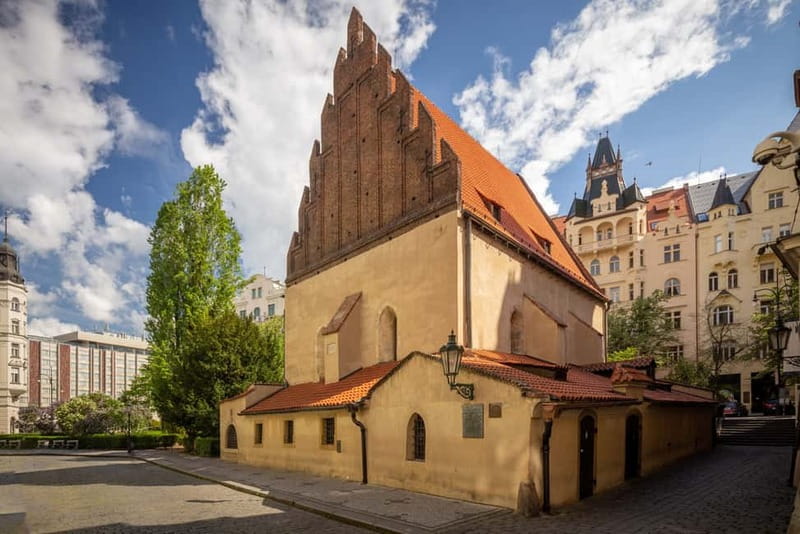
You meet at in front of the World of Franz Kafka, Nám. Franze Kafky 16/1, in Staré Město. Starting here is practical: it puts you in the historic center fast, and you begin the walk with the Old Town context you’ll need for everything that follows.
Since it’s a private group format, you’re not being herded with dozens of strangers at a slow pace. That matters for a history tour. When the guide explains something like Nazi administration in Prague or the logistics of deportations, the ability to ask a question without yelling is a real quality-of-life upgrade.
Timing is flexible. You’re looking at 2 hours for the Old Jewish Quarter + Old Town segment, or up to 4 hours if you add the Heydrich Terror Memorial. That choice is a big deal because the memorial visit adds more than time—it adds one of the most dramatic “place-based” parts of the whole story.
Josefov in 1941: the Old Jewish Quarter, Maisel Synagogue, Spanish Synagogue
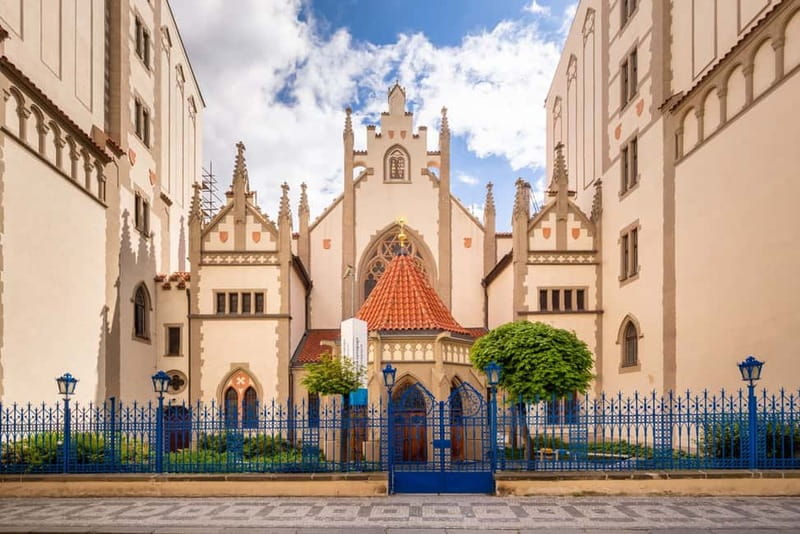
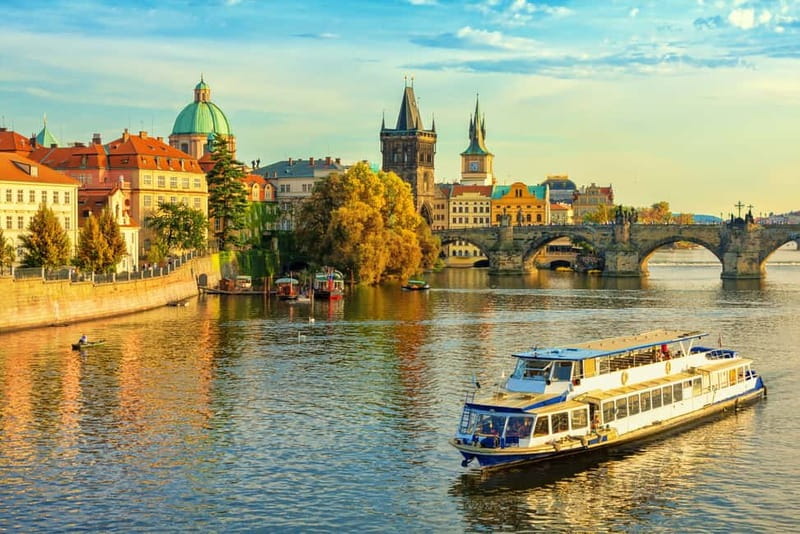
Your walk begins in Josefov, the Old Jewish Quarter. This is where the tour sets a grim baseline for Nazi rule in Prague. You’ll hear how Josefov became a particular focus for the Nazi regime, and how the neighborhood was deserted in 1941 when transport of Czech Jews to Theresienstadt concentration camp began.
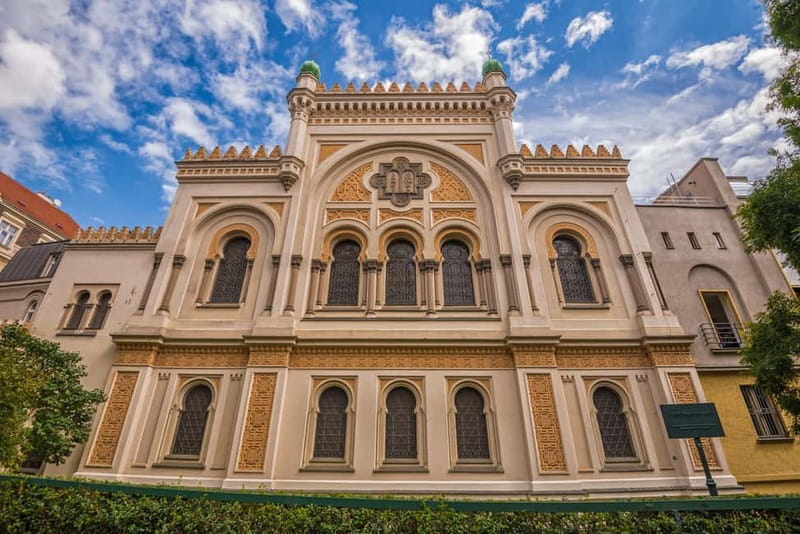
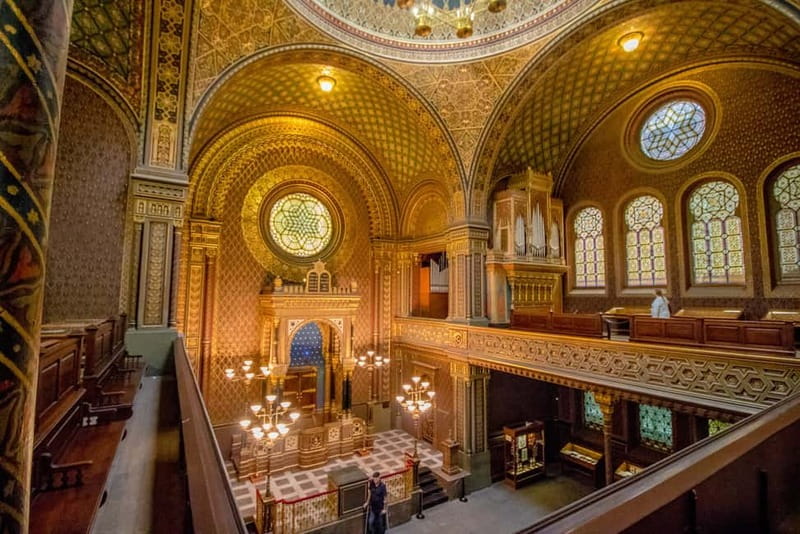
Then you move into the synagogue story. The guide takes you to the Maisel Synagogue and the Spanish Synagogue. The key point isn’t just architectural. It’s what happened to Jewish cultural life and belongings under occupation.
One detail that really changed how I understood these buildings: some valuable Jewish objects stored in these synagogues were intended for the Nazi idea of a “museum of the extinct race.” In other words, this wasn’t just theft. It was propaganda and control—an attempt to sanitize genocide into spectacle. When you’re standing there, you can feel how carefully the Nazis tried to manage narrative, not just people.
Practical takeaway: if you want context before you see the synagogues, let the guide do the explaining first and don’t rush through photos. Photos are fine, but the emotional weight of what you’re learning deserves a slower moment.
Old Town Square landmarks with May 1945 meaning
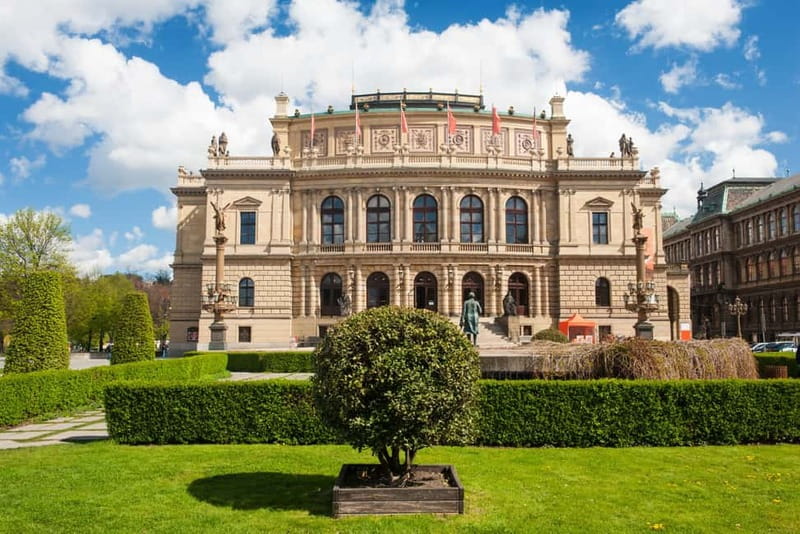
Next comes the Old Town Square area, where the tour connects major landmarks to the violence of the Prague uprising in May 1945. You’ll see the Church of St Nicholas, the Kinsky Palace, and the Church of Our Lady before Týn.
What makes this section worth your time is that you’re not treating these buildings like postcard targets. You’re learning how the uprising affected specific structures and why the aftermath still shows.
A strong highlight here: the Old Town Hall facade, which suffered heavy damage during the uprising. That kind of damage is the city’s receipt—proof that the fighting happened in real, close quarters, not off in the distance. And then there’s the contrast: the famous Astronomical Clock survived. That survival becomes symbolic in a way that’s hard to get from a standard walking tour.
If you like history that mixes visible evidence with narrative, this is one of the tour’s best stretches. You’ll look at the square and feel how the war changed the everyday cityscape.
Petschek Palace and the Gestapo: resistance work, interrogations, torture
From Old Town Square, the tour leads you toward the Petschek Palace, described as the former seat of the Gestapo headquarters. This is where the story turns from “occupation” into “system.”
You’ll also spot a memorial plaque on the corner of the building dedicated to the Czech resistance. That plaque is a quiet but important anchor: it keeps the tour from becoming only a list of Nazi actions. The guide connects Nazi power with the resistance’s efforts—offensive actions, interrogations, and torture.
This part can be emotionally tough. The guide’s job here is to explain the mechanisms: how terror was used, why interrogation mattered, and how resistance networks tried to keep functioning under pressure. You’ll likely leave with sharper awareness that resistance wasn’t a romantic movie concept—it was people making decisions inside a terrifying apparatus.
Practical tip: if you have any triggers, tell yourself where you are emotionally before this segment. Take a breath. You’re doing the tour for understanding, not as background noise.
Wenceslas Square: mass demonstrations and a change in meaning

The tour ends in Wenceslas Square, a place that many visitors know for shopping and grandeur. Here, you’ll learn about how the Nazis used it for mass demonstrations.
That detail changes the way you see the square. Even without the same crowds and banners, the space reads differently once you understand what it was used for. I like this ending because it doesn’t end the story with liberation-only feelings. It lands on the reality of how power staged itself in public space.
If you plan to wander afterward, do it with intent. Spend a few minutes observing how wide sightlines and open space can support public events—good or bad. That’s the kind of subtle lens you’ll carry from this tour.
What the 4-hour option adds: Heydrich Terror Memorial in the crypt
If you choose the 4-hour option, you add the National Memorial to the Heroes of the Heydrich Terror. The memorial is located in the underground crypt of the Cathedral of Saints Cyril and Methodius.
This is one of those places where the setting matters. The tour explains that this was the last hideout of seven SOE-trained Czechoslovakian agents involved in the assassination of high-ranking German SS and police official Reinhard Heydrich.
That connects directly to the tour’s broader themes. You already hear about Heydrich as the “Butcher of Prague,” and about Operation Anthropoid. The memorial visit turns those names into a specific location tied to a specific action and the consequences that followed.
It also helps you understand why the “Heydrich Terror” period mattered so much. This wasn’t only about one assassination. It was what the Nazis did afterward—retaliation, fear, and a tightening grip on daily life.
Practical takeaway: If you’re deciding between 2 hours and 4 hours, pick 4 hours if you want the story to finish with the action-and-repercussion side. The extra time gives you a stronger ending than just stopping at the Old Town and Wenceslas Square.
Price and value: is $104 per person worth it?
At $104 per person for a 2–4 hour private tour, the price isn’t “cheap.” But it also isn’t random. You’re paying for three things that add value fast:
- A WWII History Expert-Guide (with language options), which saves you from stitching context together on your own.
- A route that stacks high-impact sites: Josefov synagogues tied to Nazi cultural plunder, Old Town Square damage from the uprising, Gestapo headquarters at Petschek Palace, and Wenceslas Square’s Nazi public use.
- Optional inclusion of the Heydrich Terror Memorial for the 4-hour option, which is a specific, meaningful stop in a crypt hideout site.
If you’re the type of traveler who likes to understand what you’re looking at before you take pictures, you’ll get more than “sightseeing.” You’ll get a structured story across multiple locations.
If you’re budget-focused and only want quick exterior highlights, you might feel the cost more. But if you want context with a guide, especially with a private group setup, the value is pretty solid for the time you’re investing.
Who should book this WWII Old Town tour (and who should pass)
This tour is a strong fit if:
- you like history that connects buildings to real events
- you want the story told in a Czech perspective
- you’re okay with heavy topics like the Holocaust, terror, and interrogations
- you want a guide who can answer questions in English, Spanish, Russian, Italian, French, Czech, Polish, or German
It might not be for you if:
- you’re looking for a light, mostly visual walk
- you get overwhelmed easily by discussion of genocide and torture
- you prefer a purely celebratory liberation narrative without the darker occupation details
A small note from my own travel style: I think you’ll enjoy this more if you go in with curiosity and patience. Let the guide set the tone. Then let the city speak through what’s still standing.
A quick word on pacing, attention, and your best way to prepare
Because it’s focused and time-bounded, you’ll get better value if you show up ready to listen. Take 30 seconds at the start to decide what you want most: synagogues and Holocaust context, the uprising scars, or the Heydrich assassination aftermath.
Also, bring comfortable shoes. You’re walking an Old Town loop and likely standing for explanations at several key stops. For a tour with deep subject matter, it’s the practical stuff that keeps you from missing the important stuff.
One improvement I wish existed: more explicit lunch help. The tour is intense enough that I’d appreciate a simple, realistic suggestion for food nearby so you don’t have to hunt afterward while your brain is still in 1945.
Should you book this Prague Old Town WWII history tour?
I’d book it if you want a well-structured, guide-led WWII route that treats the city like evidence, not decoration. The biggest reasons: you’ll get Josefov’s deportation story, Old Town Square’s uprising physical scars, and the Gestapo–resistance connection at Petschek Palace. Add the 4-hour memorial if you want the Heydrich Terror chapter to land with maximum clarity.
I wouldn’t book it if you want a relaxed “see the sights” stroll. This is purposeful and heavy. When you’re in the right mindset, it’s also deeply satisfying—because you leave knowing more than where things are. You leave understanding why the places matter.
FAQ
Where is the meeting point?
Meet your guide in front of the World of Franz Kafka, Nám. Franze Kafky 16/1, 110 00 Staré Město, Czechia.
How long is the tour?
It runs for 2 to 4 hours, depending on the option you choose.
What’s included in the basic 2-hour option?
The 2-hour option includes the walking tour through Josefov and the Old Town Square segment. The Heydrich Terror Memorial visit is not included in the basic 2-hour option.
Is the Heydrich Terror Memorial included?
It’s included with the 4-hour option only, at the National Memorial to the Heroes of the Heydrich Terror in the underground crypt of the Cathedral of Saints Cyril and Methodius.
Is the tour private?
Yes. It’s a private group experience.
What languages are available for the live guide?
The tour offers live guidance in English, Spanish, Russian, Italian, French, Czech, Polish, and German.
Is the tour wheelchair accessible?
Yes, it’s listed as wheelchair accessible.
Is free cancellation available?
Yes. You can cancel up to 24 hours in advance for a full refund.
Is there a reserve now, pay later option?
Yes. You can reserve now and pay later, so you do not pay anything today.