REVIEW · BOGOTA
Historical tour Bogota
Book on Viator →Operated by Free Tour Bogota - Agencia de viajes Oaca Colombia · Bookable on Viator
Bogotá makes more sense when you walk it. This 3-hour history tour strings together the city’s big turning points, from early foundations to the Bogotazo, while you move through La Candelaria’s key streets. I especially like how the stories stay practical and human, with frequent nods to real people and culture—think Fernando Botero and Gabriel García Márquez—plus clear guidance from pros like Paula and Jennifer.
Two things I really like: the route covers the main landmarks without feeling like a checklist, and the pace is easy enough to keep up even with frequent photo stops. One drawback to plan for: you’re on foot for about three hours, so bring shoes you trust and use an umbrella since bad weather won’t cancel the walk.
You’ll also end with useful real-life recommendations for what to do next in the center, which turns a history lesson into an actual trip plan. With a maximum of 30 people and a group-friendly vibe, it’s a smart way to get your bearings in Bogotá quickly.
Key highlights worth prioritizing
- La Candelaria focus with a route through plazas and cultural blocks that show how the city grew
- Plaza de Bolívar + Teatro Colón connections that anchor Bogotá’s origin story and independence-era context
- Botero and cultural art references explained as you pass by the Banco de la República museum area
- Chicha stories at Chorro del Quevedo and La Concordia—history with a snackable theme
- Monserrate viewpoints and García Márquez meeting references to connect geography with literature
- Bogotazo and Jorge Eliecer Gaitán handled as a clear, national turning point—not a confusing lecture
In This Review
- A 3-hour Bogotá history walk that actually helps you navigate
- Price and value: $19.77 for a guided route through major anchors
- Start at Plaza de Bolívar: where the city’s story comes into focus
- Teatro Colón and Bolívar’s connection: architecture with a political backstory
- Banco de la República area and the Botero thread through La Candelaria
- Chorro del Quevedo and La Concordia: chicha, legends, and neighborhood texture
- Eje Ambiental viewpoints: Monserrate and García Márquez meeting spots
- Jorge Eliecer Gaitán and the Bogotazo: modern Colombia explained plainly
- Ending at Plazoleta del Rosario: emerald market energy and next-step recommendations
- How to make the most of it (and not freeze your brain)
- Who should book this Bogotá historical tour
- Should you book this tour?
- FAQ
- What is the duration of the Historical Tour Bogota?
- Where does the tour start and end?
- What areas does the tour cover?
- Is it a free tour, and what’s the price?
- Are there admission tickets or entry fees included?
- What should I bring for the weather?
- How big is the group?
- Is there a mobile ticket?
- Can I get a full refund if I change my plans?
A 3-hour Bogotá history walk that actually helps you navigate
This is the kind of tour I recommend for the first day or two in Bogotá, when you’re still trying to understand the map in your head. You’ll move through the historic center on foot with a guide, covering a sequence of landmarks that explain how Bogotá became what it is today. And because the group stays small (up to 30), the flow feels friendly instead of crowded.
The sweet spot here is that the tour mixes “what happened” with “why it matters.” You don’t just hear dates—you get connected stories about colonization, independence, and national conflict, plus cultural touches like gastronomy, architecture, and day-to-day life in Bogotá. It’s also designed to be roughly three hours, which fits neatly between other sightseeing plans.
One extra practical note: the tour won’t be canceled due to bad weather, so you’re walking through whatever Bogotá sends your way. Plan on wet streets, cool air, or sudden sprinkles—an umbrella is the easy fix.
Price and value: $19.77 for a guided route through major anchors
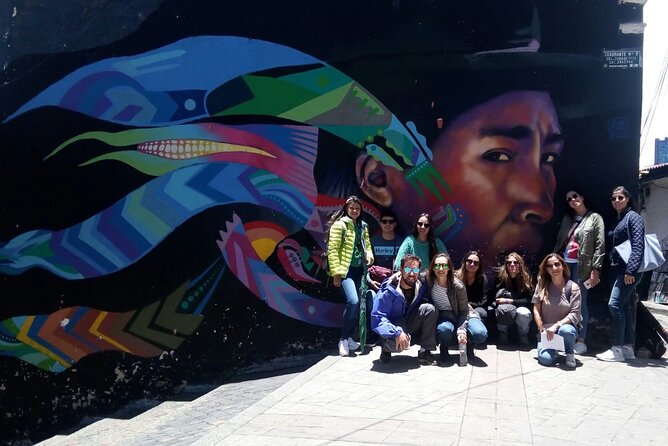
At about $19.77 per person, this tour sits in the “small price, big orientation” category. You’re paying for a guide plus a structured walk through the center’s most important public spaces—exactly the stuff that’s easy to miss or misread if you go on your own.
Also, many of the major stops are free to access as viewing points. That means your money goes mostly to interpretation: the guide turns plazas, streets, and famous buildings into a storyline you can remember. For me, that’s where value lives—when someone helps you see what you’d otherwise just pass by.
There’s also a mobile ticket involved, which simplifies check-in. And there are group discounts, which matters if you’re traveling with friends or family and want the whole crew to share the same plan.
Start at Plaza de Bolívar: where the city’s story comes into focus
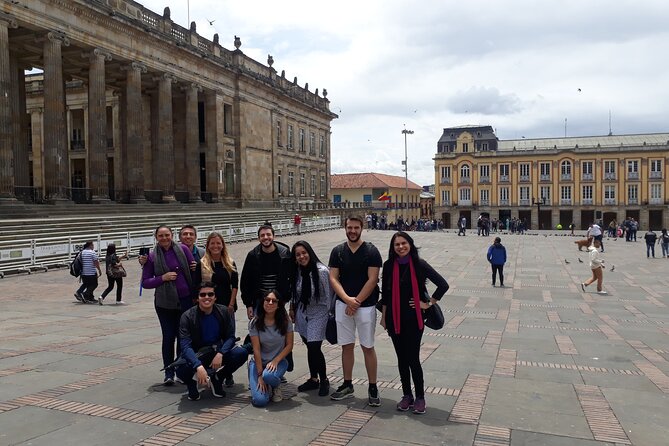
You’ll begin at Plaza de Bolívar de Bogotá, the major civic heart of the historic center. This is where the tour sets the tone: Bogotá’s beginnings, the importance of the surrounding buildings, and the idea that this place has been used to stage the country’s political and cultural life for a long time.
What I like about starting here is that it gives you context fast. Even if you don’t know Colombian history yet, you’ll start recognizing why this area is treated like the center of the center—both literally and emotionally. You’ll also get your bearings for the walk, since nearby landmarks start to make visual sense as you go.
At this stop, plan to look around slowly. It’s a quick segment (about 30 minutes), but it’s one of those spaces where the more you observe, the more your brain links future stops together.
Teatro Colón and Bolívar’s connection: architecture with a political backstory
Next up is Teatro Colón Bogotá, a stop that’s short but meaningful. You get to see one of the city’s notable architectural highlights, and the guide explains its link to Simón Bolívar—specifically, that it was the place where Bolívar lived.
This is a good example of why I think guided walking tours beat aimless wandering. A building like Teatro Colón can look impressive even without context, but with the Bolívar connection, it becomes part of the country’s independence-era story. Instead of just admiring the facade, you start to understand why people care.
You’ll spend about 15 minutes here. If you’re taking photos, do it early, then use the guide’s explanation to decide what parts of the building you actually want to remember.
Banco de la República area and the Botero thread through La Candelaria
You’ll then head toward the Museos del Banco de la República area and the cultural-block feel of La Candelaria. You’re learning from the street scene too—what the neighborhood represents, and why it matters in the larger Bogotá picture.
This stop includes a Botero thread. The guide talks about Fernando Botero’s life and ties that cultural reference back to the city you’re walking through. Even if you’re not a big museum person, this is useful because it connects Bogotá’s art world to the places where it lives in everyday life.
It’s also quick (around 15 minutes) and largely exterior-focused. That makes it perfect when you want cultural context without losing too much time in a long museum queue.
Chorro del Quevedo and La Concordia: chicha, legends, and neighborhood texture
Then the tour leans into street-level Bogotá: Plaza del Chorro del Quevedo. This is tied to Bogotá’s foundation story, and you’ll learn about its importance. You’ll also hear the history behind chicha in a pretty memorable way—why it was prohibited.
This is one of those “history you can taste” moments. Even if you don’t buy anything, the story changes how you see food and drink in the city. Chicha becomes more than a beverage—it becomes a lens on social life, tradition, and control.
From there you’ll go to Plaza De Mercado La Concordia, where the tour turns more practical. The market square is set up so you can try the traditional drink (chicha), sample typical Colombian juices, or browse for small souvenirs. If you want a low-effort snack break that doesn’t break the tour rhythm, this is the stop for it.
You’ll spend about 20 minutes at each of these plaza/market segments. The trade-off is that you have limited time inside stalls, so don’t plan a full shopping session. Plan on sampling, asking questions, and moving on.
Eje Ambiental viewpoints: Monserrate and García Márquez meeting spots
At Eje Ambiental, you’ll get a nice view toward Monserrate and learn how to get to this famous hill. That view isn’t just scenery—it’s a way to understand Bogotá’s geography and why Monserrate matters in daily life and tourism.
This stop also includes a literature connection. You’ll learn about the square where Gabriel García Márquez used to go for social meetings. It’s a fun contrast: you’re standing in real public space while connecting it to one of Colombia’s most famous writers.
It’s about 15 minutes. Take that time to look around and spot orientation cues. Later, when you plan your own Monserrate trip, you’ll already have a mental map of where the hill sits in relation to where you are.
Jorge Eliecer Gaitán and the Bogotazo: modern Colombia explained plainly
The tour continues to the Jorge Eliecer Gaitán Monument, where the guide explains who Gaitán was and why he mattered so much to Colombia. This is also where you’ll get the story of the Bogotazo and what it connects to in Colombia’s broader history of violence.
This kind of content needs clarity, not drama. What I like about a stop like this on foot is that the guide can point to real-world space and keep the story grounded. Instead of memorizing events, you understand why people later talk about these moments as turning points.
You’ll spend around 20 minutes here. If the topic feels heavy, that’s normal—just keep listening for the guide’s theme: how one political moment can ripple through society.
Ending at Plazoleta del Rosario: emerald market energy and next-step recommendations
The final stop is Plazoleta del Rosario, known for its emerald market atmosphere. It’s another place where the tour shifts from pure history into what you can do next.
You’ll learn about what the market is known for, and you might see the informal stone-style trading around you. Then the tour closes with practical recommendations for your stay in Bogotá—especially which restaurants to visit.
This is a smart finale. Walking tours sometimes end with a vague goodbye. Here, you end with targeted ideas that match what you just learned about the city’s center—so you’re more likely to choose wisely for food and exploration.
With the tour ending there, you’ll also be in a convenient zone for continuing on your own.
How to make the most of it (and not freeze your brain)
A good tour is like good coffee: it helps, but you still need to play your part. Here’s how to get more from this walk:
First, arrive ready to ask questions. Guides often move faster when the group is quiet, so being engaged helps you catch details. In this tour style, the best moments tend to come when you ask about how the past shows up in today’s streets.
Second, keep an eye on photos and pauses. One review highlighted that a guide used pictures to explain historic data, which is exactly how you should learn on a walking tour—visual cues stick better when you can point at the building you’re hearing about.
Third, dress for movement and weather. You’re walking about three hours, and the route runs through open-air plazas. The tour recommends bringing an umbrella because it won’t cancel due to bad weather—so treat that like a default plan, not a maybe.
Finally, use the final recommendations as a mini itinerary. Your guide sees what you’re interested in, and you’re standing where locals and visitors mingle. That’s when you can ask for restaurant areas that match your preferences.
Who should book this Bogotá historical tour
I think this tour is a great fit if you:
- Want a fast, guided introduction to Bogotá’s historic center and La Candelaria area
- Like history that connects politics to everyday culture (art, gastronomy, architecture)
- Appreciate a structured walking route with major landmarks instead of a self-made plan
- Prefer a small-group feel (up to 30 people)
- Travel with moderate physical fitness and comfortable walking shoes
It’s also useful if you’re unsure how to build the rest of your Bogotá days. The end includes restaurant guidance, plus you’ll learn how to approach key areas like Monserrate from a local perspective.
Should you book this tour?
If you’re spending limited time in Bogotá, I’d book it. The value isn’t just the low price—it’s the fact that you get guided context across multiple major plazas and cultural touchpoints in one go. You leave with a clearer mental map of where Bogotá started, what shaped it, and why the center looks the way it does.
I’d hold off only if you hate walking for three hours, don’t want to touch heavy historical topics like the Bogotazo and violence, or you already know the city’s basics and prefer very specialized museum time. For most first-timers, though, this is a solid “get oriented and understand the city” move.
FAQ
What is the duration of the Historical Tour Bogota?
The tour lasts about 3 hours.
Where does the tour start and end?
It starts at Cra. 7 #11-10 in La Candelaria, Bogotá, and ends at Av Jimenez de Quesada #6-71 in La Candelaria, finishing at Rosario Square.
What areas does the tour cover?
You’ll walk through the streets and stops in the historic center, including Candelaria, La Concordia, and Las Aguas.
Is it a free tour, and what’s the price?
The price is listed as $19.77 per person, and it’s described as an essential historical introduction with a guide and free viewing at the stops.
Are there admission tickets or entry fees included?
The stops listed show free admission for the viewpoints/buildings on the route, and the tour includes the guide and the guided route.
What should I bring for the weather?
Bring an umbrella, since the tour won’t be canceled due to bad weather.
How big is the group?
The tour has a maximum of 30 travelers.
Is there a mobile ticket?
Yes, the experience includes a mobile ticket.
Can I get a full refund if I change my plans?
Free cancellation is available up to 24 hours in advance of the experience start time for a full refund.