REVIEW · BEIJING
Great Wall of China at Mutianyu plus Ancient City Wall of Beijing
Book on Viator →Operated by Wikibeijing · Bookable on Viator
Two walls, one unforgettable day. I like the private guide setup, which keeps the pace flexible, and I like that entrance fees are included, so you can spend the day focused on the sights instead of ticket math.
You also get free hotel pickup and drop-off, plus a mobile ticket, which makes this feel smooth from start to finish.
It’s a full-day outing starting with a 7am meeting at your hotel, so plan an early night if you want your energy for the wall.
In This Review
- Quick highlights
- Mutianyu at 7am: why this timing and private guide matter
- Cable car round-trip: more time on stone, less time on logistics
- What 2 hours on Mutianyu really feels like
- Ming City Wall Ruins Park: a calmer follow-up with standout details
- The Southeast Corner Watchtower and its arrow-tower footprint
- Lunch and entrance fees included: how this tour protects your budget
- From one wall to another: how these two sites connect
- A note on guides: what to look for in your day
- Practical tips to make the day easier
- Price and logistics: who this is best for
- Should you book the Mutianyu + Ming City Wall Ruins Park tour?
- FAQ
- What time do I need to meet the guide?
- Is this a private tour?
- Do entrance fees and lunch come included?
- How do I get to the Great Wall section at Mutianyu?
- What can I expect at the Ming City Wall Ruins Park?
- Do I need to bring a passport?
- What is the cancellation policy?
Quick highlights
- Mutianyu Great Wall with cable car round-trip, saving time for the actual hike
- All entrance fees included, so the day stays financially predictable
- A Ming-era city wall stop that’s less famous than the Great Wall but packed with details
- A restored 2-kilometer section of wall plus watchtower views and exhibits
- Chance for quieter moments, especially compared with the wall’s busiest areas
Mutianyu at 7am: why this timing and private guide matter
The day starts early for a reason: Mutianyu is one of the most popular Great Wall sections around Beijing. Going at 7:00am means you’re less likely to arrive when tour buses are already flooding the entrances. You also get time to enjoy the wall itself, not just stand in line and shuffle forward with the crowd.
What I like most about the private format is that the schedule is still structured, but you’re not stuck waiting for a big group. You’ll meet your guide in your hotel lobby at 7am, then head out toward Mutianyu together. If you want slower photo stops or you want to keep moving, a good guide can help you find that balance.
The guide also helps you notice what you’d otherwise miss. Great Wall history can feel like a blur of dates, but here you’ll connect the dots: Mutianyu’s wall sits on earlier foundations from the Northern Qi era, then was built and restored during the Ming Dynasty (1368–1644).
You can also read our reviews of more tours and experiences in Beijing.
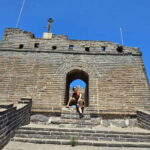


Cable car round-trip: more time on stone, less time on logistics
Mutianyu is steep in places, and your feet will do the work. The tour’s big practical win is that the cable car handles both ways, so you spend less energy on getting to the start point and more energy on walking along the wall.
You’ll use the cable car for round-trip travel and still spend about 2 hours on the Great Wall itself. That matters because the best part of this site isn’t the ride—it’s the rhythm of walking the wall and looking out over valleys and ridgelines.
Also, cable car rides give you a different perspective. From above, it’s easier to understand how the wall threads through the terrain and how the fortifications relate to each other. If you like aerial-style views, this structure of the day helps you get them without turning the trip into a purely panoramic photo marathon.
What 2 hours on Mutianyu really feels like
Two hours sounds short on paper, but on a Great Wall hike, the time adds up fast. You’ll be walking a section that’s designed for visitors, and because the cable car does the heavy lifting getting you up and back, you can focus on the wall path itself.
This is the kind of stop where you’ll feel the difference between simply seeing the Great Wall and reading it. You start to notice the shape of the parapets, the way the fortifications follow the slope, and how the structure changes as you move along. Even within a limited time window, you can get that satisfying sense of movement and discovery.
One consideration: if you’re traveling with knee issues or you prefer very gentle walks, a wall day can still be tiring. The tour includes the cable car, which helps, but you’ll still spend time on uneven stone steps and slopes.
Ming City Wall Ruins Park: a calmer follow-up with standout details
After Mutianyu, you’ll head back toward the city for a visit to the Site of Ming City Wall Ruins Park. This part of the day often surprises people—in a good way—because it’s quieter and more focused on details instead of big sweeping vistas.
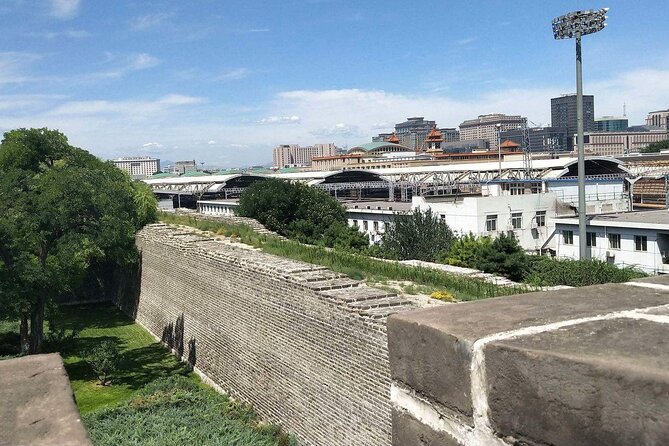
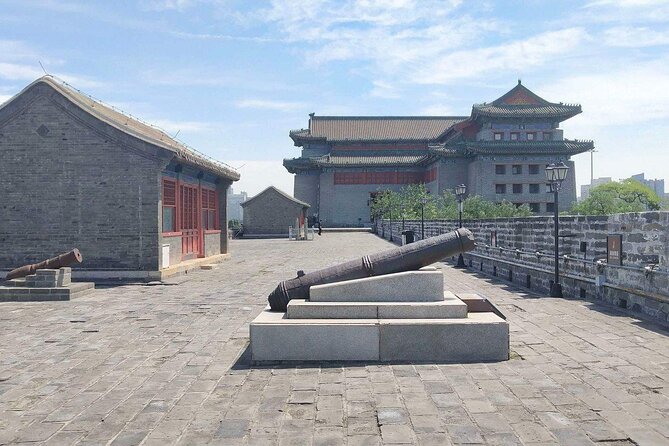
The park’s showpiece is a restored segment of the 15th-century Ming city wall that once encircled Beijing. You’ll see about 2 kilometers of the Ming-era wall, built with brickwork you can actually study up close. This is one of those places where the stone isn’t just scenic; it’s instructional.
And yes, you’ll get something that feels very real: you can note bullet holes in the wall. It’s not a dramatic add-on—it’s a reminder that city defenses were not just decorative history. If you like architecture that carries evidence of use, this stop delivers.
The Southeast Corner Watchtower and its arrow-tower footprint
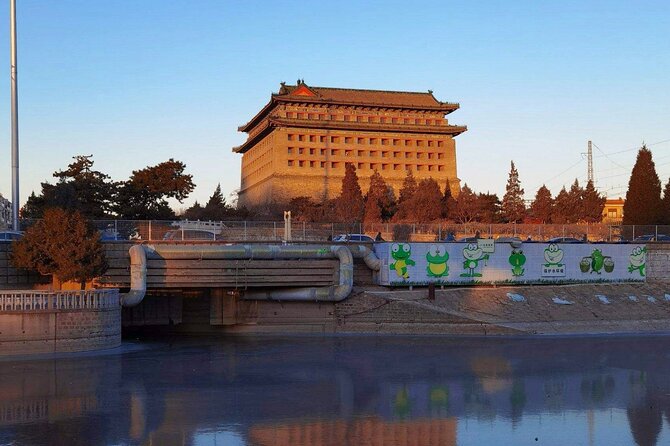
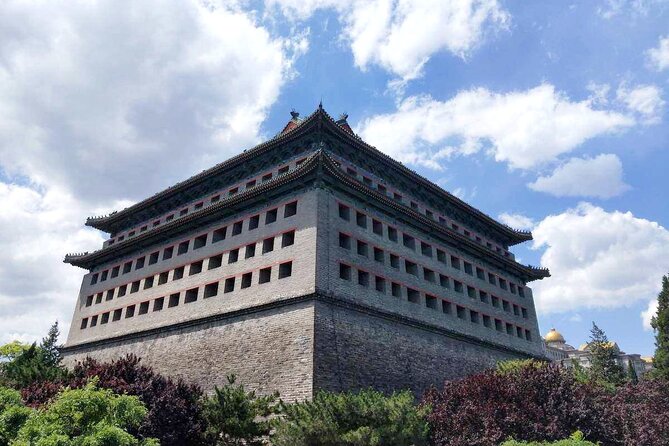
Your Ming City Wall visit includes a climb to the Southeast Corner Watchtower, where exhibitions sit. This watchtower is especially interesting because it features the largest arrow tower existing in China, with 144 windows.
That number matters because it signals scale and function. Those windows aren’t random decoration. They relate to how defenders would operate from the tower—small openings for archery and protection, repeated to match the defensive purpose. When you stand in front of something like that, it’s easier to understand how a city wall worked as an active system, not just a border line on a map.
Even if you don’t spend a long time inside each exhibit room, the climb itself helps you connect the wall segment to its defensive logic. You get a better sense of vantage points, lines of sight, and why corners mattered.



Lunch and entrance fees included: how this tour protects your budget
At $175 per person, you’re paying for more than transportation to a famous site. The real value here is what’s already built into the price: all entrance fees are included, and the day also includes lunch.
That combination helps you avoid the usual “surprise costs” trap on full-day tours. You can plan one amount and then forget about constantly deciding whether to skip something to stay within a budget. For a day that includes multiple sites (a Great Wall section plus a city wall ruin park), fee management can otherwise get messy fast.
You’ll also get free hotel pickup and drop-off, which is a huge convenience factor in Beijing. Travel time can be unpredictable, and not having to solve getting-to-the-attractions transport problems on your own is part of what you’re buying.
Finally, the tour includes group discounts and uses a mobile ticket, both of which can help if you’re traveling with a companion or want less paperwork stress.
From one wall to another: how these two sites connect
It’s easy to treat the Great Wall as a standalone bucket-list moment. What I like about this pairing is that it nudges you toward a bigger picture of Beijing’s defenses across time.
Mutianyu shows you a wall built and restored during the Ming Dynasty (1368–1644) on earlier northern foundations (Northern Qi, 550–577). Then, the Ming City Wall Ruins Park brings you back to Beijing itself—showing the 15th-century wall section that once encircled the city.
So you’re not just hopping between famous stops. You’re comparing two defensive systems: one designed to control long-distance movement across rugged terrain, and one built to protect the city core. Seeing both in one day helps the stone make more sense.
A note on guides: what to look for in your day
The tour is private, and reviews highlight the guides’ role in making the day feel smooth and personal. You may encounter guides praised for friendly, clear English, including names like Li and Joe Geng. One review also mentioned Angie for another Beijing day, reinforcing the point that good guiding makes a big difference when you’re covering multiple historical sites.
Since you’ll be moving from a Great Wall section to a city-wall park, a strong guide helps you stay oriented. Look for someone who explains what you’re seeing at each stop and helps you avoid wasting time on confusing transitions.
Practical tips to make the day easier
A wall day is about preparation more than athletic ambition. Here are the things that will help you enjoy the hike and the exhibits without feeling rushed.
Wear shoes you’re comfortable climbing in, because steps and slopes are part of the deal even with the cable car. Bring your passport since the tour specifically asks for it. And because you start at 7am, treat the morning like the main event: water ready, breakfast sensible, and phone charged for the mobile ticket.
Also, plan your pace. If you go full speed from the first viewpoint, you might burn out before you get your best photo angles and your best time to notice details like brickwork and wall construction. A private guide can help you slow down in the right places.
Price and logistics: who this is best for
This tour makes the most sense if you want a guided, low-friction day that hits two major “wall” experiences without making you coordinate transport and entrances.
It’s ideal for couples, small groups, and anyone who values time management. The price can feel steep if you’re comparing it to independent tickets, but the value shows up when you consider the total package: pickup/drop-off, lunch, entrance fees, and a private guide.
You might want a different option if you’re trying to minimize time in long transfers or if you strongly dislike early starts. The schedule is built around 7am departure, and the day runs about 8 to 9 hours total, so it’s not the best fit for a sleepy, late-day sightseeing style.
Should you book the Mutianyu + Ming City Wall Ruins Park tour?
Yes, if you want your Great Wall visit to feel purposeful. The cable car round-trip plus about 2 hours on the wall is a smart way to maximize time on the structure itself. The second stop adds variety: brickwork, bullet holes, and the Southeast Corner Watchtower with 144 windows give you a different type of historical payoff than just another view over the valleys.
Book it if you appreciate clear value—entrance fees included, lunch included, and pickup/drop-off handled for you. And if you’re traveling with someone who needs a guided day to stay energized, the private format is a big advantage.
Pass if you need a later start or you want to spend most of your time roaming slowly without a set itinerary. This day is planned, and it moves.
FAQ
What time do I need to meet the guide?
You meet your guide at 7:00am in your Beijing hotel lobby.
Is this a private tour?
Yes. It’s a private tour/activity, so only your group participates.
Do entrance fees and lunch come included?
Yes. All entrance fees are included, and lunch is included as part of the tour.
How do I get to the Great Wall section at Mutianyu?
You’ll take the cable car for both ways, then spend about 2 hours on the Great Wall.
What can I expect at the Ming City Wall Ruins Park?
You’ll visit a restored segment of the 15th-century Ming city wall, see about a 2-kilometer stretch, and climb the Southeast Corner Watchtower to view exhibitions.
Do I need to bring a passport?
Yes. The tour asks you to bring your passport.
What is the cancellation policy?
Free cancellation is available up to 24 hours in advance for a full refund. If you cancel less than 24 hours before the start time, the amount you paid is not refunded.