REVIEW · TUNIS
Historical Tour of Ancient Carthage
Book on Viator →Operated by Savor Tunisia Tourism & Services · Bookable on Viator
Carthage is history you can walk through. In just about 3 hours 30 minutes, this guided tour connects Carthaginian, Roman, and early Christian remains in a way that feels like a story you can follow on foot, not a list of ruins. I especially like the local guide approach and the way the Roman-era stops sit right alongside earlier Punic sites.
The one drawback to plan for is that it’s a lot of names and meaning packed into one outing. You’ll be outside for parts of it, and the experience needs good weather to run smoothly.
I also like that the basics are handled for you: pickup is offered, and you’re issued a mobile ticket for an easy start. If you’re the type who enjoys asking questions, you’ll probably feel well cared for—guides like Tarek are the kind who answer in plain language and even help with lunch logistics when needed.
In This Review
- Key things that make this Carthage tour worth your time
- Why Carthage works best with a guided route
- Price and logistics for a 3.5-hour Carthage loop
- Stop 1: Site Archeologique de Carthage and the Roman Arena
- Stop 2: Punic Ports & Museum and walking through the port ruins
- Stop 3: Tophet de Carthage and the Alter of Tophet
- Stop 4: La Basilique de Saint Cyprien ruins and Mediterranean views
- What “private experience” means in real life
- How long you’ll be out, and how to not feel rushed
- Who should book this Carthage tour
- Final call: should you book this Historical Tour of Ancient Carthage?
- FAQ
- How long is the Historical Tour of Ancient Carthage in Tunis?
- What are the main stops on the tour?
- Are admission tickets included?
- Is lunch included?
- Do you get pickup?
- Is this tour private?
- What happens if the weather is bad?
Key things that make this Carthage tour worth your time
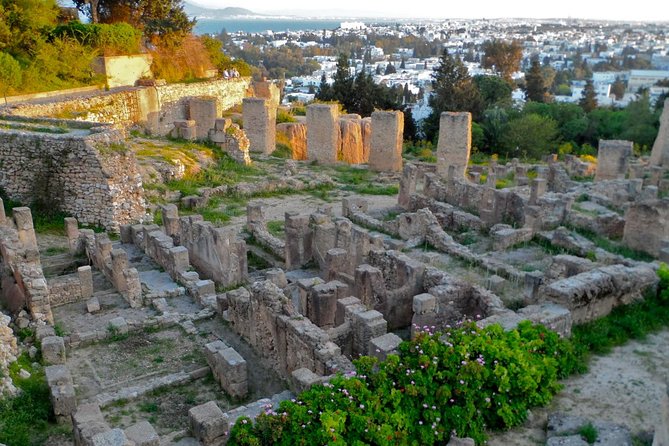
- Four major Carthage stops in one efficient loop: Roman arena, Punic port ruins, Tophet, and Saint Cyprien basilica ruins
- Admission tickets included at each site, so you’re not scrambling to buy entry mid-tour
- Punic Ports & Museum ruins that let you connect Carthage’s role as a port city to what you’re seeing
- Tophet de Carthage and the Alter of Tophet for a focused look at ancient religious practices
- Sea-view finale at Saint Cyprien where the ruins overlook the Mediterranean
- Private group format with pickup and transportation for a calmer pace and fewer coordination headaches
Why Carthage works best with a guided route
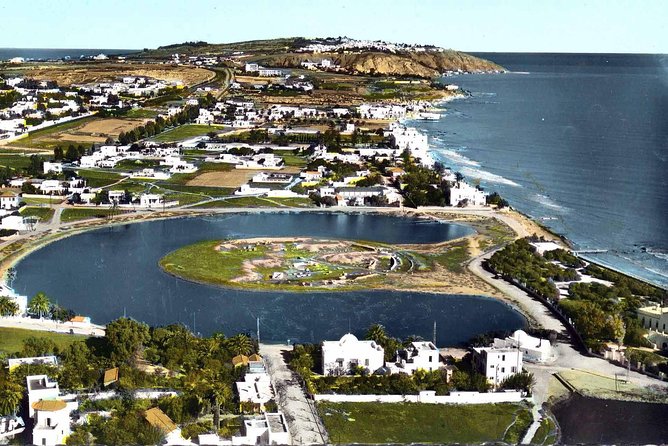
Carthage is one of those places where the stones are real, but the context is what makes it click. Left to your own devices, you might be able to see the big shapes—an arena here, ruins there—but you’d miss the links that tie the whole city together across eras.
This tour is built around that linkage. You start in the preserved archaeological complex area, then shift to the Punic Ports & Museum for the maritime angle, move to Tophet de Carthage for religious practice, and finish at the Saint Cyprien basilica ruins with views over the Mediterranean. That order helps you understand how Carthage’s identity changed over time while still feeling like one continuous place.
I also like the way your guide can turn a short visit into a “here’s what you’re looking at” moment. In examples from past groups, Tarek stands out for patient explanations and answering lots of questions without making people feel rushed. That matters when you’re trying to absorb a compact slice of Northern African ancient history in one sitting.
You can also read our reviews of more tours and experiences in Tunis.

Price and logistics for a 3.5-hour Carthage loop
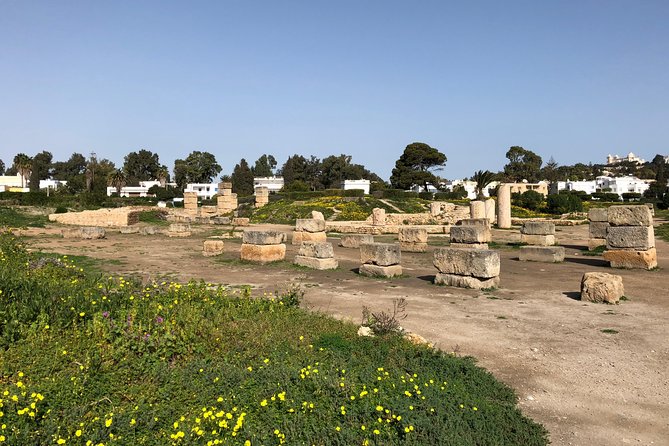
At $104 per person, this isn’t a budget “quick photo stop” type of outing. But it also isn’t priced like a complicated custom private day. The value is in what you don’t have to organize yourself: private transportation, pickup offered, and all fees and taxes included.
You’re also getting entry coverage built into the route. Each stop lists an included admission ticket, which is a quiet win. It means you can focus on the sites and timing rather than managing paperwork, multiple ticket counters, and last-minute payment stress.
Two practical notes you should plan around:
- It’s about 3 hours 30 minutes, so wear comfortable shoes and accept that it’s packed.
- The tour requires good weather, and if conditions aren’t right, you’ll either get another date or a full refund.
If you like planning ahead, booking about 70 days in advance (the average lead time here) is a smart move. For a half-day with multiple included sites, earlier booking tends to help you lock in the schedule that fits your Tunis itinerary.
Stop 1: Site Archeologique de Carthage and the Roman Arena
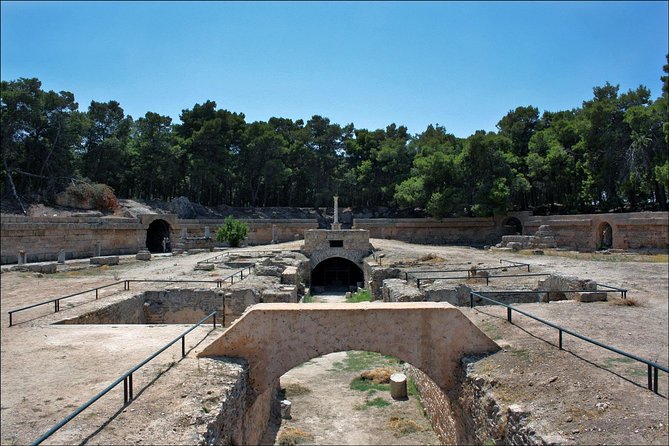
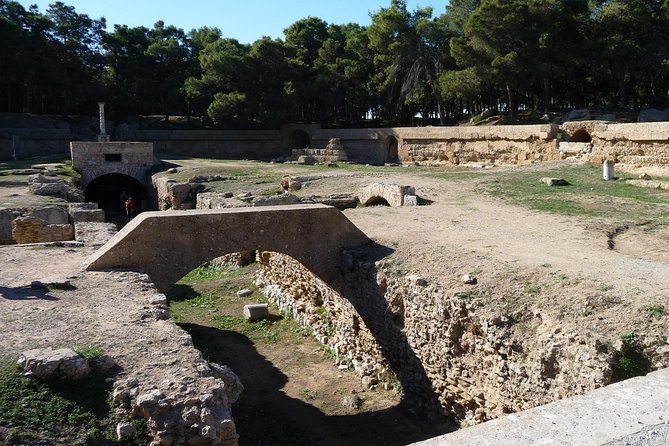
The tour begins at the Site Archeologique de Carthage, with a focus on the arena of Carthage—described as an ancient Roman arena that’s been well preserved. This is a strong first stop because the Roman layers are often the easiest to visualize. You can walk the space and feel how a major public venue might have worked.
Expect stories about the arena as you explore the premises. Even if you don’t consider yourself a history person, this is the kind of start that gives you a frame for the rest of the day. You’re not just entering random ruins—you’re starting with a clearly defined Roman building type, then the tour can pivot to the older Punic foundations and religious areas later.
A small consideration: since it’s the first site, you’ll want to arrive ready to pay attention. The early part of the day sets the mental map, and it helps to keep your questions for the guide as you move through the arena area.
Stop 2: Punic Ports & Museum and walking through the port ruins
Next you shift gears to the Punic Ports & Museum, and this is where Carthage starts to feel like a working city rather than only a collection of monuments. The port is the ancient port of Carthage, and the experience here is built around walking through the ruins and learning the history tied to that maritime setting.
I like this stop because it answers an important question early: how did Carthage function in the wider world? A port explains why a place grows, why cultures mix, and why power and trade become visible in the physical layout.
You’ll get about 30 minutes here, including the museum/port time. That’s enough to absorb the basic story and see the spatial clues without turning it into a museum marathon. The included admission ticket also keeps the visit smooth.
Possible drawback: port ruins and museum areas can be visually uneven—some parts help you understand the story immediately, while other sections may be more about reading the guide’s explanations. If you’re the type who needs “show me” moments, bring questions like How does this ruin connect to the idea of a port? Your guide should be able to translate the space for you.
Stop 3: Tophet de Carthage and the Alter of Tophet
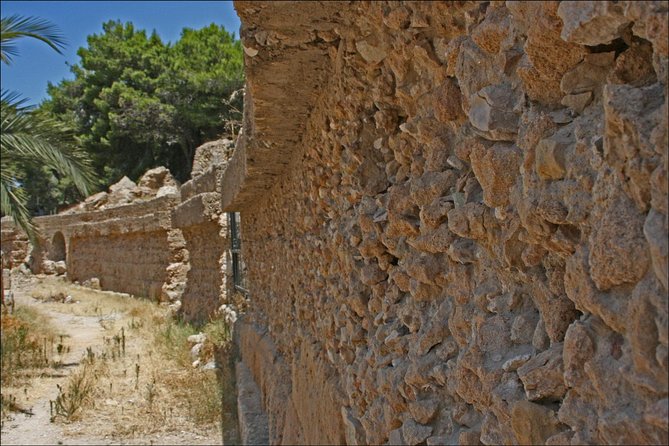
The tour then goes to Tophet de Carthage, where you visit the Alter of Tophet—an ancient religious compound tied to Carthaginian religion and practices. This stop can feel more emotionally and conceptually intense than the Roman arena and port areas. That’s not a bad thing; it’s part of what makes Carthage meaningful.
Your time here is about 30 minutes, with time to learn about the religious compound and its practices. The key value is that your guide can help you connect the physical site to the idea of religious practice, instead of leaving you with only a vague sense of what the area represents.
Practical advice: expect the tour’s narrative to be dense for this stop. If you like structured explanations, this is where you’ll probably lean in. If you get overwhelmed by too many details, take a breath, then ask a single clarifying question rather than trying to memorize everything at once.
Also, note that this is part of the tour’s theme: Carthage isn’t only “Roman stuff.” It’s Carthaginian roots, Roman change, and early Christian presence in later layers. The Tophet stop helps anchor the earlier chapter.
Stop 4: La Basilique de Saint Cyprien ruins and Mediterranean views
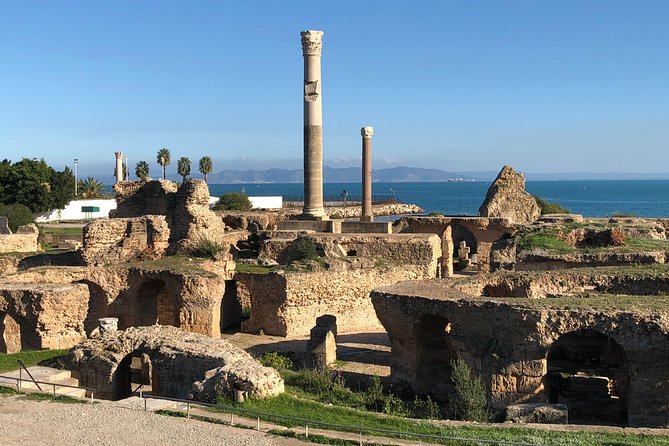
The final stop is La Basilique de Saint Cyprien, where you visit the ruins of St. Cyprians Basilica. This is an especially satisfying ending because it adds two things at once: the sense of age and the scenery. The ruins overlook the Mediterranean, and the view is described as breathtaking.
From a visitor perspective, it helps to end with somewhere that gives you both context and a “wow” moment. You’re not just finishing because the tour clock says so—you’re finishing at a site where the atmosphere does part of the storytelling for you.
The tour lists about 30 minutes here, including time with the ruins. And because it’s one of the oldest churches in North Africa (as described), it gives you a final reminder that Carthage’s story continued beyond Punic and Roman eras.
One possible consideration: if it’s bright or windy, you may want a hat and sunglasses. Not required, but it can make the sea-view moment more comfortable and easier to enjoy.
What “private experience” means in real life
This is a private tour/activity, restricted to your group. That changes the feel more than you might expect. Instead of blending into a larger crowd with a guide talking at a high pace, you get a more conversational rhythm—especially at the stops where questions naturally pop up.
This is also where the role of your guide and driver becomes more personal. In examples from past tours, Tarek is described as friendly, eager to answer questions, and willing to go beyond the strict script when someone has a specific lunch request. In at least one case, getting help to find a shwarma for lunch was part of the experience.
Your transportation also matters. The tour includes private transportation, and a smooth driver pickup can make the difference between feeling rushed and feeling relaxed. Mohammed is mentioned as a wonderful driver in one tour experience, which fits the general idea: you want someone who can handle the timing so your guide can do the talking.
Bottom line: if you value pacing and Q&A, the private setup is a big chunk of the value—not just a pricing line item.
How long you’ll be out, and how to not feel rushed
A 3 hours 30 minutes tour sounds manageable until you realize it includes multiple stops with entry time. The good news is that each site is capped around 30–45 minutes depending on the stop, which keeps you moving.
I’d plan your day around this tour like a half-day anchor. Don’t schedule it as a “between meetings” activity. Instead, give yourself space afterward for a relaxed meal. Lunch is optional, and the tour provides recommendations for excellent lunch spots, which is helpful when you’re done and hungry and don’t want to hunt.
Pack smart, too:
- Comfortable walking shoes (you’ll be moving between multiple outdoor areas)
- Sunscreen or a hat if it’s sunny
- A light layer if coastal wind makes it feel cooler than expected
And because the tour requires good weather, keep a flexible mindset. If conditions aren’t right, the operator offers a different date or a full refund, which is exactly the kind of policy you want when ruins are involved.
Who should book this Carthage tour
This is a great fit if you:
- Want a guided storyline across Carthaginian, Roman, and early Christian chapters
- Prefer not to piece together four separate sites on your own
- Enjoy asking questions and having a guide explain what you’re seeing
- Have limited time in Tunis but still want a meaningful ancient history outing
It’s also a good pick if you like structure. The stop order goes from arena to port ruins to religious compound to basilica, which naturally builds from civic life to maritime context to spiritual practice to early Christian presence.
If you’re traveling with kids, the tour says most people can participate, but with a half-day schedule packed with learning, you’ll likely want to gauge attention spans. Short explanations with pauses for questions can make it work better than a purely classroom-style approach.
Final call: should you book this Historical Tour of Ancient Carthage?
I’d book this if you want a practical, story-led way to see key Carthage sites in one go. The price makes more sense when you factor in private transportation, pickup, and admission tickets included at multiple stops. It’s not the kind of tour you do just to say you saw ruins. It’s the kind of tour that helps the ruins make sense.
Skip it or consider another format if:
- You hate tours that require attention and explanation (there’s a lot to absorb)
- Your schedule is too tight for a weather-dependent half day
- You’re looking for only one “main” site and nothing else
If you’re ready to connect the dots between Punic, Roman, and early Christian Carthage, this tour offers a clean route and a guide-led pace that’s built for understanding, not just checking boxes.
FAQ
How long is the Historical Tour of Ancient Carthage in Tunis?
It runs for about 3 hours 30 minutes.
What are the main stops on the tour?
You’ll visit the Site Archeologique de Carthage (including the Roman arena), the Punic Ports & Museum, Tophet de Carthage, and La Basilique de Saint Cyprien.
Are admission tickets included?
Yes. Admission tickets are included for each stop.
Is lunch included?
Lunch isn’t included. The tour provides optional recommendations for lunch.
Do you get pickup?
Pickup is offered, and the tour includes private transportation.
Is this tour private?
Yes. It’s private, and only your group participates.
What happens if the weather is bad?
The experience requires good weather. If it’s canceled due to poor weather, you’ll be offered a different date or a full refund.