REVIEW · TUNIS
Guided tour in the UNESCO world heritage Medina of Tunis
Book on Viator →Operated by Saber ARRAKI · Bookable on Viator
A maze with a human map makes all the difference. This guided tour through the UNESCO Medina of Tunis turns confusing alleyways into a clear, story-filled walk. I like that you’re not just seeing sights. You’re learning how they connect, from the grand Zitouna Mosque to neighborhood craft markets.
Two things I really like: first, you get a certified guide, Saber ARRAKI, approved by the Tunisian National Tourism Office, which keeps the facts grounded and the pacing smart. Second, the route blends monuments and everyday life, so the medina feels like a place people live in, not a museum you pass through.
One drawback to plan for: it’s mostly walking, and it’s a real medina—crowds and uneven lanes happen. If your legs are short on stamina, you’ll want to wear supportive shoes and be ready for quick uphill/downs in places.
In This Review
- Key highlights to look for
- Walking the Medina of Tunis without getting lost in the souks
- The route starts at La Kasba and ends in La Medina
- Zitouna Mosque: the Olive Tree as the medina’s anchor
- Dar Lasram: a traditional house with modern cultural roles
- Medersa Slimaniya and Bir Lahjar: learning spaces and memory
- Souk Al Attarine and Café du Souk: scents, specialties, and a needed pause
- Hammouda Pasha Mosque, goldsmiths, and the Kachachine hammam
- Grand Souk des Chechias and Dar El Jeld: crafts and a photo break
- Rue du Pacha: monuments in one street, plus a rooftop moment
- Price and tickets: what $46.53 really buys you
- Who this Tunis Medina tour is best for (and who might skip)
- Should you book Saber ARRAKI’s Guided Tour of the UNESCO Medina?
- FAQ
- How long is the Guided Tour in the UNESCO Medina of Tunis?
- What does the tour cost, and what’s included?
- Are entry tickets included for every stop?
- Where do I meet the guide, and where does the tour end?
- How big is the group?
- Is there a mobile ticket?
- What’s the cancellation and weather rule?
Key highlights to look for
- Saber ARRAKI brings local, street-level context in addition to major-medina landmarks.
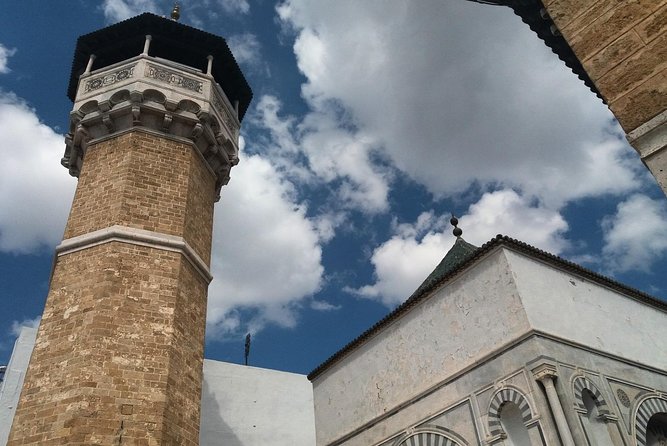
- Zitouna Mosque is the anchor stop: you’ll see its scale, nine entrances, and 184 ancient columns tied to Carthage.
- Madrasas swap option: you’ll either visit Medersa Slimaniya or Madrasa Bir Lahjar depending on the tour flow.
- Souk-to-crafts mix: perfumers, goldsmiths, chechias, plus a stop for café time in the medina.
- Not all crowded markets: you’ll spend time in calmer lanes too, with photo breaks that make it feel like a proper walk, not a rush.
- Small group size (max 15) keeps questions possible and the pace comfortable.
Walking the Medina of Tunis without getting lost in the souks
The Medina of Tunis is UNESCO-listed for a reason: it’s dense, old, and layered. Without help, you can spend hours looping through shops and miss what makes the place matter—religious life, education, trade, and daily routine all in the same maze.
That’s what this tour fixes. You start on one side of the old city and work through key religious and civic points while also cutting through specialized souks. The max group size is 15, which matters more than you’d think. In a medina, small groups don’t just feel nicer—they help you keep up with directions and actually hear what your guide is explaining.
The timing is also built for an enjoyable pace: about 2 hours 30 minutes to 3 hours 30 minutes. That range gives enough time to get inside a couple of meaningful spaces while still leaving breathing room for pauses, photos, and a café stop.
Finally, your guide is not a generic “tour host.” Saber ARRAKI is a national certified guide approved by the Tunisian National Tourism Office. He also grew up in the area, so his explanations sound less like a script and more like someone translating their home into your language.
You can also read our reviews of more tours and experiences in Tunis.
The route starts at La Kasba and ends in La Medina
Logistics that actually help: the tour begins at La Kasba, Tunis and ends in La Medina, Tunis. That end point is useful because it naturally drops you back into the medina zone where you can keep exploring on your own afterward, without needing to fight the streets immediately after the tour.
You also have a 9:00 am start time, which is a big deal in Tunis medina. Morning light often makes stonework and mosque exteriors easier to read. Cooler temps help too, since you’re walking through tight lanes.
You’ll want to plan for the “medina reality”: uneven pavement, stairs in places, and lanes that funnel into busy souks. The tour is listed as suitable for most travelers, but good shoes are still the smart move.
One more small detail: you’ll use a mobile ticket. If you’re traveling light, that saves hassle. If your phone battery is weak, bring a charging option or a backup plan.
Zitouna Mosque: the Olive Tree as the medina’s anchor
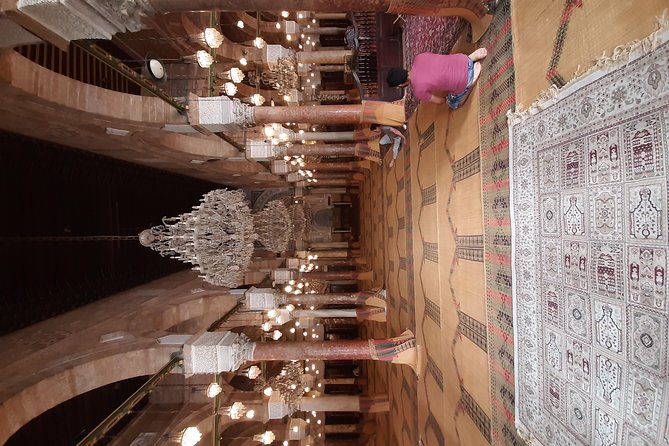
If you want one stop that explains the medina’s logic, it’s the Zitouna Mosque (Mosque of the Olive Tree). It’s the main mosque in the medina of Tunis, and it sits right at the center of religious and civic life.
Here’s what’s impressive about the place, beyond the postcard exterior. The mosque is tied to Malikism, and it’s described as the oldest and largest sanctuary in Tunisia’s capital. It covers about 5,000 square meters and has nine entrances. There are also 184 ancient columns, many said to come from the Carthage site.
Why your guide’s explanation matters: in a medina, you often see architecture but not the meaning behind it. At Zitouna, you get the context for why the medina’s streets, institutions, and learning centers cluster in this area. Even if you only spend part of the time here, it changes how you read everything else you walk past afterward.
Practical tip: take a moment to look up and around as you move. Mosque space is about geometry and repetition, and that’s easier to notice when you’re not rushing through.
Dar Lasram: a traditional house with modern cultural roles
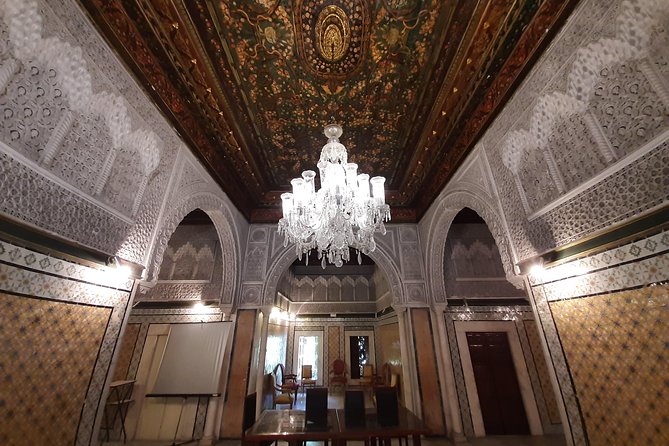
After Zitouna, the tour shifts from the grand public space to a more intimate scale at Dar Lasram. This is a traditional Tunisian house with an overall area of about 2,250 square meters, and the layout tells you how homes worked there.
You’ll see a breakdown that’s typical of the style:
- Ground floor: shop and service areas
- Upstairs main house
- Upper level: guest house
What I like here is the transition between commerce and family life in one building. It’s a reminder that the medina isn’t only monuments. It’s also real property, real people, and real routines—just arranged differently than modern homes.
There’s also a meaningful cultural angle. The “palace” space is divided between the Medina Safeguarding Association and the Tahar-Haddad Cultural Club. So the house isn’t only preserved; it’s also used.
Time on site is about 30 minutes, but here’s the key drawback to note: admission ticket isn’t included for Dar Lasram. Plan for an extra entry cost on the day, or at least be ready to pay if you want to step inside.
Medersa Slimaniya and Bir Lahjar: learning spaces and memory
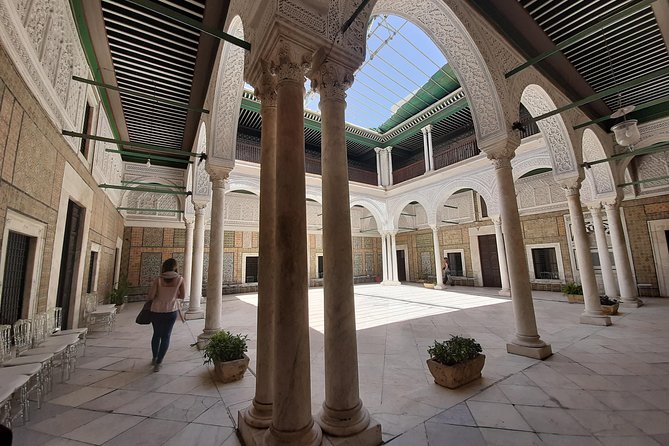
Next comes the education side of the medina, and this is where you’ll see how religion and schooling were deeply connected in Tunisian life.
Medersa Slimaniya is built in 1754 by Ali I Pasha, remembering his son Suleiman, who the story attributes to poisoning by his brother. It’s located close to Zitouna, near the corner of souk El Koutbiya and souq El Kachachine. Time here is about 15 minutes, and the admission ticket is included.
But there’s a twist that you’ll want to know before you go: the tour indicates you may have the choice to visit Bir Lahjar or Slimaneya during the itinerary. So if you’re aiming for a specific building, ask which option applies to your date.
If you visit Madrasa Bir Lahjar instead, you’ll get another angle on the same theme. It’s described as hosting Malikite students for decades coming from different regions of Tunisia. That’s a useful detail because it connects the building to movement across the country—students didn’t just learn locally, they traveled to study.
Why this matters for you: most people walk through medina sites like they’re isolated. Madrasas show the medina as a system—religious authority, scholarship, and the social organization of street life.
Souk Al Attarine and Café du Souk: scents, specialties, and a needed pause
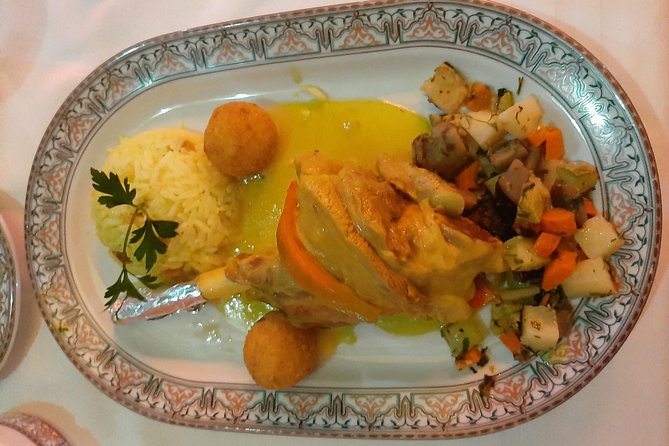
The route then moves into the trade lanes. At Souk Al Attarine (perfumer souk), you’ll spend about 15 minutes, and admission is free. It’s specialized for perfumes and beauty products, so it feels focused. Instead of random browsing, you’re in a place built around a single kind of craft and sale.
This is a good moment to slow down. Your guide can point out what you’re seeing and why it’s in this exact lane. That’s more satisfying than just walking past shop doors.
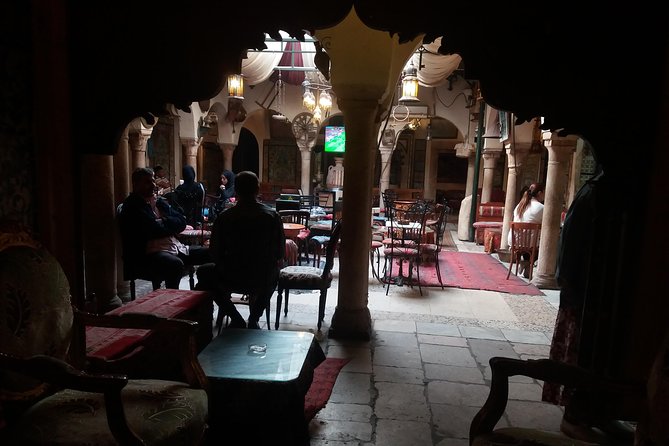
After that, there’s a Café du Souk stop, described as emblematic of the medina. You’ll have around 30 minutes here, and admission is free. This pause is not wasted time. In a medina, your energy level affects your attention span. A café break helps you reset so you keep absorbing details instead of just covering ground.
A small practical angle: if you’re sensitive to smells or heat, the café stop gives you a controlled break. If you want to keep photos for later, use this time to plan angles for the next streets.
Hammouda Pasha Mosque, goldsmiths, and the Kachachine hammam
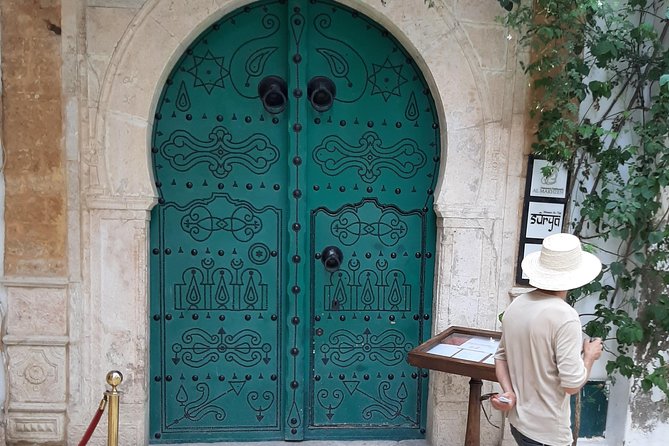
From the education and craft streets, the tour pulls you toward religious and everyday infrastructure.
On Rue de la Kasbah, you’ll do a short stop for the Hammouda Pasha Mosque (about 5 minutes, free). It’s quick, but those quick hits are the whole point of a guided route. You’re not stuck in one location long enough to lose the bigger picture.
Then comes the craft rhythm:
- Souk el-Birka (market of goldsmiths), about 5 minutes, free
- Hammam el Kachachine (discovery of the hammam), about 5 minutes, free
These are short stops, but they add texture. Goldsmith streets explain the medina’s wealth of specialized trades. A hammam stop shows how public cleansing and social life were built into the urban fabric.
If you’ve never thought of a hammam as part of a social network, you’ll likely see it differently after your guide’s context.
Tip for your photos: the most interesting shots often come from angles down the lanes rather than straight at the buildings. Move one step, turn your head, and let your guide tell you where the good views are.
Grand Souk des Chechias and Dar El Jeld: crafts and a photo break
You’ll also see Grand Souk des Chechias, a visit focused on traditional Chaouachine (about 15 minutes, free). Chechia is one of those Tunis identifiers people recognize, but it’s easy to miss the craft culture if you’re only in a hurry for souvenirs. This stop gives the trade a place in the bigger medina story.
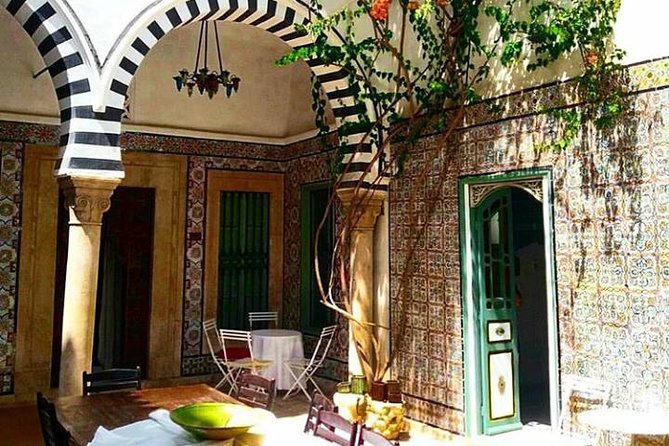
After that, there’s a quick photo break near Dar El Jeld, described as an old residence converted into a gourmet restaurant (about 5 minutes, free). Even if you don’t eat there, the concept matters: old homes can become dining spaces, and the medina keeps adapting without fully changing its bones.
This is also a good moment to regroup your camera battery and check your route. The medina is fast; your eyes need little breaks to stay sharp.
Rue du Pacha: monuments in one street, plus a rooftop moment
One of the most memorable sections of the tour is Rue du Pacha, where you get a concentration of monuments in a walkable stretch.
You’ll spend about 30 minutes here, and admission is free. The description includes:
- Dar Hammouda Pasha
- Didi ben Arous mausoleum
- Hammaouda Pasha Mosque
This street is a “read it like a map” kind of place. Without guidance, monuments can look like separate buildings. With a guide, you understand how the street organizes power, devotion, and civic identity.
Also, based on what your guide is known for on this route, you should expect at least one pause that helps you see the medina from above. Some versions of the tour highlight a panoramic view from the rooftops, with a view toward the Al-Zaytuna Mosque. It’s the kind of moment that makes the whole maze make sense.
Practical tip: if you want rooftop or high-angle photos, protect your phone from dust and keep your lens clean.
Price and tickets: what $46.53 really buys you
At $46.53 per person, this is a mid-range price for a 2.5-to-3.5 hour guided walk in a UNESCO site. The value comes from three things:
1) A certified national guide (Saber ARRAKI) approved by the Tunisian National Tourism Office
2) A route designed for orientation, meaning you see more than just shopfronts
3) A structured stop mix: mosques, madrasas, souks, craft lanes, and short cultural infrastructure moments
Another value point: the tour includes all fees and taxes and uses a mobile ticket. That reduces “surprise” costs from the tour operator side.
Now the part you need to budget for: Dar Lasram admission ticket is not included. Everything else—Zitouna, the medersa ticket (as specified), and the souks/café stops—follow the included/free pattern in the itinerary. In other words, you should expect only limited add-ons, but Dar Lasram is the clear exception.
If you’re planning ahead, bring some cash or a card for the one site you might need to pay separately.
Who this Tunis Medina tour is best for (and who might skip)
This tour is ideal if you:
- Want a solid orientation to the medina without spending your whole day lost
- Like a balanced mix of monuments and trade streets
- Enjoy asking questions and getting patient answers (the small group size helps a lot)
- Appreciate architecture and street-level context, not just shopping
It’s also a great option if you don’t have a full day. The pacing fits a morning start and helps you make the rest of your Tunis trip smarter.
You might skip it if:
- You want a totally free-form walk with no structure
- You dislike walking in dense, older lanes for a couple of hours
Should you book Saber ARRAKI’s Guided Tour of the UNESCO Medina?
If you’re visiting Tunis and you care about understanding what you’re seeing, I’d book this. The strongest reason is the mix: Zitouna’s scale, madrasas like Slimaniya/Bir Lahjar, specialized souks like Attarine and goldsmiths, and street monuments on Rue du Pacha. It turns the medina into a story you can follow, not a maze you survive.
Also, the guide matters here. Saber ARRAKI is set up to translate the place into clear, practical context, and the tour size keeps it from turning into a cattle-line march.
One last piece of advice: wear comfortable shoes and keep your expectations realistic. Some of the best moments happen in short stops—mosques, hammams, viewpoints—so be ready to look up and move with purpose.
FAQ
How long is the Guided Tour in the UNESCO Medina of Tunis?
It runs about 2 hours 30 minutes to 3 hours 30 minutes.
What does the tour cost, and what’s included?
The price is $46.53 per person, and it includes all fees and taxes.
Are entry tickets included for every stop?
Admission ticket is included for Medersa Slimaniya (and for the Bir Lahjar option). Admission ticket for Dar Lasram is not included. Other listed souks/café/photo stops are free.
Where do I meet the guide, and where does the tour end?
The start is at La Kasba, Tunis, Tunisia, and the tour ends in La Medina, Tunis.
How big is the group?
The tour has a maximum of 15 travelers.
Is there a mobile ticket?
Yes, the tour uses a mobile ticket.
What’s the cancellation and weather rule?
You can cancel for a full refund up to 24 hours before the experience starts. The tour requires good weather, and if it’s canceled due to poor weather you’ll be offered another date or a full refund.