REVIEW · HOUSTON
Houston: Buffalo Bayou Park Cistern History Tour
Book on GetYourGuide →Operated by Buffalo Bayou Partnership · Bookable on GetYourGuide
Houston has a voice you can hear.
This guided tour brings you underground to the Buffalo Bayou Park Cistern, a vast former drinking water reservoir turned public space, where the architecture and acoustics make the whole place feel strange in the best way. You’ll also get the history behind how it was built back in 1926 and why it mattered to early Houston.
I especially like two things: the chance to try the 17-second reverberation with your own call-and-response, and the solid 1926 reservoir history shared by the guide as you stand under those huge concrete columns. It’s the kind of stop that turns sightseeing into a hands-on lesson without feeling like homework.
One thing to plan for: the echo can make fast, unclear speech harder to catch. If you’re sensitive to audio in reverberant rooms, keep your attention on the guide and be ready to ask them to slow down.
In This Review
- Key things to know before you go
- Check in at Buffalo Bayou Park, Then Head Below Houston
- From Drinking Water Reservoir to Public Cistern
- Monolithic Concrete Columns and a Space Like 1.5 Football Fields
- The 17-Second Reverberation: Try Calling Out
- Guides Who Make the Cistern Sing
- What $15 Gets You in 30 Minutes
- Who This Tour Is For (and Who Might Skip It)
- A Simple Plan to Get the Most From Your Echo Test
- Should You Book the Buffalo Bayou Cistern History Tour?
- FAQ
- How long is the Buffalo Bayou Park Cistern History Tour?
- Where do I check in for the tour?
- How much does the tour cost?
- Is the tour a guided experience?
- Does the tour take place underground?
- Is it wheelchair accessible?
- Are pets allowed?
- Are tripods allowed during the tour?
- Is this tour suitable for young children?
Key things to know before you go
- 30 minutes underground: enough time for history, architecture, and a real chance to test the acoustics.
- A former water reservoir (1926): you’ll learn how it once held about 15 million gallons before it became a public space.
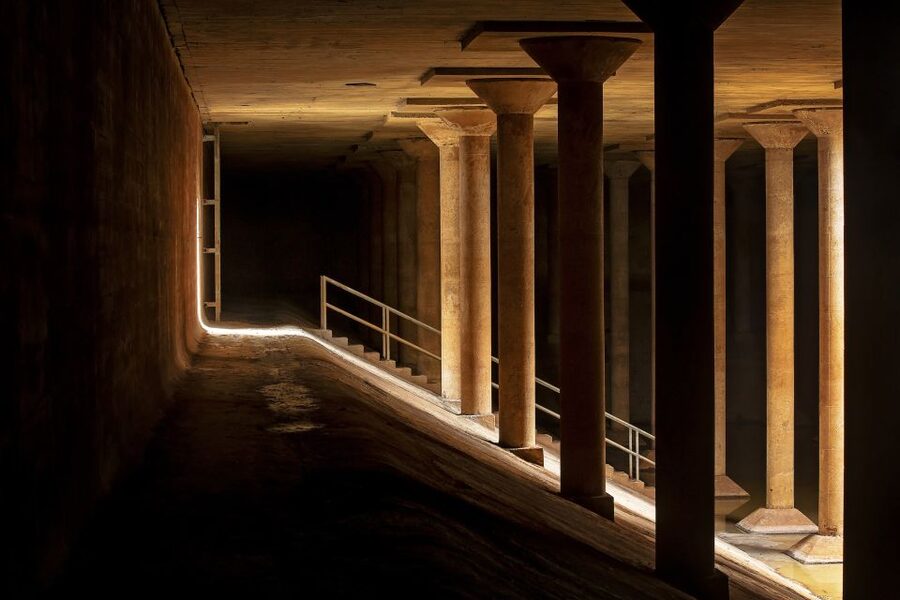
- One room, huge scale: the interior is about 1.5 football fields worth of space, with monolithic concrete columns.
- Try the echo yourself: calling out helps you experience the 17-second sound bounce.
- Live English guide: expect an expert-led walking tour with plenty of storytelling.
- No tripods, pets not allowed: assistance dogs are allowed, but plan around the restrictions.
Check in at Buffalo Bayou Park, Then Head Below Houston
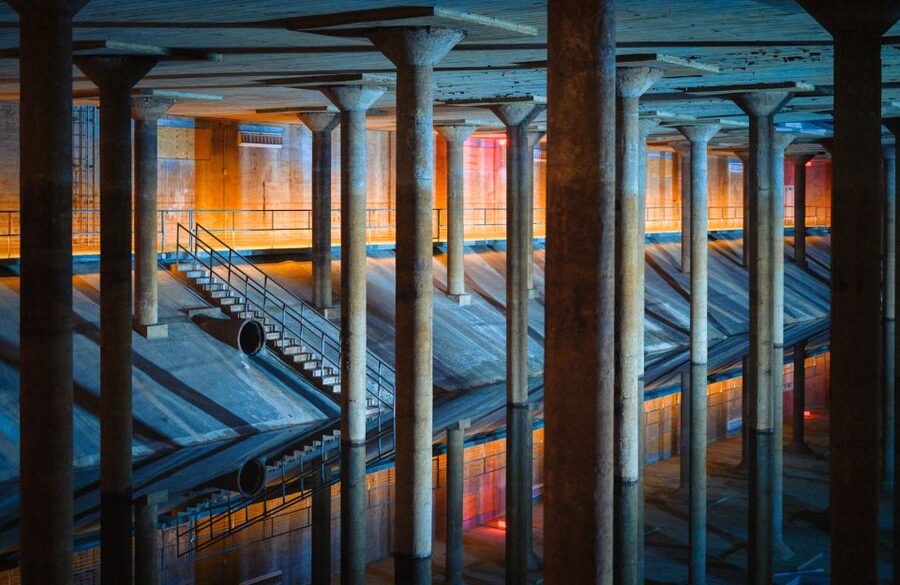
Your tour starts at the Buffalo Bayou Park Visitor Center. Check in there, then meet your guide at the cistern entrance by the Visitor Center.
If you’re driving, use the overfill parking in City Lot H at 1643 Memorial Dr, Houston, TX 77007, just east of Fonde Recreation Center. And yes, keep valuables out of your car. It’s a simple rule, but it saves headaches.
This is a walking tour through an underground space. That matters: you’ll want to move at a comfortable pace and stay aware that sound carries strongly in enclosed rooms. The good news is the tour is only about 30 minutes, so it doesn’t drag.
From Drinking Water Reservoir to Public Cistern
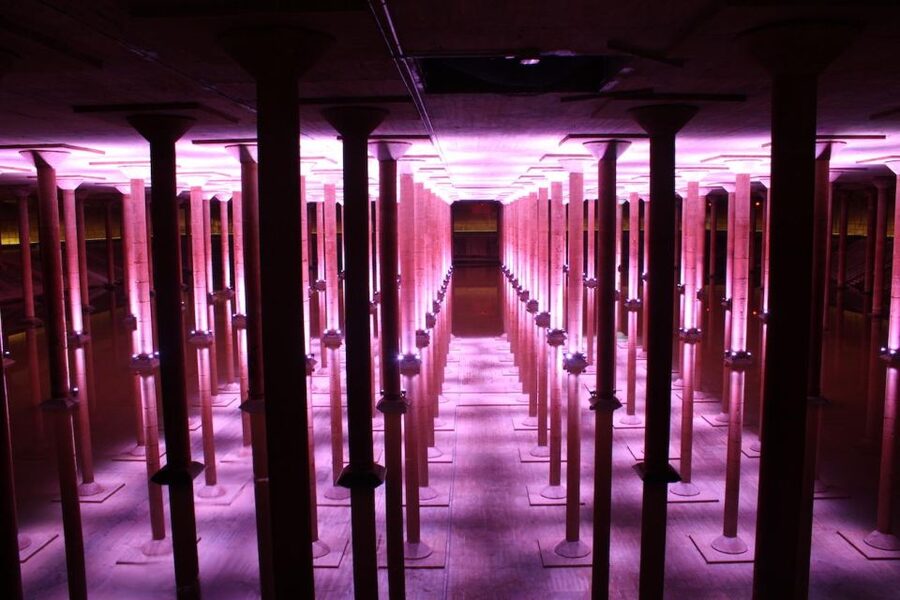
The Buffalo Bayou Park Cistern was built in 1926 as Houston’s original drinking water reservoir. The guide explains how the city used this structure at a massive scale—at one time, it held around 15 million gallons of drinking water.
That history gives the space context. Instead of viewing the cistern as just a cool underground attraction, you start thinking like an early Houston resident: this wasn’t a fun project, it was essential infrastructure. The tour helps you connect the architecture to a practical city need, then shows how the space got repurposed into something you can actually walk through and experience.
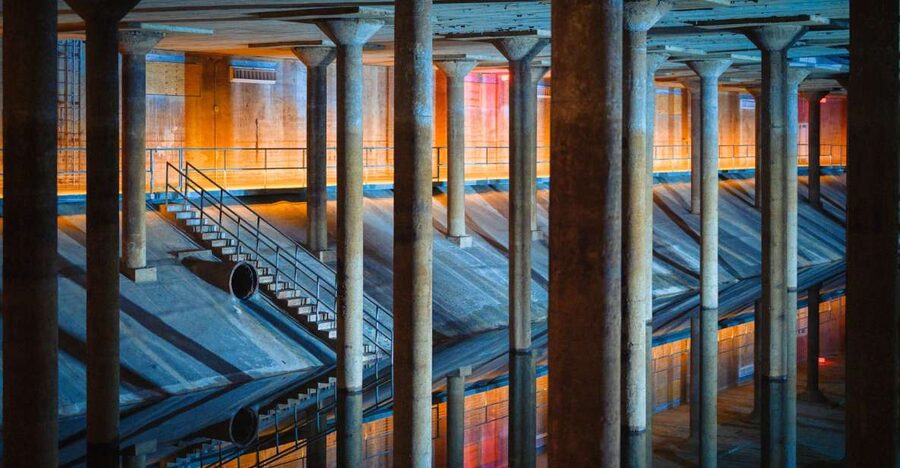
As you go in, you’ll see how the cistern becomes a subterranean public space. The structure’s purpose changed, but its geometry didn’t—and that’s part of why it feels so cinematic.
Monolithic Concrete Columns and a Space Like 1.5 Football Fields
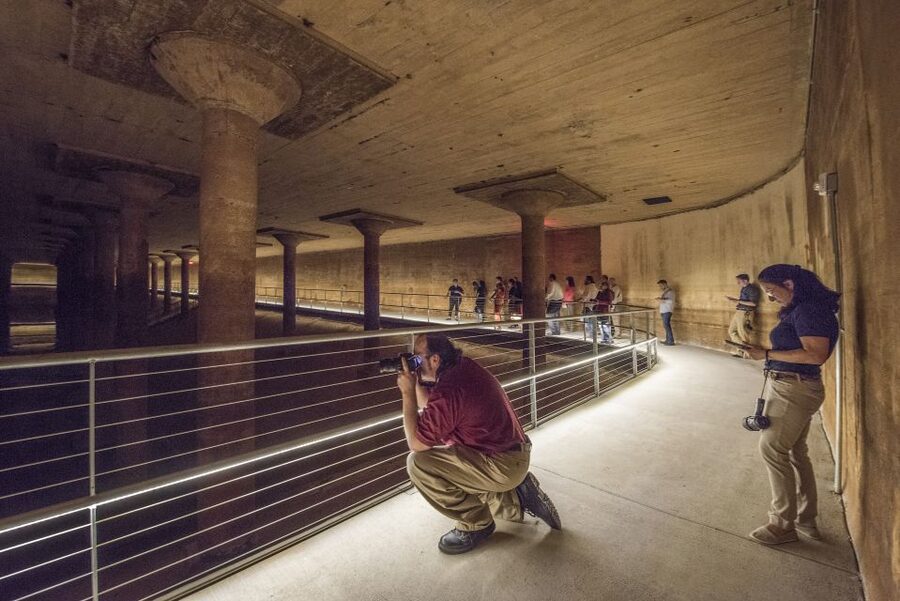
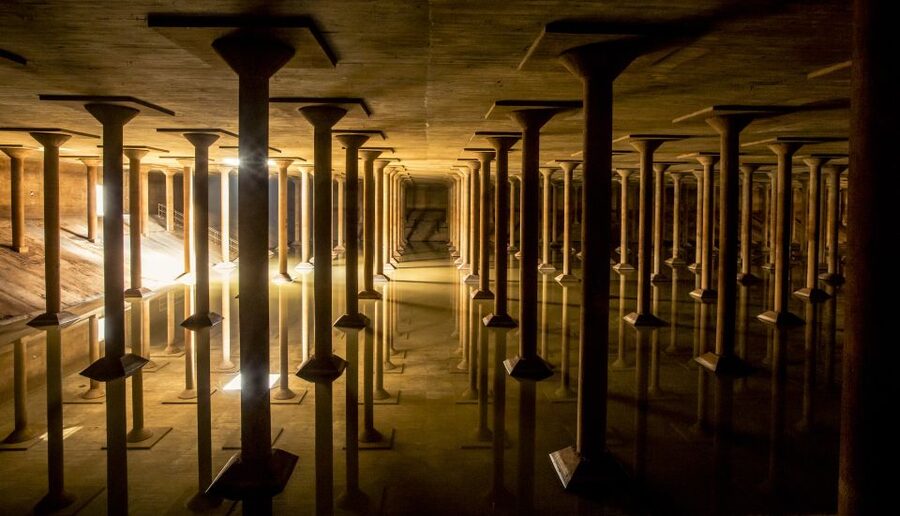
One of the biggest surprises is scale. The interior is about 1.5 football fields in size, and the columns feel heavy and monumental when you’re standing among them.
Look closely and you’ll get a better sense of how the cistern’s design creates both stability and drama. Those monolithic concrete columns aren’t just decoration. They define how the ceiling, walls, and airflow work together underground—along with the sound.
There’s also a practical angle here. Because the space is large and reverberant, the guide’s role becomes more than explaining facts. They help you notice details in real time—what to look for while you’re still in the room, not after you’ve left and tried to remember it from a photo.
The 17-Second Reverberation: Try Calling Out
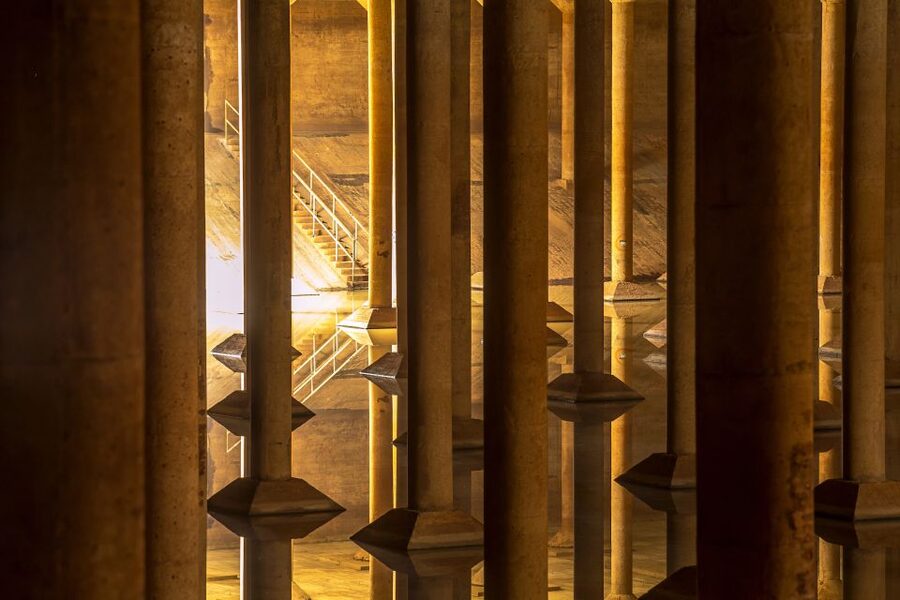
This tour is built around one moment you can actually test: the cistern’s 17-second reverberation. The guide walks you into the cavernous space, then encourages you to play with the sound.
Here’s how to make it work for you: speak or call once, clearly, then pause. If you’re talking over the echo, you’ll mostly hear your own momentum, not the effect. Try a short phrase, or even just a call-and-response with yourself. The point isn’t to perform—it’s to understand how long it takes for your voice to bounce back and fade.
You’ll also notice that the room’s lighting can change what you see. Some tours are described as lit up in a way that makes the echo and the columns feel more dramatic. Even if you’re not a lighting person, it helps you read the space as a designed environment, not a random underground chamber.
This is one of those experiences where you’ll feel slightly silly for five seconds, and then you’ll get why it’s there.
Guides Who Make the Cistern Sing
A major reason the tour is so popular is the guide. You’re not just getting dates and measurements; you’re getting an expert-led walking tour with real personality.
The standout pattern in the guide experiences is singing. Several guides include singing during the tour, including a capella performances that take advantage of the acoustics. In one case, the singing was described as something the guide composed—so the guide isn’t only reading information, they’re shaping the experience around the room.
That said, there’s a balance to keep in mind. One of the main drawbacks that shows up is that echo can make it harder to understand speech, especially if the guide talks quickly or doesn’t enunciate enough. If you have any trouble hearing in loud/reverberant spaces, go in ready to focus—and if you can, position yourself where you can hear best.
You’ll still walk away with the key facts, but how much you catch in the middle depends on your listening comfort in an echo-heavy room.
What $15 Gets You in 30 Minutes
At $15 per person for about 30 minutes, this isn’t a long-haul tour. That’s a good thing. The cistern is concentrated. You spend your time in the place that matters: the underground room where the history and the acoustics come together.
What you get is practical value:
- Entrance to the cistern space
- A live guided experience in English
- Time to learn the 1926 story and understand the reservoir’s scale
- A chance to experience the 17-second reverberation firsthand
If you’re comparing it to other Houston activities, the value is in the uniqueness. It’s hard to find another city stop where you can learn about infrastructure history and also test a real acoustic effect—both at once—without paying for a full day.
Also, the tour tends to run in the morning and afternoon, usually around that 30-minute mark. That makes it easier to slot in without disrupting a packed itinerary.
Who This Tour Is For (and Who Might Skip It)
This tour fits well if you like:
- Architecture you can actually walk through
- History tied to real city planning and infrastructure
- Unique sensory experiences like the echo test
It may not fit everyone. It’s not suitable for children under 9. The underground setting and the tour’s format are simply not set up for very young kids.
Also, pets aren’t allowed (assistance dogs are allowed). And tripods aren’t allowed either, so leave your bulky gear behind if you’re thinking of bringing it.
Finally, because it takes place underground, you’ll want to consider comfort level if you’re sensitive to enclosed spaces. The tour is short, but you’re still underground for the main event.
A Simple Plan to Get the Most From Your Echo Test
You don’t need a special strategy, but a few habits make it better.
First, arrive with enough time to check in calmly at the Visitor Center. Once you’re underground, you’ll have less control over the pace—so start relaxed.
Second, go in with a listening mindset. The cistern bounces sound for a reason, and you’ll hear it most clearly when you pay attention instead of multitasking.
Third, treat the echo experiment like a game, not a performance. One clean call is usually more effective than repeated talking over each other.
And if the guide includes singing, hang in there. Even if you’re not a concert person, the whole point is that the room changes the sound.
Should You Book the Buffalo Bayou Cistern History Tour?
If you want a Houston experience that’s part history lesson, part architecture walk, and part science experiment you can do with your own voice, this is an easy yes. The price is low, the time is tight, and the experience is genuinely specific to this space.
Book it if:
- you like guided storytelling that includes practical, in-room moments
- you’re excited by acoustics and want to test the 17-second effect
- you want a distinctive stop that doesn’t eat your whole day
Consider skipping or rethinking it if:
- you need very clear audio and you struggle in echo-heavy rooms
- you’re traveling with kids under 9
- you plan to bring tripods or rely on pets in your travels
FAQ
How long is the Buffalo Bayou Park Cistern History Tour?
The tour lasts about 30 minutes.
Where do I check in for the tour?
Meet inside the Buffalo Bayou Park Visitor Center next to the cistern to check in.
How much does the tour cost?
The price is listed as $15 per person.
Is the tour a guided experience?
Yes. It’s a live tour with an English-speaking guide, and entrance is included.
Does the tour take place underground?
Yes. The tour is underground inside the cistern.
Is it wheelchair accessible?
Yes, the tour is wheelchair accessible.
Are pets allowed?
Pets are not allowed. Assistance dogs are allowed.
Are tripods allowed during the tour?
Tripods are not allowed.
Is this tour suitable for young children?
It’s not suitable for children under 9.