REVIEW · HUE VIETNAM
Hue Motorbike & Boat Tour to Countryside & Heritage Sites
Book on GetYourGuide →Operated by Adventure Journey Vietnam · Bookable on GetYourGuide
Hue has a way of sticking with you.
I really love how this tour turns the usual Hue sightseeing shuffle into a smooth motorbike-and-boat day—fast enough to see a lot, calm enough to enjoy river views. Two things I liked most: the guide (Hung) explains the Nguyen Dynasty in plain language, and the route mixes famous monuments with quieter places like Tu Hieu Pagoda and the Tiger Arena, so you get more than just postcard stops. A possible drawback: since you’re on scooters and motorbikes most of the day, you’ll want a comfortable seat and a willingness to ride.
The second big win for me was how practical the whole day feels. You’re not just touring sites—you’re moving like locals do, and it makes countryside bits between Hue landmarks feel real instead of rushed. Still, plan for extra costs at some points: entrance tickets for royal tombs are not included, and the day depends a bit on what you choose to visit.
In This Review
- Key things to know before you go
- Riding into Hue: why this motorbike-and-boat format works
- Your morning start in Hue City
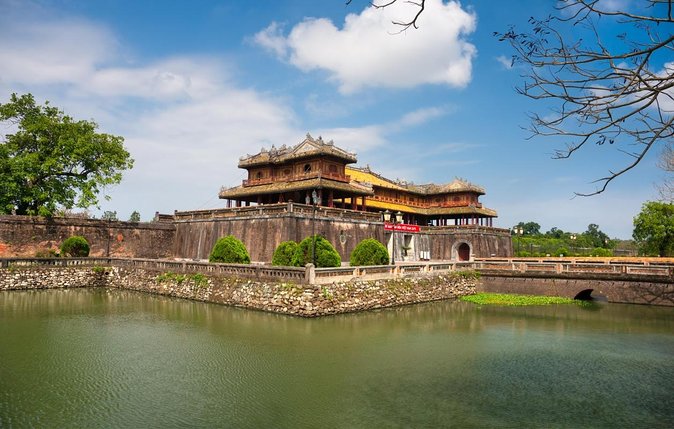
- Hue Historic Citadel: Imperial City, built for power and ceremony
- Thanh Toan Covered Bridge and the market walk
- Khai Dinh Tomb: small size, big architectural statements
- Minh Mang Tomb and the idea of designed space
- Tu Duc and Dong Khanh: the tombs you pick shape your mood
- Thuy Tien Lake and the abandoned water park pause
- Vong Canh Hill: views plus a Vietnam War perspective
- Thuy Xuan village: incense sticks and conical hat making
- Tu Hieu Pagoda: the Root Temple and the eunuchs’ story
- Thien Mu Pagoda and the Celestial Lady Pagoda: symbols you can feel
- Tiger Arena at Thuy Bieu Village: entertainment with real brutality
- Dragon boat on the Perfume River: the calm finish
- Price and value: what you’re paying for (and what you might add)
- Who should book this Hue tour
- Should you book it?
- FAQ
- How long is the Hue Motorbike & Boat Tour?
- What’s the starting point for pickup?
- Is the tour private?
- What transport do you use during the day?
- Is an English-speaking guide included?
- Are food and drinks included?
- Are royal tomb entrance tickets included?
- What entrance ticket combo options are mentioned?
- Can I change which tomb I visit (Tu Duc vs Minh Mang)?
- Is there free cancellation?
Key things to know before you go
- Motorbike + helmets, private setup: You ride with qualified drivers and helmets, plus an English-speaking guide.
- A curated mix of royalty and everyday life: You’ll connect tombs and pagodas to how people lived, farmed, and worshipped.
- Royal-tomb tickets are your part: You’ll need to buy entry for the tombs separately (or choose combo tickets).
- Perfume River by private dragon boat: A real decompression moment after temples and tombs.
- Tiger Arena reality check: The entertainment history here is dark, and the guide does not sugarcoat it.
Riding into Hue: why this motorbike-and-boat format works
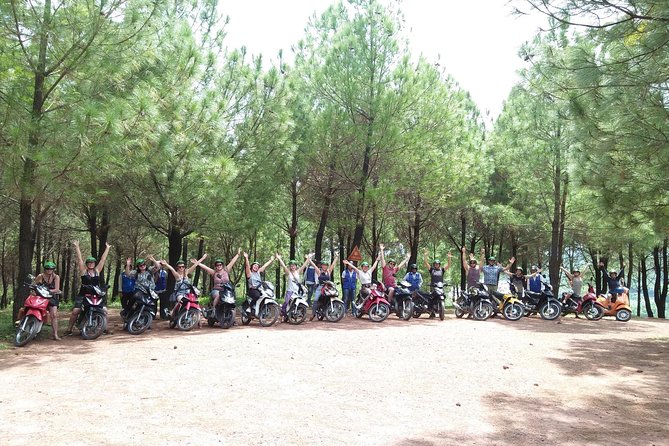
Hue is one of Vietnam’s “slow to understand” places. The city is famous for imperial power, but the countryside and everyday life around it help you read the landscape. That’s why I like this format: you get a local-feeling ride on a scooter or motorbike, and then you finish with a private boat on the Perfume River.
The day is built around two transport styles:
- Overland travel by motorbike/scooter to cover temples and tombs efficiently.
- A dragon boat cruise to slow down and reset.
Even if you’re not a “motorbike person,” this setup can be a smart choice. Your driver handles the road, and your guide keeps you on track with explanations and timing so you’re not just being dropped at gates.
You can also read our reviews of more tours and experiences in Hue Vietnam.


Your morning start in Hue City
Pickup is from your hotel or from Hue Railway Station (if you share your train number). That matters, because Hue days can start awkwardly when tours require you to meet at a busy hub.
Once you’re on the bikes, you’ll notice the pacing is designed to keep you from zigzagging too much. You’ll have photo stops, short breaks, and guided time at each major stop. The tour is also private, which helps a lot if you want to linger at a viewpoint or move faster through areas that don’t interest you as much.
Hue Historic Citadel: Imperial City, built for power and ceremony
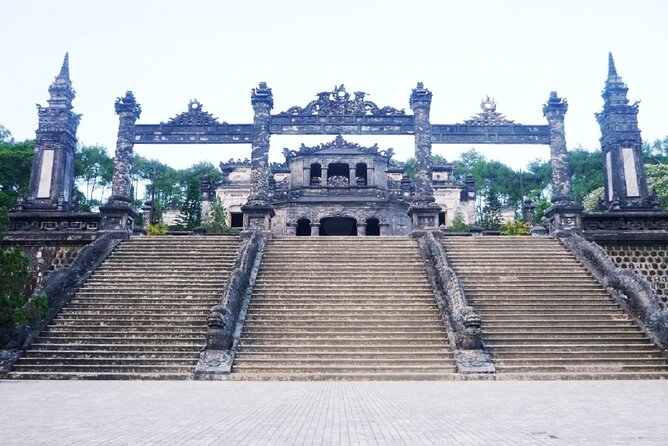
Your main imperial stop is Hue Historic Citadel, tied to the Nguyen Dynasty. The big timeline detail I like here is that it was started under King Gia Long (beginning in 1804) and finished under King Minh Mang (completed in 1833). It was used as living and working quarters for the royal family until 1945, and it’s recognized by UNESCO as World Cultural Heritage.
What this means for you on the ground: the citadel isn’t just impressive walls. It’s an entire worldview—hierarchy, ceremony, and control. Hung’s explanations help you connect what you’re seeing to how the royal court was organized, rather than treating it as a set of buildings.
One small consideration: this is also where you’ll feel the “big site” part of Hue. Expect walking and some open space. If you’re wearing heat-friendly clothes, you’ll enjoy the guided time more.
Thanh Toan Covered Bridge and the market walk
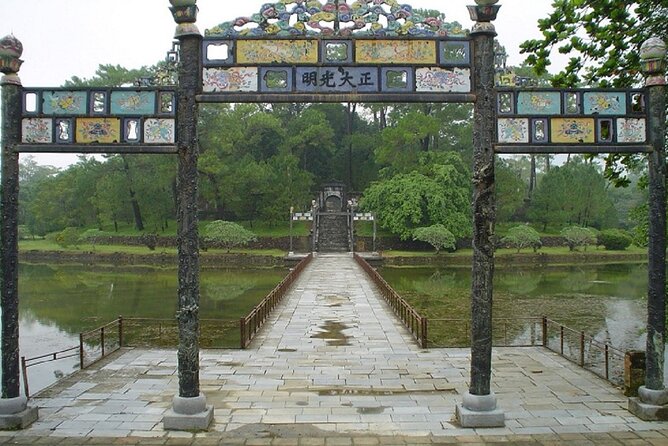
Next you head to Thanh Toan Covered Bridge, built in 1776 thanks to donations from a local lady. This kind of origin story is the fun part—these bridges aren’t just built by empires. They’re supported by communities.
From there, you walk to a local market area linked to daily life. It’s not a shopping trap moment; it’s more about watching how people move through their routine. This is where the countryside side of the day starts to feel human.
If you like street-level observation—how vendors talk, how locals buy essentials, how life continues around old landmarks—this stop is worth leaning into.
Khai Dinh Tomb: small size, big architectural statements
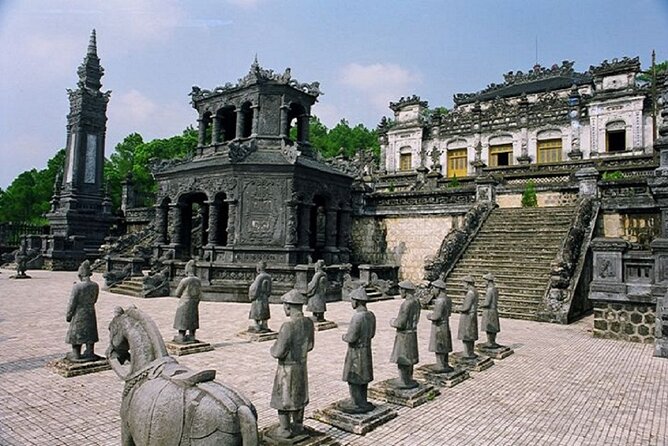
Khai Dinh Tomb is famous for being the smallest of the Nguyen emperor tombs, yet also the most elaborately designed. I like that the design doesn’t follow one straight style. You’ll see a mix of Oriental, Indian, and European architectural influence.
That blend is more than decorative. It tells you something about how Vietnamese royal culture wasn’t sealed off from the wider world. In other words, the tomb is a visual message about reach and ambition.
Practical note: this stop is one of the ones where you should be ready for entrance ticket costs, since royal tomb entry is not included.
Minh Mang Tomb and the idea of designed space
Minh Mang Tomb is considered a strong example of how natural landscape and architecture work together. A detail I found especially helpful is the building timeline: Minh Mang passed away in 1841, but the tomb was built mostly by his successor, Thieu Tri, during 1840 to 1843.
What I like about focusing on the “who built it” angle is that it changes how you read the site. You stop seeing it as a single-person monument and start seeing it as a continuing royal project.
If you’re the type who enjoys understanding the logic behind placement—why certain halls face certain directions—this tomb will feel satisfying.
Tu Duc and Dong Khanh: the tombs you pick shape your mood
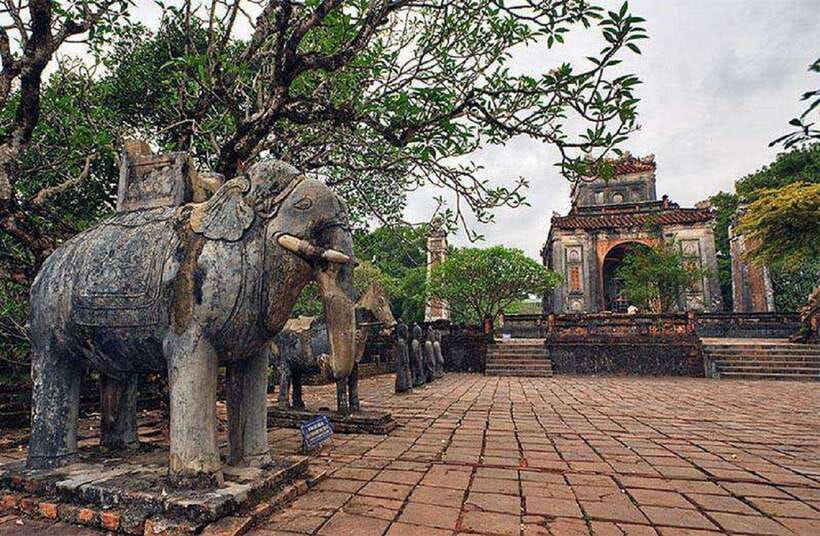
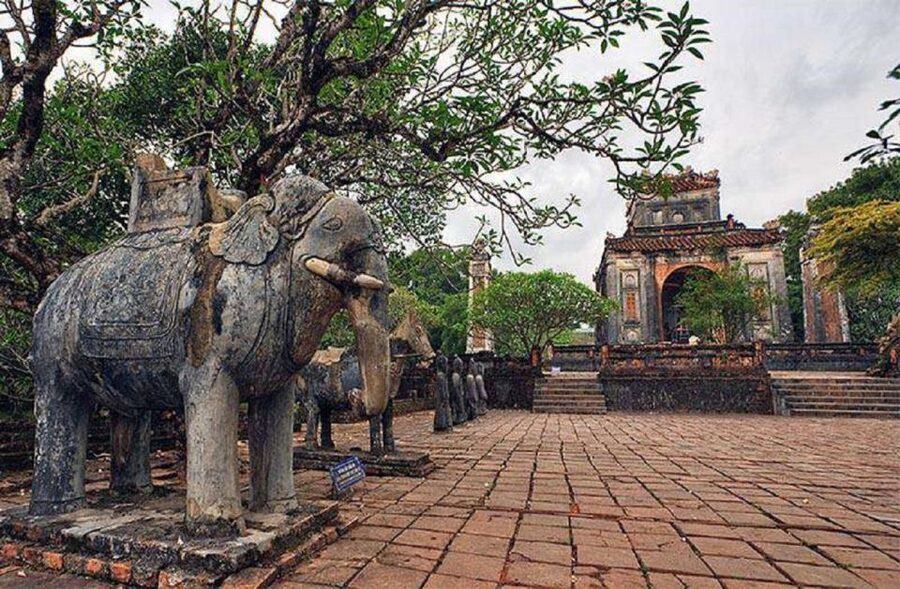
This tour is flexible in one important way. You can visit Tu Duc Tomb instead of Minh Mang Tomb if you tell the operator when you reserve.
Tu Duc Tomb is described as one of the most beautiful and picturesque works of Nguyen architecture. It covers 12 hectares, took 3 years, and involved about 3,000 workers. That scale matters when you walk through it—you feel the time and labor, not just the final design.
You’ll also have a stop at Emperor Dong Khanh’s mausoleum. It’s handled as a guided site with photo stops and scenic riding time around it.
If you love variety, pick the tombs based on your interests:
- If you want dramatic, landscaped design: Tu Duc tends to be a strong choice.
- If you prefer a more focused architectural reading: Khai Dinh and Minh Mang can feel more intense.
Thuy Tien Lake and the abandoned water park pause
Between major heritage stops, you’ll make time around Thuy Tien Lake, including a look at the abandoned water park area. This is the kind of stop you either love for photos and mood or you skip through for time.
I think it works as a pressure release. After tombs and formal spaces, a strange, quiet site like this gives your brain a break. Even if you’re not after nostalgia, the change of scenery helps the day feel varied.
Vong Canh Hill: views plus a Vietnam War perspective
Vong Canh Hill is built for a reason: you get a broad view of the Perfume River, plus time to learn about the Vietnam War from viewpoints in the area.
This is one of those stops where context makes the view more meaningful. You aren’t just taking pictures of a river bend. You’re connecting that geography to how people had to think about danger, distance, and movement.
If history is your weak spot (in a good way), you’ll likely appreciate the guide’s framing here.
Thuy Xuan village: incense sticks and conical hat making
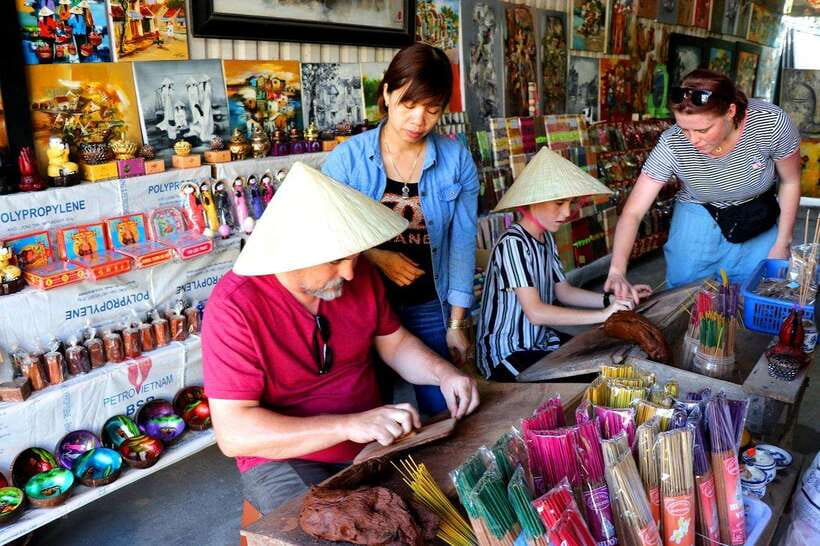
Thuy Xuan Village is a workshop area known for making incense sticks and conical hats. You’ll get time for a visit and shopping, plus the chance to try making incense sticks for a souvenir.
This is the kind of activity that doesn’t require you to be an artisan. You just need patience. The payoff is personal: you’ll take home something tied to a specific place and a specific craft, not just a generic souvenir.
Also, it’s a nice reset from the solemn tombs and temples. It shifts the day from royal power to everyday traditions that still matter.
Tu Hieu Pagoda: the Root Temple and the eunuchs’ story
At Tu Hieu Pagoda, you learn about a less-talked-about side of royal life. The site served as living quarters for eunuchs of the Nguyen Dynasty after they retired. It’s also known as the Root Temple.
This stop can hit harder than you expect, because it makes royal history feel like human lives—roles, restrictions, and the afterlife of service. Hung’s explanations help you understand why this pagoda mattered, beyond architecture and scenery.
If you’re interested in cultural history that doesn’t stay on the surface, this one is a must.
Thien Mu Pagoda and the Celestial Lady Pagoda: symbols you can feel
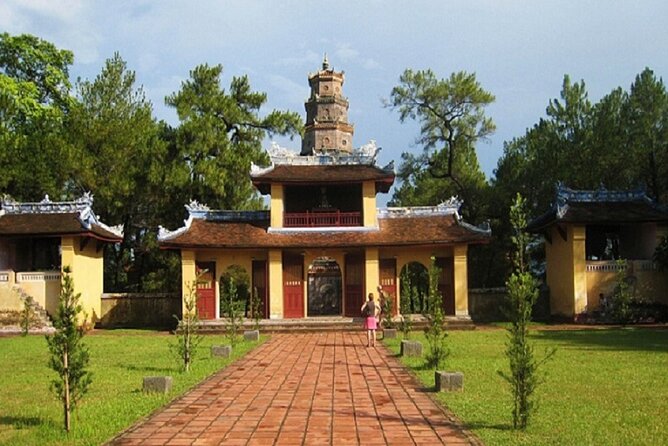
Your day includes Thien Mu Pagoda on the north shore of the Perfume River, about 3 km from the Imperial Citadel. I like that the tour gives you options for how to get there: you can reach it by dragon boat along the river, or by bicycle if you’re up for it.
Thien Mu is regarded as the unofficial symbol of the former imperial capital. And here’s what makes it especially worth your attention: today it houses an Austin Motor Vehicle associated with Thich Quang Duc’s self-immolation in Saigon in 1963, in protest against the Diem regime. The site is still home to monks and remains a holy place visited regularly.
Then there’s also the Pagoda of the Celestial Lady, another guided stop with time for photos and sightseeing.
Together, these pagodas show you that Hue isn’t only about tombs and court. It’s also where belief, memory, and daily devotion continue.
Tiger Arena at Thuy Bieu Village: entertainment with real brutality
At Tiger Arena, Thuy Bieu Village, you’ll visit a site built in 1830 that was used as a kind of Colosseum for fighting between elephants and tigers for entertainment of kings until 1904.
I appreciate how the tour frames this honestly. It’s easy to romanticize the past when it’s behind palace walls. Here, you’re learning about brutality directly, which changes the emotional tone of the day.
If that topic makes you uncomfortable, it’s still a powerful stop because it explains why historical culture is not always gentle or noble.
Dragon boat on the Perfume River: the calm finish
To close the day, you cruise on the Perfume River by private dragon boat. This part matters because it’s your decompression window. After riding, walking, and listening for hours, the water gives your eyes a break and your body a chance to reset.
You’ll then return toward Hue City, with your guide and driver taking you back to your hotel.
If you’re thinking about what to prioritize photos-wise, aim for the river cruise. You’ll likely get calmer light and a better sense of Hue’s layout from the water than from most roadside viewpoints.
Price and value: what you’re paying for (and what you might add)
At $16 per person for a 1-day private tour, the value is strong on paper—especially because you get:
- An English-speaking guide
- Motorbikes/scooters with driver and helmets
- A private dragon boat cruise
- Fuel and entrance fees, with one major exception: royal tombs
- Travel insurance (covered up to 20,000,000 VND)
So where can the day cost more? Mainly in royal tomb entrances. The tour notes that you can buy combo tickets for Imperial City + royal tombs:
- 420k VND for Imperial City with 2 tombs
- 530k VND for Imperial City with 3 tombs
- Valid in two days
That combo information is actually useful because it helps you plan how many tombs you want to commit to on your overall Hue trip, not just inside this one day.
Who should book this Hue tour
You’ll enjoy this most if you:
- Want a high-coverage day without spending it trapped on slow transport
- Like history that connects royals, religion, and real daily life
- Are comfortable with motorbike/scooter travel for much of the day
- Want the Perfume River as a true break, not just a photo stop
You might not love it as much if you strongly prefer walking-only sightseeing, or if the Tiger Arena topic will be hard for you.
Should you book it?
I’d book it if you want Hue in one day and you like your history with context. The guide-led explanations (Hung) are a big reason this works, and the combination of imperial sites, pagodas, craft workshops, and a private river cruise gives you variety without feeling random.
Before you confirm, do two quick checks:
- Decide whether you want Tu Duc Tomb or Minh Mang Tomb (tell them when you reserve if you want to swap).
- Mentally budget for royal tomb entrances, ideally by using the Imperial City combo ticket options mentioned.
If you match those two points, this is a strong value way to see Hue like locals move through it—on two wheels, then on the river.
FAQ
How long is the Hue Motorbike & Boat Tour?
It’s a 1-day tour.
What’s the starting point for pickup?
Pickup is included from your hotel or from Hue Railway Station. If you want station pickup, you provide your train number.
Is the tour private?
Yes, it’s a private group tour.
What transport do you use during the day?
You’ll travel by motorbike/scooter with a driver and helmets, and you’ll also enjoy a private dragon boat cruise on the Perfume River.
Is an English-speaking guide included?
Yes. The guide is live and English-speaking.
Are food and drinks included?
No. Food and drinks are not included.
Are royal tomb entrance tickets included?
No. Entrance tickets for royal tombs are not included. You may choose combo tickets for Imperial City and royal tombs.
What entrance ticket combo options are mentioned?
The tour mentions combo tickets: 420k VND for Imperial City with 2 tombs, or 530k VND for Imperial City with 3 tombs. They’re valid in two days.
Can I change which tomb I visit (Tu Duc vs Minh Mang)?
Yes. The tour says it’s possible to visit Tu Duc Tomb instead of Minh Mang Tomb if you inform them when making the reservation.
Is there free cancellation?
Yes. You can cancel up to 24 hours in advance for a full refund.