REVIEW · SCOTLAND
Lewis Historical Tour
Book on Viator →Operated by Hebridean Life Tours · Bookable on Viator
Lewis has a way of grabbing attention fast, and this tour delivers the sights in smart order. I like the chance to stand by Clach an Trushal and the way the day slows down at Callanish so you can actually make sense of what you’re seeing. My one watch-out: it’s a busy route, so you’ll be out of the car and back in it often during the 4 to 6 hours.
What makes this experience work is the private format and the local guides. On past departures, guides like Alan, Marisa, and Murdo were praised for being professional, fun, and flexible with timing so you can ask questions and even adjust when something grabs your attention. You’ll also want to plan for optional add-ons, since one extra attraction mentioned (Bosta Iron Age House) isn’t included and costs £6.50 per person.
In This Review
- Key things that make this Lewis tour click
- A private Lewis day built for real questions
- Pickup in Stornoway, then a clean route of five key stops
- Clach an Trushal: the Stone of Compassion, measured in meters
- Butt of Lewis Lighthouse: David Stevenson, sea life, and a wind record
- Gearrannan Blackhouse Village: 1800s life you can see
- Callanish Standing Stones: older than Stonehenge, with a guide’s perspective
- Lews Castle: museum time plus the Lewis Chessmen story
- Price and value: what $493.61 buys you on Lewis
- How to get the best day out of your guide
- Should you book this Lewis Historical Tour?
- FAQ
- FAQ
- How long is the Lewis Historical Tour?
- What time does the tour start, and where does it begin?
- Is pickup available?
- Is the tour private?
- What’s included in the tour cost?
- Are there any extra admission fees?
- What language is the tour in?
- What is the cancellation policy?
Key things that make this Lewis tour click
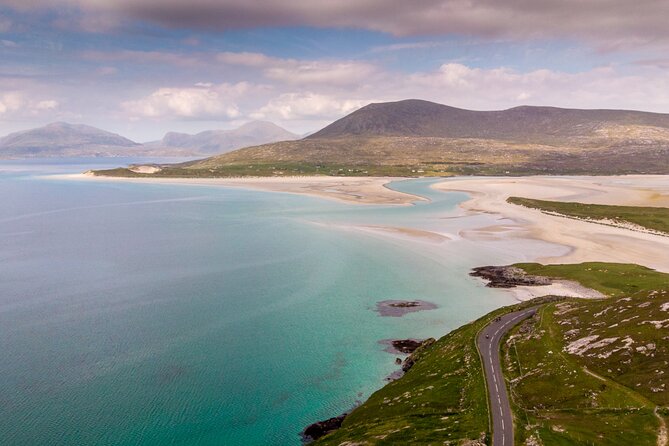
- Stone of Compassion stop at Clach an Trushal, with real scale details (5.8m tall) in a very short visit
- Butt of Lewis Lighthouse at the most north-westerly point in the British Isles, with David Stevenson ties and big wind history
- Gearrannan Blackhouse Village with an included museum time, plus a Harris Tweed weaver working and a peat stack to see
- Callanish Standing Stones paired with an exhibition and a tea-and-cake break at the visitor centre
- Lews Castle museum time plus the Lewis Chessmen story, carved from walrus ivory and found in Uig
- Private transportation and guide flexibility, including help avoiding large tour-bus timing when possible
A private Lewis day built for real questions
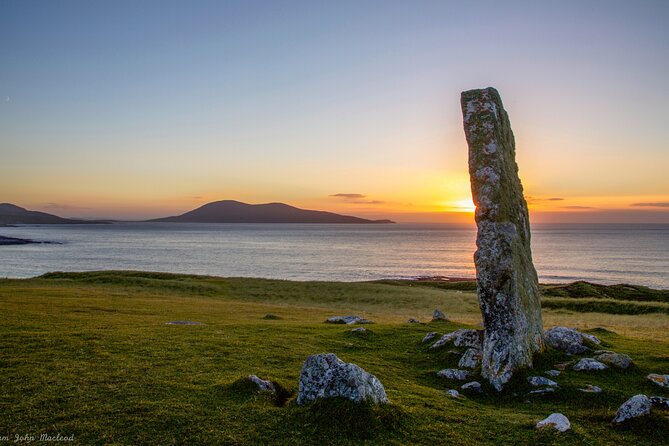
This isn’t a rush-through “here’s a photo, next stop” day. It’s set up like a guided conversation with stops that each have a point, from Neolithic stones to a lighthouse and then into 1800s island life and museum time at Lews Castle.
You start at 9:00am in Stornoway (South Beach) and return back to the same meeting point. The total time is about 4 to 6 hours, which means you can fit in multiple high-impact sites without feeling like you need to book a whole second day on Lewis just to cover the basics.
The big win is that you’re traveling as your own group. People who want context tend to get it here—especially if you’re asking about the older sites and what the stones might have meant. In the best moments, the guide can slow down when your group’s curiosity needs more time, rather than forcing you into someone else’s schedule.
You can also read our reviews of more tours and experiences in Scotland.
Pickup in Stornoway, then a clean route of five key stops
Logistics are straightforward. You’re offered pickup at Stornoway Airport, Stornoway Town Centre, or the Deep Water Port, and the tour ends back at the original meeting point. You’ll have a mobile ticket, and the tour runs in English.
One practical consideration: the tour is marked as requiring moderate physical fitness. That doesn’t mean it’s a hike, but you’ll likely be doing short walks around viewpoints, standing and moving for photos, and going in and out of a few locations across the day.
The route timing also matters. Several stops have short scheduled durations (like 5 minutes at Clach an Trushal and 15 minutes at the lighthouse), so it helps if you go in with a photo plan and then switch to “listen and look” for the details.
Clach an Trushal: the Stone of Compassion, measured in meters
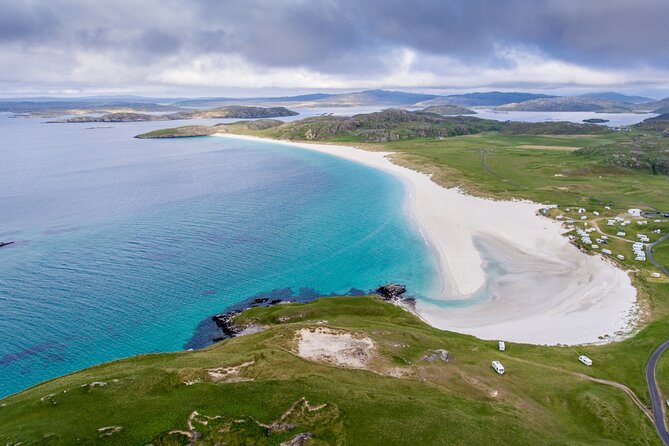
Your first stop is Clach an Trushal, known as the Stone of Compassion. This standing stone is believed to be the tallest in Scotland, and the tour gives you the kind of numbers that help your brain picture it: it stands about 5.8 metres tall and is roughly 1.83 metres wide, with a thickness up to 1.5 metres at its thickest point.
That’s the main value of this quick stop. Even with limited time (about 5 minutes), the scale helps you stop treating the stone circle story as just “old rocks.” You’re looking at a large, deliberate presence in the landscape.
The drawback is obvious: with only a few minutes, you won’t get long browsing time or an in-depth museum-style setting. Plan to use the time for two things—quick photos and attention to what the guide explains about the site.
Since admission is free here, the stop also works well if you’re trying to keep costs under control while still hitting a top-of-the-list Neolithic highlight.
Butt of Lewis Lighthouse: David Stevenson, sea life, and a wind record
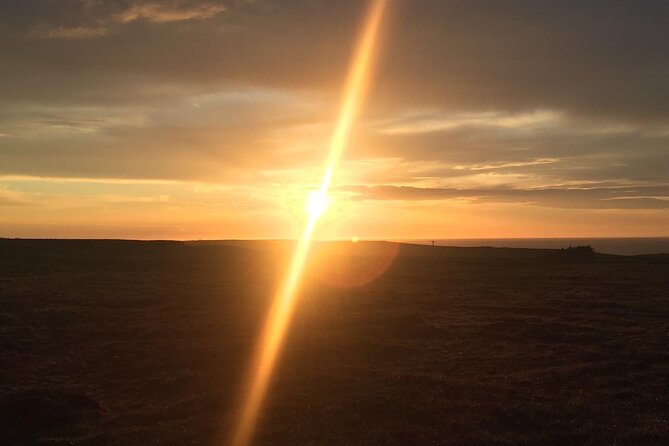
Next is Butt of Lewis Lighthouse, at the most north-westerly point in the British Isles. The lighthouse was built by David Stevenson—the father of Robert Louis Stevenson. That connection is a fun one because it links the island to a wider Scottish cultural story, not just local maritime survival.
This is also a stop for ocean watching. The area is noted for the chance to spot basking sharks and porpoises, plus there’s a small beach nearby if the weather is kind. You get around 15 minutes and admission is free.
One more detail adds texture: the Guinness Book of Records includes this area for the highest gust recorded in the British Isles—133.6 miles per hour in 1962. Even if you never feel that exact intensity, it’s a clue to expect strong conditions at the edge of the world.
So the trade-off here is time versus flexibility. Fifteen minutes is enough to take in the lighthouse and viewpoints, but you can’t count on wildlife like it’s guaranteed. If you’re a sea-life fan, keep your eyes up and your expectations realistic.
Gearrannan Blackhouse Village: 1800s life you can see
Then you shift from stones and sea to daily life at Gearrannan Blackhouse Village, a restored village that focuses on Lewis life in the 1800s. You’ll get about 45 minutes here, and the admission is included, which is a rare win in a tour where other entry fees can add up.
The museum approach is hands-on and readable. You’ll watch a video on community life and culture, and you can see a Harris Tweed weaver working. There’s also a real peat stack to view, which helps the story move beyond words.
This stop is especially valuable if you care about how people lived, not just what ancient monuments look like. It’s the kind of place where small details do the heavy lifting—tools, materials, and the rhythm of work you can actually observe.
One caution for your planning: Bosta Iron Age House is listed as an optional add-on with a fee of £6.50 per person, but it’s not included. If you’re deciding on the day whether to add that, you’ll want to treat it as a bonus rather than something guaranteed in the base plan.
Callanish Standing Stones: older than Stonehenge, with a guide’s perspective
Your fourth stop is Callanish Standing Stones. The tour frames this site as older than Stonehenge and notes that the stones are similar in age to the Pyramids—an attention-grabbing comparison that helps you grasp just how far back this goes.
You’re there for about 30 minutes, and admission is free. The schedule also includes time for the exhibition, which is key because Callanish is the type of site where you’ll either feel lost—or you’ll start connecting pieces once you have context.
You can also grab tea and cake at the visitor centre. That matters more than it sounds. When you’re trying to make sense of ancient stone geometry and human motives, you need a mental pause, not another sprint.
The only real drawback: 30 minutes is enough for the stones and the basics, but it’s not enough for a long, question-by-question study. If your group likes deep interpretation, this is where having a guide who handles questions well makes the biggest difference.
Lews Castle: museum time plus the Lewis Chessmen story
The final stop is Lews Castle. The building was redeveloped in 2015 to return it closer to its original state, and it was built between 1840 and 1860 by Lord and Lady Matheson as a luxurious dwelling. Later, it was sold to Lord Leverhulme of Unilever.
In 1924, the castle and surrounding lands were left to the people of Stornoway, leading to the establishment of the first land-owning trust in Scotland. That local ownership detail gives the castle a human center, not just a grand building on a hill.
The museum on-site houses island history and includes the Lewis Chessmen, which were discovered in a sand dune in Uig in 1831. These chess pieces were carved from walrus ivory and are believed to have been brought to Lewis by Vikings in the 12th century AD.
You get about 30 minutes, and admission is listed as free. That’s a solid amount of time for both wandering the exhibits and locating the chessmen story without feeling rushed.
As with other short stops, the limitation is depth. If chessmen are your top priority, you may want to ask the guide where to look first so you don’t spend your limited time hunting.
Price and value: what $493.61 buys you on Lewis
At $493.61 per person, this isn’t a low-cost tour. So the real question is value: what do you gain that you wouldn’t easily piece together on your own?
First, you get private transportation for a route that hits multiple high-demand locations: Clach an Trushal, Butt of Lewis Lighthouse, Gearrannan, Callanish, and Lews Castle. Second, the day’s admission situation is unusually favorable: Gearrannan is included, while several other stops are listed with free admission.
There’s also a hidden value in pacing and attention. In examples from prior groups, guides were praised for being flexible with unplanned stops when something interesting appeared, and for trying to time visits to avoid the big-tour-bus crunch. That’s not just convenience—it makes the experience more personal, especially at places where you want to hear explanations instead of shouting over crowds.
One more thing: the tour is often booked well in advance (the average booking window is 125 days). That’s a hint that the private format and guide-led approach are in demand on Lewis.
Still, if you’re traveling on a tight budget, you may feel the per-person price. This tour tends to make the most sense if you want a guided day that connects sites into a coherent story, and you’re okay paying for transportation plus interpretation rather than self-driving and reading everything on your own.
How to get the best day out of your guide
If you like history, this is the style of tour that rewards questions. A strong guide can help you understand not only what each place is, but why people cared enough to build, travel, or preserve it.
A couple of practical moves:
- When you arrive at a short stop like Clach an Trushal or the lighthouse, ask one clear question right away. Then take your photos.
- For the longer museum moments (Gearrannan and Lews Castle), ask about daily life and what the objects mean, not just dates.
- If you’re interested in the Neolithic sites, say so early. Guides can often steer your attention in a way that makes Callanish and the standing stones easier to interpret.
And remember: the schedule is designed to avoid boredom, not to guarantee long free time. If you want hours of wandering without guidance, you may prefer a slower, self-led day.
Should you book this Lewis Historical Tour?
You should book if you want a private, guide-led route that ties together island culture, ancient monuments, and museum artifacts in one smooth half-day to full-day window. It’s a great fit for small groups, especially if you care about both the big sites (Callanish, Clach an Trushal) and the human stories (Gearrannan, Lews Castle, and the Lewis Chessmen).
Skip it or consider alternatives if you’re mainly chasing maximum time at one place, or if the per-person price feels steep compared with what you could do by self-driving and picking a couple of stops. The timing is efficient, but it’s still a schedule—so you’ll want to enjoy the “see a lot with context” style rather than expecting endless lingering.
FAQ
FAQ
How long is the Lewis Historical Tour?
The tour duration is approximately 4 to 6 hours.
What time does the tour start, and where does it begin?
The start time is 9:00am, and the meeting point is South Beach, Stornoway (HS1, UK).
Is pickup available?
Yes. Pickup is offered from Stornoway Airport, Stornoway Town Centre, and Stornoway Deep Water Port, plus client accommodations.
Is the tour private?
Yes. It’s a private tour/activity, and only your group will participate.
What’s included in the tour cost?
Private transportation is included. Gearrannan Blackhouse Village admission is listed as included. Several other stops also have free admission.
Are there any extra admission fees?
Yes. Bosta Iron Age House is listed as not included, with a fee of £6.50 per person.
What language is the tour in?
The tour is offered in English.
What is the cancellation policy?
Free cancellation is available up to 24 hours in advance for a full refund. If you cancel less than 24 hours before the start time, the amount you paid will not be refunded.