REVIEW · LUCKNOW
Lucknow Colonial Heritage Walk: Guided Tour by Foot
Book on GetYourGuide →Operated by Lets Go Far · Bookable on GetYourGuide
Lucknow history walks right up to you in two hours. I love how this walk lines up St. Joseph’s Cathedral and The Residency so you can see colonial-era design and the 1857 Rebellion scars in the same route. It’s one of the easier ways to get your bearings in central Lucknow without feeling like you’re just chasing landmarks.
One catch: you’re on your feet for much of the tour, so plan for real walking time under sun and shade—bring water and wear comfortable shoes. If you want a guided story instead of a self-guided photo hunt, this tour is a strong pick.
In This Review
- Key things that make this walk worth your time
- Entering St. Joseph’s Cathedral: Gothic spires and colonial craftsmanship
- From leafy lanes to The Residency: the 1857 Rebellion made visible
- Hazratganj Market: where Mughal elegance meets British street order
- The guide experience in English and Hindi, with a storyteller touch
- What the 2-hour format gives you, and what it can’t
- Price and value: why $13 can make sense here
- Practical tips before you go: what to bring and how to dress
- Who should book this Lucknow colonial heritage walk
- Should you book? My take
- FAQ
- Where is the meeting point for the tour?
- How long is the Lucknow Colonial Heritage Walk?
- How big is the group?
- What languages will the guide speak?
- Which places does the tour visit?
- Is pickup and drop-off included?
- What’s included in the ticket price?
- What is not included?
- What should I bring?
- What restrictions apply, and who should avoid this tour?
- What is the cancellation policy?
Key things that make this walk worth your time

- Gothic revival architecture at St. Joseph’s Cathedral, with details you’ll actually know how to notice
- The Residency ruins linked to the 1857 Rebellion, explained in a clear, human way
- Hazratganj Market’s mixed legacy, where Mughal-style grace meets British-era street planning
- Small group size (up to 10), which helps the guide keep conversations going
- English and Hindi live guide so you can follow the story without guesswork
- Insider-style route tips, including quieter lanes and spots locals use day to day
Entering St. Joseph’s Cathedral: Gothic spires and colonial craftsmanship

You start at the entrance of St. Joseph’s Cathedral Church. Even before you get too far inside, the building’s mood is the point. The cathedral’s look is heavily shaped by Gothic revival style: tall spires, dramatic lines, and that sense of vertical lift you usually find in churches built to be seen from far away.
What I like most here is how the guide turns a pretty building into a clue. You’re not only looking at architecture—you’re learning how colonial-era design habits arrived and got reshaped in Lucknow. When your guide points out craftsmanship and layout choices, it changes your photos. Suddenly you’re not just snapping spires; you’re noticing why they feel the way they do.
Practical note: this is a walk-and-look tour, so expect to spend time pausing for explanations. Bring your sunglasses and be ready for bright light if the sun hits the façade. You’ll move on when it feels like you’ve gotten the cathedral’s story in your head.
You can also read our reviews of more tours and experiences in Lucknow.

From leafy lanes to The Residency: the 1857 Rebellion made visible
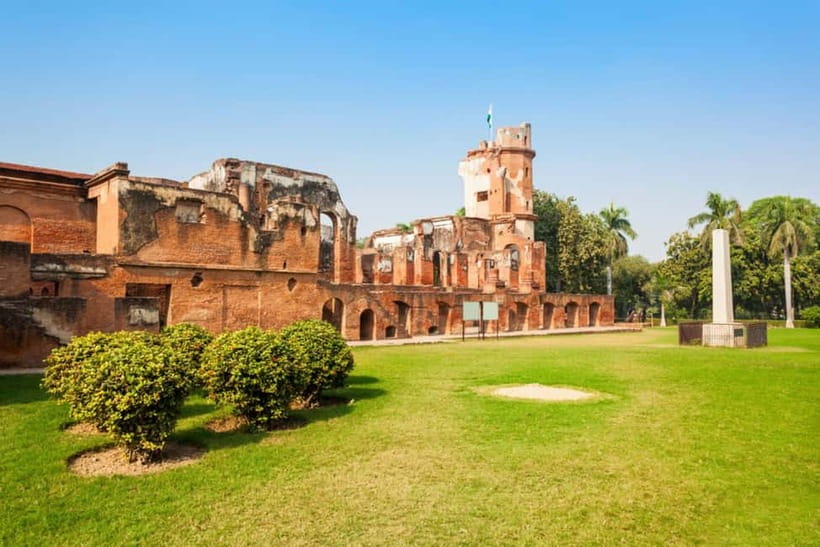
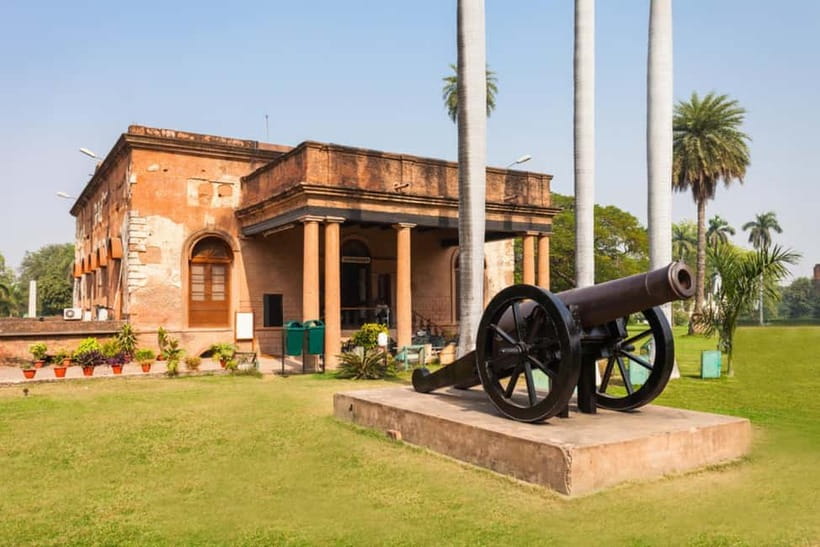
After the cathedral, you head toward The Residency, a colonial-era complex that became one of the most famous sites of the 1857 Rebellion. The focus here isn’t comfort. It’s weight. The area is now ruined, and that matters: you’re walking among structures that carry the history of a siege.
The best part of this segment is how your guide connects cause and effect. You’ll hear how British officials lived here and how the siege unfolded—then you’ll look at what remains: crumbling walls, the kind of damage you can’t unsee once it’s explained, and the general layout that helps you picture what people experienced.
If you’re the type who usually skips ruins because you think you already understand them, don’t. Ruins work best when someone gives you a mental map. You’ll leave with the ability to read The Residency like a timeline, not just a set of broken stones.
One consideration: because this is historical ground, you’ll want to keep it respectful and slow down when the guide asks you to notice specific areas. This isn’t a sprinting tour.
Hazratganj Market: where Mughal elegance meets British street order
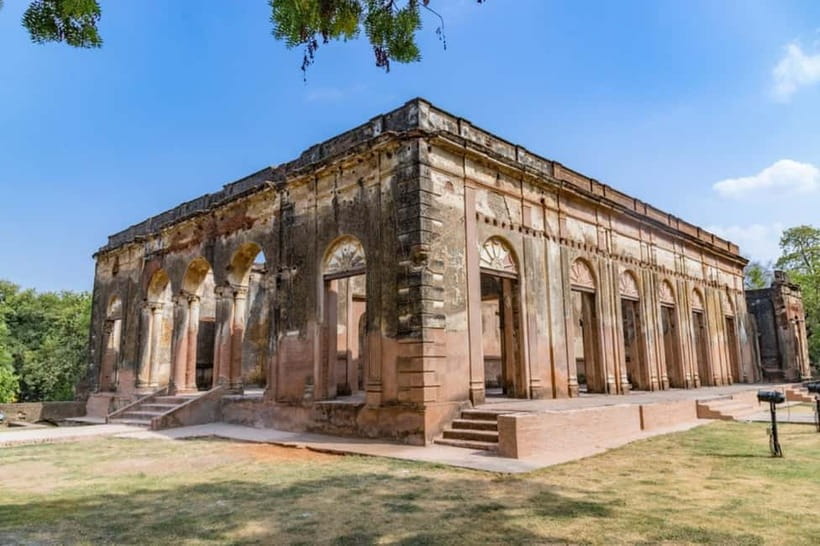
By the time you reach Hazratganj Market, you’re switching from siege history to everyday city life. That’s a smart arc. It helps you see Lucknow as more than one dramatic chapter.
Hazratganj is described as a blend of Mughal and British influence, and you’ll notice it in the street feel. The tour highlights arcaded walkways and Victorian-style street lamps, but it also stresses Mughal-era roots. The result is a market space that feels like two eras worked side by side—then got absorbed into one identity.
What makes this stop valuable is that the architecture is still in use. You’re not just viewing the past from behind a barrier. You’ll see colonial-style buildings repurposed into contemporary shops and cafés, so the place feels alive while still carrying historical form.
If you like getting a feel for how locals move around, this is where the tour’s “experience Lucknow like a local” promise shows up. The guide can point you toward lanes and practical rhythms you might miss if you were only following main streets. Bring some cash and a camera—this is the part where you’ll want a few photos, but also a moment to watch how the market operates.
The guide experience in English and Hindi, with a storyteller touch

This tour is led by an English/Hindi live guide. That sounds basic until you realize how often history tours fail when the narration is either too dense or too vague. Here, you get a guided story that’s meant to be followed, and you’re encouraged to ask questions.
I also appreciate the tone: the tour includes lively conversations and humor, plus a focus on real connection—not stiff lectures. In past departures, guides like Saadam and Vishal have been highlighted for their passion and storytelling style, which is exactly what you want when you’re walking through serious sites like The Residency.
If your Hindi is limited, that’s fine. The guide’s job is to keep you oriented and explain what you’re seeing as you see it. And if you do speak Hindi, it’s a chance to pick up local phrasing tied to the places you’re visiting.
What the 2-hour format gives you, and what it can’t
A two-hour walking heritage tour is the sweet spot for a first-time visit. You get a coherent loop: cathedral → ruins → market. In one session, you see three different ways Lucknow expresses itself: spiritual colonial-era architecture, the hard physical memory of 1857, and daily commercial life shaped by mixed influences.
Still, it’s not a slow museum crawl. You won’t have time to linger for a long sit-down at each stop, and you won’t have unlimited wandering to explore beyond the route. The trade-off is that the guide handles the pacing so you don’t get lost—or worse, miss the point of what you’re looking at.
You’re also walking through historical sites, so the tour leans on comfort and weather prep. If you’re coming during hot hours, you’ll feel it. If you’re the kind of person who enjoys quick stops with clear explanations, you’ll likely love the pace.
Price and value: why $13 can make sense here
At about $13 per person for a 2-hour guided walk, this is priced like an efficient city experience. The value isn’t just the guide—it’s the combination of three locations that would be harder to connect without context.
You’re paying for:
- a route that links architecture and history (not random sightseeing),
- interpretation that helps you read what you’re seeing,
- English/Hindi narration,
- and a small group cap (up to 10) so you’re not lost in a crowd.
Is $13 cheap? For a guided session with multiple stops in central Lucknow, it’s in the practical range. You should still check what you’ll actually pay at checkout, especially if the displayed price shows one amount but the final total changes in local currency. Before you confirm, I’d make sure the final number in INR is the one you’re expecting.
One more value point: you get “insider hacks” and local-style tips, including quieter lanes and tucked-away spots locals use. Those small navigation wins can save you time later, especially if this is your first day in the city.
Practical tips before you go: what to bring and how to dress
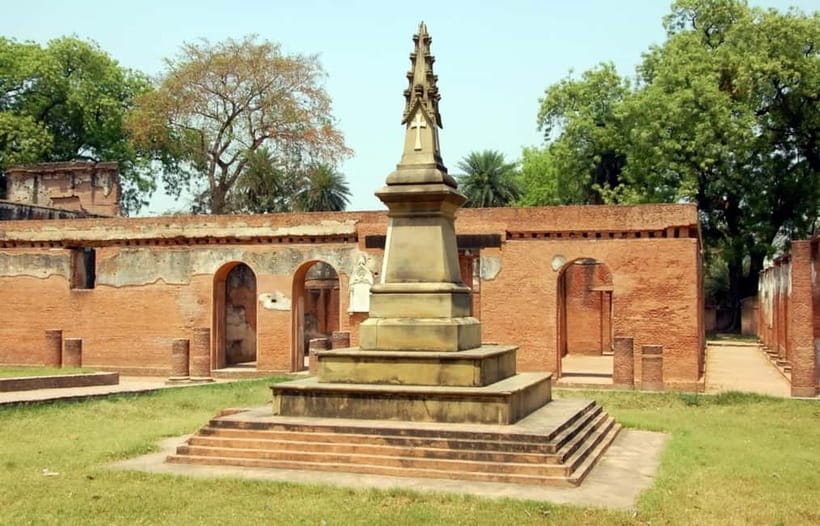
This is a walking tour, so your job is to make your body the least complicated thing on the route.
Bring:
- sunglasses and sun hat
- sunscreen
- water
- camera
- cash
Plan your clothing around the site rules. Short skirts aren’t allowed, and you should avoid anything that makes you feel uncomfortable when you’re moving between stops.
Also note what’s not allowed:
- weapons or sharp objects
- intoxication
- alcohol and drugs
Good shoes matter here. You’ll want something that handles uneven or historical ground and keeps you stable for pauses and photos. If you’re prone to foot fatigue, consider wearing cushioned insoles.
Finally, meeting time matters. You meet at the entrance of St. Joseph Cathedral Church, so arriving on time helps the whole group keep momentum.
Who should book this Lucknow colonial heritage walk
This tour is a great match if you want:
- a guided connection between Lucknow’s colonial-era architecture and the 1857 Rebellion,
- a compact 2-hour introduction to central Lucknow,
- and a small-group experience with real conversation.
You should skip it if you’re pregnant. The tour isn’t marked as suitable for that, and it’s centered on walking through historical sites.
It’s also a solid choice if you don’t want to think too hard about what to do next. The route is clear, the guide tells the story in the moment, and Hazratganj Market gives you an everyday payoff at the end.
If you’re on a tight schedule and want three strong stops without transfers or indecision, this fits.
Should you book? My take
Book this tour if you want a guided walk that actually teaches you how to look at Lucknow—cathedral architecture, Residency ruins tied to 1857, and Hazratganj’s Mughal-and-British blend in one smooth arc. I like that it’s short, small-group, and focused, so you’re not spending your day just getting around.
Don’t book it if walking time under sun is a problem for you, or if you fall into the not-suitable-for-pregnancy category. And do a quick sanity check of the final amount at checkout so you’re not surprised by currency conversions.
If you come prepared—with water, sun protection, and comfortable shoes—you’ll come away with a sharper sense of why Lucknow’s cityscape feels the way it does.
FAQ
Where is the meeting point for the tour?
You’ll meet at the entrance of St. Joseph Cathedral Church. Try to arrive on time so the tour can start without delays.
How long is the Lucknow Colonial Heritage Walk?
The duration is 2 hours.
How big is the group?
It’s a small group with a maximum of 10 participants.
What languages will the guide speak?
The live tour guide speaks English and Hindi.
Which places does the tour visit?
The tour covers St. Joseph’s Cathedral, The Residency ruins, and Hazratganj Market.
Is pickup and drop-off included?
No. Pickup and drop are not included.
What’s included in the ticket price?
Included items are an English/Hindi live tour guide, insider hacks to experience the city like a local, time exploring hidden alleys and tucked-away spots, and lively conversations with the guide.
What is not included?
Meals and drinks, personal expenses, and pickup/drop are not included.
What should I bring?
Bring sunglasses, a sun hat, a camera, sunscreen, water, and cash.
What restrictions apply, and who should avoid this tour?
Short skirts are not allowed, weapons or sharp objects are not allowed, and intoxication, alcohol, and drugs are not allowed. The tour is also not suitable for pregnant women.
What is the cancellation policy?
Free cancellation is available up to 24 hours in advance for a full refund.