REVIEW · MUNICH
Munich: National Socialism Historical Tour in GERMAN
Book on GetYourGuide →Operated by Weis(s)er Stadtvogel GmbH · Bookable on GetYourGuide
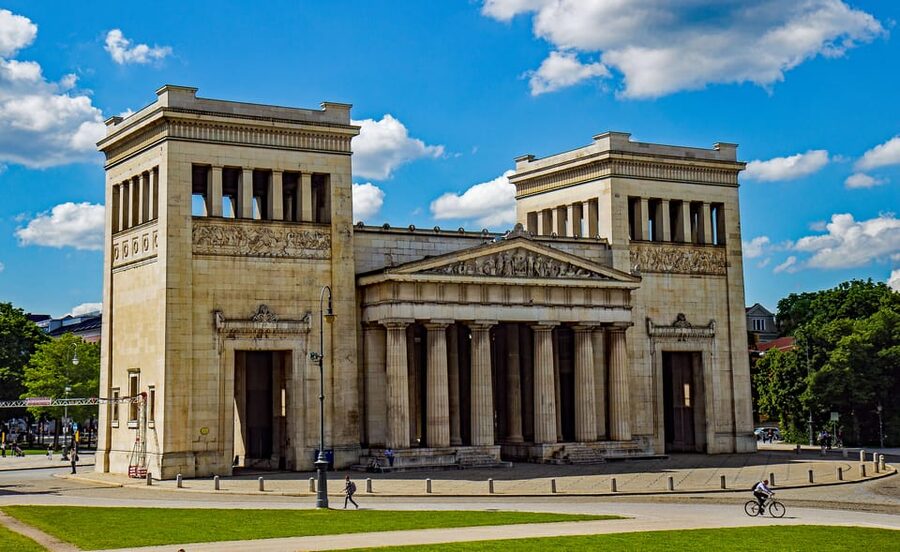
Munich still has footprints from the Nazi rise. This German walking tour follows the key places where National Socialism took root, starting around Königsplatz and moving through the heart of the story.
I especially like two things: the way the guide keeps the timeline grounded in real street corners, and the use of black-and-white photographs to show Munich in the 1920s and 30s. You’re not just hearing dates; you’re seeing what the city looked like in the moment those events unfolded.
One consideration: this is a rain-or-shine walk, so you’ll want solid shoes and a mindset for heavy subject matter. Also, the tour is listed as wheelchair accessible but marked not suitable for people with mobility impairments, so if you need accessibility support, plan to check directly with the operator.
In This Review
- Key highlights you’ll notice fast
- Why Munich’s National Socialism story starts around Königsplatz
- Königsplatz to the former Führerbau: the 1938 Munich Agreement stop
- Briennerstrasse: seeing how the city’s layout carried the message
- Passing the former Gestapo headquarters: why proximity matters
- Odeonsplatz and Feldherrnhalle: the November 9 stops you can’t ignore
- The black-and-white photos: how they improve your memory
- German guide, 2-hour walking pace: what it feels like in real life
- Price and value: is $34 worth a focused history walk?
- Practical tips for meeting up and dressing for the route
- Accessibility note: the listing is clear, but the details conflict
- Should you book this Munich National Socialism historical tour?
- FAQ
- How long is the Munich National Socialism Historical Tour?
- What language is the tour guide speaking?
- Where do we meet for the tour?
- How can I identify the tour guide?
- What is the price per person?
- Is the tour rain or shine?
- Is food included in the tour price?
- Can I cancel and get a refund?
Key highlights you’ll notice fast
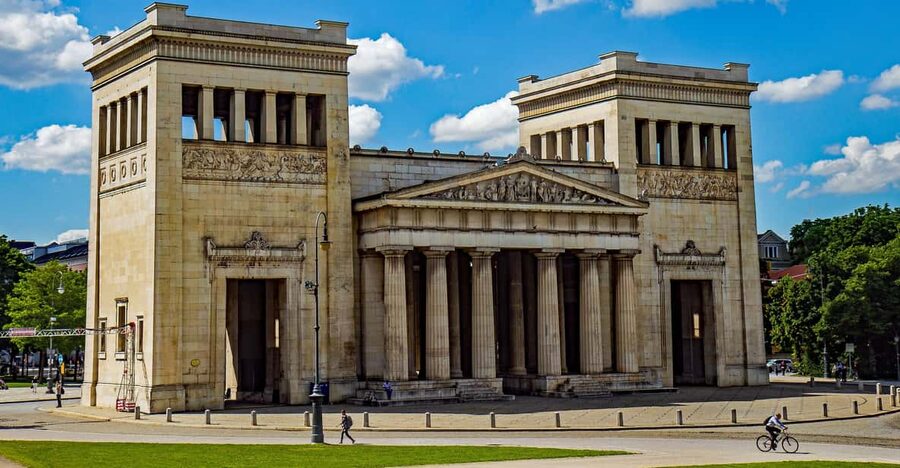
- Königsplatz as the starting point for understanding Munich’s role in National Socialism’s early momentum
- Former Führerbau stop tied to the 1938 Munich Agreement and the present-day Munich Documentation Centre
- Briennerstrasse walking segment that connects the political story to the city’s layout
- Pass by the former Gestapo headquarters, keeping the focus on what repression looked like nearby
- Feldherrnhalle at Odeonsplatz for the tour’s November 9 focus and the Beer Hall Putsch discussion
- Historic black-and-white photos in-hand to sharpen the timeline and images in your head
Why Munich’s National Socialism story starts around Königsplatz
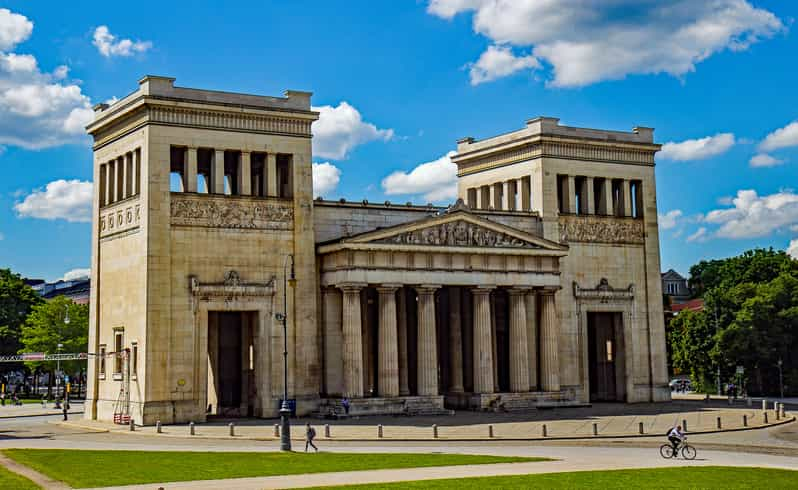
Munich is often called the City of the Movement because the Nazi party’s early rise and propaganda machine had a physical home here. This tour builds your understanding from that starting point instead of treating the period as something that happened elsewhere and drifted in later.
You begin at the main entrance of the Staatliche Antikensammlungen. From there, the guide sets the tone for what you’ll see next: the rise of the NSDAP, the political turning points, and how the city’s spaces became part of the messaging.
If you like history that has a street address, this approach works. It helps you connect political events to real locations you can point at on a map, which is exactly what you want in a city you’ll keep visiting.
You can also read our reviews of more tours and experiences in Munich.
Königsplatz to the former Führerbau: the 1938 Munich Agreement stop
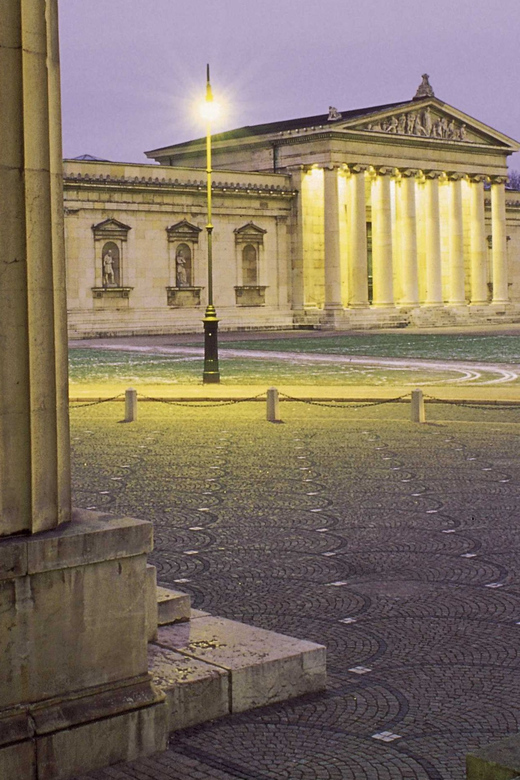
The walking route moves you from Königsplatz toward the former Führerbau. This is the kind of stop where the present and the past are sitting side-by-side, and the guide uses that tension to explain why these buildings matter.
At the former Führerbau, the tour focuses on the Munich Agreement, signed in 1938. That’s a key date for understanding how Germany’s politics and aggression escalated through diplomatic and public events, not only through violence.
Today, this area is tied to the Munich Documentation Centre for the History of National Socialism. Even without turning it into a museum day, stopping here gives you a clearer picture of how the story is documented now, and why the location keeps coming up in serious discussions.
Practical tip: since the tour is a walking format, you’re mainly learning through the guide’s narration while you’re moving and pausing. That means your best strategy is to listen closely at stops, then use the next segment to look around and absorb the geometry of the streets.
Briennerstrasse: seeing how the city’s layout carried the message
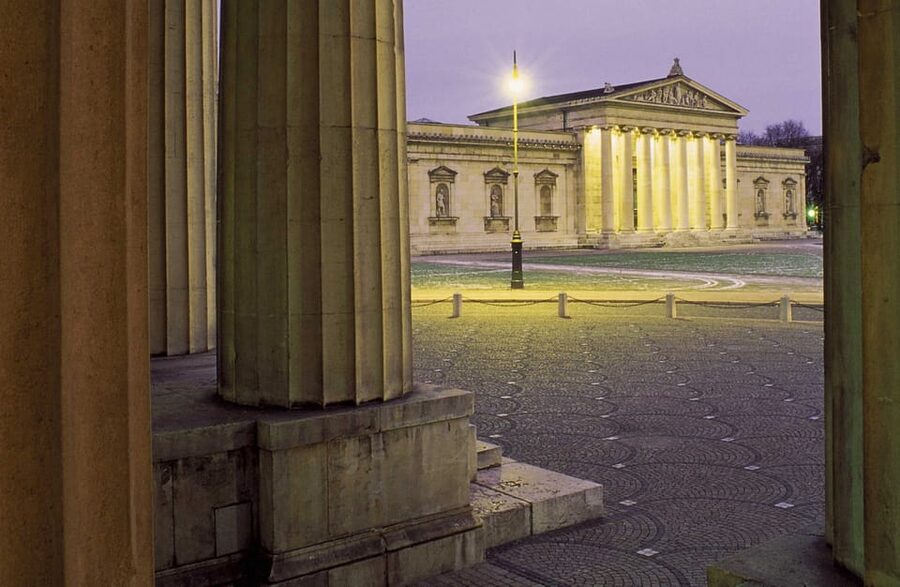
After the Führerbau area, the route goes along Briennerstrasse. This stretch matters because it shifts you from a single “event building” mindset into something more everyday: the idea that political power depends on moving people through visible, memorable spaces.
You’ll hear how the NSDAP rose to power, but you’ll also watch how the tour uses the walking route itself as a teaching tool. In other words, the guide isn’t only talking at you about propaganda; they’re showing you the physical rhythm that helped audiences experience it.
This is also one of those segments where the guide’s photo materials can really help. If you’re staring at modern streets the whole time, you’ll miss the contrast. With the black-and-white visuals added to the narrative, you can start to mentally “swap” eras without guessing.
Passing the former Gestapo headquarters: why proximity matters
One of the most sobering moments on this kind of walk is when the tour passes the former Gestapo headquarters. The value here isn’t only the name. It’s the reminder that state terror was not abstract. It happened with offices, staff, and power located in places you can stand near in everyday life.
A good guide can make this stop feel precise rather than scary-for-scary’s-sake. In this case, the narration keeps linking the bigger political arc to how control and repression worked on the ground during National Socialism.
If you’re the type who likes to understand cause-and-effect, pay attention here. The tour’s focus on events of November 9 and the NSDAP rise isn’t just about speeches and marches. The story connects to what followed once the regime consolidated power.
Odeonsplatz and Feldherrnhalle: the November 9 stops you can’t ignore
The route finishes at Feldherrnhalle at Odeonsplatz. This is the place the guide uses to anchor the tour’s emphasis on November 9, 1923, and the dramatic showdown the Nazi movement staged in public life.
The tour also discusses Hitler’s Beer Hall Putsch in connection with a November 9 date, as presented during the walk. When you’re learning in Germany from a professional guide, it’s normal that the timeline can feel dense. The important part is that you come away with how these events fit the larger rise-and-consolidation story.
Feldherrnhalle matters because it’s where symbolism, crowds, and political theater met in a visible landmark. You don’t have to agree with any ideology to understand why these scenes were powerful to the people who participated and watched.
This stop is also where the photographs can hit hardest. When the guide holds up black-and-white images, you get a sense for how the crowd scenes and city identity looked during the 1920s and 30s—long before today’s streets feel familiar.
The black-and-white photos: how they improve your memory
The guide brings along historic black-and-white photographs to illustrate topics during the walk. That sounds simple, but it’s a smart teaching choice for this subject.
Photos help in two ways. First, they prevent your brain from filling in gaps with guesswork. Second, they make the narrative more concrete: you can match faces, street views, and public scenes to the exact places you’re hearing about.
If you’re taking this tour as part of a Munich history day, those visuals also work as “anchors” for later. Weeks afterward, you’ll remember locations more easily because your mind has stored images tied to a route.
German guide, 2-hour walking pace: what it feels like in real life
This is a 2-hour walking tour with a live guide in German. You can choose between a private or group tour, which matters if you want more flexibility in how fast you move through the material.
The pace is built for walking between key landmarks rather than long pauses. That’s usually good news: you get a focused slice of history without spending the whole day in one spot. Your main responsibility is to keep your attention steady, because the story moves through several turning points.
A second-language note: if your German isn’t strong, it can still be worthwhile because the locations are visual and the guide uses photos to support explanations. That said, the tour is explicitly German-language, so plan around that.
Price and value: is $34 worth a focused history walk?
At $34 per person for a 2-hour guided walking tour, the price is fairly low for the kind of specialty topic you’re getting. What you’re paying for isn’t just walking time—it’s a city guide who can tie together places, events, and meaning.
Also, the tour includes the “learning tools” that matter most here: expert narration and the photos. Since entrance fees aren’t included, the cost stays focused on the guided experience rather than turning it into a ticket-stacking exercise.
So if you’re thinking like a value traveler, this is a good option when you want:
- a structured route through Munich’s most relevant National Socialism sites
- a professional explanation of the NSDAP rise and the key November 9 focus
- history you can walk off your list without spending extra hours searching for context on your own
You may still want museum time separately if you want deeper self-paced reading, but this tour gives you the spine of the story first.
Practical tips for meeting up and dressing for the route
Meeting point is right at the main entrance of the Staatliche Antikensammlungen. Your guide will be wearing a BIG BLUE BAG with the white words Weis(s)er Stadtvogel, which makes spotting them easier when the street is busy.
Bring comfortable shoes. And yes, this tour runs rain or shine, so dress for the weather and assume you’ll be outside for the full two hours.
Food and drinks are not included, so plan a café stop before or after if you need one. If you’re building this into a day with other sights, keep the walking-friendly timing in mind.
Accessibility note: the listing is clear, but the details conflict
The activity is marked wheelchair accessible, but it’s also listed as not suitable for people with mobility impairments. That contradiction matters for real planning.
If you or someone in your group needs accessibility support, the safest move is to contact Weis(s)er Stadtvogel GmbH ahead of time and ask how the route and pauses will work for your specific needs. Don’t assume one line cancels out the other.
Should you book this Munich National Socialism historical tour?
I’d book it if you want a guided, street-level way to understand how National Socialism began in Munich and how the story connects to key sites you’ll recognize later. The combination of expert narration, the Führerbau / Munich Agreement context, and the historic photos gives this tour practical learning value in just two hours.
Skip it or pause to plan if German is a barrier for you, if you strongly dislike heavy historical topics, or if you need mobility accommodations that aren’t clear from the accessibility notes. And if you want a “museum day,” this is not that format—it’s a walking guide that helps you see the bigger picture first.
If that fits your style, this tour is a focused, memorable way to turn Munich from a pretty city into a readable one—street by street, photo by photo.
FAQ
How long is the Munich National Socialism Historical Tour?
The tour lasts 2 hours.
What language is the tour guide speaking?
The live tour guide speaks German.
Where do we meet for the tour?
Meet in front of the main entrance of the Staatliche Antikensammlungen.
How can I identify the tour guide?
The guide will be wearing a BIG BLUE BAG with the white words Weis(s)er Stadtvogel.
What is the price per person?
The price is $34 per person.
Is the tour rain or shine?
Yes, it takes place rain or shine.
Is food included in the tour price?
No. Food and drinks are not included.
Can I cancel and get a refund?
Yes. You can cancel up to 24 hours in advance for a full refund.