REVIEW · SIGIRIYA
Private Polonnaruwa Sightseeing Day Tour from Sigiriya
Book on Viator →Operated by Sinhagiri Tours · Bookable on Viator
Polonnaruwa feels close with a private day plan. I like the private vehicle pickup from Sigiriya-area hotels and the written guide that helps you explore on your own once you’re there. The main tradeoff: you’ll still need to pay entrance fees at the sites (they aren’t included in the price).
This is an easy, do-it-at-your-own-speed setup. You’ll spend about 3 to 6 hours inside Polonnaruwa, getting dropped at each stop and then moving at a comfortable pace. If you want more storytelling, there’s an optional pro site guide add-on for 5000 LKR.
Key to knowing if this fits you: it’s private transport, but you’re not automatically getting a full guided narration everywhere. If you want every detail explained on the spot, budget for that extra guide.
In This Review
- Key takeaways before you go
- Private pickup from Sigiriya: the smart way to reach Polonnaruwa
- The 3–6 hour Polonnaruwa flow: how the day stays manageable
- Archaeological Museum first: get oriented before you start taking photos
- Parakramabahu I statue: a quick stop with a big visual payoff
- Temple texts, palace power, and the Vatadage: the core Polonnaruwa mix
- Pothgul Viharaya
- Royal Palace
- Vatadage
- Siva Devalaya No. 1
- Dagobas and image houses: Rankoth, Manik, Kiri, and Lankathilaka
- Rankoth Vehera, Manik Vihara, Kiri Vehera
- Lankathilaka Image House
- Gal Vihara: the final big moment
- Written guide vs hiring a pro site guide for 5000 LKR
- Price and value: what $71.43 per group really buys
- Practical tips for a smooth Polonnaruwa day
- Should you book this Polonnaruwa tour from Sigiriya?
- FAQ
- How long is the Polonnaruwa sightseeing tour?
- How much does the tour cost, and how many people are included?
- Where does pickup happen for this tour?
- Does the tour include entrance fees to sites?
- What’s included in the price?
- Is lunch included?
- Do you get a guide for the sites?
- How do I get my ticket?
- Will the tour end back at the same place it starts?
- What happens if weather is bad?
Key takeaways before you go
- Private vehicle from Sigiriya, Dambulla, or Habarana means fewer headaches and more control over timing
- Written guide included helps you make sense of the ruins even without a live guide
- Optional professional site guide for 5000 LKR if you want deeper explanation at the monuments
- A classic Polonnaruwa route moves from the museum into palaces, dagobas, temple buildings, and Gal Vihara
- Entrance fees are extra, including the museum admission
- Flexible pacing is part of the value, especially if you like photos and slow walking
Private pickup from Sigiriya: the smart way to reach Polonnaruwa
Starting from Sigiriya (with pickup also available from Dambulla and Habarana) is a big reason this works well. You’re not fighting shared transport schedules or squeezing into a crowded van. The day is built around your group of up to 4 people, so the “private” part actually matters when you’re trying to keep the trip calm.
The meeting point is at Sinhagiri Tours on Thalkotta Rd in Sigiriya, and the tour finishes back there. You’ll also get a mobile ticket, which is handy if you’re trying to keep your day simple and paper-free.
One extra note: this tour is designed for a day that depends on good weather. If conditions are poor, your date can be changed or you can get a full refund. In practice, that means you should plan Polonnaruwa with a little slack in your itinerary.
The 3–6 hour Polonnaruwa flow: how the day stays manageable
Polonnaruwa is big, and the monuments can feel like a lot—especially if you arrive without a plan. Here, the timing is structured, with short stop windows that keep you from feeling stuck in one place too long.
Your route is roughly paced like this:
- Archaeological Museum (about 30 minutes)
- Parakramabahu I statue (about 15 minutes)
- Pothgul Viharaya (about 15 minutes)
- Royal Palace (about 30 minutes)
- Polonnaruwa Vatadage (about 15 minutes)
- Siva Devalaya No. 1 (about 15 minutes)
- Rankoth Vehera (about 15 minutes)
- Manik Vehera (about 15 minutes)
- Kiri Vehera (about 15 minutes)
- Lankathilaka Image House (about 15 minutes)
- Gal Vihara (about 30 minutes)
This “many sites, short stops” approach is great if you want to see the highlights without turning the whole day into a marathon. If you prefer slow museum-style wandering at each monument, you may want the option of a bit of extra time where possible.
Also, the tour includes bottled water, which sounds minor until you’re standing in sun-warmed ruins. Small things add up.
Archaeological Museum first: get oriented before you start taking photos
Beginning at the Archaeological Museum is a clever move. It sets context before you walk into the stone and brick of the ancient city.
Expect around 30 minutes here. You’ll pick up tickets and visit the museum, but the admission fee itself is not included. That’s an important budgeting point, especially if you’re comparing value with other drivers or tour options.
Even if you don’t plan to read everything, the museum can help you connect names and styles to what you’ll see outside. When you can recognize what you’re looking at, photos become more than just snapshots.
Parakramabahu I statue: a quick stop with a big visual payoff
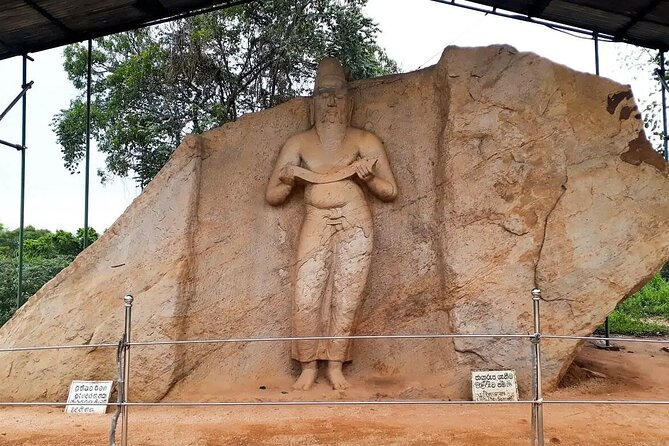
After the museum, you’ll head to the Statue of Parakramabahu I. The highlight is scale: it’s carved from a single block of granite and rises to about 12 feet tall.
Time here is short—about 15 minutes—so use it for what matters most:
- quick photos from multiple angles
- a moment to read any on-site descriptions
- deciding what to focus on during the palace and temple stops later
This is the kind of stop that works well in a private route because you’re not stuck waiting for others. You see it, you move on.
Temple texts, palace power, and the Vatadage: the core Polonnaruwa mix
Once the day starts clicking, the itinerary shifts into the city’s religious and royal architecture.
Pothgul Viharaya
You’ll visit Pothgul Viharaya, described as a place dedicated to safeguarding sacred Buddhist texts—sutras and commentaries. Time is about 15 minutes.
Even with limited time, it’s worth standing back and looking for the building rhythm. Many Polonnaruwa structures are easier to understand when you notice layout and symmetry instead of only focusing on carvings.
Royal Palace
Next up is the Royal Palace, with about 30 minutes allocated. This is where you see how seriously this civilization took engineering and design. The palace is noted as a key example of architectural skill, built using brick in the period’s typical methods.
This stop is a good place to slow your pace. The palace complex can look confusing at first, but once you pick out the main structure, the rest of the features start to make more sense.
Vatadage
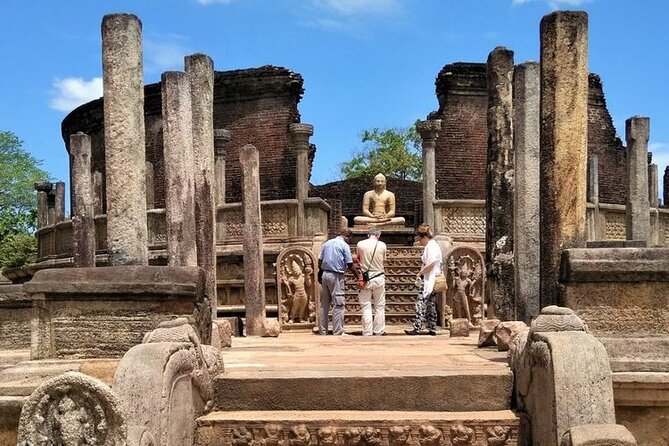
Then comes Polonnaruwa Vatadage, about 15 minutes. A Vatadage is a type of structure connected to protection and presentation of sacred relics or images, and it’s often a favorite for people who like architecture and symbolism.
If you’re the type who cares about details, you’ll enjoy this stop. If you only care about big monuments, you can still get the main idea quickly and keep moving.
Siva Devalaya No. 1
After the Vatadage, you’ll visit Siva Devalaya (No. 1), dedicated to Lord Shiva. Time is about 15 minutes.
This is a helpful contrast point. Seeing a Shiva temple in the same ancient city context reminds you Polonnaruwa isn’t only one religious thread—it’s layered.
Dagobas and image houses: Rankoth, Manik, Kiri, and Lankathilaka
From here, the route becomes more visually varied. You’ll shift from halls and palaces into the monument types that make Polonnaruwa famous.
Rankoth Vehera, Manik Vihara, Kiri Vehera
You’ll make three separate stops here, each about 15 minutes:
- Rankoth Vehera: noted for grandeur and religious/cultural significance
- Manik Vehera: focused on enduring spirituality and architectural prowess
- Kiri Vehera: the milk-white dagoba, often a photographic favorite because of how striking it looks
If you’re short on time, pick one of these to really study. Don’t try to treat all three like identical checkboxes. They’re better when you compare them—shapes, positions, and how each one frames sacred space.
Lankathilaka Image House
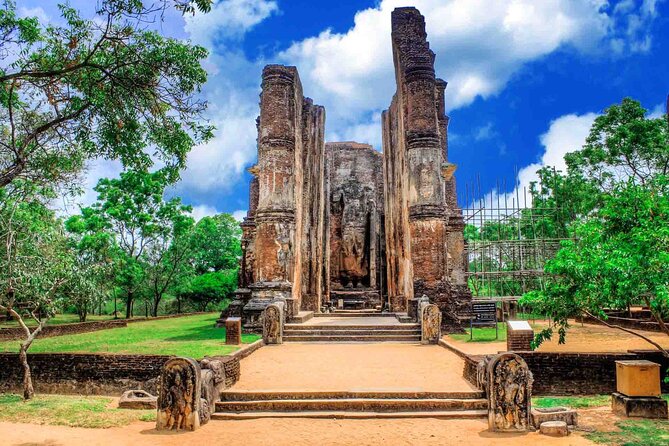
Next is Lankathilaka Image House, about 15 minutes. This one is known for its towering brick walls, a colossal Buddha statue, and notable frescoes (when visible).
This stop is ideal for two things:
- people who like big sculptures
- anyone who wants to understand how Buddhist art was presented through massive built form
Gal Vihara: the final big moment
Gal Vihara is one of the defining stops in Polonnaruwa. Your time here is about 30 minutes, and the payoff is art and devotion in the same space.
This is the moment to slow down. If you’re going to spend extra minutes anywhere, spend them here—because the carvings and Buddha images are the type you’ll remember days later. Give yourself space to step back and then step in again, so you can see both the overall composition and the close-up work.
Written guide vs hiring a pro site guide for 5000 LKR
Here’s the key decision point.
This tour includes a detailed written guide free of charge, so you can explore independently. The structure is basically: transport + orientation + a self-guided approach at each stop.
If you want a more story-driven experience, you can arrange a professional site guide for an extra 5000 LKR. That’s worth considering if:
- you don’t want to do pre-reading at all
- you want names, dates, and meanings explained as you stand there
- you want help interpreting what you’re seeing on the walkways and in the temple spaces
A driver like Shahiru from Sinhagiri Tours is also part of the reason this style can work. In practice, a good driver doesn’t just drive—you often get helpful direction on where to go inside the site complex, especially when things get busy.
Price and value: what $71.43 per group really buys
The price is $71.43 per group for up to 4 people, with average booking about 20 days in advance. For a private vehicle day, that’s often reasonable—especially because you’re not paying per person.
The value equation changes, though, because entrance fees are not included and lunch isn’t included. Museum admission isn’t included either. So your final cost depends on what you pay at the gate.
How to judge value quickly:
- If you’ll split the group price across 3–4 people, this tends to be good value.
- If you’re traveling solo or as a couple and you’ll likely add the 5000 LKR site guide, you should compare total cost with options that already include a guide.
- If you’re happy using the written guide and you’re comfortable paying site entrance fees, this keeps the day efficient without extra guide costs.
Practical tips for a smooth Polonnaruwa day
A few things that will make your day easier, without turning it into an overplanned production:
- Bring a camera and charge everything before you go. The day includes multiple photo-worthy stops, including big statues and Gal Vihara.
- Plan for some waiting while you move between sites. With short stop windows, you’ll get better results if you’re ready to step out quickly.
- Decide ahead of time whether you want the 5000 LKR guide. If you do, you’ll want to use the time to ask questions at the monuments that matter most to you.
- Wear footwear you can walk in comfortably. Polonnaruwa is a ruin site, so you’ll likely be stepping on uneven surfaces.
Should you book this Polonnaruwa tour from Sigiriya?
Book it if you want:
- private transport from Sigiriya-area locations
- a structured highlight route that doesn’t drag on
- the freedom to move at your own pace using the written guide
- good value for a small group up to four
Think twice if:
- you absolutely want a full live guide explanation at every stop and don’t want to pay the 5000 LKR add-on
- you’re trying to minimize your total spend beyond the base price, since entrance fees and museum tickets will add to the day
If you match the first list, this tour style is a solid way to see Polonnaruwa efficiently—without losing the fun part, which is standing in front of the ruins and letting them do the talking.
FAQ
How long is the Polonnaruwa sightseeing tour?
The tour lasts about 3 to 6 hours.
How much does the tour cost, and how many people are included?
It’s $71.43 per group for up to 4 people.
Where does pickup happen for this tour?
Pickup is offered from Sigiriya, Dambulla, and Habarana. The tour starts at Sinhagiri Tours on Thalkotta Rd, Sigiriya.
Does the tour include entrance fees to sites?
No. Entrance fees are not included, including admission for the Archaeological Museum.
What’s included in the price?
Included items are a private vehicle and bottled water.
Is lunch included?
No, lunch is not included.
Do you get a guide for the sites?
You receive a detailed written guide. A professional site guide can be arranged for an extra 5000 LKR.
How do I get my ticket?
You’ll receive a mobile ticket.
Will the tour end back at the same place it starts?
Yes. The activity ends back at the meeting point in Sigiriya.
What happens if weather is bad?
This experience requires good weather, and if it’s canceled due to poor weather, you’ll be offered a different date or a full refund.