REVIEW · VELHA GOA
Old Goa: Saga Of Saints, Spices & Sovereigns | Heritage Walk
Book on GetYourGuide →Operated by Origins And Horizons · Bookable on GetYourGuide
Old Goa has a way of pulling you into the past fast. This heritage walk connects saints, spices, and colonial power through churches, convents, and the quieter monastic corners most people miss, with the stories told in clear, human language. It’s an easy length for a hot afternoon, and you finish with a local drink to cool down.
Two things I really like: first, you’re guided through Portuguese-era sacred spaces and taught how to read the architecture and sacred art instead of just snapping photos. Second, the tour leans into lesser-known religious and monastic sites, so you get more than the same postcard route.
One thing to consider: the walk is outdoors and involves uneven historic ground, and the activity notes it’s not suitable for people with mobility impairments and people with heart problems.
In This Review
- Key things I’d plan for
- Old Goa in Two Hours: Saints, Spices, and Portuguese Power
- Meeting at Santa Monica Convent: Where the Story Begins
- Churches and Convents on the Ground: How to Look Beyond the Facade
- What to watch for during the church portions
- Rosary Church Stop: Devotion, Art, and a Different Kind of Quiet
- Augustinian Monastery Ruins: When History Becomes Texture
- Why this ruins stop is worth the effort
- Hidden Monastic Nooks: The Part Most Photo Routes Skip
- Medieval Maps, Trade Routes, and Missionary Expeditions: The Big Picture
- Your Guide Makes It Click: Amreen’s Story Rhythm and Question-Friendly Answers
- Price and Value for $9: What You’re Really Buying
- Practical Stuff: Timing, Clothing Rules, and What to Bring
- What to bring
- Dress code you’ll need to follow
- If you have health or mobility concerns
- Should You Book This Old Goa Heritage Walk?
Key things I’d plan for
- Santa Monica Convent as your starting point, including the oldest nunnery-of-Asia context
- Portuguese craftsmanship and sacred art decoding that helps you understand what you’re seeing
- Rosary Church and the Augustinian monastery ruins, two stops that carry big meaning
- Medieval-map storytelling that ties Goa’s churches to trade routes and missionary expeditions
- A local-drink finish, plus the guide’s habit of choosing shadier listening spots
Old Goa in Two Hours: Saints, Spices, and Portuguese Power
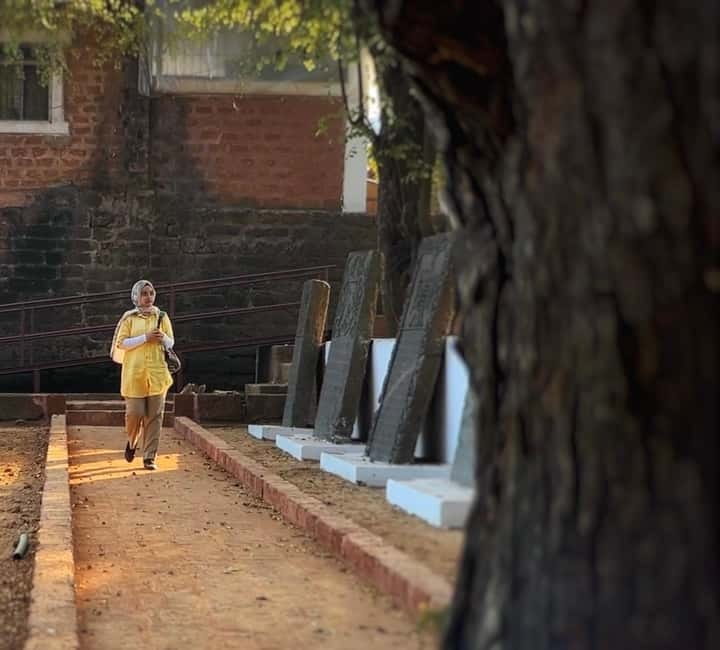
Old Goa isn’t only about churches. It’s about how ideas traveled—by ship, by prayer, and by money. On this walk, you connect the dots between Goa’s Catholic missions and its earlier identity as a cosmopolitan trading hub, where Portuguese influence arrived through both faith and commerce.
The pace feels purposeful: you move between key religious sites and monastic remnants, then the guide slows down when the story matters. Instead of treating heritage like a checklist, you learn how each place fits into a wider chain of events: saints and sovereigns on one end, spices and ships on the other.
Meeting at Santa Monica Convent: Where the Story Begins
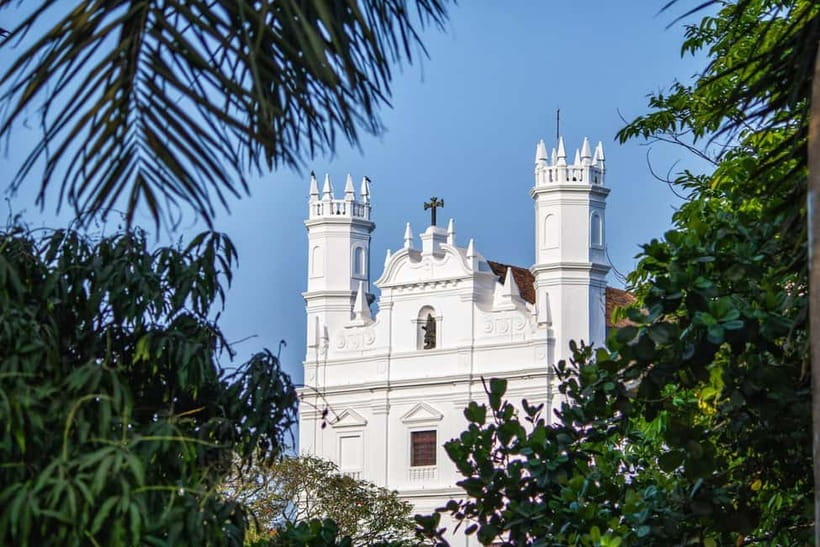
You meet at the entrance/parking area in front of the main entrance to Santa Monica Convent in Old Goa. Even before the walking starts, you’re in the right mood: this is the kind of place where walls and corridors seem to hold memories, and the guide uses that atmosphere to set the historical frame.
Santa Monica is especially important because the tour includes the idea of it being the oldest nunnery of Asia. That matters, because it shifts the focus from Goa as a European outpost to Goa as a long-running religious center shaped by local life and Portuguese Catholic structures.
What I like about starting here is the way it anchors everything else. Once you understand the convent world—how it worked, how it was organized, and why it lasted for centuries—the later ruins of other orders hit harder.
Churches and Convents on the Ground: How to Look Beyond the Facade
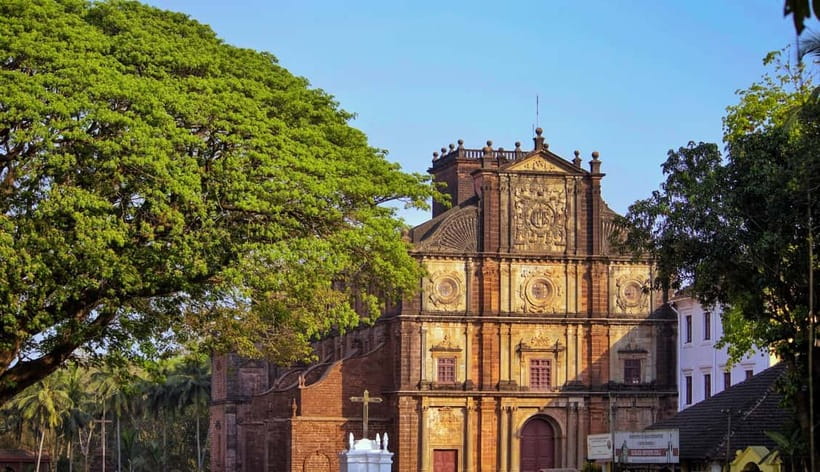
From Santa Monica, you’ll walk past iconic churches and convents, including references to Augustinian remains. You’re not just handed dates and names; you’re shown how styles and symbols evolved as Portuguese power took root in Goa.
The tour includes help decoding sacred art and architectural styles. That’s one of those small inclusions that changes your experience fast. When you learn what certain patterns, religious imagery, or design choices were meant to communicate, you stop viewing churches as “pretty buildings” and start seeing them as messages built in stone and paint.
You’ll also hear why Old Goa became so strategically important—churches and missions weren’t isolated. They were tied to trade routes and missionary expeditions, meaning the same port networks that carried goods also carried people, ideas, and religious instruction.
What to watch for during the church portions
- Look for details the guide highlights, not only the big altars.
- If you’re taking photos, pause after the explanation so your camera doesn’t steal the story from you.
- Expect respectful behavior in working sacred spaces. Dress matters.
Rosary Church Stop: Devotion, Art, and a Different Kind of Quiet
One of the specific sites mentioned is Rosary Church, and it’s the kind of stop that gives the walk variety. Churches connected to prayer traditions can feel different from grand cathedrals: they often pull you in closer, into smaller moments of devotion.
This is also where the “decode” part becomes useful. Sacred art isn’t always obvious at a glance, especially if you don’t know what you’re looking for. The guide’s job here is to translate the visual language—how religious belief showed up in layout, ornament, and the kinds of imagery you see.
A practical note: Rosary Church can be part of the more contemplative segments of the walk, so you may want to pace your questions. Let the guide finish the full explanation before you ask, since the story tends to build in layers.
Augustinian Monastery Ruins: When History Becomes Texture
The walk includes the ruins of the Augustinian monastery, one of the most powerful segments because ruins force a new kind of attention. When buildings crumble, you notice structure: the thickness of walls, the way openings were made, and what once supported daily religious life.
This stop is tied to the broader arc of Old Goa’s timeline, including the eventual abandonment of Old Goa in the early 19th century. Hearing that in context changes the emotional weight. Instead of seeing ruins as leftovers, you understand them as the result of major shifts—political, economic, and religious—that eventually moved the center elsewhere.
Why this ruins stop is worth the effort
- It makes you understand the orders and their footprints, not just the Portuguese era in general.
- You’ll likely connect the Augustinian presence back to the theme of saints and sovereigns—faith organized like an institution.
- The contrast between living worship spaces and broken monastic fragments creates a clear before-and-after feeling.
Hidden Monastic Nooks: The Part Most Photo Routes Skip
A big selling point here is the walk’s focus on places beyond the most obvious tourist circuit. The experience includes forgotten hidden monastic sites and other quieter corners, with stories that sit outside the standard photo narrative.
That’s not just “less crowded.” It’s about perspective. When you hear about religious beliefs, local lores, and what daily monastic life might have meant, you start to understand why some spots were important even when they weren’t famous. These are the fragments that show how communities actually functioned.
I also like that the guide clearly aims for preservation-minded storytelling. The goal feels less like collecting facts and more like giving you respect for what remains—and why it needs care.
Medieval Maps, Trade Routes, and Missionary Expeditions: The Big Picture
The tour uses medieval maps as a storytelling tool. That’s a smart approach, because it changes how you measure distance and significance. Instead of thinking of churches as isolated monuments, you start seeing them as part of a connected system: ports, routes, and missions spreading along the same channels.
This is where the tour’s central theme really comes alive. Goa’s story isn’t only religious. It’s also commercial and political. The guide ties together the role of spices, ships, and salvation—meaning the same empire networks that moved valuable commodities also shaped the missionary push.
You’ll walk away understanding why Old Goa became “cosmopolitan” in the first place, and how Portuguese rule reshaped local life without erasing everything. It’s the mix that makes Goa interesting, and you’ll feel it in the way the tour keeps switching scales—from a single church detail to centuries of movement.
Your Guide Makes It Click: Amreen’s Story Rhythm and Question-Friendly Answers
A tour can have great stops on paper and still feel flat. This one tends to work because the guide approach is built around storytelling and clarity.
Several guides are named in the feedback, with Amreen showing up repeatedly as a local historian and dedicated storyteller. People noted how her English is strong, and how she weaves history, religion, and architecture into one thread without losing the plot. One person also highlighted that the guide revealed context carefully—setting up the meaning before dropping the full story.
I also appreciate the practical listening design. One report mentioned that the guide chose shady spots with places to sit, which matters on a walk in Goa. When you can pause comfortably, you actually absorb the details instead of rushing to beat the sun.
If you enjoy asking questions, you’re in the right place too. The tone seems built for dialogue, not just narration.
Price and Value for $9: What You’re Really Buying
At $9 per person for about 2 hours, this is one of those prices where you should compare against what’s included, not against what you wish a tour would cost.
Here’s the value equation the tour gives you:
- You get entry to churches included in the walk, not just a drive-by.
- You get an expert local guide focused on context, not surface-level sightseeing.
- You get guidance on sacred art and architectural styles, which turns the places into something you understand.
- You finish with a refreshment drink.
You might spend more than that on a generic walking tour elsewhere and still get mostly “look at this, it’s old.” Here, the guide makes the age meaningful by tying it to trade routes, missions, and monastic life.
For many people, that’s the sweet spot: short enough to fit into a Goa itinerary, but deep enough to feel like you learned something you can carry home.
Practical Stuff: Timing, Clothing Rules, and What to Bring
The walk is about 2 hours, and it’s listed as English. If you’re traveling with family, one comment mentioned the guide kept even a younger son engaged, which suggests the storytelling can work across ages—just remember it still involves walking through historic areas.
What to bring
- Comfortable shoes
- Hat
- Sunscreen
- Water
Dress code you’ll need to follow
Not allowed: shorts, short skirts, sleeveless shirts, ripped clothing, or see-through clothing. This is one of those tours where the rules are about respect and comfort in sacred spaces, so pack for that. If you’re unsure, carry a light layer that covers arms and legs.
If you have health or mobility concerns
The activity lists wheelchair accessible, but it also says it’s not suitable for people with mobility impairments and for people with heart problems. If either applies to you, it’s worth checking directly with the operator about how the route and the ground conditions work in practice.
Should You Book This Old Goa Heritage Walk?
Book it if you want Old Goa to make sense. You’ll enjoy it most if you care about the “why” behind Portuguese-era churches—how saints, institutions, art, and empire connected to spices, ships, and missionary work.
Skip it (or plan carefully) if you’re looking for a fast, photo-only stroll. This walk is story-led, and parts of it are tied to ruins and uneven historic space. Also think twice if you have mobility or heart concerns, since the activity explicitly flags those limitations.
If you want a short tour that leaves you with more than selfies—something that helps you read churches and ruins as evidence of real people and real systems—this one is a strong choice.