REVIEW · NEW ORLEANS
New Orleans Cocktail and Food History Tour
Book on Viator →Operated by Doctor Gumbo Tours · Bookable on Viator
Four drinks and six bites in NOLA. I like that you kick off at Red Fish Grill with Alligator sausage gumbo and a Cat 5 Hurricane, then keep sampling as you move through the French Quarter.
I also love the way the guide connects what’s on your plate to the stories behind New Orleans cuisine, from Louisiana’s early periods to later immigrant influence. If you get one of the guides people rave about like Meg, Ben, Gary, or Dylan, you’ll get that mix of history, food, and laughs without turning it into a lecture.
The trade-off is practical: you’re doing a decent amount of walking, and the tour does not offer gluten-free, dairy-free, or vegan options, so plan around that and come with realistic expectations about tastings.
In This Review
- Key highlights at a glance
- New Orleans flavor run: how this tour actually feels
- Your route in plain English: French Quarter to Decatur Street
- Stop 1: Red Fish Grill gumbo and the Cat 5 Hurricane
- What to watch for
- Stop 2: Pepper Palace for unlimited hot-sauce chaos (in a good way)
- The practical trade-off
- Stop 3: Napoleon House seating for muffuletta, Pimm’s Cup, and jambalaya
- What I like about this stop’s placement
- Stop 4: Leah’s Pralines for sweet classics with a smoky twist
- A small tip
- Stop 5: Cane & Table fried plantains with lime crema and salsa macha
- The best way to enjoy the last stop
- The scenic passes: Jackson Square and Royal Street strolls
- Cocktail heritage, explained through drinks you actually taste
- Price and value at $160 per person: what you’re really paying for
- Portion expectations: tasting sizes vs a full meal
- Who should book this tour (and who might skip it)
- Quick practical tips before you go
- Should you book this New Orleans cocktail and food history tour?
- FAQ
- How long is the New Orleans Cocktail and Food History Tour?
- What’s the meeting point and where does the tour end?
- What’s included in the tour price?
- Are there vegetarian or other dietary options?
- What’s the minimum age to join?
- Is the tour offered in English?
- Does the tour run in bad weather?
- Is there free cancellation?
- Is this tour suitable for mobility limitations?
Key highlights at a glance
- Up to six dishes and four full-sized drinks across multiple historic stops
- Cat 5 Hurricane, Pimm’s Cup, and a Caribbean-style daiquiri show off the cocktail heritage
- Pepper Palace hot-sauce sampling plus a free Louisiana-style bottle
- Napoleon House seating for the muffuletta and jambalaya moments
- Small group size (max 16) for a more personal, question-friendly flow
- Vegetarian option available (request at check-out), but no vegan/gluten-free/dairy-free substitutions
New Orleans flavor run: how this tour actually feels
This is the kind of tour that works best when you treat it like a focused afternoon, not a buffet disguised as a history lesson. You meet inside Red Fish Grill, start tasting fast, and then keep moving stop-to-stop through classic French Quarter territory. By the end, you’ll have a much better sense of how New Orleans food and cocktails developed side-by-side.
The format is also smart for time-pressed visitors. In about 4 hours you get a concentrated lineup: gumbo, muffuletta, pralines, plantains, plus multiple full-size cocktails. It’s perfect if you want to learn the city by eating and sipping, rather than trying to figure it all out yourself one restaurant at a time.
That said, it’s not a sit-down feast at every stop. Most of what you get is “taste-size” compared to ordering a full entrée on your own, even though the tour includes more than enough variety to satisfy a big appetite. If you’re the type who needs a full meal in one place, you may still enjoy it, but you should go in expecting a sampling day.
You can also read our reviews of more tours and experiences in New Orleans.
Your route in plain English: French Quarter to Decatur Street
You start at Red Fish Grill, 115 Bourbon St at 2:00 pm, and the tour ends inside Cane & Table, 1113 Decatur St. Along the way you’ll move through the French Quarter area, including stops on Bourbon Street and near landmarks like Jackson Square and Royal Street.
A key detail: it’s structured around six tasting locations plus a couple of scenic pass-bys. Even if you’re not a museum person, the walking matters. New Orleans changes block by block, and your route gives you a feel for where different food traditions show up.
One more practical note: the tour is designed for people who can walk. It’s “not recommended” if you have mobility or walking issues, so if that’s you, this may be the wrong choice.
Stop 1: Red Fish Grill gumbo and the Cat 5 Hurricane
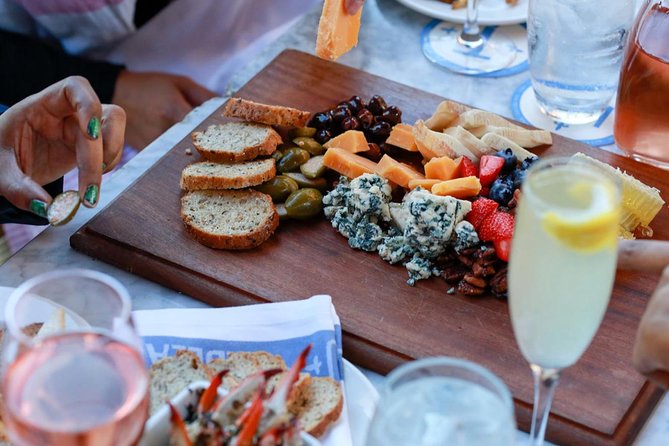
You begin inside Red Fish Grill in the French Quarter, and the first bite is a real statement. You’ll start with seafood gumbo with alligator sausage. This is described as a dark roux shrimp and crab gumbo, slow cooked with alligator sausage, served with rice.
Then the tour kicks off the drinking part with the Cat 5 Hurricane. This pairing is smart. Gumbo is heavy, deep, and slow-cooked; the Hurricane is fruity and punchy. Together, they show how New Orleans handles contrast: rich food plus bold, spirit-forward cocktails.
The guide also sets the historical stage here, focusing on the pre-colonial and colonial periods of Louisiana history. It’s not just trivia. The point is to show that the city’s food culture didn’t appear out of nowhere; it formed through long timelines of people, trade, and local adaptation.
What to watch for
This start is ideal if you want the day to feel like a kickoff party rather than a quiet tasting. But if you’re sensitive to strong alcohol flavors, remember this is the moment you begin drinking, not the moment you take it easy.
Stop 2: Pepper Palace for unlimited hot-sauce chaos (in a good way)
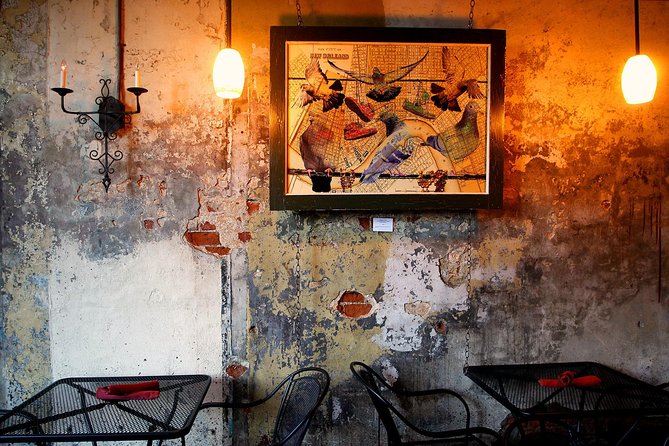
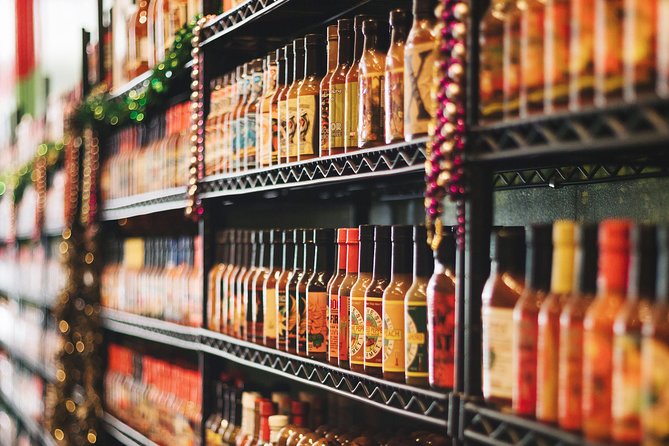
Next you walk about four blocks to Pepper Palace, where the tour leans hard into Cajun and seasoning culture. This stop is built around a sampling wall of sauces, rubs, and marinades. You get unlimited variety of hot sauces and seasonings, including BBQ, buffalo wing-style sauces, salsas, and dry rubs.
Then you get the souvenir angle: you also receive a free bottle of Louisiana-style hot sauce to take home.
This stop is more than just spice. It teaches you how New Orleans cooking works: heat isn’t only about pain, it’s about flavor building. If you’ve ever eaten something in NOLA that tasted layered instead of one-note hot, this is where that habit starts to make sense.




The practical trade-off
The sauces can be intense. Pace yourself, especially if you’ve already had gumbo and you’re still heading to multiple cocktail servings.
Stop 3: Napoleon House seating for muffuletta, Pimm’s Cup, and jambalaya
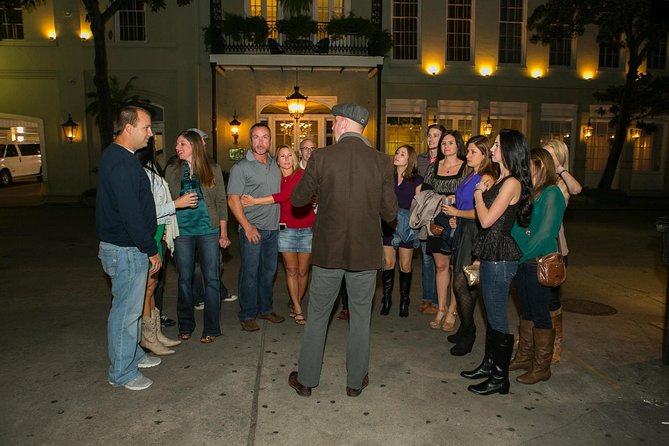
One of the best changes of pace on this tour is that you get a seated experience at Napoleon House, one of the iconic names in New Orleans dining.
Here you’ll enjoy a muffuletta moment and Pimm’s Cup cocktail-style drinking, plus a hot savory dish: chicken and Andouille sausage jambalaya. The jambalaya is served as a slow-cooked rice dish with spices, herbs, chicken, and smoked sausage.
Just as important, this stop adds historical context about 19th century immigrant patterns and how they shaped Louisiana’s cuisine again. That matters because jambalaya and muffuletta aren’t just “good food.” They’re examples of how New Orleans re-mixes old traditions into something unmistakably its own.
What I like about this stop’s placement
Napoleon House lands after you’ve already tasted gumbo and played with hot sauces. By this point, you’re ready for a comfort-food, rice-and-sausage payoff that feels more like an entrée flavor profile.
Stop 4: Leah’s Pralines for sweet classics with a smoky twist
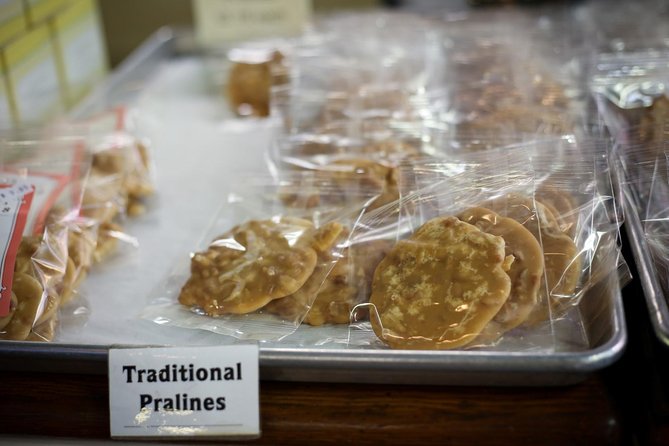
From there, the route moves toward Leah’s Pralines, a third-generation family-owned candy store. The tour includes classic pralines plus a signature surprise: bacon pecan brittle.
This is a great stop because it reminds you that New Orleans sweetness isn’t always just sugar and cream. The city is comfortable with sweet-salty flavor, and this is a literal example you can try on a bite-sized scale.
If you’ve been wondering what pralines actually taste like beyond the word, this answers it quickly. It’s praline made with local brown sugar, pecans, and dairy.
A small tip
If you’re sensitive to very sweet desserts, take a slow bite here. Also, keep moving. Pralines are delicious, but they can dull your appetite if you eat too much before the final tasting.
Stop 5: Cane & Table fried plantains with lime crema and salsa macha
Then you head to Cane & Table on Decatur Street, which is where the tour ends inside the restaurant. This is a key stop because it blends classic and playful flavors.
You’ll get fried plantains (maduros) served with lime crème fraîche and topped with salsa macha. This is a sweet fried element with brightness and heat from the toppings. It’s the kind of dish that makes you think: sweet food doesn’t have to be one-dimensional.
And you’ll also get a classic daiquiri made with Caribbean white rum, fresh lime, and sugar.
By now, you’ve had Hurricane and Pimm’s Cup energy, so the daiquiri gives you a more citrus-forward reset. It’s also a good reminder of how Caribbean and Louisiana flavors overlap through migration and trade routes.
The best way to enjoy the last stop
Go slow and savor. The tour is almost done, and Cane & Table is positioned as the final payoff, both in taste and in the chance to ask the guide for recommendations for what to do after.
The scenic passes: Jackson Square and Royal Street strolls
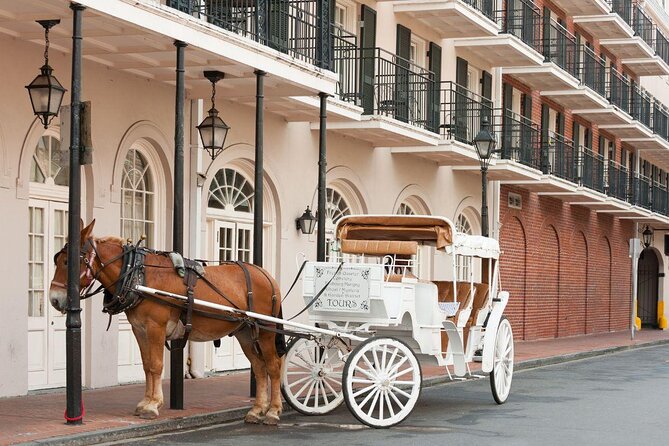
Between food stops, you’ll pass by Jackson Square and stroll along Royal Street, where you’ll see shops and the classic French Quarter vibe. These segments aren’t about adding extra tastings; they’re about placing your meal story into the city’s geography.
If you’re new to New Orleans, this helps you start connecting neighborhood names to what you’ve tasted. It’s also a nice breather—just enough walking time to reset your hunger and digestion before the next stop.
Cocktail heritage, explained through drinks you actually taste
This tour does something I really appreciate: it treats cocktails as part of the local food culture, not as an optional side quest. You get multiple full-size drinks that each bring a different personality.
You start with Cat 5 Hurricane, then later you’ll taste Pimm’s Cup, and you finish with a classic daiquiri. That lineup is useful because it covers different directions New Orleans takes with rum, fruit flavors, and spirit-forward drinks.
Even if you don’t become a cocktail nerd overnight, you’ll leave with a practical takeaway: the city’s “bar culture” isn’t separate from dinner. It’s tied to how people gather, celebrate, and keep the mood going.
One more reason this matters for value: alcohol at bars can get expensive fast. Since this tour includes four full-sized drinks, you’re not paying that full price on top of food tastings.
Price and value at $160 per person: what you’re really paying for
At $160 per person, you are paying premium-tour pricing. The key question is: does it deliver enough variety and quantity to justify it?
Here’s what you get on paper:
- Up to six dishes (gumbo, hot sauce sampling, muffuletta, jambalaya, pralines, fried plantains)
- Four full-sized drinks
- A guided, walking format with historical context
Also, you get a vegetarian option for the lunch set menu (request at check-out). The trade-off is that there are no gluten-free, dairy-free, or vegan options, so if you need those, this may not be workable.
Some people feel the cost is high because they want more food at each stop. But the other half of the equation is the cocktail count and the fact that multiple restaurants and tastings are involved, including a seated experience. If you’re the type who will happily drink and sample across the city, this price can start to feel more reasonable.
My advice: treat this as a “skills-based” tasting tour. You’re buying the guide’s ability to connect what you’re eating to why it exists, plus the ability to get you into a few solid, classic places without you doing all the planning.
Portion expectations: tasting sizes vs a full meal
I’d plan your expectations around “enough to try everything” rather than “equal to ordering full entrées everywhere.” Even though some dishes feel substantial in flavor and satisfaction, the format is sampling.
That said, the final result is often very satisfying because the tour stacks variety. You’re not stuck with just spicy, just sweet, or just one type of cuisine. You rotate between savory, heat, dessert, and citrusy cocktails.
If you’re hungry before you start, consider eating a light early meal and arriving ready to taste. Then after the tour, you’ll have a better sense of what you want to order for dinner that night.
Who should book this tour (and who might skip it)
This tour is a strong match if you:
- Want a first-timer introduction to New Orleans food and cocktails
- Like history told through real meals and drinks
- Enjoy walking but not to the point of discomfort
- Are 21+ and happy to drink cocktails included with the tour
- Want a guided day that helps you decide what to eat next
It may not be your best pick if you:
- Need gluten-free, dairy-free, or vegan options
- Have mobility concerns or limited ability to walk several blocks
- Prefer one long sit-down meal over multiple stops
If you’re traveling with a group, the maximum of 16 people helps keep the experience from feeling like chaos. You’ll have room to ask questions and keep the pace moving.
Quick practical tips before you go
- Bring comfortable shoes. You’re walking between multiple stops in the French Quarter.
- If you have allergies, this tour asks you to notify staff during check-out. It specifically mentions allergies (not aversions), so don’t skip that step.
- If you want the best experience with drinks, pace yourself. You’re tasting gumbo and sugar and multiple rum drinks in one afternoon.
- Come ready to learn. The history angle is part of the payoff, not just a bonus.
Should you book this New Orleans cocktail and food history tour?
Book it if you want a high-impact sampler day: classic New Orleans staples, four full-size drinks, and a guide who ties the food to the city’s development. For many people, it’s the easiest way to get oriented fast and leave with a short list of what to order again later.
Skip it if dietary needs make it complicated or if you hate walking. And if you only want huge portions, remember this is built around tastings at multiple venues, not a full meal at every stop.
If your goal is to taste broadly, drink thoughtfully, and understand what makes New Orleans food and cocktails tick, this is a very solid way to do it.
FAQ
How long is the New Orleans Cocktail and Food History Tour?
It lasts about 4 hours.
What’s the meeting point and where does the tour end?
It starts at Red Fish Grill, 115 Bourbon St, New Orleans, LA 70130, and ends inside Cane & Table, 1113 Decatur St, New Orleans, LA 70116.
What’s included in the tour price?
The tour includes beverages and a lunch set menu (with a vegetarian option available). It also includes multiple tastings and four full-sized drinks as part of the experience.
Are there vegetarian or other dietary options?
A vegetarian option is available if you request it at check-out. The tour does not offer gluten-free, dairy-free, or vegan options, and you should notify the provider about any food allergies during check-out.
What’s the minimum age to join?
The minimum age is 21.
Is the tour offered in English?
Yes, it’s offered in English.
Does the tour run in bad weather?
It requires good weather. If it’s canceled due to poor weather, you’ll be offered a different date or a full refund.
Is there free cancellation?
Yes. You can cancel up to 24 hours in advance of the experience for a full refund.
Is this tour suitable for mobility limitations?
It is not recommended for travelers with mobility/walking issues.