REVIEW · SICILY
Ortigia: Syracuse’s Ancient Town Center Private Walking Tour
Book on Viator →Operated by Hermes Sicily Tourist guides group · Bookable on Viator
Ortygia is easiest to read on foot.
I love how this small-group private walking tour saves you from getting lost and helps you connect the dots across centuries. I also like that you get landmark time plus a feel for everyday life in the old streets and market areas. One possible drawback: the cathedral interior costs extra (around €2) and you must follow the no-shorts/no-sleeveless dress rule for entry.
The best part is the guide. On past tours, I’ve heard from groups led by guides like Eva (also seen as Ava in reviews), Valeria, Carmine, and Frau Maier, and the common thread is clear English and a habit of answering whatever you’re curious about. If your main goal is history with context—without hunting for it yourself—this is a strong match.
In This Review
- Key things to know before you go
- Why Ortygia on foot beats trying to DIY
- Meeting at Via dell’Apollonion: a route you can follow
- Temple of Apollo: the oldest Greek stone you can spot
- Piazza Archimede and the Diana fountain
- Via Cavor and the Collegio dei Gesuiti area
- Piazza Duomo: the cathedral square and its big names
- Syracuse Cathedral interiors: baroque on ancient foundations (optional €2)
- Chiesa di Santa Lucia alla Badia: visit the St. Lucy interior
- Fonte Aretusa: the spring and the Alpheus–Arethusa story
- Island of Ortygia and the Giudecca walk through former Jewish quarter
- Price and value: what you’re paying for at $107.53
- Who this tour fits best
- Should you book Ortigia: Syracuse’s Ancient Town Center Private Walking Tour?
- FAQ
- How long is the Ortigia walking tour?
- Is the tour offered in English?
- What is the price per person?
- Is the cathedral interior included?
- What dress code do I need for the cathedral?
- Is there anything to know about visiting Chiesa di Santa Lucia alla Badia?
- What happens if the cathedral is closed for services?
- Where do I meet the guide?
- Can I cancel for a refund?
Key things to know before you go
- 2 hours of walking through Ortygia, paced so you can actually look, not just move
- English-guided route with a guide who can explain what you’re seeing and why it matters
- One paid optional stop: Syracuse Cathedral interiors are about €2 per person
- Dress code at the cathedral: cover shoulders and avoid shorts, or entry can be refused
- Monday timing matters: Chiesa di Santa Lucia alla Badia interior visit isn’t possible on Mondays
- Fonte Aretusa + myth: you’ll hear the Arethusa and Alpheus story while you’re there
Why Ortygia on foot beats trying to DIY
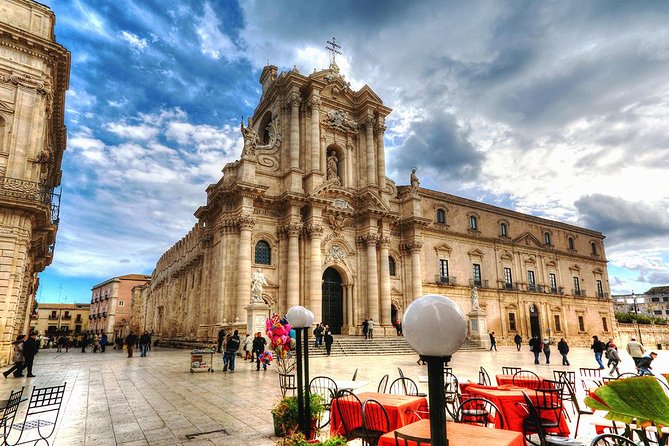
Ortygia—the old island center across from Siracusa—can feel like a maze on your first day. That’s exactly why I like this tour format. In about two hours, you follow a planned path that hits the key sights while still letting you stop, look up, and ask questions.
I also like that you’re not stuck staring at a phone map. Instead, the guide turns the street scene into something you can understand: Greek temple stone, later Roman and Christian layers, and the way today’s neighborhoods still shape the walk.
Finally, you get a little of what makes Syracuse special beyond monuments. As you move through the old lanes and near the market area, you see how people actually shop, pass time, and live their day in this tightly packed town center.
You can also read our reviews of more tours and experiences in Sicily.


Meeting at Via dell’Apollonion: a route you can follow
You start at Via dell’Apollonion, 96100 Siracusa SR, Italy and the tour finishes back near the meeting point. That matters more than you might think. It reduces the stress of trying to end up in the right place later for lunch, the next museum, or just a slow walk on your own.
This is a private walking tour, meaning you only share the experience with your own group. That usually makes it easier to set a comfortable pace, especially if someone in your party wants to linger at a fountain or a church facade.
The tour runs in English, and you’ll receive confirmation at booking time. You also get a mobile ticket, which is handy if you’re bouncing between stops and don’t want to manage paper.
Temple of Apollo: the oldest Greek stone you can spot
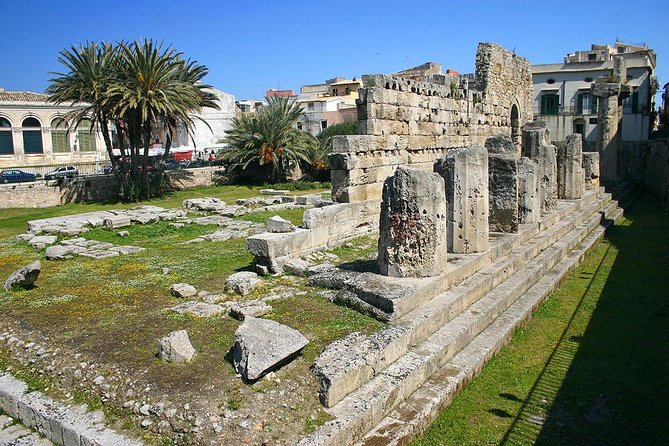
The tour begins near the Temple of Apollo (Tempio di Apollo). This is described as the oldest stone temple built by Greeks in Sicily, so even from the outside you’re looking at a big deal historically.
What I like about kicking off here is that it gives you a baseline. Once you’ve seen what Greek builders started with, the rest of the walk makes more sense—especially when you reach the cathedral, which sits on earlier foundations.
Plan for a quick-but-important stop. This is about orientation and context—enough time to see details and understand the story before you move on.
Piazza Archimede and the Diana fountain
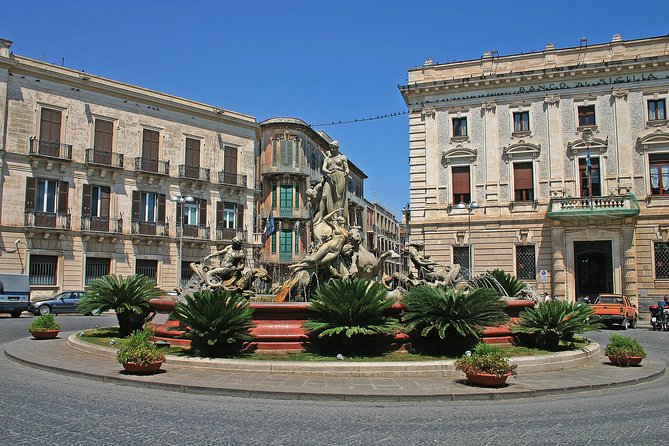
Next up is Piazza Archimede, where you’ll view the neoclassical Diana fountain and the mix of building styles around the square. Squares are useful checkpoints on foot. You can orient your direction, get a breath, and then continue without feeling like you’re sprinting between landmarks.
Here’s the practical value: fountains and civic squares often signal how a city organizes daily life, not just how it looks in postcards. Seeing the Diana fountain in its setting helps you understand why Ortygia still feels like a lived-in town center rather than an open-air museum.
It’s a short stop, so keep your eyes up. Look at the architectural mix—those contrasts are part of what the guide will help you read.
Via Cavor and the Collegio dei Gesuiti area
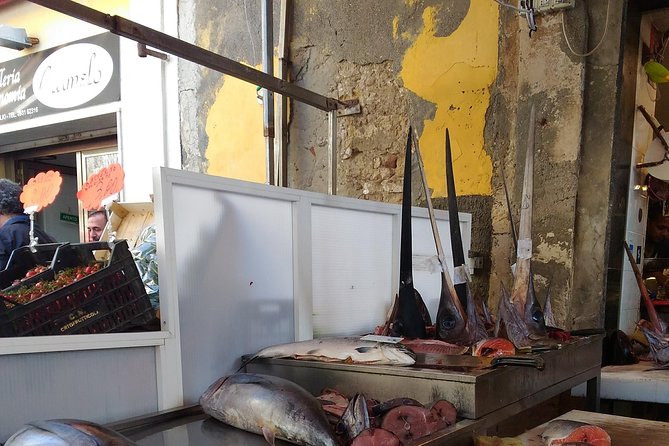
After the square, you walk through via Cavor, passing near the Collegio dei Gesuiti. Streets like this are where history becomes physical. You don’t just hear about eras—you see how buildings and institutions shaped the neighborhood.
This segment is a good chance to slow down and watch the street rhythm. Ortygia’s narrow lanes can feel like a set of corridors between bigger moments—squares, churches, and springs. A guided route keeps you from missing why a particular street matters.
No admission tickets are listed here, so you can focus on architecture and atmosphere.
Piazza Duomo: the cathedral square and its big names
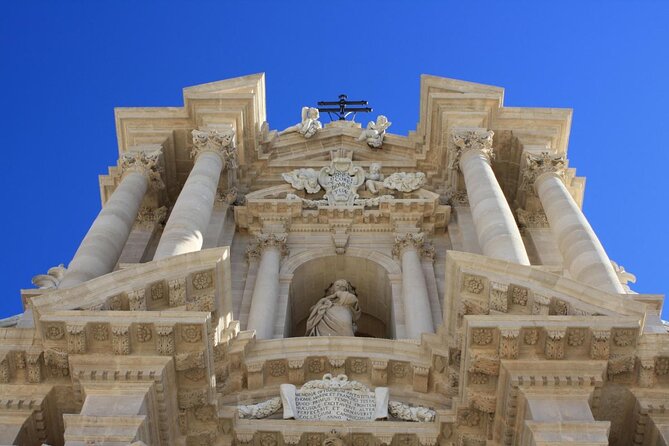
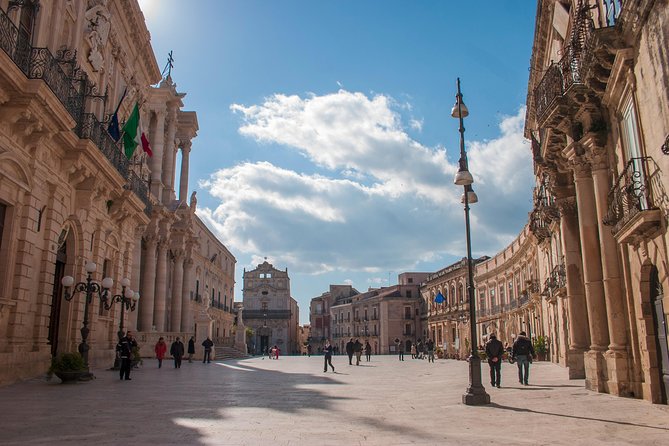
Then you reach Piazza Duomo, one of the core viewpoints in Syracuse. The guide focuses on the cathedral square and its main buildings, including the cathedral, palazzo Vermexio, the arcivescovado, and palazzo Beneventano del Bosco.
I love stops like this because they give you a mental map. When you understand what surrounds the cathedral—who built what, and what role the institutions played—you’ll feel like the city makes sense as a system, not as random highlights.
You’ll have time here before the interior visit. Use it to compare facades and spot where baroque style and earlier foundations hint at what’s beneath.
Syracuse Cathedral interiors: baroque on ancient foundations (optional €2)
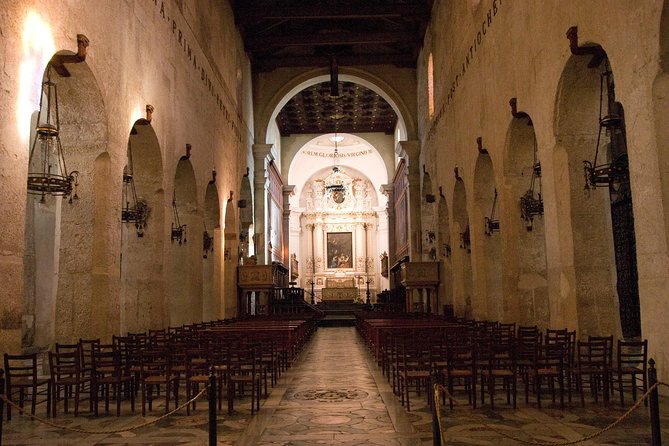
The main interior visit is Syracuse Cathedral. This church is described as a baroque church built on an ancient Greek temple. That’s the kind of layering you can’t fully get from just walking around outside.
A few practical notes before you count on entering:
- The cathedral interior fee is not included and is about €2 per person.
- Interior access is not possible during holy mass or marriages. If that happens, the guide will explain from outside.
Also, there’s a strict dress code for cathedral entry: no shorts or sleeveless tops, and shoulders must be covered for both men and women. If you show up dressed casually, you may be refused entry. I’d rather you think about this before you leave the hotel than scramble at the last minute.
If you’re okay with the optional ticket and you can dress correctly, this is one of the stops that can turn “nice buildings” into a real wow moment.
Chiesa di Santa Lucia alla Badia: visit the St. Lucy interior
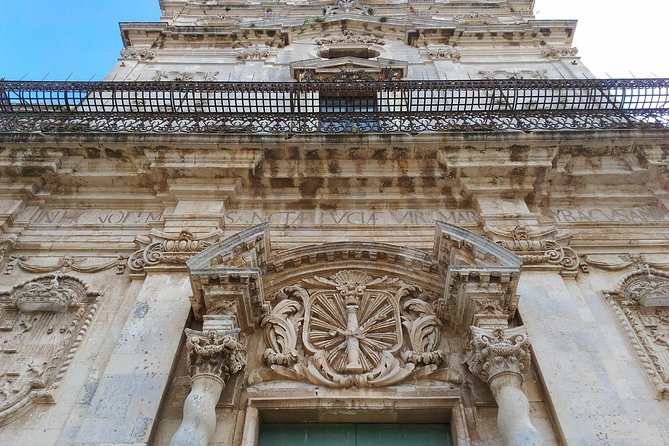
Next is Chiesa di Santa Lucia alla Badia, dedicated to St. Lucy. You’ll be able to visit the interiors during most days, but there’s one big scheduling detail: the church is closed on Mondays, so interior access isn’t possible on that day.
I like including this stop because it shifts the story into lived religious devotion. It also connects to what Ortygia is known for: the idea that sacred spaces often hold centuries of meaning in a compact footprint.
In the best case, you get that interior view. In the not-best case (Monday), you’ll still move through the area, and the guide can focus on the broader context even when interiors are off the table.
Fonte Aretusa: the spring and the Alpheus–Arethusa story
One of the most memorable pauses is Fonte Aretusa, Syracuse’s legendary spring, also noted for papyrus plants. The guide tells the story of Alpheus and Arethusa while you stand where the legend points you.
This stop is short, but it lands. Springs and waterways in ancient towns aren’t just pretty—they’re where myths attach to real geography. When you hear the story in place, you remember it more easily than if it’s just an abstract tale.
If you like mythology, this is your payoff moment: it explains why people have kept talking about Arethusa for ages, even as Syracuse changed around her.
Island of Ortygia and the Giudecca walk through former Jewish quarter
After the spring, you move into the Island of Ortygia walk through the narrow streets of the old town center and the Giudecca district, the historic Jewish quarter of Syracuse.
This is where the tour becomes more than monuments. Walking through Ortygia’s tight street pattern helps you understand why the city’s cultural layers mattered. The physical layout—how people could move, gather, and worship—shaped community life.
You also finish with a walk along Via della Giudecca, giving you a final focus on that former neighborhood. It’s a thoughtful ending because it closes the loop between what you learned about earlier communities and what you can still sense in the street plan today.
Price and value: what you’re paying for at $107.53
At $107.53 per person for roughly 2 hours, the price looks steep if you’re comparing it to a generic street walk. But here’s why it can still feel like good value.
First, you’re paying for a guided route that saves time. Ortygia is compact, but it’s easy to waste an hour simply figuring out where to go next. This tour is built so you keep moving toward high-impact sights.
Second, most stops are free in terms of admission. The main exception is the cathedral interior (about €2 per person, optional). That means you’re not stacking entry fees at every corner.
Third, it’s private, and the guides named in real experiences—Eva/Ava, Valeria, Carmine, and Frau Maier—are consistently described as friendly and able to answer questions. That matters when you’re paying for guidance, not just motion.
If your goal is history with clear explanations and a smart path through the core of Ortygia, I’d call this a reasonable spend—especially on a day when you want to see a lot without stressing about logistics.
Who this tour fits best
This works well if you:
- Want the top Ortygia sights in a tight, organized walk
- Like history explained in everyday language, with chances to ask questions
- Prefer a private experience where your group’s interests can shape the pacing
- Plan to be in Syracuse long enough that you can dedicate time to the island center
It’s less ideal if you hate walking in heat or you’re only interested in one or two monuments. The tour does require steady foot time and, as noted, it’s best with good weather. If conditions are rough, you might be offered a different date or a refund.
Should you book Ortigia: Syracuse’s Ancient Town Center Private Walking Tour?
Yes—if you want a guided Ortygia that connects the Greek, baroque, and myth parts into one understandable story. This is the kind of tour where the route matters: it helps you see the big landmarks without spending your precious vacation hours figuring out what’s where.
Book it especially if you can meet the cathedral dress rule and you’re willing to pay the small optional interior fee. If you’re coming on a Monday, plan your expectations for St. Lucy’s interior visit, since it’s closed that day.
FAQ
How long is the Ortigia walking tour?
The tour lasts about 2 hours.
Is the tour offered in English?
Yes, it’s offered in English.
What is the price per person?
The price is $107.53 per person.
Is the cathedral interior included?
No. The Syracuse Cathedral interior has an extra fee of about €2 per person.
What dress code do I need for the cathedral?
You need shoulders covered and you can’t wear shorts or sleeveless tops. If you don’t follow the dress requirements, entry may be refused.
Is there anything to know about visiting Chiesa di Santa Lucia alla Badia?
Its interiors are not possible on Mondays because the church is closed that day.
What happens if the cathedral is closed for services?
Interior access is not possible during holy mass or marriages. In that case, the guide will explain the church from outside.
Where do I meet the guide?
You meet at Via dell’Apollonion, 96100 Siracusa SR, Italy.
Can I cancel for a refund?
Yes. You can cancel for a full refund up to 24 hours in advance of the experience start time.