REVIEW · SICILY
Ancient Syracuse: private guided tour of the Neapolis archaeological park
Book on Viator →Operated by Hermes Sicily Tourist guides group · Bookable on Viator
Ancient Syracuse hits hard, in the best way. This private guided walk through the Neapolis archaeological park turns scattered stone into a clear story of Greek and Roman Syracuse, with a guide who keeps the pace human and the details practical. I like how close you get to the monuments, and I like that you’re not just looking at ruins—you’re learning how the city worked and why these places mattered.
One thing to plan for: the park entrance ticket isn’t included, so you’ll want to budget time (and heat) for the ticket purchase unless you choose a ticket-inclusive option. If you go in spring or summer performance season, the Greek theater can be covered with temporary seating, so your view of the amphitheater may be partly blocked.
In This Review
- Key things that make this tour worth your time
- Neapolis Park: your walk through ancient Syracuse
- Teatro Greco: the big Greek theater and the summer cover issue
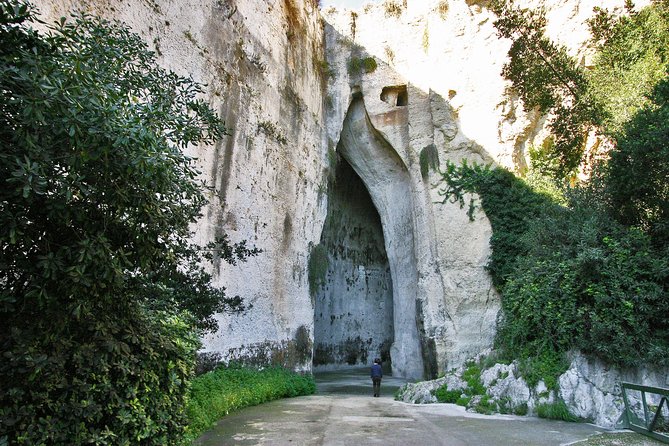
- The Ear of Dionysius and the quarry-style acoustics
- Anfiteatro Romano di Siracusa: gladiators and Roman spectacle
- Private guide value: what you’re really paying for at $108.24
- Timing, tickets, and packing for a smooth Neapolis visit
- Who should book this private Syracuse tour?
- Should you book Ancient Syracuse: private guided tour of the Neapolis archaeological park?
- FAQ
- How long is the Ancient Syracuse private guided tour of Neapolis?
- Where does the tour start and end?
- Is the Neapolis park entrance ticket included?
- What parts of the itinerary have free admission?
- Is this tour private?
- What language is the tour offered in?
- Can I choose a morning or afternoon departure?
- Do I need good walking shoes?
- Is a service animal allowed?
- When will I get confirmation after booking?
- What if the weather is bad?
Key things that make this tour worth your time
- Private group format means your guide can slow down, speed up, and answer follow-ups without herding anyone around
- Neapolis park first gives you the big picture before you hop to the theater and other signature stops
- Teatro Greco access is short and focused, with reality checks about what you’ll see in warmer months
- Ear of Dionysius is built for acoustics, and it’s one of the stops that people remember long after the walk
- Roman amphitheater stop adds a clear shift from Greek culture to Roman spectacle
- Guides like Eva and Martina are repeatedly praised for explaining details in a way that keeps kids and adults engaged
Neapolis Park: your walk through ancient Syracuse
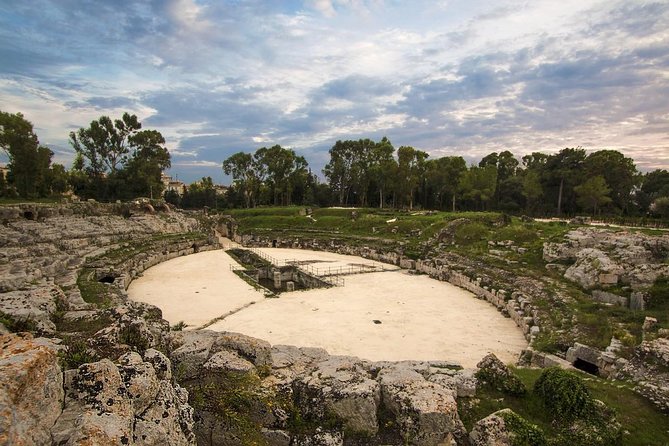
Neapolis is where the major ancient monuments of Syracuse cluster together, so it’s a smart place to start. You’ll spend the bulk of the tour walking the park while your guide connects the dots—how the Greeks designed public spaces and how later Romans adapted them.
This is the sort of site where, without guidance, you can end up staring at rocks and guessing. With a guide, you’re more likely to notice what you’re looking at: how the structure is shaped, how people would have moved through the area, and what each monument says about life in the city.
Your stop here can run close to the listed Neapolis time of up to 2 hours, even though the overall tour is advertised at about 1 hour 30 minutes. In real life, expect the guide to set the tempo. If your group asks questions and you stop for photos, the Neapolis portion will naturally stretch.
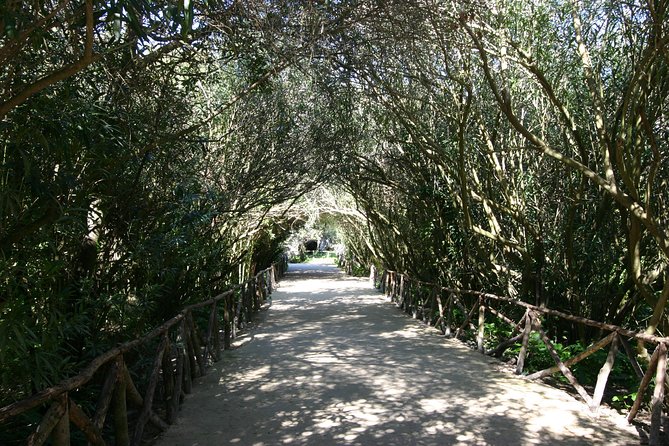
A practical note: the park involves walking on uneven ground. Bring comfortable shoes, because you’ll want your feet to feel steady when you’re turning from one viewpoint to the next.
You can also read our reviews of more tours and experiences in Sicily.


Teatro Greco: the big Greek theater and the summer cover issue
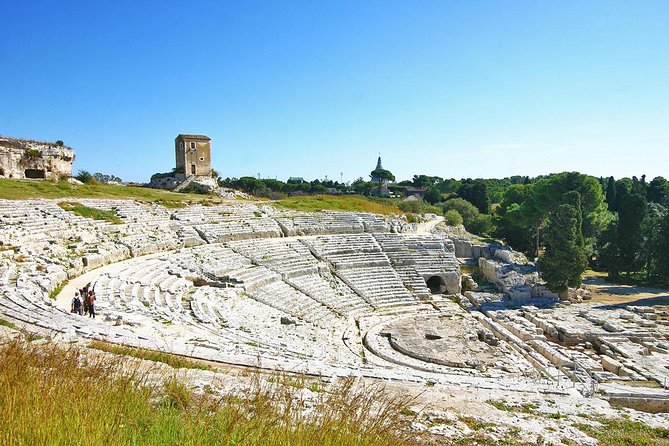
Teatro Greco is the headline Greek theater in Sicily, and the tour gives it a short, focused visit. The time here is listed at about 40 minutes, which is enough to understand what makes the theater important and to line up the views you can still appreciate.
Here’s the main consideration: during performance season (usually spring and summer), the Greek theater is covered and you’ll see only part of the amphitheater. That’s not a deal-breaker, but it does change the photo you thought you were buying.
If theater performances are happening, it also means you’re seeing the site as a living stage, not just a museum piece. Still, go in with eyes open. If your top goal is a fully open, classic amphitheater view, you might prefer traveling in a time when it’s not covered.
The upside is that even partial visibility can be enough to understand the scale and design. You’ll also get the story of how Greek theater shaped civic life—so the stop lands even if the view is slightly boxed in.
The Ear of Dionysius and the quarry-style acoustics
The Ear of Dionysius is one of those Syracuse stops that feels like a legend you can stand next to. You’ll only spend about 15 minutes here, but that’s usually the right amount of time for a site that’s best at close range.
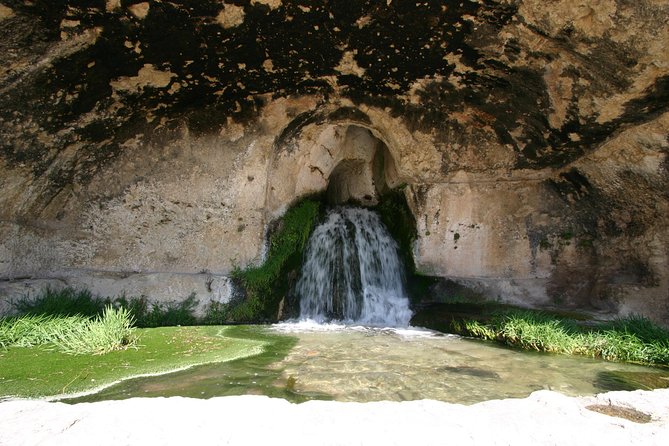
This is also a stop tied to sound. People talk about the caves and the acoustics—especially the fun factor of hearing echoes in the right spots. The Ear of Dionysius leans into that idea, so even if you’re not the singing type, you’ll still notice how the place behaves when sound bounces.
The tour also includes the ancient Greek stone quarries nearby. Think of them as the workshop where the stones came from. That matters because it helps you imagine the labor behind the monuments, instead of treating the ruins like magic props that appeared overnight.
In a place like this, a good guide makes a quick stop feel complete. You’ll hear the explanations that turn a name like Dionysius into something more than a trivia label.
Anfiteatro Romano di Siracusa: gladiators and Roman spectacle
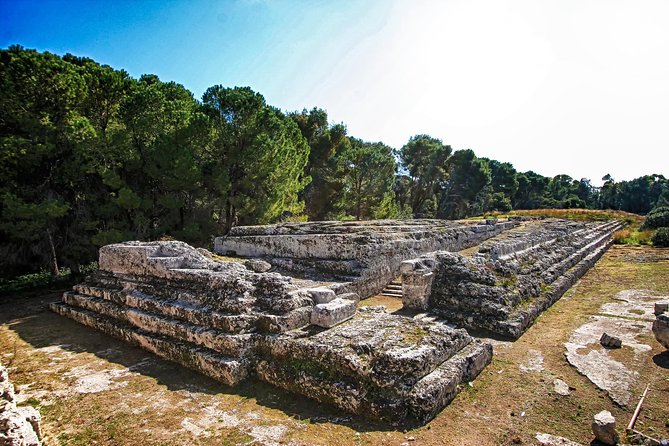
After the Greek pieces, the tour shifts to the Roman amphitheater, Anfiteatro Romano di Siracusa. This stop is short—about 15 minutes—but it adds a useful pivot. You’re seeing how public entertainment evolved once Roman power shaped the city.
Your guide will cover Roman gladiators and how the amphitheater worked. Even in a quick visit, that context changes what you notice: the seating layout, the idea of spectacle, and the way Roman architecture supported crowds.
This stop can feel like a classic “quick hit” between longer segments. I like that. You get a change of pace without losing the historical thread.
If you’re the type who likes to compare cultures through architecture, this is a high-value transition. Greek theater and Roman amphitheater aren’t just two ruins. They’re two different answers to the same human desire: gather people in one place and create an event.
Private guide value: what you’re really paying for at $108.24
The price—$108.24 per person—may look steep until you think about what’s included. You’re buying a professional guide plus a private walking format. That means you’re not sharing your questions with a dozen strangers, and you’re not playing roulette with the quality of your experience.
You’re also saving your own energy. In archaeology parks, it’s easy to feel lost. A guide helps you move through efficiently, so you don’t waste time guessing what’s worth your attention.
Now add the ticket reality: park admission is not included (unless you choose a ticket-inclusive option). Some parts of the tour have free admission, like Teatro Greco and the Ear of Dionysius, but the Neapolis park itself is the piece you need to budget for. If you’re counting euros like I do, this matters for your final total.
Where does the value really show up? In the way the guide explains the “why,” not just the “what.” In past experiences, guides like Eva have impressed people with how quickly they answer questions and how they point out subtle details—like architectural ornaments and small elements you’d otherwise miss. Another guide, Martina, has been praised for strong explanations and for making the time feel worthwhile even when the main theater view is affected by summer staging.
For families, that guiding style is especially useful. If you’re traveling with a 10-year-old who wants history to make sense, it helps when the guide can translate ruins into stories with real characters and real logic.
If you’re traveling as a pair or small group, private tours tend to feel especially fair. You’re spreading the guiding cost and getting a customized pace, which often beats waiting around at the mercy of group tours.
Timing, tickets, and packing for a smooth Neapolis visit
This tour gives you a choice of morning or afternoon departure times, which helps if you’re trying to plan around heat, other stops, or your day’s rhythm. I usually like morning options in Sicily because the day often builds into bigger crowds and hotter walking.
Your meeting point is Largo Anfiteatro, 2, 96100 Siracusa. Since the tour ends back at the starting spot, you can treat this as a self-contained block in your schedule.
Because admission to the park isn’t included, don’t treat this as a “walk in whenever” experience. If you show up late or without ticket prep, you might burn time. The simplest move is to plan ticket time so your tour doesn’t start feeling like a frantic detour in the sun.
Pack like you’re going to be outside for a while. Comfortable walking shoes are a must. If you’re going in warmer months, consider bringing an umbrella for shade or quick protection if the weather turns hot and bright. That’s a small thing, but it can keep the day pleasant.
Also, the tour runs on good-weather conditions. If the forecast is bad, you might see scheduling changes. Build a little flexibility into your Syracuse plan.
Who should book this private Syracuse tour?
I’d book this if you want ancient Syracuse to feel understandable, not just impressive. If you like guided storytelling, and if you appreciate practical explanations of how Greek and Roman spaces worked, this private format is a strong match.
It’s also a good fit if you’re traveling with kids or teens who do better with active guidance than with a self-guided brochure. The guide’s ability to answer questions and keep people engaged is a big part of why this experience scores so high.
I’d think twice if your priority is purely sightseeing photos with no interruptions. The visit is structured, and you do have to work around the theater cover issue in peak performance season. If your goal is a perfect unobstructed view of Teatro Greco, plan your timing carefully.
Finally, consider your tolerance for walking. Neapolis involves getting around on uneven ground. If you don’t enjoy that style of touring, you might prefer a more transit-based plan.
Should you book Ancient Syracuse: private guided tour of the Neapolis archaeological park?
Yes, if you want the ruins to make sense. The biggest strength here is the private guide who explains what you’re seeing and keeps the walk from turning into a list of names. Add in the chance to connect multiple major sites—Neapolis first, then Teatro Greco, the Ear of Dionysius, and the Roman amphitheater—and it becomes a smart way to see the highlights without wasting time guessing.
Book with the only big caution in mind: tickets and summer theater visibility. If you go prepared, expect good timing, and accept that spring/summer staging can partially cover Teatro Greco, you’re set up for a memorable and genuinely useful visit.
FAQ
How long is the Ancient Syracuse private guided tour of Neapolis?
The tour is listed at about 1 hour 30 minutes (approx.).
Where does the tour start and end?
It starts at Largo Anfiteatro, 2, 96100 Siracusa SR, Italy and ends back at the meeting point.
Is the Neapolis park entrance ticket included?
No. The park admission fee is not included, except if you book a Tour + Ticket option.
What parts of the itinerary have free admission?
Teatro Greco and the Ear of Dionysius are listed as free admission stops.
Is this tour private?
Yes. It’s a private activity, and only your group participates.
What language is the tour offered in?
The tour is offered in English.
Can I choose a morning or afternoon departure?
Yes, you can choose from morning or afternoon departure times.
Do I need good walking shoes?
Yes. Comfortable walking shoes are recommended since it’s a walking tour.
Is a service animal allowed?
Yes, service animals are allowed.
When will I get confirmation after booking?
Confirmation is received within 48 hours of booking, subject to availability.
What if the weather is bad?
The experience requires good weather. If it’s canceled due to poor weather, you’ll be offered a different date or a full refund.