REVIEW · AYUTTHAYA
Colors of Ayutthaya: UNESCO Heritage 6 hour Bicycle Tour
Book on GetYourGuide →Operated by Recreational Bangkok Biking · Bookable on GetYourGuide
Biking through Ayutthaya makes history feel close. This UNESCO heritage route strings together villages, temple ruins, and big signature sights like Wat Mahathat, all on two wheels.
Wat Mahathat’s roots-and-Buddha moment and the lunch stop by the river are the two highlights I’d chase. The day also includes temple entrance fees and a boat crossing, which keeps things simple.
One possible consideration: the experience can hinge on how clearly the guide explains things in English that day—one review noted language clarity issues, which can affect how much you get out of the stops.
In This Review
- Key things you’ll notice on this tour
- Why This Ayutthaya Bike Route Works
- From PomPhet Fort to the Countryside: Getting Rolling
- What helps your day feel smooth
- Elephant Kraal: Ayutthaya’s Wild-Elephant Era
- Wat Mahathat: The Roots, the Buddha Head, and the Pause You Need
- A practical tip
- Wat Phra Si Sanphet: Three Pagodas and a Temple-City Mindset
- Where it can fall short
- Local Elementary School Stop: Real Life, Not Just Ruins
- How to handle it respectfully
- Lunch at a Riverside Restaurant (Plus Market Snacks)
- Luang Phor Lokayasuttha: The Reclining Buddha at Its Scale
- Wat Chai Wattanaram: West-Bank Views and King Prasat Thong’s Memorial
- Pacing, Group Size, and How Guides Shape the Day
- A fair reality check
- Price and Value: Is $70 a Good Deal?
- Who This Tour Suits Best (and Who Might Want to Rethink It)
- Should You Book Colors of Ayutthaya: UNESCO Heritage 6 hour Bicycle Tour?
- FAQ
- What is the duration of the tour?
- What time does the tour start?
- Where is the meeting point?
- How many people are in the group?
- What languages are the guides available in?
- Is the bike rental included?
- Is boat crossing included?
- Are temple entrance fees included?
- What is the minimum age to join?
- What is included in lunch?
Key things you’ll notice on this tour
- Small group (up to 9): you ride more like a team than a crowd.
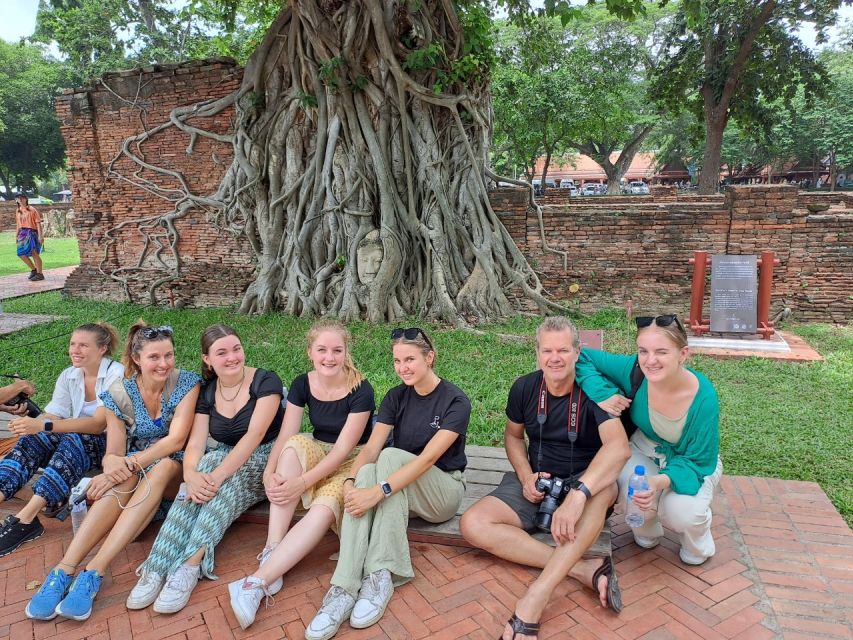
- Wat Mahathat’s Buddha in tree roots: a signature photo and a real conversation starter.
- Local school visit (if open): a human connection beyond temples and ruins.
- Elephant Kraal history: a quick but striking detour into Ayutthaya’s old elephant practices.
- Riverside Thai lunch plus market snacks: food breaks are part of the rhythm, not an afterthought.
- West-bank temple finale with boat crossing: you finish with river views rather than backtracking the whole way.
Why This Ayutthaya Bike Route Works
This tour is built for people who don’t want Ayutthaya to feel like a checklist. You get a bike day that mixes the obvious icons with the quieter, everyday parts of the province—rice fields, villages, a market, and even a local school stop when it’s open.
The structure also helps. You start by getting fitted with your bike and helmet, then you gradually ramp up from countryside riding to the densest temple zone around the old capital. That pacing matters because temple time is mostly walking and looking, not just photo stops.
And then there’s the “less obvious” value: entrance fees are included for Wat Mahathat, Wat Phra Si Sanphet, and Wat Chai Wattanaram, plus lunch and the boat crossing. That bundle makes the $70 price easier to justify than tours that keep adding pay-ons later.
From PomPhet Fort to the Countryside: Getting Rolling
You meet at the tour office near PomPhet Fort on Uthong Road, close to Ayutthaya train station (a short walk away). After meeting your guide, you get a bike fitting before departure—important in a place like this where you’ll cover real distance.
Tours run daily starting at 10:00, and you’re out for about 330 minutes. Expect a steady ride north along roads that pass through idyllic villages and alongside rice paddies. If you’ve ever toured a city on foot, you already know the problem: you end up seeing only what’s near the main roads. Here, the bicycle acts like a key, giving you a more “local pace.”
What helps your day feel smooth
You’ll likely spend the morning forming a rhythm: pedal, pause, listen, pedal again. That style works best if you’re comfortable riding at a moderate pace and you like learning what you’re seeing—not just snapping pictures and moving on.
Elephant Kraal: Ayutthaya’s Wild-Elephant Era
After you’re rolling, the itinerary includes a stop at Phaniat Royal Elephant Kraal. This isn’t just a random roadside sight. Historically, during Ayutthaya’s heyday, it was used to entrap wild elephants herded down from the north. The king’s elephant round-ups were traditionally presided over by Ayutthaya rulers who selected strong elephants for training and later war and labor.
This is one of those stops that makes the day feel more human and less postcard-like. You’ll connect the temples to the kingdom that built them. Even if you’re not an elephant-history person, this moment tends to land because it explains a real system—how power, labor, and animals were linked in the old capital era.
Wat Mahathat: The Roots, the Buddha Head, and the Pause You Need
As you get closer to the old capital, temple ruins start appearing more frequently. By around 12:30, you stop for lunch, then you enter the old capital area to visit major sites.
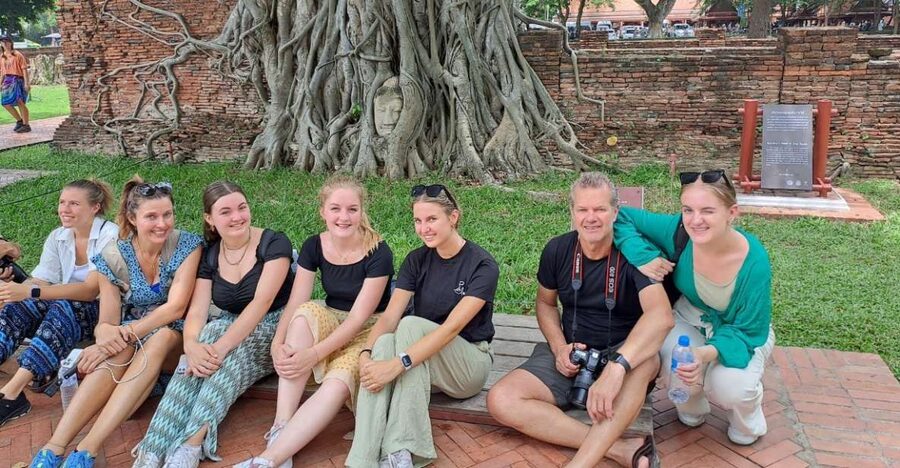
First up is Wat Mahathat, famous for the Buddha head entwined in tree roots. This is the kind of scene that’s hard to “fake” in a description. The roots don’t just create a photo background—they physically frame the temple story. You’ll likely get context from your guide about why that spot matters and how Ayutthaya’s religious life evolved.
A practical tip
If you want the full effect, slow down for a couple minutes here. Standing still in that space helps you notice what you’d otherwise miss—root patterns, the scale of the ruins, and how people move through the site.
Wat Phra Si Sanphet: Three Pagodas and a Temple-City Mindset
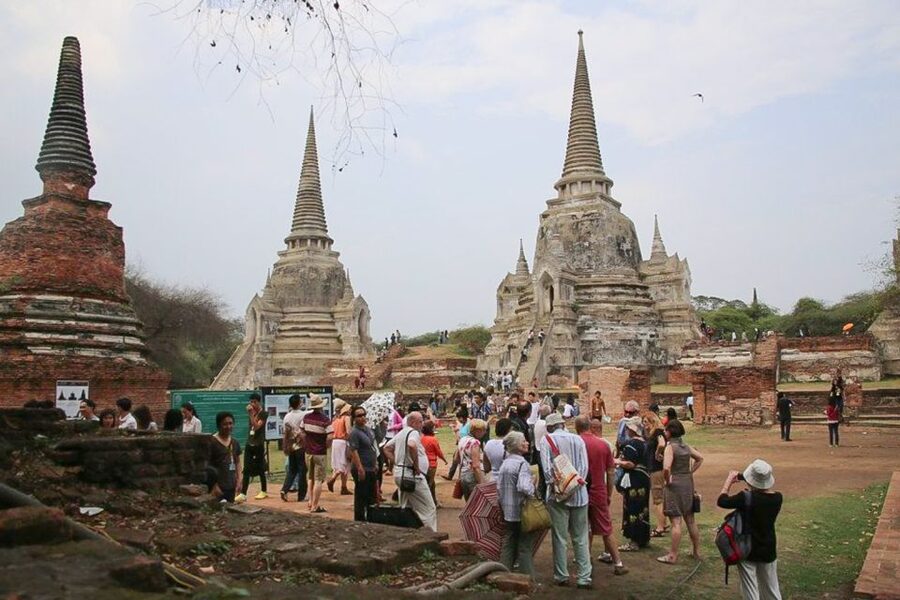
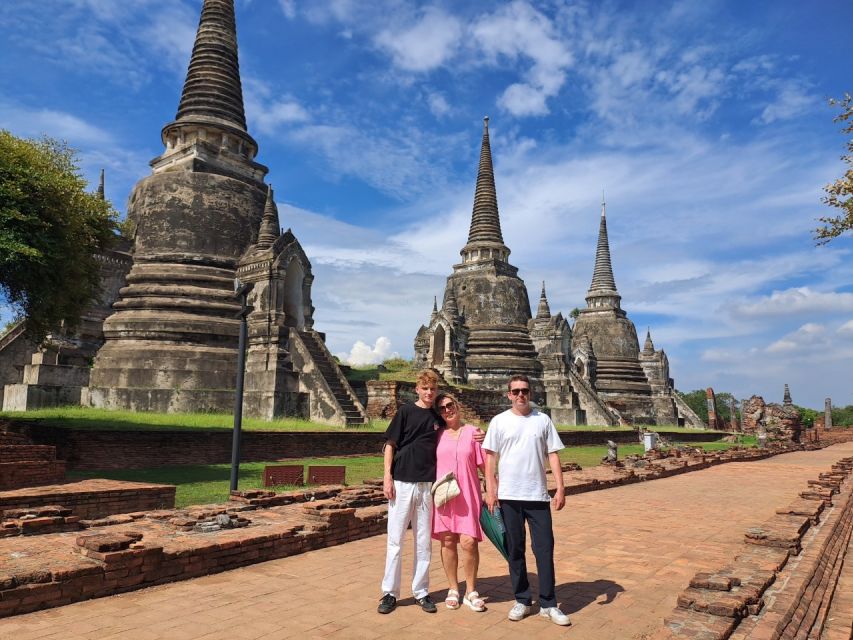
Right after Wat Mahathat, you visit Wat Phra Si Sanphet, known for three distinctive pagodas. This stop is a great contrast. Wat Mahathat grabs you with the iconic Buddha-in-roots image. Wat Phra Si Sanphet gives you the wider sense of how the palace-temple center of Ayutthaya worked.
The guide typically explains the broader story: the history of Ayutthaya, how the temples were tied to kings, and what the ruins represent today. One of the best parts of this tour is that you’re not just seeing temple shapes—you’re learning the “why” behind them.
Where it can fall short
If you don’t catch the explanation clearly (English clarity can vary), you may still enjoy the visuals, but the context won’t click as fast. One review specifically called out language clarity as a factor in value. If you’re sensitive to that, it can help to be proactive: ask a quick question when something sparks your curiosity.
Local Elementary School Stop: Real Life, Not Just Ruins
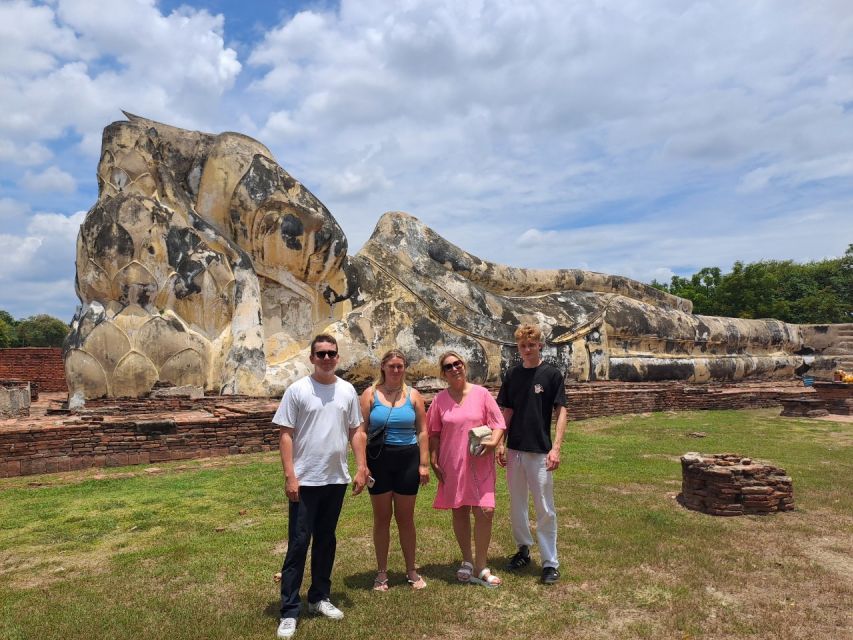
This tour can include a visit to a local elementary school to interact with children—only if it’s open. This is the part of the day that can surprise people who signed up thinking it would be temples only.
Even when the visit is short, it adds a layer most historical tours skip: daily life in the present. Your guide may explain local customs, and you’ll get a sense of how Ayutthaya’s community lives beyond the historical center.
How to handle it respectfully
Keep it simple and calm. Smile, follow your guide’s lead, and avoid turning the moment into a performance. If the school isn’t open, you still won’t be left without structure—your day continues with the rest of the ride and temple stops.
Lunch at a Riverside Restaurant (Plus Market Snacks)
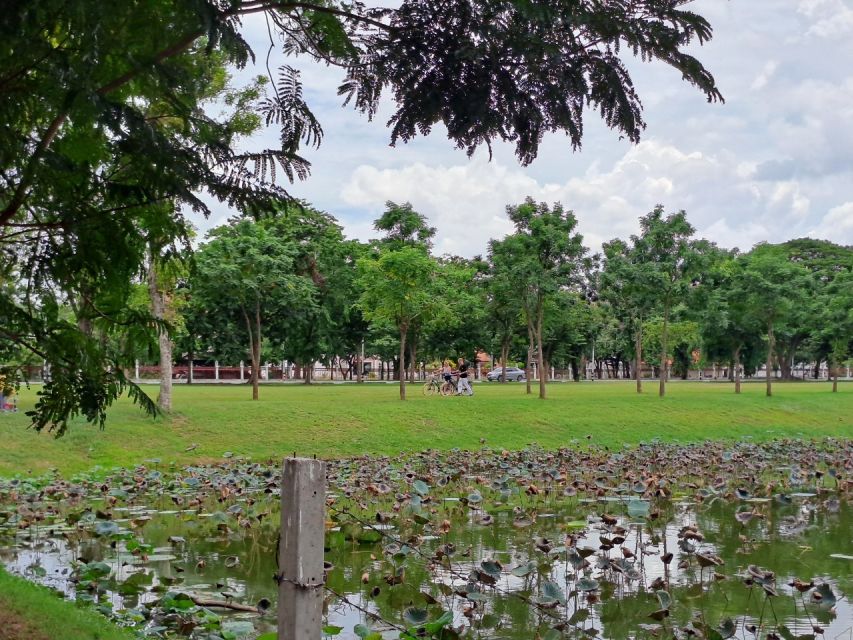
Around 12:30, you stop for Thai lunch at a local riverside restaurant. Reviews are consistently positive about lunch quality. Several mentions highlight that the meal is tasty, and at least one review praised the setting because the restaurant sits right by the river. Another common note: cold drinks during the ride.
One review did flag that the portion felt small for their expectations. That doesn’t mean the lunch is bad—it’s more about planning. If you’re a big eater or you hate feeling hungry after a meal, you may want to think of this lunch as “enough plus” rather than a feast.
After lunch, there’s also a short ride to a local market where you can see typical baked and fried delicacies. This works well as a break from temple concentration. It’s also a way to taste the area’s everyday food culture, even if you only sample a little.
Luang Phor Lokayasuttha: The Reclining Buddha at Its Scale
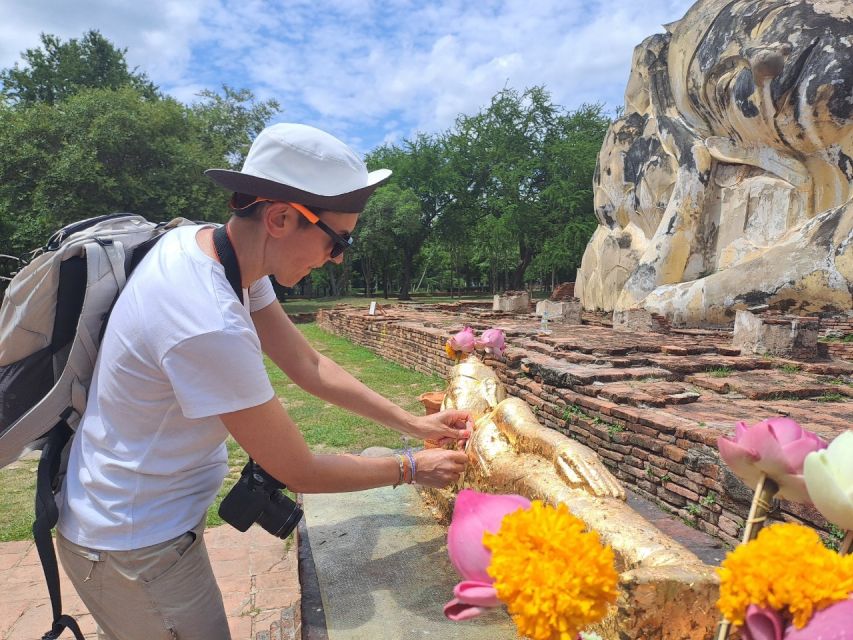
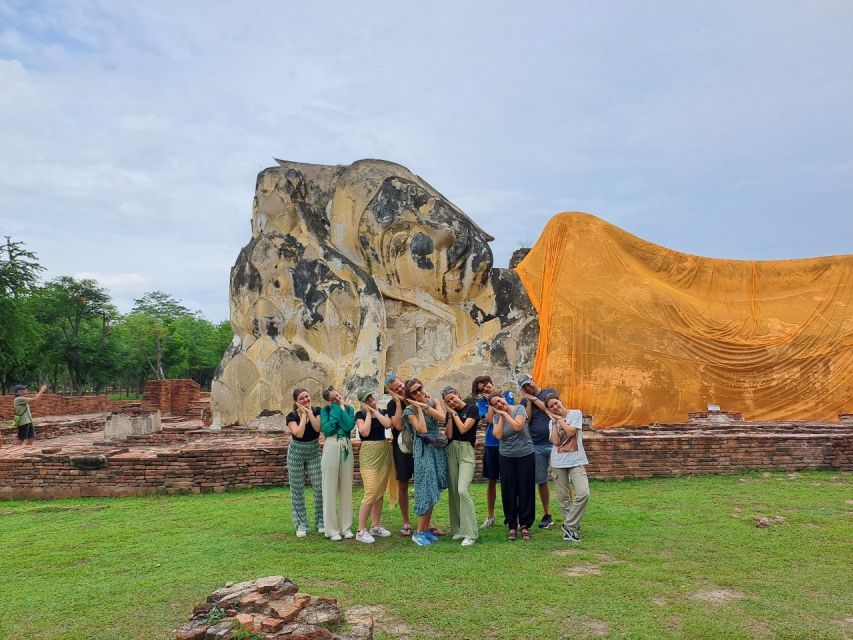
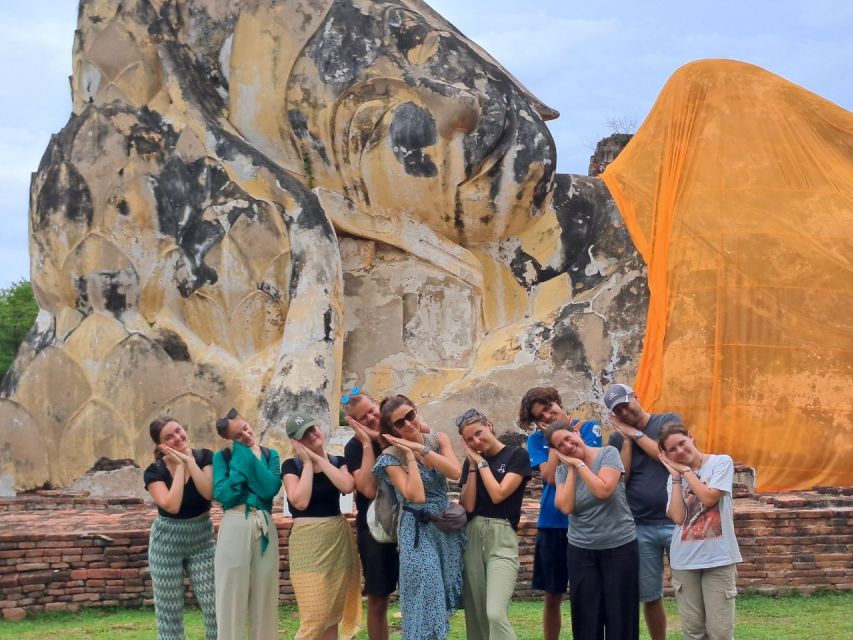
Next you head toward the huge reclining Buddha statue at Luang Phor Lokayasuttha, where you’re told it’s the largest Buddha statue in Ayutthaya. This stop balances the earlier ones nicely. Instead of pagodas and tree-root imagery, you get sheer scale.
A reclining Buddha setting also tends to change the pace of looking. You can’t take it in with one sideways photo the way you might with a head-in-roots scene. You end up spending time just orienting yourself—face, body proportions, and the wider temple surroundings.
If you like learning through guided storytelling, this is where your guide’s explanation can make the statue feel less like a landmark and more like a spiritual centerpiece.
Wat Chai Wattanaram: West-Bank Views and King Prasat Thong’s Memorial
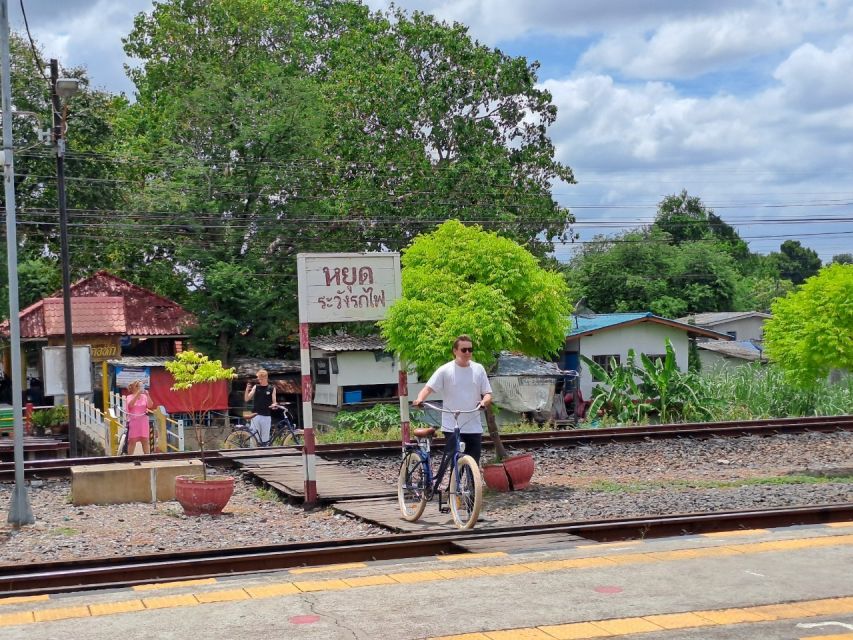
The late-day payoff comes at Wat Chai Wattanaram on the west banks of the Chao Phraya River. This is described as one of the most impressive temples in Ayutthaya, and it was constructed in 1630 by King Prasat Thong as a memorial of his mother’s residence in the area.
The west-bank location matters. It gives you that open river sense of where the old capital’s power and water access connected. It also helps the day feel like a journey instead of a loop of the same roads.
After visiting, you continue along the west bank until you reach the pier, then you cross the river by boat and return to the city. That river crossing is a smart ending: it turns the day’s effort into a calmer finish, with a change of scenery that doesn’t require more cycling.
Pacing, Group Size, and How Guides Shape the Day
This is a small-group tour capped at 9 participants, which I think is a big part of why people rate it highly. With a group that size, your guide can adjust stops so nobody gets lost and everyone can hear the key explanations.
The biggest “make or break” variable here is the guide and how well you connect with their explanations. Different guides have shown different styles, and you can see it in the review highlights: guides such as Bung, Beam, and Spike are specifically mentioned as knowledgeable and friendly, with at least one note that the ride pacing felt right and that lunch was excellent at a riverside restaurant.
If you’re going with family, it can also help that a good guide can handle small needs without turning the day chaotic. One review mentions accommodation for family needs—exact details weren’t provided, but the point is that the group dynamic is manageable.
A fair reality check
Not every stop will feel like the best part of your day. If you’re the type who wants nonstop wow moments, temple ruins can feel slower. The fix is mindset: treat it like a guided “read” of the kingdom rather than a photo sprint.
Price and Value: Is $70 a Good Deal?
For $70 per person, you’re getting a bundled day that includes: bike rental and helmet, a guide, drinking water, Thai lunch, entrance fees for three major temples, and a boat crossing.
On a per-item basis, that’s the value story. If you were to assemble this day yourself, you’d likely pay for bike rental, pay for multiple entrances, and spend time figuring out the boat crossing and route. Here, you’re paying for coordination plus local context plus the small-group structure.
The main reason the value can feel mixed comes down to two things:
- language clarity during explanations
- lunch portion size relative to appetite
If you’re comfortable with guided history in a second language and you like your lunch as a solid midday meal (with market snacks available after), this price tends to make sense.
Who This Tour Suits Best (and Who Might Want to Rethink It)
You should book this if you:
- like temples but also want countryside riding between the big sights
- enjoy learning kingdom history and not just ticking off names
- want a small-group day with someone guiding the pace
- appreciate food that’s included and located at a pleasant spot
You might reconsider if you:
- need very clear English narration to feel satisfied (clarity can vary)
- expect a large buffet-style lunch portion
- prefer fully private touring so you can move at your own tempo without group stops
This tour hits a nice middle ground: active enough to feel like a real day outside, structured enough that you won’t be guessing what to do next.
Should You Book Colors of Ayutthaya: UNESCO Heritage 6 hour Bicycle Tour?
If your ideal Ayutthaya day includes biking through villages, hitting the big temple icons like Wat Mahathat, and ending with the calm rhythm of the river crossing, I’d say yes—this is a strong match.
Book it with confidence if you like guided storytelling and you’re okay with explanations taking a few minutes at each stop. The biggest “heads up” is communication: if you rely heavily on English for understanding, it’s worth going in ready to ask questions and stay engaged.
FAQ
What is the duration of the tour?
The tour duration is 330 minutes (about 5.5 hours).
What time does the tour start?
Tours run daily from 10:00.
Where is the meeting point?
The meeting point is close to PomPhet Fort on Uthong Road.
How many people are in the group?
The tour is limited to a small group of up to 9 participants.
What languages are the guides available in?
The live tour guide offers English and Thai.
Is the bike rental included?
Yes. Bike rental and a helmet are included.
Is boat crossing included?
Yes. A boat crossing is included.
Are temple entrance fees included?
Yes. Entrance fees are included for Wat Mahathat, Wat Phra Sri Sanphet, and Wat Chai Wattanaram.
What is the minimum age to join?
The minimum age to join is 12 years old.
What is included in lunch?
Lunch is Thai lunch at a local restaurant, and drinking water is included as well.