REVIEW · PADUA
Padua: Jewish Heritage Museum and Synagogue Tour
Book on GetYourGuide →Operated by Fondazione per il Museo della Padova Ebr · Bookable on GetYourGuide
A synagogue visit with real stories. In Padua’s old ghetto area, this guided tour pairs the Padua Jewish Museum with the Italian Synagogue, ending inside the prayer space. I like that the museum uses multimedia, including Denis Brotto’s video installation, so the past feels personal instead of stuck in a textbook. I also like seeing the Aron-ha-Kodesh—a sacred chamber still used for prayer today.
One thing to plan around is the dress code: shorts and sleeveless shirts aren’t allowed, so pack something simple if you’re traveling in warmer weather. Also, there’s a note about weekday reservations where a €60 ticket is requested, so check timing before you lock in your slot.
In This Review
- Key moments that make this tour worth your time
- Where the tour begins in Padua’s ghetto area
- Padua Jewish Museum: Denis Brotto and the character stories
- Why the former Ashkenazi synagogue matters
- The walk through narrow ghetto streets
- Ending inside the Italian Synagogue and its Aron-ha-Kodesh
- Price and value: what you’re really paying for
- Who this tour fits (and who might want a different plan)
- Tips to make the visit smoother (and more meaningful)
- Should you book the Padua Jewish Heritage Museum and Synagogue tour?
- FAQ
- How long is the Padua Jewish Heritage Museum and Synagogue tour?
- What sites do I visit on this tour?
- Is there multimedia included?
- What is the meeting point?
- How much does it cost?
- What languages is the tour available in?
- Is the tour wheelchair accessible?
- Are there dress code restrictions?
- Is cancellation free?
- Do weekday reservations cost more?
Key moments that make this tour worth your time
- Denis Brotto’s multimedia installation inside the museum, plus character-driven storytelling
- A still-active synagogue as the final stop, not just a showpiece
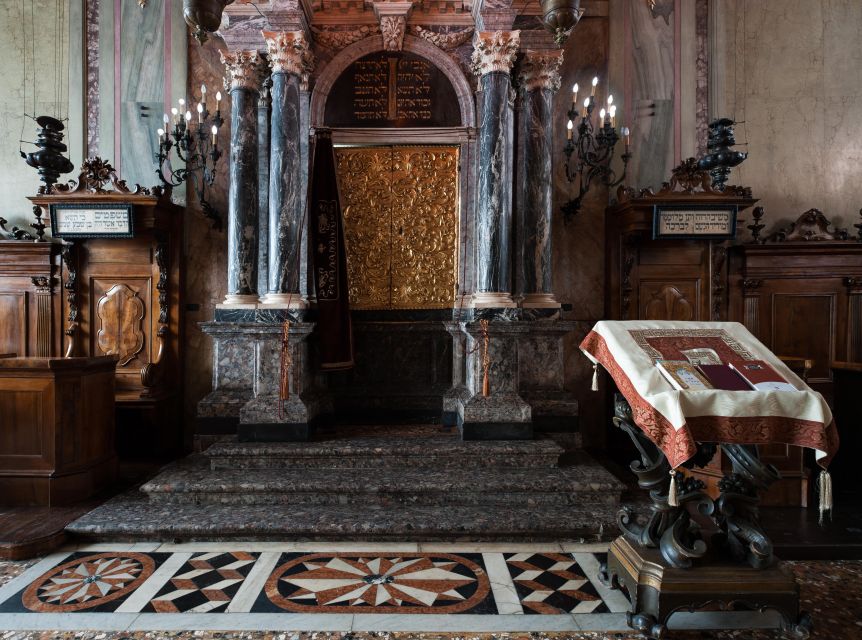
- Polychrome marble Aron-ha-Kodesh on the Eastern Wall, explained in context
- 10 illustrated figures from Padua Jewish life that bring the community’s story to your feet
- A walk through narrow ghetto streets where the focus is daily life: social, cultural, commercial, and religious
Where the tour begins in Padua’s ghetto area
You’ll meet in Padua’s historical center, in the ancient ghetto zone. The directions are straightforward: look for a magenta color building, then go to the ticket counter and show your voucher before the tour starts.
This matters more than it sounds. Padua is best when you can move on foot and let the city lead you. Starting near the ghetto area keeps the whole experience grounded, so the museum and synagogue don’t feel like random “sight visits.” It feels like one connected story in one walkable pocket of town.
Timing is also part of the value. The tour runs about 1 to 1.5 hours, which is long enough to slow down and understand what you’re seeing, but short enough that you won’t feel like your whole day disappears.
If you’re doing Padua as a day trip, you’ll appreciate that. And if you’re traveling with family, this length is usually easier for kids and teens than long museum marathons—assuming everyone can handle the indoor quiet of a sacred site.
Padua Jewish Museum: Denis Brotto and the character stories
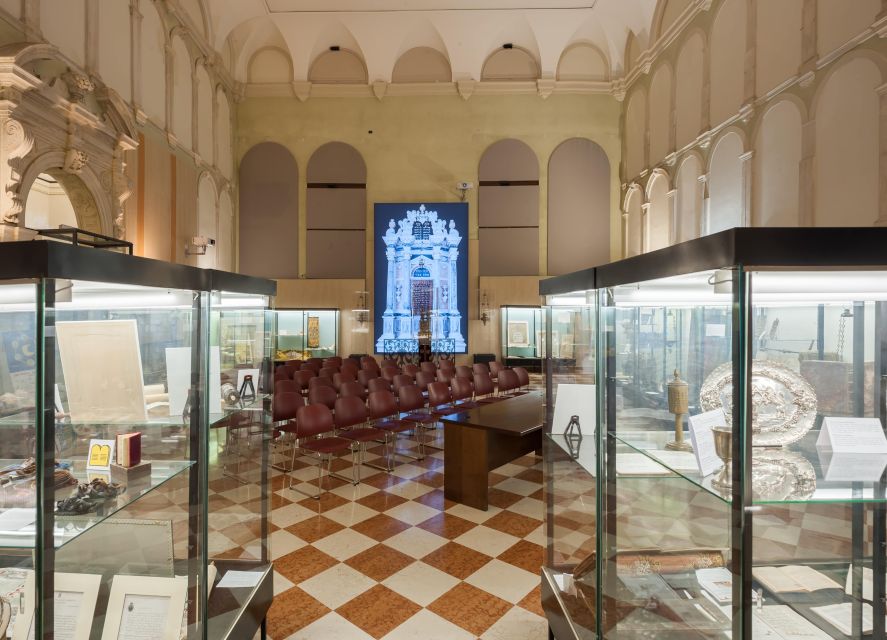
The first big stop is the Padua Jewish Museum, located in the former Ashkenazi synagogue. That setting changes the tone immediately. Instead of looking at Jewish history as artifacts behind glass, you’re in a space that once carried worship and community life.
Inside, you’ll encounter a multimedia video installation created by film director Denis Brotto. After that, the tour shifts into a storytelling mode: you’ll meet 10 illustrious characters connected to Jewish life in Padua, with their stories narrated through the places that represent Padua Judaism.
You’ll notice how these characters are used like wayfinding. They help you connect dates, rituals, and social life to actual people, including major figures tied to Italian Jewish learning. In examples mentioned by guides, names like Rabbi Judah Minz and Moshe Chaim Luzzatto (often linked with the Ramchal) show up as part of the intellectual and spiritual threads that ran through Padua.
One detail I really like: the museum isn’t only about “what happened.” It helps you understand how Jewish community life worked—how study, prayer, and social bonds fit together in the same city that also shaped wider Italian culture.
Why the former Ashkenazi synagogue matters
This museum isn’t just a container for exhibits. It’s in a space with a complicated, human history. In the material shared during tours, you learn that the Ashkenazi synagogue was rebuilt after destruction by fire set by fascists in 1943, and that the rebuilt structure came from later restoration work.
That context matters because it explains why you may see both antiquity and renewal in the same room. Synagogues are meant to be lived in. When a community loses a building, it isn’t only losing walls—it’s losing continuity. Learning about the rebuilding helps you read the architecture and the museum’s displays as part of survival, not only design.
Another practical point: this is the moment when your guide usually sets the “frame.” You start to learn what you’re seeing before you reach the more awe-driven final stop in the synagogue itself. It’s the difference between standing in a sacred room thinking, That’s pretty, and understanding why certain features matter.
If you’re traveling with a parent, grandparent, or someone who cares about heritage, this first stop tends to land well. A lot of visitors also like that the museum presentation balances religion with community life—more than just prayers and dates.
The walk through narrow ghetto streets
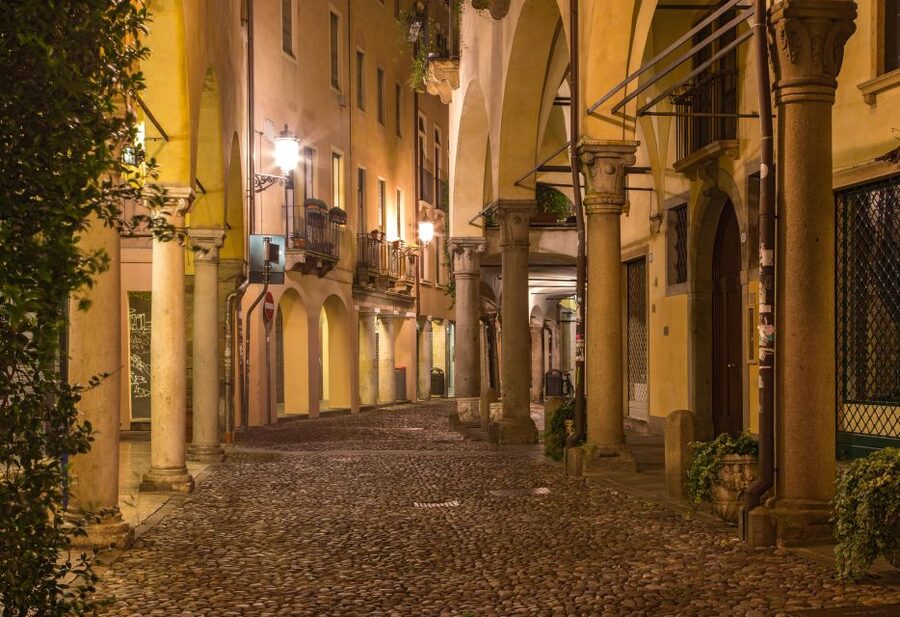
After the museum, you move out into the streets—narrow, restricted lanes where the story of the Jewish settlement is explained through everyday themes. The focus is on how the community fit into Padua’s wider urban life: commercial activity, social life, culture, and religion.
This is where the tour earns its “guided” label. You’re not just walking past buildings and hoping you guess the history. Your guide ties the spaces together, so each turn feels like a page in a local chapter.
For me, this segment is one of the best “memory hooks” of the whole tour. It turns the city into a timeline. You’ll start to associate the ghetto area with movement and exchange, not only confinement and hardship. That doesn’t erase the difficult parts of history—it gives you a fuller picture of daily life.
Practical note: wear shoes that can handle narrow streets and indoor-to-outdoor transitions. Even if you’re not walking far, the ground and pacing matter for comfort.
Ending inside the Italian Synagogue and its Aron-ha-Kodesh
The final stop is the Italian Synagogue, still used as a prayer site by the Padua community. That detail changes the experience in a quiet but important way. You’re not visiting a museum set inside a synagogue. You’re entering an active religious space.
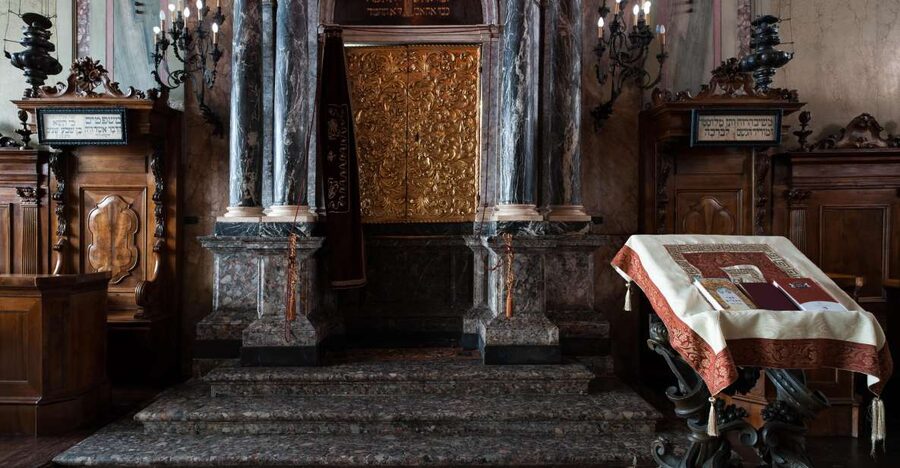
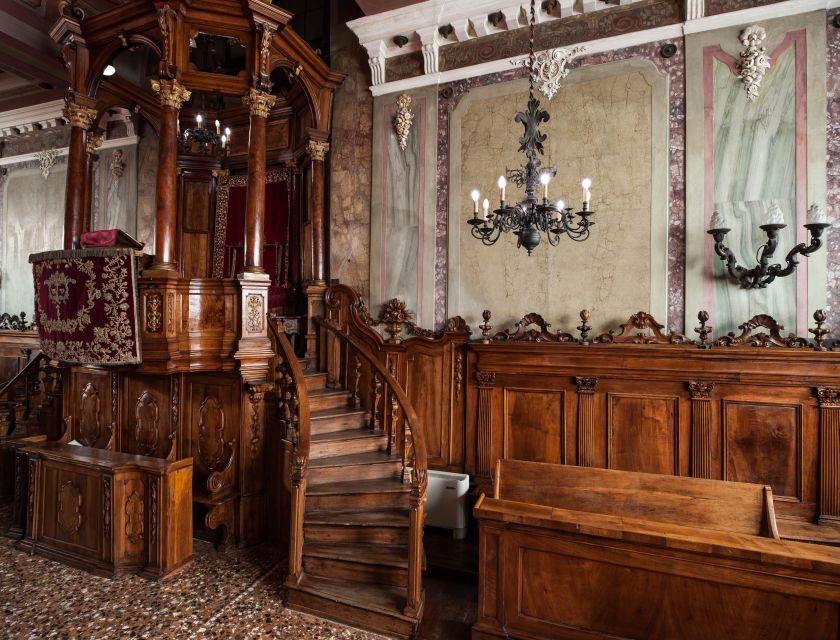
This is where the tour tends to feel most powerful. You’ll hear about the synagogue’s architecture and style, and then focus on one centerpiece: the Aron-ha-Kodesh, positioned on the Eastern Wall. Guides describe it as a polychrome marble sacred chamber, and you’ll learn what makes it meaningful—both as sacred structure and as a practical part of prayer life today.
The Aron-ha-Kodesh isn’t explained like a trivia item. Your guide puts it in context: why it’s oriented the way it is, what it represents, and how it still functions in the rhythm of worship.
I also like that the tour finishes here, because it gives you a natural emotional arc. Museum first—understanding the community. Walk next—seeing how the city shaped daily life. Synagogue last—seeing what still carries forward.
In guides’ stories shared during tours, the atmosphere and art inside the synagogue are often described as astonishing in person. Even if you’ve seen synagogues elsewhere in Europe, this one has a “Padua-specific” feeling because it stays connected to the local community.
Price and value: what you’re really paying for
The listed price is $17 per person, and the tour includes entry to both the Padua Jewish Museum and the Padua Synagogue, a live guide, and a multimedia experience. It also includes skip-the-ticket-line.
For a 1–1.5 hour format, that’s solid value—especially because you’re not just paying to get inside. You’re paying for interpretation: architecture explained, community history put into human terms, and the Aron-ha-Kodesh contextualized as an active religious element.
One thing to keep an eye on: the weekday note about a €60 ticket requested on weekday reservations. That could mean different pricing rules depending on the day and reservation terms. If you’re comparing options in Padua, check the exact day you plan to go and confirm what price applies to your slot.
Also consider who you’re traveling with. If you have a family group, this tour can be a smart way to add Jewish history to your day without turning it into a half-day research project. If you’re solo, you’ll still get a full experience because the narration and multimedia do a lot of the heavy lifting.
The overall rating shown for the experience is extremely high (4.9 with 109 reviews), and the most repeated praise centers on guides who can tell the story respectfully and clearly—often with names like Antonella, Simonetta, and Isaiah coming up in guides’ accounts.
Who this tour fits (and who might want a different plan)
This is best for you if you want Jewish heritage in Padua with real context—museum plus synagogue, connected by a guide who can explain architecture, ritual objects, and community life without turning it into a lecture.
It’s also a good match if you care about learning through storytelling. The tour uses character narratives and short documentary-style content connected to notable figures in Italian Jewish life, so you’re not only reading labels.
You might want to choose another option if:
- You’re expecting a long “deep academic” format (this is compact: about 1–1.5 hours).
- You’re not comfortable with a synagogue dress code (no shorts, no sleeveless shirts).
- You dislike guided walking sections through narrow lanes.
That said, wheelchair access is listed, so the tour is designed to be possible for visitors who need accessibility accommodations.
Tips to make the visit smoother (and more meaningful)
A few practical things will help you get more out of the tour:
- Dress for synagogue entry. Shorts and sleeveless shirts aren’t allowed. If you’re unsure, go with a light shirt with sleeves.
- Bring your questions. Guides often handle detailed questions about the history of the community and the significance of specific figures. If you care about names like the Ramchal or Rabbi Judah Minz, ask how they fit into Padua’s timeline.
- Watch how the museum and synagogue connect. Try to link what you learned in the museum—community roles, rituals, and stories—to what you see in the synagogue, especially the Aron-ha-Kodesh.
- Plan for walking. You’ll go through narrow ghetto streets after the museum. Comfortable shoes are worth it.
If you’re traveling from Venice or pairing Padua with other stops, treat this as a “anchor experience.” It gives your day a clear storyline.
Should you book the Padua Jewish Heritage Museum and Synagogue tour?
Yes, I’d book it if your goal is a focused, respectful, and well-explained introduction to Padua’s Jewish community—through museum exhibits, multimedia storytelling, and a synagogue that’s still used for prayer.
Choose it especially if you want more than an exterior photo stop. The combination of the museum setting (in a former Ashkenazi synagogue), the character-driven presentations, and the ending at the Italian Synagogue’s Aron-ha-Kodesh gives you both understanding and atmosphere in a short time.
Just double-check the weekday pricing note and make sure you’ll meet the dress requirements. If those two boxes are checked, this is one of the most worthwhile cultural history tours you can do in Padua.
FAQ
How long is the Padua Jewish Heritage Museum and Synagogue tour?
The tour lasts about 1 to 1.5 hours.
What sites do I visit on this tour?
You’ll visit the Padua Jewish Museum (in the former Ashkenazi Synagogue) and the Italian Synagogue.
Is there multimedia included?
Yes. The museum visit includes a multimedia experience with a video installation by Denis Brotto.
What is the meeting point?
Meet at a magenta-colored building. You’ll need to show your voucher at the ticket counter before the tour begins.
How much does it cost?
The price is listed as $17 per person.
What languages is the tour available in?
The guided tour is offered in English and Italian.
Is the tour wheelchair accessible?
Yes, the tour is listed as wheelchair accessible.
Are there dress code restrictions?
Yes. Shorts and sleeveless shirts are not allowed.
Is cancellation free?
Free cancellation is available up to 24 hours in advance for a full refund.
Do weekday reservations cost more?
There’s a note that for weekday reservations, a €60 ticket is requested. You should check the exact terms for your chosen day.