REVIEW · PONDICHERRY
Pondicherry Heritage Walking Tour of French Quarters
Book on Viator →Operated by 5 Senses Walks · Bookable on Viator
French Quarters in Pondicherry feel like a living photo.
You walk through colonial streets, spotting French architectural styles alongside Indian influences, while a local guide keeps the story clear and practical.
I especially love how the tour stays easy to follow. You’re not stuck in a museum schedule; it’s a steady 2-hour stroll with short stops that actually help you understand what you’re looking at.
I also like the guide attention. On past groups, guides such as Vanaraj and Prasanth showed up prepared and tuned in, including checking that expectations are being met and adjusting for a child in the group.
One consideration: English can be uneven depending on the guide. If you need very detailed explanations, go in with patience, ask follow-up questions early, and let your guide know what you want to focus on.
In This Review
- Key highlights to look for
- Why the French Quarters feel different right away
- Price, pace, and what $26 really buys
- Starting at White Town: the streets that set the tone
- Foyer du Soldat: where former soldiers keep culture alive
- Raj Niwas: a Baroque past, a British interruption, a Rococo return
- Aayi Mandapam (Park Monument): Napoleon III-era memorial meaning
- French War Memorial: lamps, reflectors, and Louis Guerre’s touch
- Eglise de Notre Dame des Anges: a Greco-Roman church facing the Bay
- Old Lighthouse: 1835 engineering with a modernized glow
- Finishing at the Gandhi statue: a tall landmark to close the loop
- The guide factor: what you’ll gain (and what to watch)
- Timing and comfort tips for a smooth French Quarters walk
- Who this tour is best for in Pondicherry
- Should you book the Pondicherry Heritage Walking Tour of the French Quarters?
- FAQ
- How long is the Pondicherry Heritage Walking Tour of French Quarters?
- What is the price per person?
- What’s included in the tour?
- Are admission fees included for the stops?
- Where does the tour start and end?
- What is the cancellation policy?
Key highlights to look for
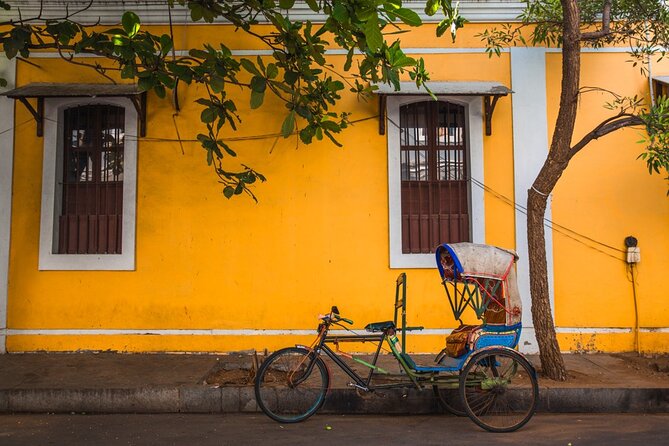
- French colonial streets on foot: Rue Dumas, Rue Romain Rolland, Rue Suffren, and Rue La Bourdonnais make the story visible.
- Power, war, and rebuilding: From a commander’s residence to British destruction and a Rococo rebuild.
- Napoleon III-era monuments: Greco-Roman designs tied to French engineering and commemoration.
- Bay-facing landmarks: Eglise de Notre Dame des Anges and the old lighthouse give you views with context.
- A strong last stop: You end near the 13-foot Gandhi statue, a dramatic finishing point.
Why the French Quarters feel different right away
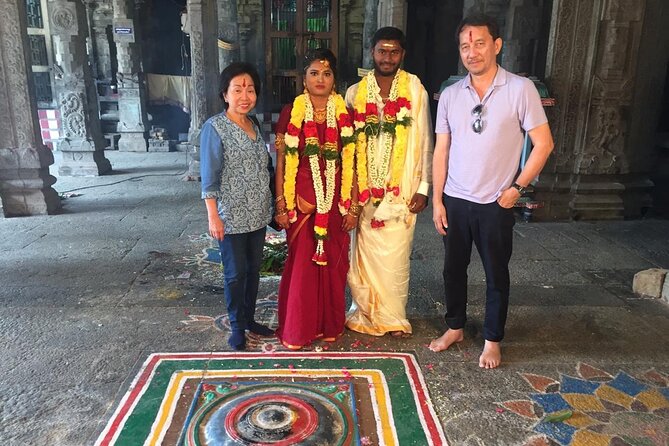
Pondicherry’s French Quarter isn’t just about old buildings. It’s about a mixed past—French planning and architectural styles layered onto local life—so the streets feel readable even if you’ve never been here before.
From the start, the walk is designed to help you get your bearings fast. You move along specific streets, then connect each corner to a real role in colonial history: governance, religion, war, and public memory.
And the tour keeps the pacing human. Each stop is short, so you can keep your eyes moving and still absorb what matters—architecture, names, and why certain structures were built where they were.
Price, pace, and what $26 really buys
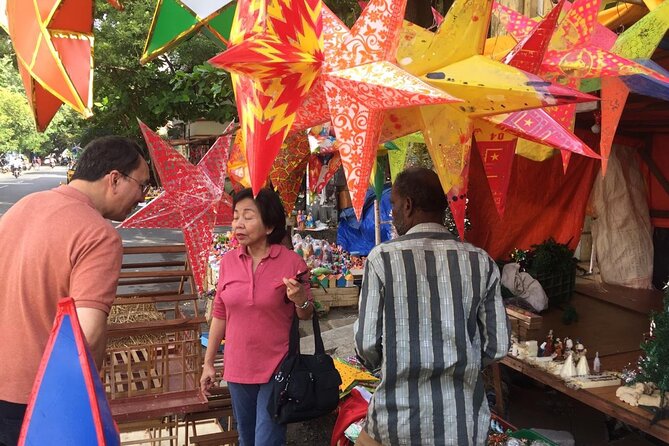
This tour costs $26 per person, and you get a guided, organized walk for around 2 hours. With a group cap of 15 travelers, you’re not fighting the crowd for attention or photo angles.
You’ll also have a mobile ticket, which is handy if you’re switching between apps during your day. Group discounts may apply, so if you’re traveling with friends or family, this is one of those activities where splitting the cost can feel smarter.
One more value point: most stops are listed as free admission. That means you’re paying primarily for interpretation and navigation, not for entry fees stacking up during the route.
You should also note what’s not included. Snacks aren’t included, so if you’re sensitive to hunger during a two-hour walk, plan a small snack beforehand.
Starting at White Town: the streets that set the tone
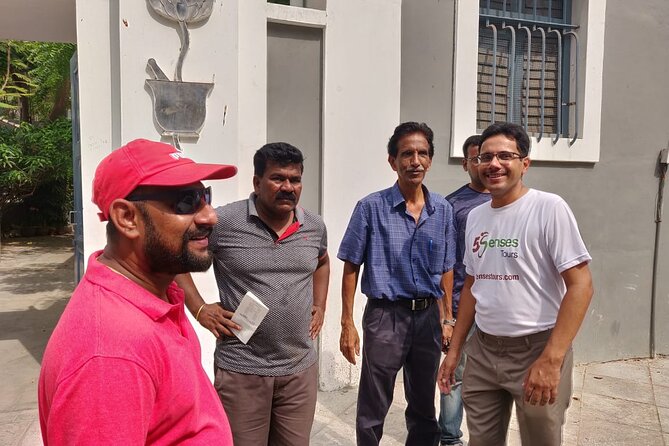
The walk begins near the Chief Secretariat Government of Puducherry on Goubert Avenue, along Beach Road in White Town. The meeting point matters here because White Town is the area where French colonial influence is easiest to recognize on foot.
From there, you’ll follow the route through streets like Rue Dumas, Rue Romain Rolland, Rue Suffren, and Rue La Bourdonnais. Even if the buildings look similar at first glance, the guide’s job is to help you see the differences—French styles like Baroque, Rococo, and Neoclassical mixed with Indian architectural elements.
Expect the first segment to feel like orientation. It’s not just sightseeing; it’s learning how to read the neighborhood quickly, so later stops hit harder.
At this stage, I’d bring one simple tactic: slow down for a minute at every intersection. If you rush, you’ll miss the way the streets frame landmarks, especially as you get closer to the Bay.
Foyer du Soldat: where former soldiers keep culture alive
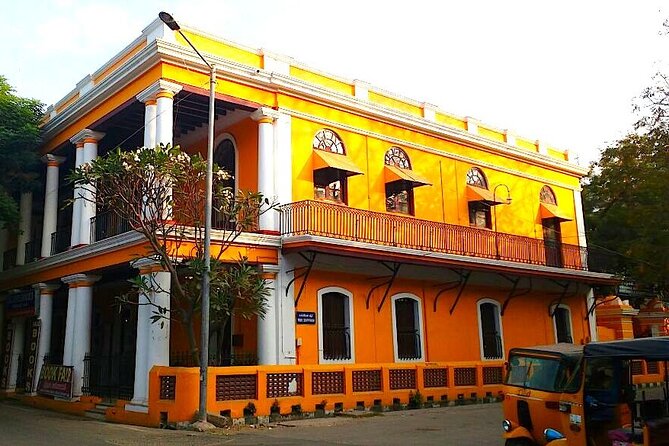
Stop 2 is the Foyer Du Soldat, a French legion hall and gathering place for former soldiers of the French army who served in various wars. It’s a quieter kind of stop, less about a single dramatic façade and more about the role a building plays after the fighting ends.
You’ll spend about 20 minutes here. In that time, the key is to focus on the hall as a social space—somewhere veterans can meet and cultural events can happen, giving the structure a living purpose rather than only historical weight.
This is also a nice break in the middle of a walk packed with landmarks. If you’re the type who enjoys people-and-purpose history, this stop tends to land well.
Raj Niwas: a Baroque past, a British interruption, a Rococo return
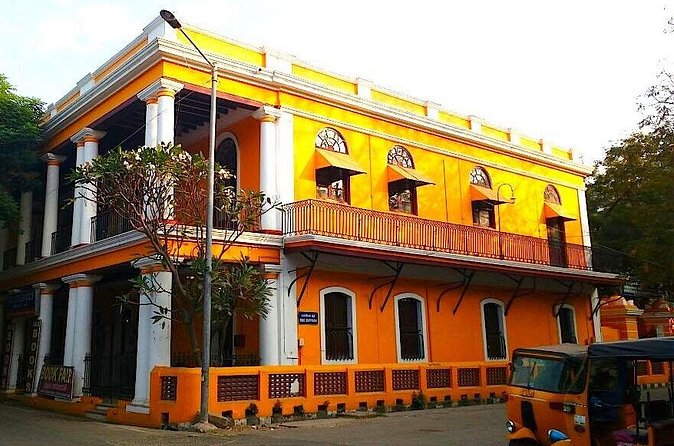
Next comes Raj Niwas, the residence of the Lieutenant Governor of Puducherry. The building’s timeline is the story you’ll carry from here onward: it was initially constructed in French Baroque style, then destroyed by the British in 1761, and later rebuilt in Rococo style.
You’ll spend about 10 minutes at this stop. That’s short, but it’s long enough to understand the big lesson: architecture can act like a history document. The building is still in use as a residence, so it’s not just a relic.
Important practical note: admission is not included for this stop. So if you were hoping for a deeper inside look, you’ll want to adjust expectations and enjoy the exterior context and explanation.
If you’re traveling at a pace where you like more time inside buildings, you might want to pair this tour with another half-day activity. This walk is best for seeing the city’s structure, then choosing how to go deeper elsewhere.
Aayi Mandapam (Park Monument): Napoleon III-era memorial meaning
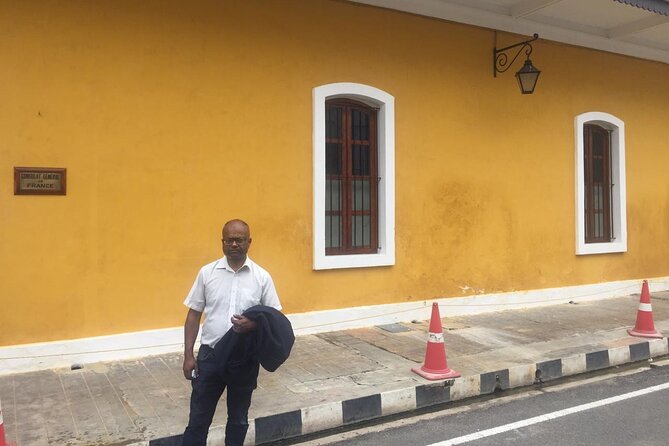
Stop 4 is the Park Monument (Aayi Mandapam), built during the reign of Napoleon III in the 19th century in a Greco-Roman architectural style. This stop is also a reminder that French influence wasn’t only about power buildings and churches—it also showed up in public commemoration.
The monument commemorates the selfless act of a courtesan named Aayi. Even if you don’t know her story before you arrive, the guide’s explanation gives the stone meaning beyond its style.
You’ll have around 15 minutes here. Use that time to look at how the monument fits the park setting and how the form signals ceremonial remembrance.
This stop can be a helpful contrast if you’ve been seeing lots of military or governance-related locations. Aayi Mandapam brings the focus toward moral action and cultural memory.
French War Memorial: lamps, reflectors, and Louis Guerre’s touch
Stop 5 is the French War Memorial, built in 1835 and designed by French engineer Louis Guerre. It’s one of those places where the details make the history feel less abstract.
The memorial originally used six oil lamps and two reflectors. Later, the light source was converted to electric lamps in 1913, then upgraded again in 1931 (the route notes indicate an additional upgrade, though the exact final feature isn’t spelled out here).
Plan for about 15 minutes at this stop. If lighting tech bores you, focus on the bigger picture: this memorial wasn’t only meant to be seen. It was designed to be lit, which says a lot about how public remembrance worked then.
I’d also keep an eye out for how the memorial’s design connects to the engineer’s later works you’ll see soon, especially the church and lighthouse.
Eglise de Notre Dame des Anges: a Greco-Roman church facing the Bay
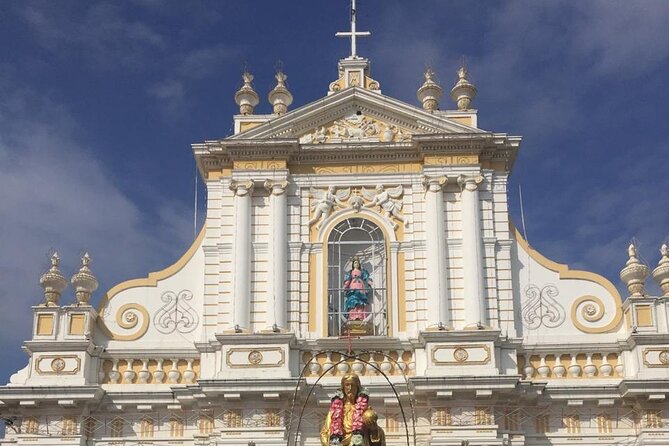
Stop 6 is the Eglise de Notre Dame des Anges, a historic Catholic church built facing the Bay of Bengal. You’ll spend about 20 minutes here, and it’s a stop where the setting does half the explaining.
The church was built in 1855 under Napoleon III and designed by Louis Guerre in a Greco-Roman style. The twin towers and stained glass windows are the most recognizable features, and the guide’s context usually helps you understand why a French-style church landed in this exact coastal setting.
This is one of the best moments on the walk to slow down. The Bay view gives you space to step back, and the church gives you a focal point that feels both European and very specific to Pondicherry.
If you like architecture, take a few photos from different angles. The towers and windows change how the façade reads as you move.
Old Lighthouse: 1835 engineering with a modernized glow
Stop 7 is the Old Lighthouse, also built in 1835 and designed by Louis Guerre. Like the war memorial, it started with a system of six oil lamps and two reflectors, then shifted to electric lamps in 1913, with further upgrades noted in 1931.
You’ll likely have around 10 minutes here. That’s just enough time to spot the overall form and connect it to the lighting progression you heard at the French War Memorial.
If you’re the type who thinks, Why do the same names show up again and again, this is your answer. Seeing Guerre linked to both the memorial and lighthouse helps you recognize the French engineering footprint in the city.
Even in a short visit, the lighthouse works because it ties function to design. It’s not just old. It’s old engineering with a purpose.
Finishing at the Gandhi statue: a tall landmark to close the loop
Stop 8 is the Statue of Gandhi, located at the end of the walk by Beach Road. The statue is 13 feet tall and was built by sculptor Roy Choudhary from the Madras School of Art and Crafts.
This makes a strong finishing point because you end where Pondicherry’s colonial past and post-colonial identity sit close together. The walk starts with French streets and styles; it ends with a figure that represents a very different chapter.
The statue is also surrounded by eight carved elements, which gives you something to look at even if you’re not fully following every detail of the route.
If you have time after the tour, take 10 minutes to stand near the statue and just watch the beachfront area. You’ll likely feel the day’s story connect in your head.
The guide factor: what you’ll gain (and what to watch)
The tour includes a guide, and that’s where a walking tour can make or break your experience. In strong groups, the guide energy makes the difference, and you get better explanations for the architecture and the purpose behind each stop.
Based on past experiences with guides like Vanaraj and Prasanth, you can expect a style of guiding that can be both supportive and attentive. One guide even checked in on whether a child in the group was doing okay and tailored the experience around the needs of the family.
Still, there’s one real consideration: English proficiency can vary. In some cases, people have found the level substandard, even when the guide was kind and the overall tour felt positive.
My practical advice: if English clarity matters to you, ask your guide right at the beginning what they’ll cover, then flag any confusion immediately. A good guide can usually adjust on the fly once they know what you need.
Timing and comfort tips for a smooth French Quarters walk
You’re walking for about 2 hours, with stop times that typically range from 10 to 20 minutes. That means you’ll spend enough time at each landmark to understand it, but you won’t be stuck long enough to overheat or lose focus.
Because snacks aren’t included, bring a small water and a light snack if you think you’ll need it. It’s also smart to wear comfortable walking shoes, since you’ll be moving through multiple streets and stopping often.
The route ends near the Gandhi statue on Beach Road in White Town, so you can easily continue your day with nearby cafes or a beachfront stroll—just plan around the fact that you’re finishing in a sightseeing zone.
Also, the group size stays at 15 travelers. That’s good for photos, but you should still be ready to share space at the most popular stops like the church and memorial areas.
Who this tour is best for in Pondicherry
This tour is a strong fit if you want an intro that helps you understand what you’re seeing. The French Quarter can be confusing when you’re wandering alone because there are many styles and many names tied to each landmark.
You’ll likely enjoy this most if you:
- like architecture stories tied to real events like rebuilding after destruction
- want a guided route through key French-era sites in a manageable time
- enjoy short stops that keep you moving and focused
It also works well for families and mixed groups, especially when guides adapt for children, based on what’s happened in past tours.
If you prefer long museum-style visits or you want a heavy inside-the-building focus, you might find the structure limiting. Here, the value is in seeing many important points in a short time and learning how they connect.
Should you book the Pondicherry Heritage Walking Tour of the French Quarters?
Yes, if you want a practical, organized way to understand Pondicherry’s French Quarter without spending your whole day figuring it out. At $26, you’re paying for a guided route that covers major landmarks, most of them free to view, in about 2 hours.
Book especially if you care about the “why” behind the buildings—French engineering names like Louis Guerre, the Napoleon III connections, and the building timeline of Raj Niwas with its Baroque-to-Rococo rebuild after 1761.
I’d hesitate only if you’re extremely sensitive to language clarity or you need deep inside access, since Raj Niwas doesn’t include admission and guide English can vary.
FAQ
How long is the Pondicherry Heritage Walking Tour of French Quarters?
The tour is about 2 hours.
What is the price per person?
The price is $26.00 per person.
What’s included in the tour?
The tour includes a guide.
Are admission fees included for the stops?
Most stops are listed as free admission, but Raj Niwas has admission not included.
Where does the tour start and end?
It starts at Chief Secretariat Government of Puducherry, Goubert Avenue, White Town and ends at the Mahatma Gandhi Statue, Beach Road, White Town.
What is the cancellation policy?
Cancellation is free and you can cancel up to 24 hours in advance for a full refund.