REVIEW · ROME
Ancient Art Workshop: Fresco
Book on Viator →Operated by Officina delle Arti Antiche · Bookable on Viator
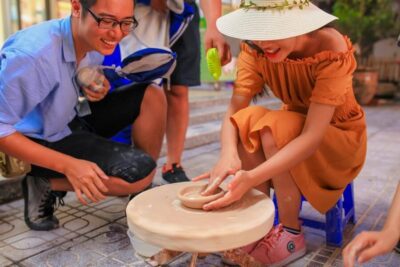
Hands-on fresco feels like time travel. In a studio on the Appian Way, you’ll copy an ancient scene using materials meant to work like the past. I love that the class ends with a finished piece you can take home right away, not just a watch-and-learn demo.
The second thing I really like: the teaching is built for real people. In past sessions, instructors such as Cecelia and Nina have guided beginners step-by-step, with lots of patience, and even helped with Italian pronunciation and simple phrases. You’ll also get a practical look at how fresco paint sets into plaster and how mosaics are assembled using colored marble tiles.
One thing to consider: because this is a small, teacher-led studio, there can be occasional last-minute changes. I saw one report of a cancellation about an hour before start time, so if your schedule is tight, give yourself some breathing room.
In This Review
- Key Things You’ll Actually Do (and Enjoy)
- Fresco + Mosaic on the Appian Way: A Rome Break That Works
- Choosing Your Scene: Sistine Chapel vs. Roman Floor Details
- The Studio Tools: Natural Pigments and Colored Marble Tiles
- What Happens in the Class: A Simple Flow You Can Follow
- Fresco Technique, Plainly Explained: Your Paint Meets Plaster
- Mosaic Portion: Colored Marble Tiles That Feel Like Roman Craft
- Languages and Group Setup: Private, Small, and Flexible
- Price and Value: $246.90 for Two Is About More Than the Craft
- Logistics That Matter: Meeting Point, Timing, What to Bring
- Who This Workshop Fits Best (and Who Might Want Another Option)
- The Main Drawback to Keep in Mind: It’s a Small Operation
- Should You Book Ancient Art Workshop: Fresco?
- FAQ
- How long is the Fresco workshop?
- Where do I meet for the workshop?
- What’s included in the price?
- What is not included?
- What languages are available?
- Can I take my work home?
- Is it private, and how many people is the group?
Key Things You’ll Actually Do (and Enjoy)
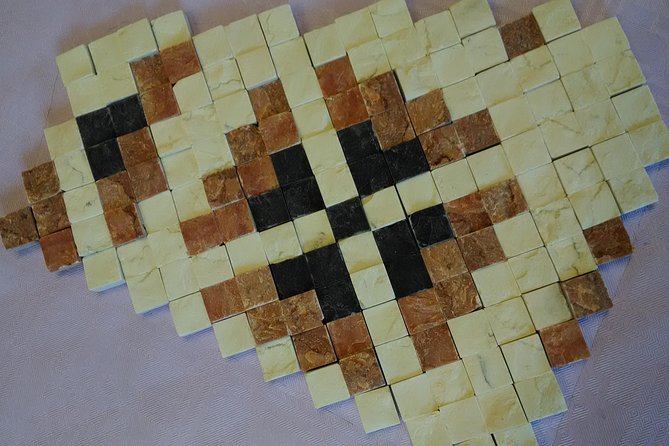
- Pick a subject like a Sistine Chapel-inspired design or a Roman floor detail, then reproduce it yourself
- Work with real-feeling materials: natural pigments and colored marble tiles designed to mimic period methods
- Learn the why, not just the how as your instructor explains how fresco paint bonds to plaster
- Get hands-on guidance even if you’re not artistic, with plenty of one-on-one attention in your private group
- Leave with a souvenir immediately, so the experience keeps paying off after you stop sightseeing
Fresco + Mosaic on the Appian Way: A Rome Break That Works
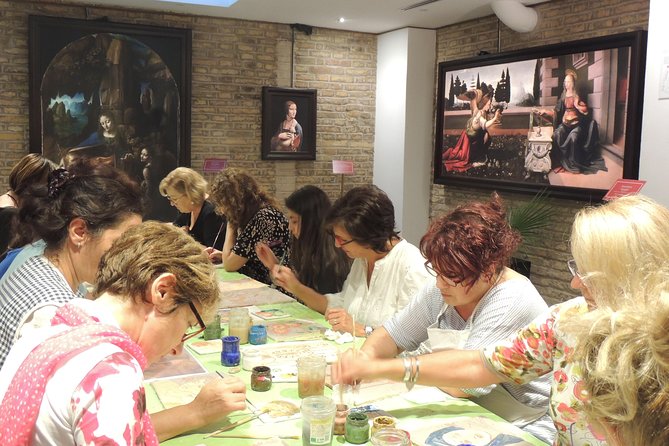
Rome can be nonstop. You’ll walk past masterpieces all day, then do something totally different in a quieter studio setting. This workshop is a nice reset, because it shifts you from museum viewing to making, with your hands busy for about two hours.
I also like the timing logic here: the experience is offered during daytime hours on weekdays, and it’s the kind of activity that can fit between visits to major sites. Since you’re indoors, it’s also a strong option when the streets get hot and crowded.
And the location is practical. Your meeting spot is on the Appian Way area, reachable by Metro A, so you’re not stuck guessing complicated routes across town.
You can also read our reviews of more tours and experiences in Rome.
Choosing Your Scene: Sistine Chapel vs. Roman Floor Details
The workshop’s most fun decision point is what you’ll recreate. You can choose something inspired by a Michelangelo-style Sistine Chapel subject, or go for a close-up detail from a Roman floor.
Why that matters: the subject choice changes what you pay attention to while you work. A Sistine Chapel-inspired design makes you focus on composition, tones, and layered surfaces. A Roman floor detail pushes you toward geometric thinking and pattern awareness—especially once mosaic tiles enter the picture.
In the sessions described, instructors help you pick a project that matches your comfort level. Even if you think you can’t draw, you’ll still be guided through the process and the steps to transfer your marks and build the final surface.
The Studio Tools: Natural Pigments and Colored Marble Tiles
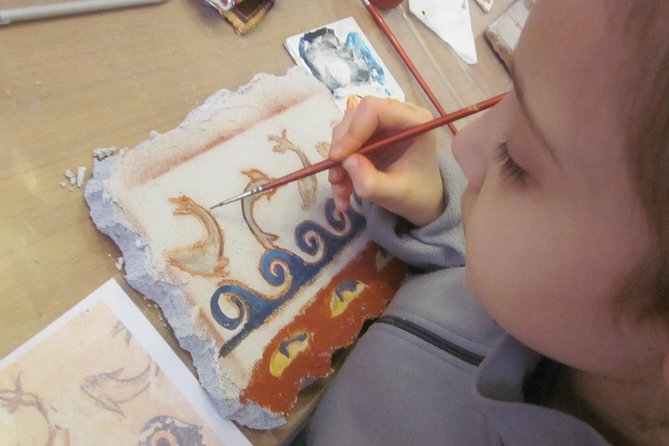
Here’s where the “authentic feel” comes from. The class uses materials designed to reflect older methods: natural pigments for the fresco work, and colored marble tiles for the mosaic portion.
That’s more than a marketing line. When you’re using pigments and tiles that behave differently than typical craft paint, you notice texture and color mixing in a more real way. The result is that your artwork starts to feel like it has a process behind it, not just a finish.
You also don’t have to shop or bring supplies. All workshop materials are included: colors, brushes, marble tiles, and whatever you need to make your piece.
What Happens in the Class: A Simple Flow You Can Follow
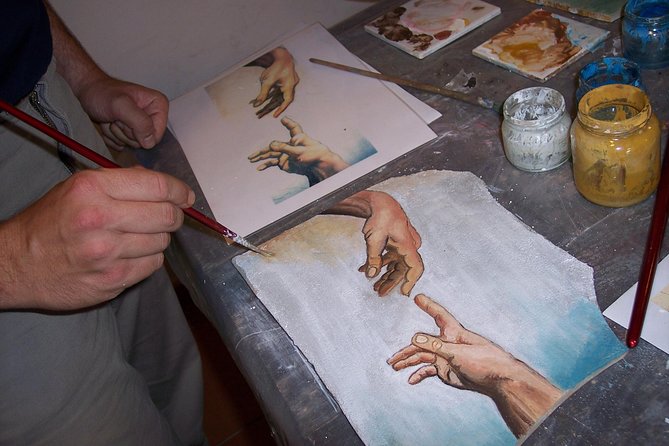
Even if you’ve never painted anything before, the workshop follows a clear rhythm. First comes a short introduction to the technique and what makes fresco distinct. Then you move into practical steps—transferring your marks, building the surface, and applying pigment in the right way.
You’ll also spend time on the mosaic portion. In the sessions described, instructors walk you through how the tiles go down and how to keep your pattern aligned. The key is pacing: you’re not rushed, and the guidance is meant to keep you moving forward at a steady rate.
A helpful detail from real class experiences: instructors often explain the science-like bit in plain terms. One instructor teaching style described how fresco paint bonds to plaster to create a lasting, waterproof layer. That kind of explanation makes the technique click faster, even if you’re not a “technical art person.”
Fresco Technique, Plainly Explained: Your Paint Meets Plaster
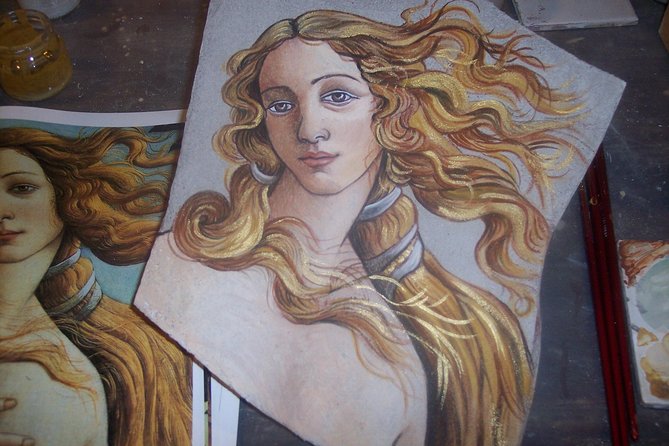
Fresco has a reputation for being complicated. In practice, what you need to understand is the basic relationship between plaster and paint.
In the way the class is taught, you learn how marking and preparation matter, then how the paint interacts with the surface. You don’t just smear color—you apply it with the idea that the work is meant to set properly into the plaster layer.
This is also where the instructors’ background helps. Nina, in particular, has been described as a restoration specialist, and her explanations of materials and method make the experience feel grounded. If you enjoy learning “how it’s made” in a hands-on way, this section is the heart of the class.
Mosaic Portion: Colored Marble Tiles That Feel Like Roman Craft
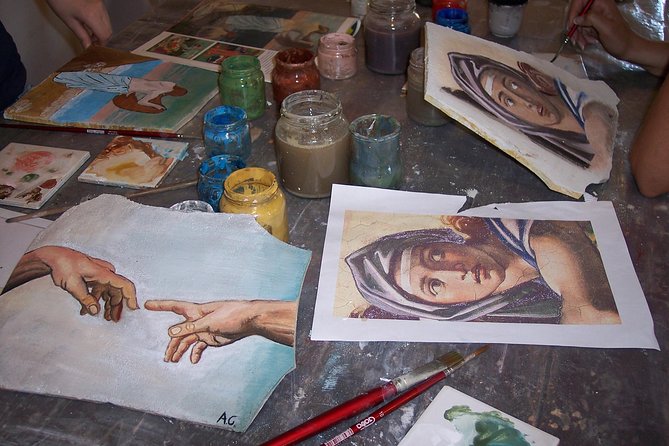
The mosaic part is a different kind of satisfaction. Fresco is about painting and timing; mosaic is about placement, spacing, and pattern control.
Because the tiles are colored marble, your finished piece has weight and color clarity that craft-store supplies often don’t match. And because you’re making it yourself, you’ll understand how mosaic artwork is built from small decisions that add up to a coherent image.
In the guided sessions, instructors provide tips as you go. That can include advice on blending tones for the fresco side, plus straightforward support for staying on pattern for the mosaic side. The vibe is practical: do the step, check the result, then move on.
Languages and Group Setup: Private, Small, and Flexible
This is a private tour/activity, and your group is the only group in the studio during your session. That matters more than people think. It usually means you can ask questions without feeling like you’re competing for attention in a crowded classroom.
The workshop also supports multiple languages. The experience can be carried out in Italian, English, French, German, and Spanish, and the listing feature notes English.
Price is per group, up to 2 people. If you’re traveling as a couple, or you want a focused experience with a parent-child pairing, this setup can feel like good value.
Price and Value: $246.90 for Two Is About More Than the Craft
Let’s talk value. At $246.90 per group (up to 2) for about two hours, you’re paying for a guided studio experience plus the included materials. You’re not paying separately for paint, tiles, or tools—and that’s a big part of the cost justification.
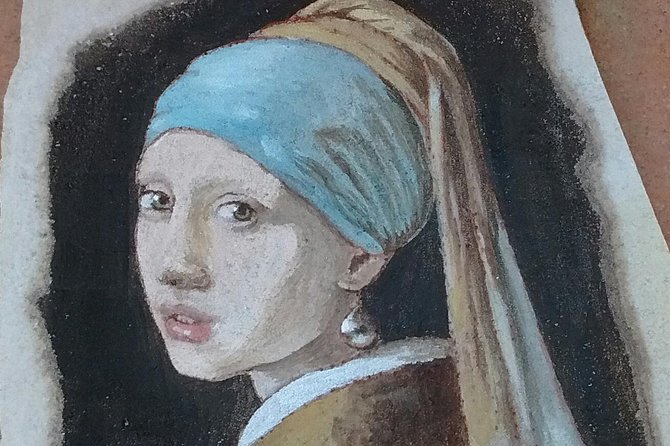
Also, the product isn’t just a postcard-like souvenir. You’re leaving with something you made on-site using materials meant to match period techniques. If you’ve been collecting tickets and fridge magnets on your trip, this is a different kind of keepsake: personal and handmade.
If you’re visiting Rome and planning to see frescoes and mosaics in churches and museums, this workshop gives you a physical reference point. Later, the details you notice in the city will make more sense because you’ve tried the process yourself.
Logistics That Matter: Meeting Point, Timing, What to Bring
Your meeting point is Bsocial, Via del Commercio 12 G, 00154 Roma RM, Italy. The activity ends back at the meeting point, so you’re not left juggling a return plan.
The workshop runs during Monday to Friday, 10:00 AM to 6:00 PM (within the listed date range). Confirmation is sent at booking time unless you book within one day of travel, in which case confirmation arrives as soon as possible subject to availability.
What’s not included: transportation, food, and drinks. So I’d plan to handle meals around your class time. For comfort, think about what you’ll do before and after on foot—Rome includes lots of walking even on “light” days.
Who This Workshop Fits Best (and Who Might Want Another Option)
This is designed to work for many ages. It’s suitable for adults and children, and it’s described as ideal for families. If you’re traveling with kids, the hands-on nature is the point: everyone gets real tasks instead of watching from the sidelines.
It also makes sense for art-curious travelers. If you like Renaissance art, you’ll enjoy the Sistine Chapel link. If you like everyday Rome details—floors, geometry, materials—you’ll appreciate the Roman floor-style option.
Who might not love it: if you’re expecting a full museum-style walkthrough of Roman art, this isn’t that. This is a making class. You’ll leave with one project, not a deep survey of Roman art across centuries.
The Main Drawback to Keep in Mind: It’s a Small Operation
Because this is a teacher-led studio, the experience depends on the instructor being available. One unhappy moment was described: a cancellation about an hour before class due to family problems, with an immediate refund provided.
That doesn’t mean it’s common, but it does mean I’d avoid scheduling this as a “must-do” with zero flexibility. Give yourself another creative activity nearby on the same day or reserve this for a time slot where you can adapt.
Should You Book Ancient Art Workshop: Fresco?
Book it if you want a hands-on Rome experience that ends with an actual object you made. The combination of fresco technique plus mosaic work, taught by instructors like Cecelia and Nina, gives you both process and a tangible souvenir.
I’d especially recommend it if:
- you’re traveling with a family and want everyone engaged
- you like art history but prefer learning by doing
- you want natural materials and a more authentic craft feel than generic paint classes
Skip it or look at alternatives if you need strict schedule certainty with no backup option, or if you’re only interested in passive sightseeing.
If you can travel with a little flexibility, this workshop is the kind of memorable pause that makes Rome feel personal, not just observed.
FAQ
How long is the Fresco workshop?
The experience runs for about 2 hours.
Where do I meet for the workshop?
You meet at Bsocial, Via del Commercio 12 G, 00154 Roma RM, Italy. It ends back at the same meeting point.
What’s included in the price?
All materials needed for the workshop are included, such as colors, brushes, and marble tiles.
What is not included?
Transportation, food, and drinks are not included.
What languages are available?
The activity can be carried out in Italian, English, French, German, and Spanish.
Can I take my work home?
Yes. At the end of the lesson, everyone can take their work away immediately.
Is it private, and how many people is the group?
It’s a private tour/activity, and the price is listed per group up to 2 people.