REVIEW · ATHENS
Ancient Corinth Half Day Tour
Book on Viator →Operated by H.P.Tours - Hellenic Private Tours · Bookable on Viator
Four layers of Corinth in five hours. This private half-day tour is a smart way to see Corinth Canal and the towering Acrocorinth fortress area without burning a full day. I love how the stops link together—engineering, city life, then a medieval stronghold. The only real drawback is that you’ll cover some site entrance fees on your own, including Ancient Corinth.
I also like the comfort setup: an air-conditioned vehicle with bottled water and WiFi, plus an English-speaking driver who explains what you’re seeing while you ride. The trade-off is that the driver isn’t licensed to go inside the archaeological sites with you.
Because it’s totally private for up to two people, you can move at a pace that feels right—good if you want photo time at the canal and a slower walk through the ruins rather than a rush-job. Plan for about 5 hours total, with time after lunch for the port remains of Kechries.
Key things I’d plan around
- Corinth Canal in under an hour: brief stop plus big backstory, including Periander’s diolkós concept and Nero’s failed attempt
- Ancient Corinth highlights: Temple of Apollo, Lechaion Street, the Agora, Stoa, and the spring of Peirene
- Acrocorinth on a monolithic rock: a medieval castle site with occupation stretching from archaic times to the 1800s
- Kechries port after lunch: short visit to the trade port tied to Apostle Paul’s second missionary journey
- Private door-to-door transport: Athens hotel or Piraeus pickup and drop-off in an air-conditioned vehicle
- Licensed guide is optional: your driver explains, but if you want someone to walk inside sites, it’s an add-on
In This Review
- A half-day that still feels like a whole story
- Private pickup from Athens or Piraeus, and what you should expect on the ride
- Corinth Canal: the dream that took centuries (and still feels unreal)
- Ancient Corinth: Apollo’s temple, the Agora, and the Roman streets you can still walk
- The religious center: Temple of Apollo and the city’s cult world
- The political and daily-life core: the Agora and the rostrum
- The “shopping mile” Roman-style: Lechaion Street
- Stoa, Peirene, and the everyday refresh points
- A theater that evolved with Roman tastes: Odeion and the idea of naval battles
- Acrocorinth: the fortress that makes Corinth feel close and huge
- Kechries port remains: a short stop with a strong “trade route” feeling
- The real value: what’s included, what you pay for, and when to add a licensed guide
- A practical game plan for a smooth 5-hour day
- Should you book the Ancient Corinth half-day tour?
- FAQ
- How many people are in a group?
- How long is the Ancient Corinth half-day tour?
- Is pickup and drop-off included?
- Are entrance tickets included?
- Is WiFi and bottled water provided?
- Can I have an English-licensed guide inside the sites?
- Is free cancellation offered?
A half-day that still feels like a whole story
This tour works because it’s built around layers. You start with a modern-feeling piece of engineering (the canal), then step into the ancient city that sat at the crossroads of trade and power, then finish with Acrocorinth’s fortress presence. Even the last stop, Kechries, adds another “why Corinth mattered” clue by focusing on the port side of the equation.
The pacing is also realistic for people with limited time in Athens. You’re not trying to squeeze in every ruin in Greece. Instead, you get four meaningful snapshots—each one with a different mood and kind of walking.
And since the vehicle picks you up and drops you off, you’re not wasting hours figuring out schedules. That matters on a day when you’re also paying for entry tickets (at least for part of the route).
Private pickup from Athens or Piraeus, and what you should expect on the ride
This is a private experience for up to 2 people, and it includes pickup and drop-off from your Athens hotel or from the Piraeus Port cruise ship terminal. On board, you get WiFi and bottled water, and the vehicle stays air-conditioned.
One practical note: your English-speaking driver gives explanations about the monuments and the history you’re about to see, plus interesting facts about Greece today. But by rule, the driver isn’t allowed to accompany you into the sites themselves. So what you’re really buying is a guided road-and-stops experience: narrative on the way, then you explore the ruins on your own during the site time.
If you want someone to walk with you inside Ancient Corinth and Acrocorinth, there’s an optional licensed English tour guide available for an extra 260 euros paid in cash, subject to availability. This can be worth it if you like detailed context at street level instead of hearing it mostly on the bus/at viewpoints.
You can also read our reviews of more tours and experiences in Athens.

Corinth Canal: the dream that took centuries (and still feels unreal)
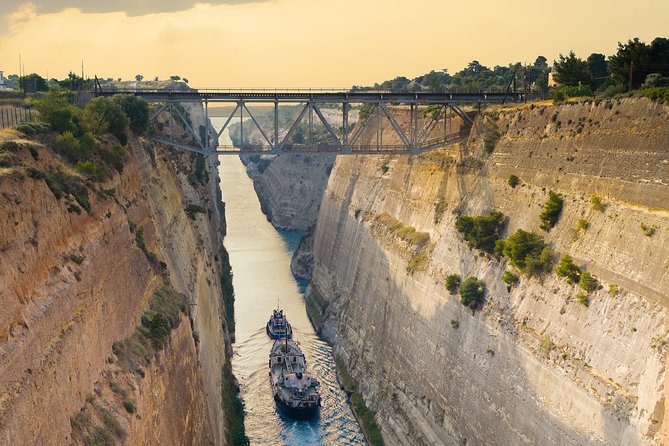
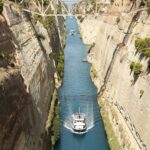
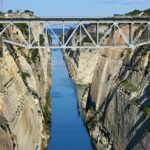
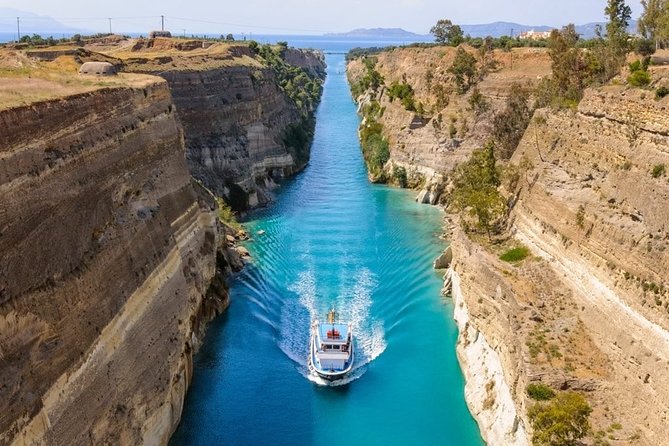
The first stop is the Corinth Canal area, sometimes described through the idea of the Isthmus crossing between the Saronic and Corinthian seas. You start with about a 45-mile drive along the National highway, and once there you get a short visit—about 20 minutes—with admission listed as free.
What makes this stop good value is the storytelling angle. The canal wasn’t just a 19th-century project. The legend and the local ambition go back thousands of years:
- The idea is tied to Periander, tyrant of Corinth around 602 BC, who is associated with the concept of digging the canal
- Since ancient engineers didn’t have the modern tools, the workaround was the diolkós, a stone road that helped ships transfer on wheeled platforms
- Under Emperor Nero in AD 67, construction with a group of about 6,000 slaves began but was interrupted when Nero was murdered
- The canal finally reached completion in the late 1800s
Even if you’re not a “history of infrastructure” person, it lands. You get that narrow-strait feel that makes you understand why cutting through the land mattered for shipping and time. And because the visit is short and the admission is free, it’s a low-cost stop that sets up the rest of the day nicely.
Tip for your photos: the canal edges can give you that strong “from above/through the cut” perspective, so keep your camera ready during the quick arrival and departure moments.
Ancient Corinth: Apollo’s temple, the Agora, and the Roman streets you can still walk
Ancient Corinth is the heart of the day. You’ll spend about an hour here, and the entry ticket for Ancient Corinth is listed as 15 euros per adult (not included).
This is where the tour earns its name. Corinth wasn’t just one ruin—it was a major center tied to gods, games, commerce, and political power. The site brings that to life through architecture and layout even when parts are worn down.
The religious center: Temple of Apollo and the city’s cult world
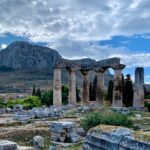
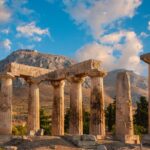
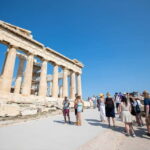
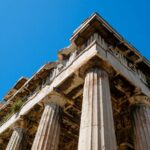
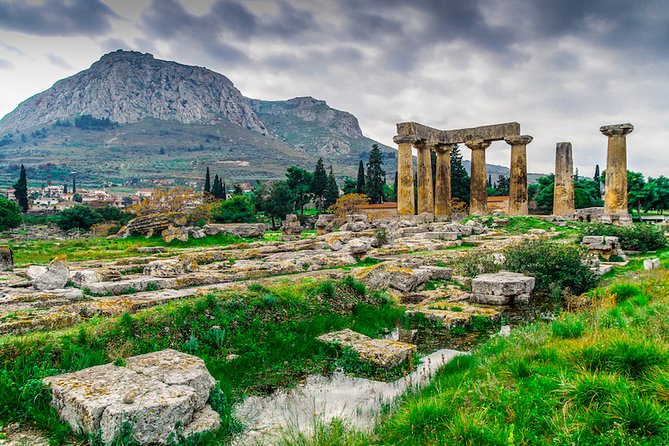
One of the standout structures is the Temple of Apollo, built in the middle of the 6th century BC. It’s noted as the most famous surviving testimony of Corinth’s earlier splendor, with seven columns still standing. A key detail is how the columns were made: monolithic columns rather than the more usual column drums.
If you like seeing how engineering choices shape the look of a building, pause here longer than you think you need. The remaining columns give you a clear sense of scale, and that helps the rest of the ruins feel less like random stones.
The political and daily-life core: the Agora and the rostrum
From there, you move into the Agora area, likely dating back to the 4th century BC. It didn’t need to be rebuilt again and again—its role continued even as centuries rolled forward.
You’ll also see the Basilica Iulia area from 44 CE, described as a courthouse built by Emperor Claudius. In the middle of the Agora there’s the platform called the bèma (or rostrum). It’s traditionally connected in Christian sources to the idea of Paul being questioned by Gallio, proconsul of Achaia—but the site materials note that archaeology and historical research make that specific claim unlikely.
This is exactly the kind of fact that makes Ancient Corinth more interesting than a checklist. You’re seeing a place where real public decisions happened, and you’re also seeing how stories get attached over time.


The “shopping mile” Roman-style: Lechaion Street
One of my favorite parts of Ancient Corinth to slow down for is the Lechaion Street stretch. You get an arched gateway starting the walk, and the street is framed by galleries that once held shops with products arriving from across the Roman Empire and beyond.
The layout is so clear that you can almost picture the rhythm of a working city. There’s even a well-preserved latrine to notice if you enjoy the honest, human details of daily life.
Lechaion Street was described as a major public-life corridor, and the way it’s positioned helps you understand how the city connected its commerce to its broader power.
Stoa, Peirene, and the everyday refresh points
South of the Agora you’ll find a long Stoa, about 154 meters, built after 338 BC by Philip II of Macedonia as a kind of guest house for deputies of the Corinthian Confederation. Under Roman rule, the southern part functioned as the administrative seat for the Isthmian Games.
Near the street area, there’s also the well house of the spring of Peirene, described as famous for clear water and linked in local tradition to Pegasos. It was decorated and connected to poetic inspiration in the story tradition—whether you take the myth literally or not, it tells you what water meant to a city built on movement and trade.
A theater that evolved with Roman tastes: Odeion and the idea of naval battles
Two more buildings are worth your time if you like seeing how cultures reused space. There’s the Odeion (concert hall) from the 1st century CE, enlarged in the 2nd century by Herodes Attikos. And there’s also a theater area that was reshaped in the Roman period into an arena-like setting, with references to possible Naumachiai (naval battle performances).
This is a good reminder that Corinth kept adapting. The stones you see were never “frozen in time.” They were used, modified, and repurposed.
Acrocorinth: the fortress that makes Corinth feel close and huge
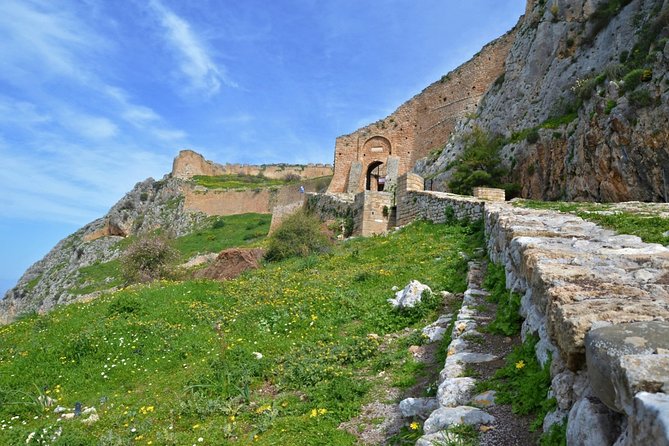
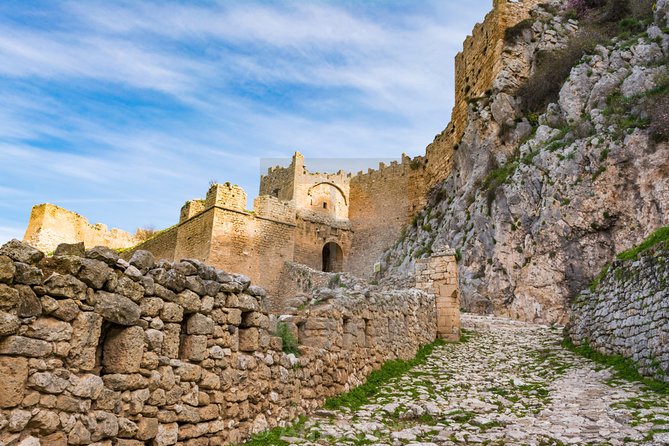
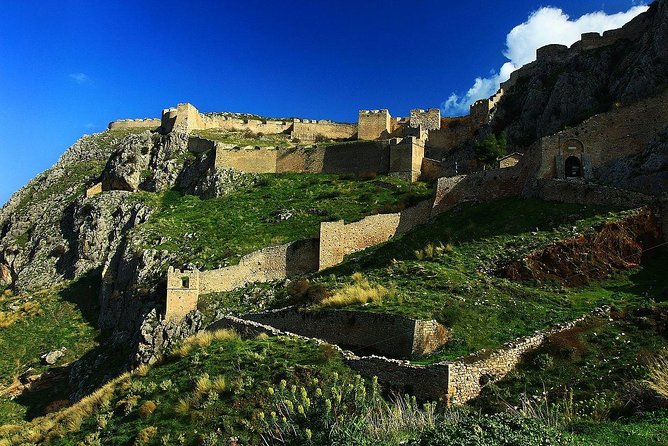
After the ruins, you head to Acrocorinth, often called Upper Corinth. Expect about an hour here, with admission listed as not included.
Acrocorinth sits on a monolithic rock overlooking the ancient city of Corinth. That single fact changes your whole perception of the day. Ancient cities can feel flat in photos, but from a height like this, you understand why Corinth was strategic.
It also has deep time on its side. The site is described as continuously occupied from archaic times to the early 19th century, and today it’s one of Greece’s important medieval castle sites. So you’re not just looking at a view—you’re looking at a long-running human habit of using the same commanding spot for survival, defense, and control.
If you’re prone to museum fatigue, this is still a good stop because it gives your eyes something to do: look out, trace the terrain, and reframe what you just walked through below.
Practical note: plan for uneven ground and steps. Even without details on how steep each path is, fortress sites usually mean a bit of climbing.
Kechries port remains: a short stop with a strong “trade route” feeling
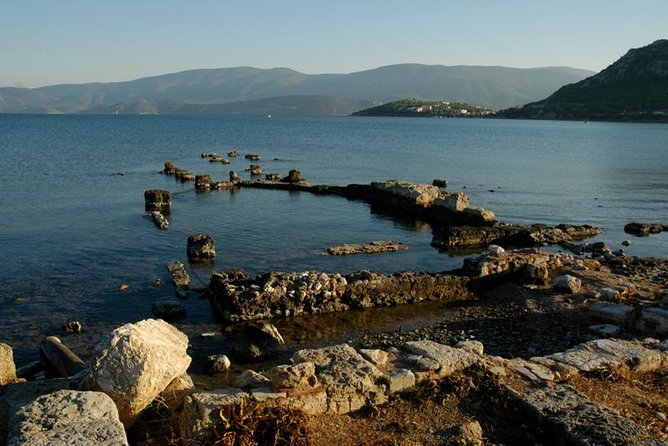
After Ancient Corinth and Acrocorinth, you’ll have time after lunch to visit Kechries. This is a quick stop, about 15 minutes, and admission is listed as free.
Kechries matters because it connects Corinth to the sea in a more direct way. It was one of Corinth’s two ports, used for eastern trade routes via the Saronic Gulf. And it’s tied to the story of Apostle Paul arriving during his second missionary.
Even with limited time, you’ll likely come away with a clearer mental model: Corinth wasn’t only an inland city with temples and markets. It was also a working gateway for ships, goods, and people.
This stop is especially useful if you’re traveling with someone who wants variety: after ruins and a fortress, Kechries feels more open and maritime, even if what you see is “remains” rather than a fully preserved harbor.
The real value: what’s included, what you pay for, and when to add a licensed guide
Here’s the simple way to think about costs.
You pay:
- $363.71 per group, up to 2 people
- plus the entrance fee for Ancient Corinth at 15 euros per adult
- and potentially more site tickets for other stops, since the tour data specifically lists Ancient Corinth as the paid entrance item
You might also choose to pay for a licensed English tour guide to walk inside sites for 260 euros in cash, if available.
What you get for the base price:
- door-to-door private transportation from Athens or Piraeus
- an English-speaking driver who explains during the ride and at the monument stops
- bottled water, WiFi on board
- air-conditioned comfort
- a private setup, meaning no mixed group interruptions
So the value is strongest when:
- you’re traveling as a duo (because the price is per group up to 2)
- you like structure but don’t want to spend extra energy coordinating transportation
The main trade-off is the “driver vs licensed guide” split. If you’re the type who likes straight answers inside the ruins—who built what, why it mattered, and what to notice—then the licensed guide add-on can shift the day from good to excellent. If you’re happy learning the big picture while you ride and then soaking up the site yourself, the base setup is already solid.
A practical game plan for a smooth 5-hour day
This tour is about 5 hours total. To make it feel unhurried, think of the day in two halves: canal + ancient city + Acrocorinth, then Kechries after lunch.
Wear shoes you trust. Archaeological terrain is rarely flat, and fortress areas tend to demand foot care. Bring a light layer too; even in warm seasons, time on stone can feel cooler than you expect.
Also, plan your energy around decision points:
- Ancient Corinth is your densest stop for walking and visual detail
- Acrocorinth is your payoff stop for views and the “why” behind the city’s control
- Kechries is short, so treat it like a focused chapter rather than another long hike
If you’re on a cruise, be ready for port terminal details. Piraeus has terminals A, B, and C. Your driver meets you at the correct exit for the terminal your ship docks at. If Terminal B or C’s exit gate is closed, you may need to take a shuttle bus (about a 3-minute ride) to Terminal A where the driver will wait.
For airport arrivals, your driver meets you at Athens International Airport at the customs exit holding an H.P. Tours sign with your name.
Should you book the Ancient Corinth half-day tour?
I’d book this tour if you want a high-impact day with minimal logistical stress. The combination makes sense: Corinth Canal for the engineering story, Ancient Corinth for the core ruins and city layout, Acrocorinth for the commanding fortress view, and Kechries for the port/trade connection tied to Apostle Paul’s second missionary.
It’s also a good fit if you’re traveling as two people and want the comfort of a private vehicle with explanations handled for you. You won’t be stuck in a crowd, and you’ll have the time to move at your own speed inside the sites.
Skip it only if you strongly need a licensed guide walking inside every stop. Because your driver can explain but can’t accompany you into the sites, you’ll either explore independently or add the licensed guide option for extra cost. If that kind of guided detail is a must-have for your travel style, budget for the add-on.
FAQ
How many people are in a group?
This is a private tour for up to 2 people per group.
How long is the Ancient Corinth half-day tour?
The tour runs for about 5 hours.
Is pickup and drop-off included?
Yes. Private transportation includes pickup and drop-off from your Athens hotel or from the Piraeus port cruise ship terminal.
Are entrance tickets included?
Entrance fees are not fully included. Ancient Corinth has an entrance fee listed as 15 euros per adult. Corinth Canal and Kechries are listed as free, and site ticket costs for other stops are marked as not included.
Is WiFi and bottled water provided?
Yes. Bottled water and WiFi on board are included.
Can I have an English-licensed guide inside the sites?
Yes, it’s optional. An English-speaking licensed tour guide can be arranged for an extra 260 euros paid in cash, subject to availability.
Is free cancellation offered?
Yes. Free cancellation is available up to 24 hours in advance for a full refund.