REVIEW · YEREVAN
Private Day Trip from Yerevan to UNESCO World Heritage Sites
Book on Viator →Operated by Explora Armenia · Bookable on Viator
Six UNESCO stops in one tight day. This private day trip from Yerevan strings together Etchmiadzin Cathedral, St Hripsime, Zvartnots, Charents’ Arch, Geghard, and Garni Temple, with hotel pickup, an air-conditioned car, and WiFi so the day feels smooth instead of chaotic. I really liked how guide Mari (also seen as Marya) and driver Artyom kept things clear and on track, and how the route jumps from Armenia’s early Christian roots to the pagan world at Garni.
One thing to keep in mind: two major sites charge on the day. Uncovered entrance fees apply for Zvartnots and Garni (1500 AMD each), and the overall 6–7 hour pace can feel a bit rushed if you like to linger in museums or photos for a long time.
In This Review
- Key things to know before you go
- Why This Yerevan UNESCO Trip Feels More Relaxing Than It Looks
- Holy Etchmiadzin Cathedral: Armenia’s Christian Center in One Glance
- St Hripsime Church: A Martyr Story Built Into Armenian Architecture
- Zvartnots Temple Ruins: Medieval Grandeur Without the Roof
- Charents’ Arch: The Simple View That Makes the Day Pay Off
- Geghard Monastery: Rock-Carved Monuments in a Canyon Setting
- Garni Temple: The Caucasus’ Only Preserved Pagan Temple
- Price and Logistics: Does $89.36 Feel Like Good Value?
- Who This Tour Fits Best (and Who Might Want Something Else)
- Should You Book This UNESCO Day Trip?
- FAQ
- What is the duration of this day trip?
- How much does the tour cost?
- Is pickup included?
- Is this tour private?
- Is WiFi available during the trip?
- Are admissions included for all sites?
- How much are the entrance fees for Zvartnots and Garni?
- Is lunch included?
- What language is the tour offered in?
- Can I cancel for a full refund?
Key things to know before you go
- Private group pace: Only your group rides, so questions and photo stops work better than on big tours.
- A religion-to-ritual contrast day: Christian UNESCO sites run back-to-back with Garni’s pagan temple.
- Two paid entrances: Plan for Zvartnots and Garni tickets (1500 AMD each).
- Ararat photo payoff: Charents’ Arch is timed right in the flow for a classic view.
- Comfort upgrades included: WiFi, bottled water, and an air-conditioned vehicle help on a longer day out of Yerevan.
- Free entry at several stops: Etchmiadzin, Hripsime, Charents’ Arch, and Geghard are free for this tour.
Why This Yerevan UNESCO Trip Feels More Relaxing Than It Looks
This is the kind of day trip that sounds packed because it is. Still, it works because you’re not juggling taxis, ticket lines, or figuring out how to get between distant monuments. Hotel pickup and drop-off means you start and end where you’re staying. On board, you get WiFi, bottled water, and an air-conditioned vehicle, which matters on hot days and also on cooler days when the car becomes your warming station.
Because it’s private, you can ask the guide to slow down for a specific carving, a church detail, or a quick Mount Ararat question. Guides in this style tend to give you context that makes the sites feel less like random stops and more like a connected story across centuries.
The biggest trade-off is the schedule. Six to seven hours means you’ll see a lot, but you won’t have hours in one place. If you enjoy long, unhurried museum-style visits, you might feel the pace. If you want a high-value sampler that you can later expand on in your own time, this hits the sweet spot.
You can also read our reviews of more tours and experiences in Yerevan.

Holy Etchmiadzin Cathedral: Armenia’s Christian Center in One Glance
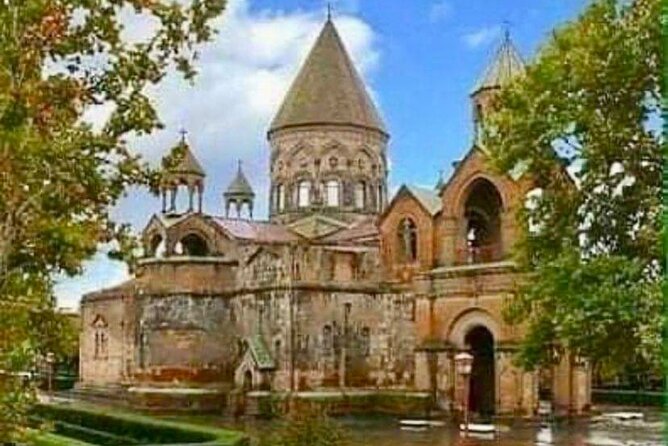
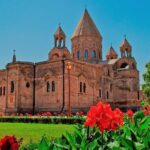
Your first stop is Holy Etchmiadzin, centered on Etchmiadzin Cathedral, the religious heart for Armenian Apostolic Christianity. Armenia adopted Christianity as a state religion in 301, and the cathedral is listed as a UNESCO World Heritage Site (2000). That combo—legendary early Christianity plus UNESCO recognition—sets the tone for the day.
You’ll spend about an hour here. Admission is free on this tour, which makes it a great first move since you can focus on absorbing the architecture and atmosphere instead of thinking about cost. The cathedral is not just a pretty building. It’s the kind of place where the meaning feels present: people come here for religious identity, not sightseeing.
A practical tip: arrive with a mindset of details. Look at the church layout, then shift to how the guide ties the building back to Armenia’s wider Christian story. An hour is enough to get your bearings if you let the guide connect the dots.
St Hripsime Church: A Martyr Story Built Into Armenian Architecture
Next up is Saint Hripsime Church, also a UNESCO World Heritage Site. You’ll get about an hour, and admission is free. The church is linked to a legend from Christianity’s early days, including Hripsime fleeing persecution under Roman Emperor Diocletian. Her refusal to marry the pagan Armenian King Trdat III—and the choice of martyrdom—sits at the center of the story.
The guided takeaway here is that the architecture and the legend are intertwined. A small chapel was erected over the spot where Hripsime was murdered, and later—by order of Catholicos Komitas—a 7th-century church was built as a masterpiece of Armenian architecture.
One reason I like this stop on a day like this: it gives you emotional context before you move into broader ruins and viewpoints. The route goes from religious center to a story-driven martyr church, so you’re not just collecting sights—you’re feeling what people believed and why these buildings mattered enough to preserve.
Zvartnots Temple Ruins: Medieval Grandeur Without the Roof
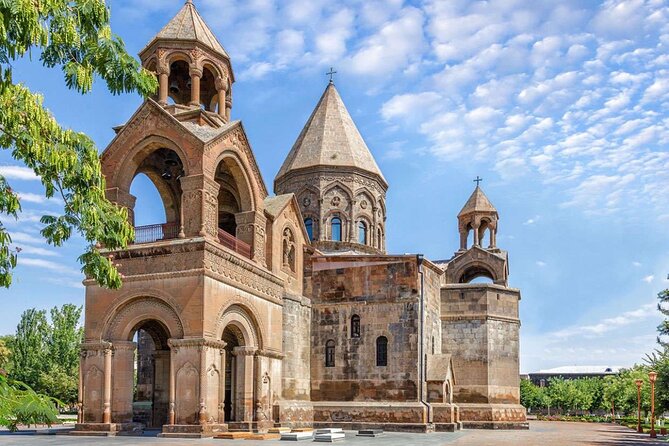
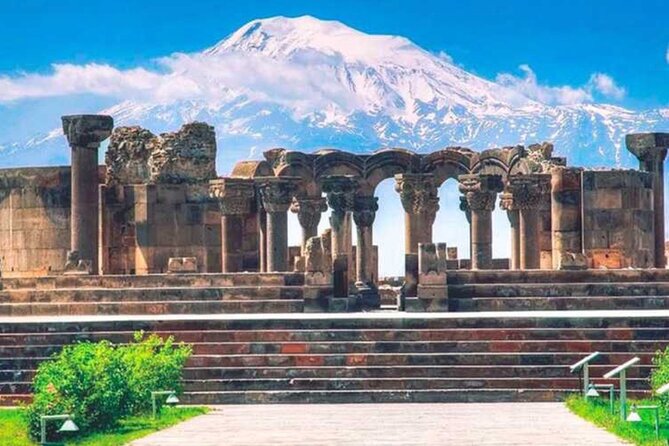
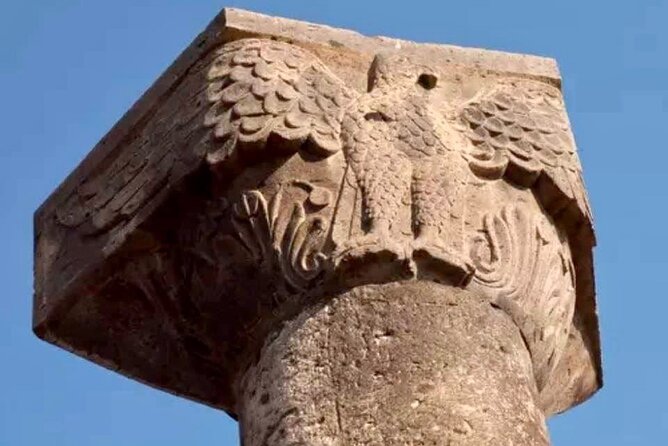
After the churches, you switch from living religious sites to Zvartnots Temple ruins. These are UNESCO-designated ruins of a medieval Armenian cathedral built in the seventh century, and you’ll have about an hour here.
Admission for Zvartnots is not included; it’s 1500 AMD. That extra cost is worth budgeting because ruins can be tricky. Without context, they sometimes feel like stone heaps. With a good guide, the place becomes readable—where columns likely stood, how the design aimed for grandeur, and how the medieval cathedral fits into Armenia’s longer architectural line.
Even in ruin form, Zvartnots has a strong visual pull because it’s about scale. You’re looking at what’s left of a building that once mattered publicly and politically, not only spiritually. If you like architecture, this is your “think and look harder” stop.
Charents’ Arch: The Simple View That Makes the Day Pay Off
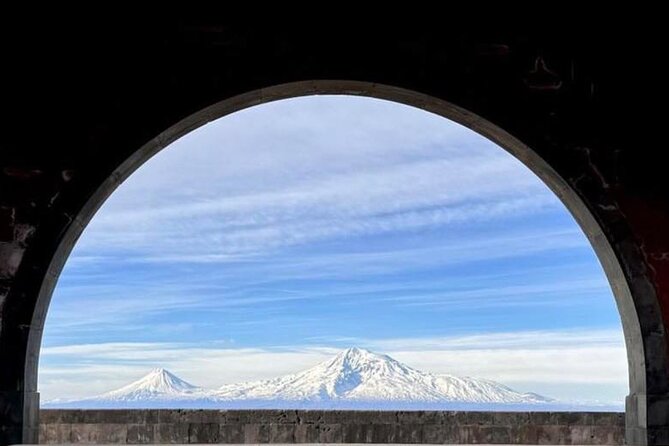
Then comes Charents’ Arch, a one-hour break where the main event is the view of Mount Ararat. This stop is free on the tour, which is nice. It also gives your legs and eyes a reset after churches and ruins.
What makes Charents’ Arch work is that it’s not competing with the rest of the day. You’ve already been absorbing religious and historical meaning. Now you get a geographic anchor: the mountain that shows up again and again in Armenian identity and art.
A practical consideration: the best view depends on weather and visibility. You can’t control clouds, but you can control your timing and attention. This is one of those spots where it helps to pause, look up, and stop treating it like a quick photo.
Geghard Monastery: Rock-Carved Monuments in a Canyon Setting
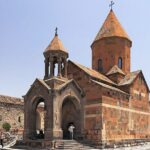
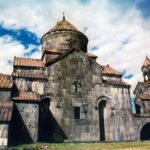
Your next UNESCO World Heritage stop is the Monastery of Geghard. You’ll spend about an hour here, and admission is free.
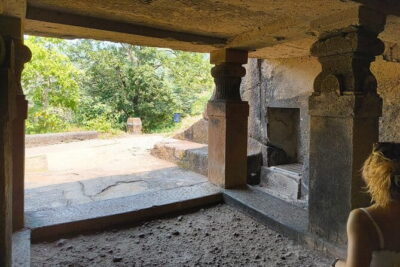
Geghard has a built-in sense of place. According to tradition, it was founded by Saint Gregory in the 4th century on the site of a sacred spring. The monastery structures you see today date from the 13th century, and they’re partially excavated in rock. That rock-carved design is the big draw: it creates an austere, grounded feeling, even when it looks dramatic.
And there’s another layer: Geghard sits in a canyon with precipices and curved cliffs surrounding it. The result is that your eyes keep moving—between carved stone details and the natural setting pressing in from the edges.
This is the stop where I think timing matters. If the day has felt quick so far, Geghard is your chance to slow down mentally. Look at the way the carvings and rock architecture cooperate. Even if you’re not a “monument person,” this one tends to land because it feels physical and real.
Garni Temple: The Caucasus’ Only Preserved Pagan Temple
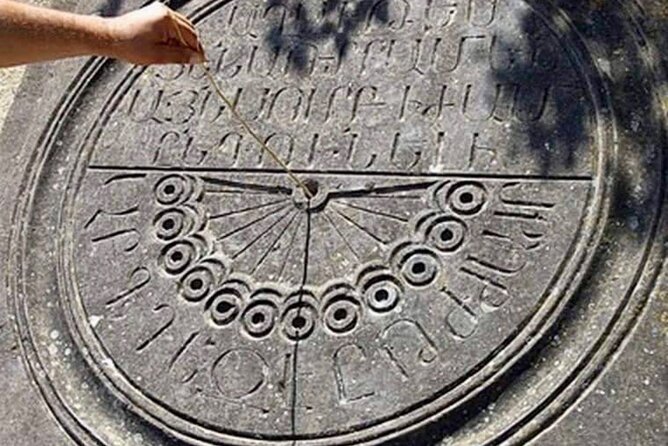
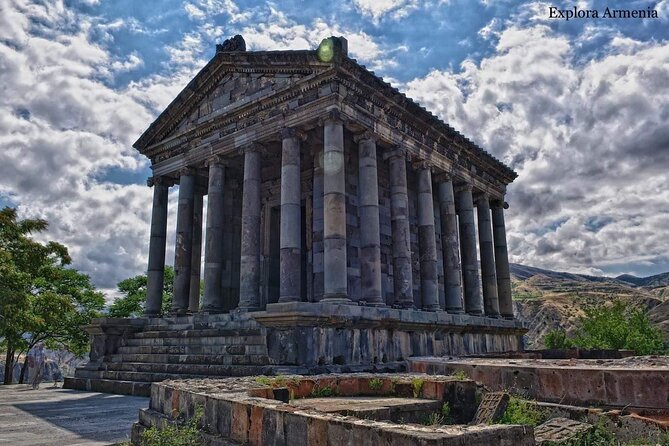
The final major site is Garni Temple, about an hour, with admission not included (1500 AMD). Garni is described as the only preserved pagan temple in the entire territory of the Caucasus, dating to the second half of the 1st century. It was dedicated to the Sun God.
Then the story turns. After Armenia’s Christianization, the temple was used as a royal residence. So even though it started as pagan worship architecture, it didn’t stay locked in time. It got repurposed—another reminder that these monuments are part of living history, not just dead artifacts.
Garni’s value on this itinerary is contrast. You finish the day where you started in theme, but from the other direction. You’ve spent hours with Armenian Apostolic Christianity and UNESCO churches; at Garni you see the pre-Christian layer that helped shape how later eras used older sacred sites.
If you want a quick way to make Garni more meaningful: try to connect the change in use to what you saw at earlier stops. It’s the same land, the same culture, different spiritual eras.
Price and Logistics: Does $89.36 Feel Like Good Value?
At $89.36 per person, this tour can feel like good value if you think about what’s included and what you avoid. You’re getting private hotel pickup and drop-off, comfortable transportation in an air-conditioned vehicle, WiFi on board, and bottled water. You also get guided time that keeps the day from turning into a checklist.
Most of the key stops are free for this tour: Etchmiadzin Cathedral, St Hripsime Church, Charents’ Arch, and Geghard. The paid parts are just two: Zvartnots and Garni, at 1500 AMD each. That means you can budget a fairly small extra amount without feeling like every stop is a separate transaction.
The private nature matters too. In a big group format, you often lose time waiting and repeating explanations. Here, you can keep the flow tight, which makes the 6–7 hour duration feel like a real sightseeing day instead of a half-day of logistics.
One note on planning: the tour is booked fairly far in advance on average (49 days). That’s a hint that weekends and busy seasons fill quickly. If your dates are firm, it’s smart to reserve early rather than hope.
Who This Tour Fits Best (and Who Might Want Something Else)
This day trip is perfect if you:
- Want UNESCO World Heritage sites without doing complicated self-planning from Yerevan
- Like a mix of Christian and pre-Christian Armenian sites
- Prefer a private guide who can explain legends and architecture clearly
- Have limited time and want a strong “first Armenia” day that you can later expand
It may be less ideal if you:
- Plan to spend tons of time photographing every corner for long stretches
- Want a slow religious pilgrimage style visit rather than a structured day
For many people, though, this is exactly right: you get the major landmarks, you get context, and you leave with enough understanding to pick your next stops wisely.
Should You Book This UNESCO Day Trip?
If you want a high-value, on-the-ground day that connects Armenia’s early Christian world with the older pagan layer at Garni, I’d book it. The combination of free entries at most stops, the guided context, and the comfort extras (air-conditioning, WiFi, bottled water) makes the $89.36 feel more like convenience plus expertise than just transportation.
The one decision point is the pace. If you like slow travel, you might feel rushed. If you like packing meaning into a day, this itinerary is built for you. Bring curiosity, budget the Zvartnots and Garni entrances, and plan to spend your time looking—not just walking.
FAQ
What is the duration of this day trip?
The tour lasts about 6 to 7 hours.
How much does the tour cost?
The price is $89.36 per person.
Is pickup included?
Yes. You get hotel pickup and hotel drop-off.
Is this tour private?
Yes. It is private, so only your group participates.
Is WiFi available during the trip?
Yes. WiFi is available on board.
Are admissions included for all sites?
Not all. Etchmiadzin, Saint Hripsime, Charents’ Arch, and Geghard are free on this tour. Zvartnots and Garni are not included.
How much are the entrance fees for Zvartnots and Garni?
Zvartnots entrance is 1500 AMD, and Garni entrance is 1500 AMD.
Is lunch included?
Lunch is not included. It is optional with an additional fee.
What language is the tour offered in?
The tour is offered in English.
Can I cancel for a full refund?
Yes. You can cancel up to 24 hours in advance for a full refund.