REVIEW · ENNIS
Private Ennis Essential History Tour with Dr Jane O’Brien
Book on Viator →Operated by Jane O'Brien · Bookable on Viator
Ennis turns into a story in an hour. This private Ennis walk with Dr Jane O’Brien stitches together centuries at street level, from medieval market days to Catholic Emancipation and the leaders of 1916—without slowing you down too much.
I especially like how Dr Jane O’Brien explains Ennis using historical sources, turning landmarks into real daily life and real stakes. I also like the practical touch that you can request an amplification device, so the details land even if you’re near traffic or other noise.
The one thing to consider is timing: at about 1 hour 10 minutes, each stop is short. It’s designed to give you a smart overview, not a slow, sit-down history seminar in every location.
In This Review
- Quick hits before you head to Ennis
- A private history walk that moves at human speed
- Price and value: what $270.32 means for your group size
- Starting point on Arthur’s Row: how to make the most of the first minutes
- Clare Museum: where Ennis begins as a medieval market town
- Daniel O’Connell Monument: Catholic Emancipation, in the town’s center
- Abbey Street bow-ways: small laneways with big social meaning
- Ennis Friary and the view over the River Fergus
- Francis Street: the oldest street and the O’Brien kings
- Arthur’s Row convent building: orphanage and industrial school records
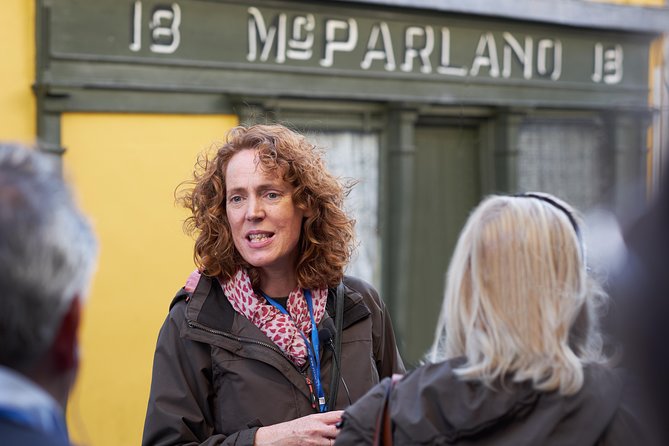
- Parnell Street and McParland House: timber framing and a real old storefront
- Chapel Lane: penal times, overcrowding, and famine devastation
- Market Place: markets, matchmaking, faction fighting, and a sculpture’s meaning
- Barrack Street: Gallows Green and crimes documented in the corporation manuscript
- Cathedral of Saints Peter and Paul: where the tour usually ends
- Walking tips so the history lands (not your feet)
- Who should book this private Ennis Essential History Tour?
- Should you book it?
- FAQ
- How long is the Private Ennis Essential History Tour with Dr Jane O’Brien?
- What’s the group size and is it private?
- Where does the tour start and end?
- Is the tour guided in English?
- Is an admission ticket required for the stops?
- Can I use a mobile ticket, and can I get a listening aid?
Quick hits before you head to Ennis
- Private and flexible: up to 6 people, so you’re not competing for attention.
- Stories tied to exact places: laneways, friaries, monuments, and street corners connect into one narrative.
- Clear listening option: an amplification device is available if you want it.
- Free entry listed at the stops: the experience notes admission tickets as free for the featured sites.
- A walk that adds up: you’ll cover a lot of ground while learning where the town’s big turning points happened.
A private history walk that moves at human speed
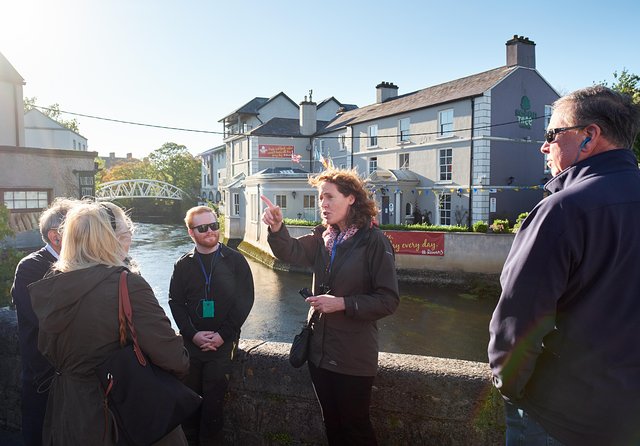
This is the kind of tour that helps you see Ennis instead of just looking at it. Dr Jane O’Brien connects the town’s major moments to the specific streets where they played out. You start with origins and trade, then shift through faith, politics, and punishment—right in the middle of everyday Ennis.
The format is also friendly for first-timers. It’s a focused 70-minute loop that’s long enough to give meaning to what you’re seeing, but short enough that you’ll still have energy to continue exploring afterward—especially if you like wandering O’Connell Street at your own pace.
And because it’s private for your group, the tour feels less like a scripted march. If something catches your interest—like a family name connected to the town, or a particular era—you’ll usually have room to ask.
You can also read our reviews of more tours and experiences in Ennis.

Price and value: what $270.32 means for your group size
The price is $270.32 per group, up to 6 people. That math matters.
- If you fill the group (6 people), it’s roughly $45 per person.
- If it’s just 2 people, it’s closer to $135 per person.
So for a couple, it’s a premium splurge. For families or small groups, it becomes very good value, especially because you’re not paying for a big coach load—you’re paying for an expert guide tailored to your group.
Also, the stops are set up so you’re not hit with ticket surprises at the featured locations. The experience lists admission tickets for each stop as free, which is a real plus if you’re trying to keep costs under control.
Starting point on Arthur’s Row: how to make the most of the first minutes
You meet at the Ennis Tourist Information Centre, on Arthur’s Row (O’Connell Street), Clonroad Beg. That’s a smart start. You’re already in the heart of town, surrounded by the kind of streets where stories stick.
You’ll get a mobile ticket, and confirmation comes at the time of booking. That matters because history tours can be a little chaotic if you’re trying to juggle paper tickets while also trying to locate your guide.
One small strategy: arrive a touch early, take 30 seconds to look around the street layout, and then let Dr Jane O’Brien do the rest. The tour works best when the town feels like a map in your head.
Clare Museum: where Ennis begins as a medieval market town
Your first stop is beside Clare Museum, at the former site of the Convent building for the Sisters of Mercy. It’s a strong opening because it frames Ennis not as a static postcard town, but as a place that kept changing its purpose over time.
Dr Jane O’Brien also sets the story’s foundation: Ennis originated in the 13th century, and it grew into a medieval market town. That’s useful because the rest of the walk makes more sense when you understand what markets meant. They weren’t just about buying and selling livestock and produce. They were where status, alliances, and conflicts could happen in public.
This first stretch is also where you start picking up what kind of guide Dr Jane O’Brien is. The tour isn’t just dates and names. It’s drama. It’s daily life. It’s the sense that real people made real choices—and sometimes paid for them later.
Daniel O’Connell Monument: Catholic Emancipation, in the town’s center
Next you move to the Daniel O’Connell Monument in the center of Ennis. This is where the story pivots toward politics and faith. The monument marks a momentous milestone of Catholic Emancipation, tied to events that changed what religious and civil life could look like.
What I like about this stop is how it anchors national history to local space. You’re not reading about Emancipation in a book—you’re seeing where the town recognizes it in stone.
If you’re the type who likes connecting big Irish history to small places, this is a good moment to slow your brain down and really watch the street around you. Even if you don’t have a lot of time, you’ll feel the town’s center as a stage where major events unfolded.
Abbey Street bow-ways: small laneways with big social meaning
Then comes one of the more atmospheric parts of the walk: Abbey Street and its bow-ways—the small laneways linking main streets to what were once poorer tenant areas.
This is where the tour shows its value as more than a list of famous locations. These laneways help explain the town’s social geography. They hint at how wealth and hardship could sit close together, just off the main routes.
The practical takeaway: this stop is short, but you’ll understand why locals might remember certain streets differently than visitors do. If you like “street-level history,” you’ll probably find yourself watching where doors open, where paths narrow, and how people would have moved through the town.
Ennis Friary and the view over the River Fergus
By Old Ennis Abbey (circa 1280s), you explore the role of the Franciscan Friars in the development of Ennis town. Then you get a pretty view of the River Fergus, plus memorials connected to the 1916 uprising against British rule.
I like the structure of this stop: faith, then geography, then memory. Friars weren’t just religious figures. They were part of how towns grew—socially, economically, and culturally.
And the River Fergus moment is a smart break in the storyline. It gives your eyes somewhere to rest. More importantly, it helps you picture why towns formed where they did. Water mattered for trade, transport, and settlement patterns.
Francis Street: the oldest street and the O’Brien kings
Moving to Francis Street, you visit what’s described as the oldest street in Ennis, linked to the former palace of the O’Brien Kings, founders of the town. That’s a name you’ll hear around Ennis, and this stop helps explain why it matters.
You also visit a Friary originally built in the 1850s, and you get to see beautiful stained glass windows plus a peaceful, calmer atmosphere in a space that still feels like it holds quiet.
This is the kind of stop where even people who aren’t museum-lovers usually enjoy themselves. The stained glass gives you a sensory anchor. When the guide talks about eras and roles, you’re not only hearing—you’re also looking at something tangible.
Arthur’s Row convent building: orphanage and industrial school records
At Arthur’s Row, you explore archived experiences of children from an orphanage and industrial school that once stood on this site. This stop is heavier than some of the others, and that’s part of why the tour feels honest.
It’s also a reminder that town history isn’t only about monuments and leaders. It includes how societies treated vulnerable kids—and how institutions shaped lives.
If you’re traveling with someone who prefers light content only, you’ll want to know this is one of the more emotionally serious moments. Still, it’s handled through place-based storytelling, not sensationalism—so it lands as context.
Parnell Street and McParland House: timber framing and a real old storefront
Next is Parnell Street, including McParland House (circa 1620). You’ll see it described as the only known surviving timber framed house in Ireland, and also the oldest house of the town to remain in continuous use without major alterations.
What makes this fun is the small, physical details: the original shopfront and the half-door that evokes a different time and how everyday business worked.
If you’re a photo person, this is a strong stop. If you’re not, it still helps you understand that history can survive as architecture, not just as stories.
And if your family name is Ennis, this part can feel extra meaningful. Seeing where a town’s origin is tied to identity gives the whole walk a personal edge.
Chapel Lane: penal times, overcrowding, and famine devastation
At Chapel Lane, you stop beside the building housing the Chapel Lane market—once a church built in 1735 during penal times. The guide also connects the space to overcrowding during the Great Famine, and the devastating impact on a town like Ennis.
This stop is powerful because it links religious restrictions, built form, and the human reality of crisis. The lane-way setting matters too. It gives the story a sense of tightness and pressure—social space shrinking when people need help most.
Again, the tour keeps it efficient. But even in a short stop, you’ll pick up what made the Famine different: it wasn’t just bad weather. It was an economic and social rupture that altered lives for generations.
Market Place: markets, matchmaking, faction fighting, and a sculpture’s meaning
Then you reach the Market Place, where Ennis served as a main market town for County Clare for hundreds of years. Here, the guide explains markets as social occasions—places for meeting, matchmaking, and yes, the infamous faction fighting.
This is one of the most “Ennis-feels-like-Ennis” stops. It connects the town’s physical layout to how people used it for community life, not just commerce.
You also see how the present recognizes that past, including the meaning of a market day sculpture standing on the site today. Even if you don’t know Irish art history, it’s easy to grasp the idea: town memory can be built into public space.
If you’re the type who likes to understand why people gather where they gather, this stop will click quickly.
Barrack Street: Gallows Green and crimes documented in the corporation manuscript
At Barrack Street, you’re shown the former Gallows Green of the town. The guide brings in documented crimes and punishments from an Ennis corporation manuscript (1660)—details that can feel shocking from a modern perspective.
This is a reality-check stop. It’s not meant to scare you; it’s meant to show what “order” meant when laws and enforcement looked very different.
If you have a low tolerance for dark themes, pace yourself here. But if you like history that feels grounded in evidence, this stop gives the walk a solid backbone.
And if you’re traveling with older kids or teens who enjoy true stories, this is often the part that makes the lesson stick.
Cathedral of Saints Peter and Paul: where the tour usually ends
The tour typically ends at the Cathedral of Saints Peter and Paul, a major Catholic church built between 1830 and 1870. It’s also positioned opposite the Old Ground Hotel, once the site of the old town jail. The cathedral area incorporates a haunted towerhouse dating to the 1500s.
Even if you don’t go inside, just standing there helps you understand how the town’s religious and civic life overlapped. And because the tour ends back at the starting point area, you can choose what to do next.
One smart move: if the cathedral interior is on your checklist, add time. If it’s not, you’ll still have enough energy to continue down O’Connell Street, which functions as the main pedestrian shopping street.
Walking tips so the history lands (not your feet)
This is a walking tour, and the experience is set up to “get your step count up.” To keep it enjoyable:
- Wear shoes that work on city pavement. You’ll cover a sequence of short stops, not long sit-down breaks.
- If you’re sensitive to noise, consider requesting the amplification device. It can make the storytelling much easier to follow.
- Bring your curiosity more than your script. The best moments come when the guide ties a place you’re standing on to a human story.
Also, because it’s private for up to 6, you can often adjust pacing slightly. Don’t be afraid to ask for a moment if something catches your attention.
Who should book this private Ennis Essential History Tour?
This tour is a great fit if you want:
- A tight, high-impact orientation to Ennis without hopping on a bus.
- A guide who can explain how Ennis grew—from a medieval market town to modern landmarks.
- Place-based history: streets, lanes, monuments, friaries, and the social meaning behind them.
It’s less ideal if you want:
- A slow, deep study of any one single site.
- A food-focused experience. (If you’re shopping for tastings, there’s a separate Gourmet History Tour option that specifically mentions snacks and local food tastings.)
Should you book it?
If you’re spending a limited amount of time in Ennis, I think this is one of the best ways to make the town click fast. The private format keeps it personal, Dr Jane O’Brien’s storytelling connects history to real spaces, and the tour structure is efficient without feeling rushed.
Book it if you like walking tours that teach you how a town works. Skip it or pair it with something longer elsewhere if you’re hoping for extended time inside every site. For many people, this becomes the foundation for everything they do after.
FAQ
How long is the Private Ennis Essential History Tour with Dr Jane O’Brien?
It lasts about 1 hour 10 minutes.
What’s the group size and is it private?
It’s a private tour/activity, and only your group participates. The group size is up to 6 people.
Where does the tour start and end?
The meeting point is the Ennis Tourist Information Centre on Arthur’s Row, O’Connell Street, Clonroad Beg, Ennis, Co. Clare. The tour ends back at the meeting point.
Is the tour guided in English?
Yes, it’s offered in English.
Is an admission ticket required for the stops?
The tour details show admission tickets as free at the listed stops.
Can I use a mobile ticket, and can I get a listening aid?
Yes, you’ll receive a mobile ticket. There is also an option for the guide to use an amplification device for easier listening.