REVIEW · DAR ES SALAAM
Bagamoyo Historical Tour – Everyday
Book on Viator →Operated by Dove Adventure Tanzania · Bookable on Viator
If history could talk, Bagamoyo would speak. This private Bagamoyo historical tour lets you trace the town from a major trading hub to the former capital of German East Africa—then you’ll spend time around the coastal mangroves and beaches for a sense of place beyond the buildings. It’s an 8-hour day built around multiple stops, with your guide connecting the dots between ports, power, faith, and forced journeys.
Two things I really like: you get a private pace (no rushing other people through dark corners), and the schedule is packed with admission tickets included at each listed major site. The downside to flag up front: you’ll hear and see slave-trade history tied to this coast, including the route from holding prisons toward ships—so come mentally prepared.
In This Review
- Key highlights you’ll feel on this Bagamoyo day
- Why Bagamoyo still feels like a timeline
- Getting from Dar es Salaam: comfort and an 8-hour flow
- Old Arab Fort: the prison route to the harbor
- Old Boma: German East Africa’s shift toward Dar es Salaam
- Kaole Ruins: early Arab settlement by the Indian Ocean
- Bagamoyo Museum at the Holy Ghost Mission: Livingstone and the cost of conversion
- Mangroves and beaches: seeing why the harbor story matters
- Price and value: what you’re paying $199 for
- What service feels like with drivers and guides like Derrick and Sadiq
- Who this private tour suits best
- Should you book this Bagamoyo Historical Tour?
- FAQ
- Does the Bagamoyo Historical Tour include pickup from Dar es Salaam?
- How long is the tour?
- What does the tour cost?
- Is lunch included in the price?
- Which sites are included during the tour?
- Are admission tickets included?
- Is mobile ticketing used?
- What’s the cancellation policy?
Key highlights you’ll feel on this Bagamoyo day
- Old Arab Fort: a prison story tied to underground tunnels and waiting dhows at the harbor
- Old Boma (German-era state house): built for leadership in the late 1800s, then overtaken by Dar es Salaam’s deeper port
- Kaole Ruins: archaeological remains of early Arab settlement, with two mosques and around 30 tombs
- Bagamoyo Museum at the Holy Ghost Mission: the Livingstone link plus emotionally heavy exhibits connected to slavery and conversion
- Private guide + driver service: a well-paced day with safe, prompt transport (with guides like Sadiq and drivers like Derrick noted for their thorough, steady guidance)
Why Bagamoyo still feels like a timeline
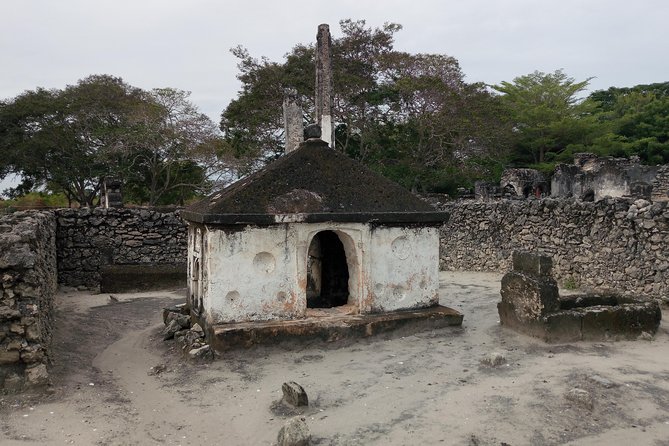
Bagamoyo has the kind of layered past you can’t fully learn from a single signboard. You’re looking at a coast where traders, colonizers, missionaries, and enslaved people all intersected—often in the same few blocks. What makes this tour work is that it moves through that story in a sensible order, so the places don’t feel like disconnected stops.
I also like that the experience isn’t only “museum mode.” Even with history as the main focus, the tour’s coastal setting matters. You’re in a town that was shaped by its harbor and Indian Ocean position, and the surrounding mangroves and beaches help you picture why Bagamoyo mattered in the first place.
Getting from Dar es Salaam: comfort and an 8-hour flow
The day starts at 8:00 am, and you’re offered pickup. You’ll ride in an air-conditioned vehicle, which is a real quality-of-life upgrade for an 8-hour historical circuit. Since the tour includes fees and taxes, you’re not constantly worrying about small entry costs popping up mid-day.
It’s also built as a private tour, so you’re not stuck watching someone else’s pace. That matters on a day with somber sites, where you may want an extra minute to look, or you may want to keep things moving.
Practical note: lunch isn’t included. The good news is the tour allows you to stop for lunch if you want, so bring a plan—either a light lunch mindset or willingness to buy food on the go.
Old Arab Fort: the prison route to the harbor
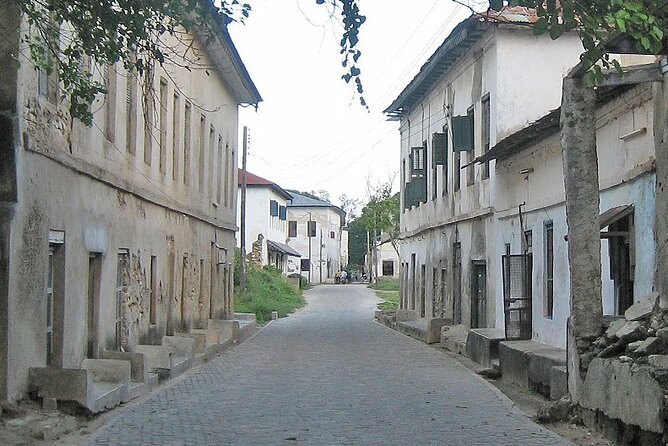
Your first big stop is the Old Arab Fort of Bagamoyo. This isn’t just an old stone structure—it’s described as a prison where enslaved people were held before being herded through underground tunnels to waiting dhows at the harbor. That physical description is the point. It turns “history” into a route you can almost trace step by step.
The way this story is presented matters. The tour highlights the experiences of the “broken heart” captives who were brought into an unknown world here. Even if you’ve read about the coast before, seeing how the fort connects to the port makes the system feel real rather than abstract.
What to expect on-site: you’ll spend about one hour here, with admission included. The time window is enough to take in what’s there, then process it with your guide’s explanation. Just don’t expect it to feel like a casual attraction—this is heavy subject matter.
Old Boma: German East Africa’s shift toward Dar es Salaam
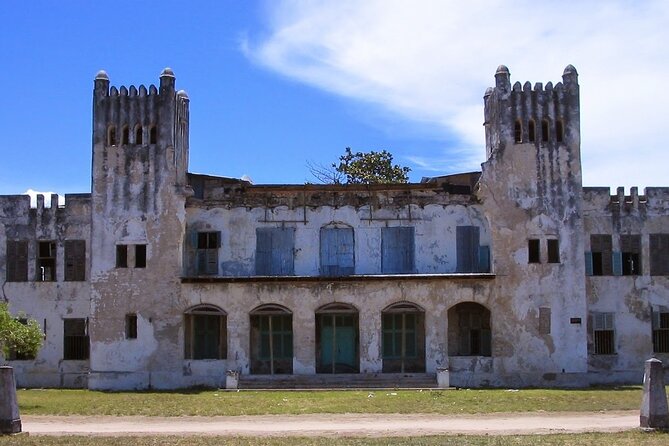
Next is the Old Boma, one of the historical buildings in Bagamoyo used as a state house. The key detail here is timing and purpose: it was built by the Germans at the end of the 19th century to serve as a residence for local leaders. It also had a short lifespan as a seat of power because the German capital moved to Mzizima (today known as Dar es Salaam) due to the shallow water depth of the Bagamoyo port.
That “shallow water” detail is small but important. It explains why political gravity changed. Even when a town had status, geography could still erase it fast. Standing in a former leadership residence helps you connect the dots between ships, docking, and who got chosen as the center.
This stop runs about 30 minutes, again with admission included. It’s short enough that you won’t feel dragged through it, but long enough to catch the story and feel how it fits into the larger timeline your guide is building.
Kaole Ruins: early Arab settlement by the Indian Ocean
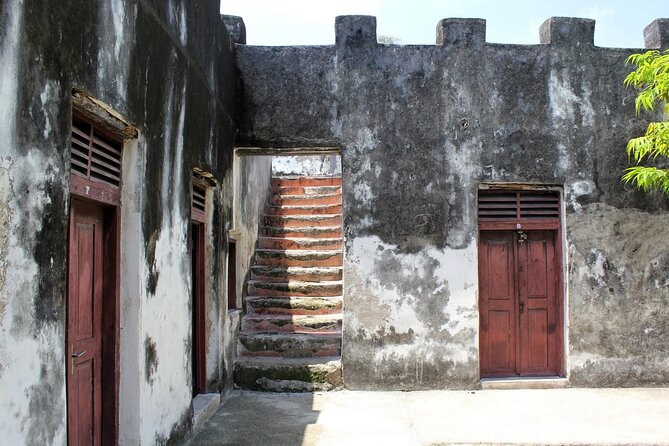
After German-era power, you shift into a much older chapter at Kaole Ruins. This site is described as holding the remains of the first settlement of Arab foreigners in Bagamoyo, along with archaeological remains from excavations. You’re looking at structures tied to day-to-day life—houses, mosques, water wells, and graves of foreigners who died there.
The context is what makes it click. Kaole is noted as having been settled in the 8th century as a trading town, with stone ruins dating roughly to the 13th to 16th centuries. The site is also positioned south-east of Bagamoyo town on the shores of the Indian Ocean, which helps explain why this area became a magnet for travel and exchange.
What to expect here: you’ll spend about one hour at Kaole, and admission tickets are included. This stop can be especially satisfying if you like archaeology and the idea that trade leaves physical traces. It’s also a good contrast point: compared with the Old Fort, the mood here is more about settlement, faith, and everyday infrastructure.
Bagamoyo Museum at the Holy Ghost Mission: Livingstone and the cost of conversion
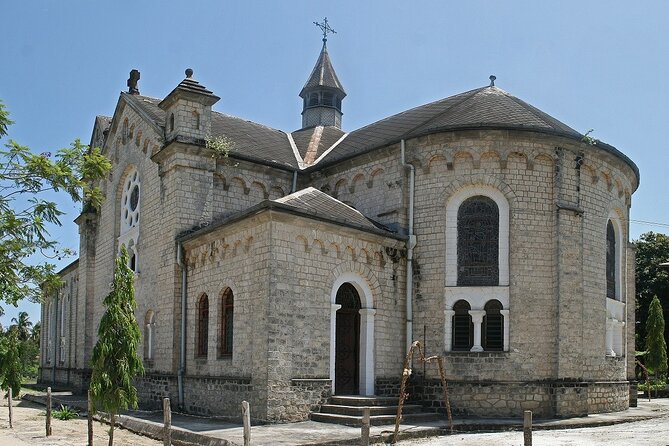
The tour’s museum stop is centered on the Holy Ghost Mission complex. The original Holy Ghost Church was built in 1872, and it’s reported to be the oldest church on the mainland of East Africa. Your guide also connects it to a famous name: in 1874, David Livingstone was interred for a night at the Holy Ghost Mission, and the Livingstone Tower is named in his honor as part of the original church.
Then comes the Sisters’ House, built in 1876, which was converted into a Roman Catholic Mission Museum. This is where the emotional weight increases. The exhibits include photographs of slaves tied together with chains to their necks, plus displays of missionary work and conversion to Christianity, along with books and booklets about that period.
This isn’t a “fun photo stop,” and it doesn’t try to be. It’s one hour with admission included, and it’s best approached with an open mind and a little breathing room. I like that your guide can frame what you’re seeing so it doesn’t become just a list of hard images.
Mangroves and beaches: seeing why the harbor story matters
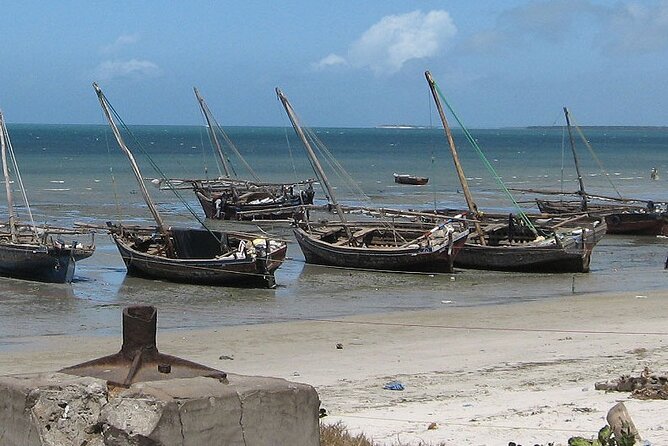
Bagamoyo’s history is tied to water—harbors, routes, ships, and coastal life. That’s why this tour isn’t only buildings. The overall tour description includes time showing you the surrounding mangrove forest and beaches as part of the day’s story.
Even without a long explanation at each shoreline spot, the value is practical: it helps you understand why ports could thrive—or fail—based on things like access and docking conditions. When you’ve already learned how the Bagamoyo port’s shallow water depth played a role in shifting capital power, the coastal scenery feels less like scenery and more like evidence.
If you’re sensitive to long outdoor stretches, plan accordingly. This is an all-day effort, and at multiple points you’ll be out in the open.
Price and value: what you’re paying $199 for
At $199 per person, this tour isn’t the cheapest way to fill a day from Dar es Salaam. But you’re also buying a lot of “friction reduction.”
Here’s the value logic I’d use when deciding:
- Admissions included at the main listed sites (Old Fort, Old Boma, Kaole Ruins, Bagamoyo Museum)
- All fees and taxes included, so you’re less likely to hit surprise costs
- Air-conditioned vehicle for an 8-hour day
- Private guide approach, meaning you can keep the pace personal instead of following a group stampede
- Pickup offered and a start time that’s early enough to use the day well
The only clear trade-off is that lunch isn’t included. That’s not a dealbreaker, but you should factor in what you’ll spend to eat near the end of the day.
So if you care about doing history in a structured, guided way—and you want transport and tickets handled—this price starts to look fair. If you’re on a strict budget and happy to DIY, you may find cheaper options. But for a single-day overview with less hassle, $199 can be a reasonable spend.
What service feels like with drivers and guides like Derrick and Sadiq
One of the most reassuring details in the experience notes is the focus on guide and driver quality. A prompt, safe driver like Derrick, paired with a guide like Sadiq who offers an incredibly informative overview across periods of history and culture, is the difference between a day that feels chaotic and one that feels organized.
In practice, I look for two things on a tour like this:
1) Does your guide help you connect the dots between places?
2) Does your driver keep the day moving safely and on time?
This tour’s format—private, fixed start, timed stops—suggests the operators are trying to manage both.
If you end up with a guide who explains the story behind each site (rather than rattling facts), you’ll get more out of the admissions and more out of the quieter moments where you just look.
Who this private tour suits best
This Bagamoyo day trip is a strong match if you:
- Want a single, organized day of history without planning every stop
- Like tours that connect trade, colonial change, and mission history into one flow
- Prefer a private pace over a bus-group routine
It’s also a good fit if you’re staying in Dar es Salaam and want one full-day outing that feels grounded in real places rather than generic viewpoints.
The one type of traveler who should reconsider is anyone who would struggle with the forced-slave history explicitly tied to the Old Fort and museum exhibits. You can still enjoy learning from it, but you should know it’s part of the experience.
Should you book this Bagamoyo Historical Tour?
Yes, if you want an efficient, guided way to understand why Bagamoyo mattered—and you’re comfortable with serious history. I think the biggest reason to book is the combination of private pacing, included admissions, and a route that moves logically from port-linked imprisonment to German political change to older trade settlement and mission-era context.
I’d hesitate only if you’re trying to keep the day light and upbeat, or if you strongly dislike long outdoor portions around the coast. Also, plan for the fact that lunch is on you.
If you want a day trip that feels like it’s actually explaining the place you’re standing in, this is a solid bet.
FAQ
Does the Bagamoyo Historical Tour include pickup from Dar es Salaam?
Yes. Pickup is offered, and the tour starts at 8:00 am.
How long is the tour?
The duration is about 8 hours.
What does the tour cost?
The price is $199.00 per person.
Is lunch included in the price?
No. Lunch is not included, though you can stop for lunch during the day.
Which sites are included during the tour?
The tour includes Old Arab Fort of Bagamoyo, Old Boma, Kaole Ruins, Bagamoyo Museum, and additional town stops.
Are admission tickets included?
Yes. Admission tickets are included at the listed stops (Old Arab Fort, Old Boma, Kaole Ruins, and Bagamoyo Museum).
Is mobile ticketing used?
Yes. Mobile tickets are included.
What’s the cancellation policy?
You can cancel up to 24 hours in advance for a full refund. If you cancel less than 24 hours before the experience starts, the amount paid is not refunded. The tour may also be rescheduled or refunded if poor weather prevents it.