REVIEW · KHAJURAHO
Private Guided Heritage and Cultural Tour in Khajuraho
Book on Viator →Operated by Rishi Guide India · Bookable on Viator
Khajuraho feels different with a private guide. I love the private, customizable flow and the way cycling lets you move between temple clusters without rushing. One consideration: temple entry fees are extra, listed at ₹600 per person.
In the best moments, guides like Ankit Chandel and Rishi bring the carvings to life with clear, story-driven explanations and real flexibility about your schedule. That kind of attention matters in Khajuraho, because you quickly start noticing patterns you’d miss on your own.
Plan on 3 to 5 hours in the morning, starting at the main entrance of the Western Group of Temples in Sevagram. Pickup is available and you get bottled water, with the route moving by tuk-tuk plus walking and bicycle time.
In This Review
- Key highlights you’ll actually feel on the ground
- Why this Khajuraho tour mixes temples with movement
- Starting at the Western Group Temples: UNESCO stars with less-stress viewing
- Matangeshwara Temple: your day gets a warm start
- Adinath Temple and Jain sites: a different lens on Khajuraho
- Old village Khajuraho: the culture after the carvings
- Bicycles, tuk-tuk, and making the route feel easy
- Price and timing: is it worth $51.06 per person?
- Guides make or break temple tours, and this one aims for strong storytelling
- Who should book this and who might skip it
- Should you book this private heritage and cultural tour in Khajuraho?
- FAQ
- How long is the private guided heritage and cultural tour in Khajuraho?
- Is this tour private?
- Is pickup offered?
- Are bicycles included?
- What about transport during the tour?
- Are temple entrance fees included?
- Is lunch included?
- Where does the tour meet and end?
- What time does the tour run?
- What if there’s poor weather?
Key highlights you’ll actually feel on the ground
- Private and customizable: you control the pace and the mix of stops, not a rigid group script
- Bicycles are included (on request): built for active travelers who want movement, not just sightseeing
- UNESCO Western Group temples with real context: the guide points out what matters in the carvings
- Jain focus at Adinath Temple: you visit multiple Jain religious sites, not just one photo stop
- Old village Khajuraho time: you shift from monuments to everyday local culture
Why this Khajuraho tour mixes temples with movement
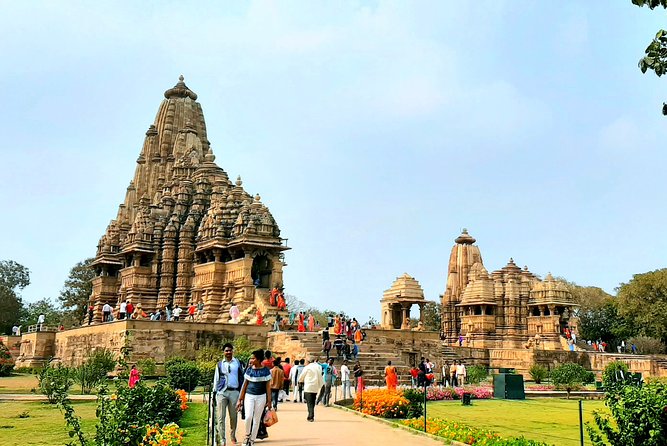
Khajuraho is famous for temples, yes. But what makes this kind of tour work is how you experience them. Instead of standing in one place and hoping the guide covers everything, you move—walking for the details, cycling when the route makes sense, and using a tuk-tuk to connect temple areas efficiently.
That movement matters because the temples aren’t all clustered like a single downtown block. You’ll get a guided rhythm: stop, look closely, then move to the next cluster. It’s especially good if you’re the type who likes to stay active on vacation and still come away with a deeper understanding.
The tour is also private, so you’re not squeezed into a one-size-fits-all schedule. Guides can adjust the order and focus based on what you want more of—big-name carvings, lesser-seen corners, Jain elements, or a more local village feel at the end.
One practical note: bicycle use is included, but it’s described as on request. If cycling is a key reason you booked, message ahead or ask right at the start so it’s lined up for you.
Starting at the Western Group Temples: UNESCO stars with less-stress viewing
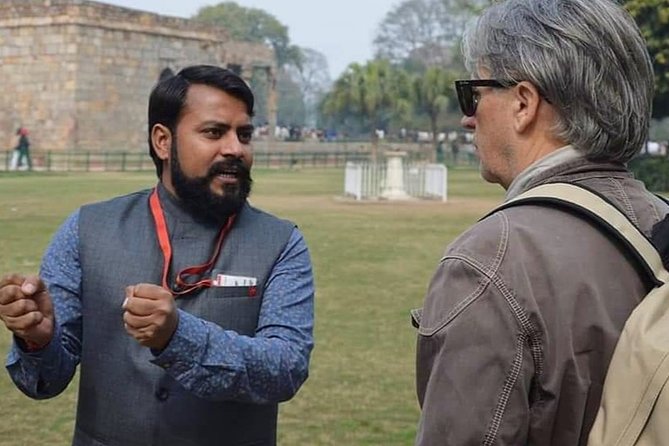
You begin right at the Western Group of Temples—the town’s main temple area with a cluster of 11 temples and UNESCO world heritage status. This is where most first-time Khajuraho visits want to be, but it can also be where you feel most rushed if you don’t have a guide.
Here’s what a good guide changes. The temples are full of figures and patterns—humans, animals, and symbolic scenes—and without context you can feel like you’re just looking at pretty stone. With a guide, you start seeing the logic: how the carvings relate to religion, society, and the worldview that shaped the artists.
The tour approach also helps you manage expectations about the famous erotic carvings. You’ll see them at the main temples, but you won’t just get a quick glance and move on. The best part is that you can ask questions as you go, and your guide can connect the carvings to the broader cultural message instead of treating them as shock value.
Practical tip: arrive ready to walk. Even with tuk-tuk and bicycle time, you’ll still cover ground on foot while you explore the temple cluster.
Matangeshwara Temple: your day gets a warm start
Before you spend most of your time at the main UNESCO zone, you visit Matangeshwara Temple. The plan frames it as a short opening stop—about 20 minutes—so it works like a warm-up before the big temple area.
This is a smart way to start, because it helps you shift from traveling mode into temple-observing mode. You get your bearings with a guided introduction, then you move on with better context. If you’ve ever felt overwhelmed at temple sites, this kind of first stop can reduce that stress.
Also, this stop is marked as admission ticket free in the schedule you’ll follow, which helps keep your day smoother on the cost side—though you should still assume there may be extra temple entrance costs later at the main complex.
Adinath Temple and Jain sites: a different lens on Khajuraho
Khajuraho often gets talked about in terms of one religious tradition, but the tour includes Jain temples through the visit to Adinath Temple. This is a key stop if you want to understand Khajuraho as a place where different beliefs shaped temple design and iconography.
At this stage, you’re not just bouncing between stone walls. The tour focuses on the Jain religious sites, including Adinath Temple, Shantinath Temple, and Parsvanath Temple. That matters because each site has its own emphasis, and a guide can explain what you’re seeing in a way that makes the carvings feel purposeful, not random.
You’ll also spend less time in one location than you might on a self-guided visit. That can be a plus: instead of zoning out, you’re fed a sequence of explanations tied to what you’re looking at right now.
Old village Khajuraho: the culture after the carvings
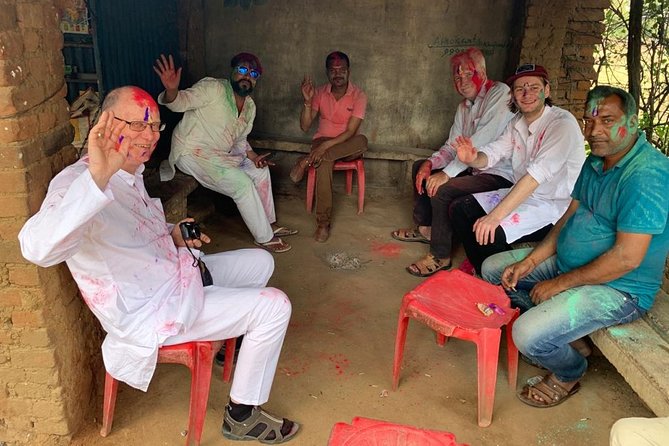
After temples, the tour shifts into something more grounded: time in the old village of Khajuraho. This is about exploring the older part of town and interacting with local people to understand day-to-day culture and lifestyle.
This is one of the smartest parts of the experience. Monuments are only half the story. The other half is how the town lives around them—what residents do, how they move through daily routines, and what the temple sites mean in a living community.
The schedule gives you around an hour here, which is enough time to ask questions without feeling like you’re getting dragged into unrelated detours. If you like honest conversations and small observations—how people talk about the town, how they describe their routines—this section can be the most memorable part of the day.
Bicycles, tuk-tuk, and making the route feel easy
This tour is designed for a mix of transport modes, and that’s part of its value. You’re not locked into one slow method. Instead, you can use a bicycle (included on request), walk for close viewing, and use a tuk-tuk to connect temple zones.
That blend is ideal for active travelers because it reduces the “stop-and-go frustration” that can happen on all-walking tours. It also helps you avoid the fatigue that can build when you’re trying to do Khajuraho temples quickly on your own.
If you’re traveling solo, the plan notes that a single-person tour can be offered on a motorbike. That’s not something every traveler will choose, but it’s good to know you’re not limited to one transport style.
Small practical advice: wear comfortable shoes. You’re spending real time outdoors and moving between sites, and temple floors are not always forgiving.
Price and timing: is it worth $51.06 per person?
At $51.06 per person, this tour sits in the “good value” category for private, guided temple time—especially because you also get bottled water and included use of a bicycle (on request), plus private transport by tuk-tuk.
However, here’s the math reality check. Temple entry fees are listed as extra: ₹600 per person. Lunch is also extra, and the schedule notes that some stops are shown as admission ticket free, while the overall temple entrance cost still applies. So your total will be a bit higher than the base price once you add tickets and any meal.
Timing is the other important factor. The tour runs in the morning window, with the schedule stating 7:30 AM to 12:00 PM. The total duration is about 3 to 5 hours, so you’re getting a focused hit of Khajuraho culture early in the day.
One more thing: the average booking time is about 25 days in advance. If you’re traveling in a busier season or want a specific language, it’s smart to book early.
Guides make or break temple tours, and this one aims for strong storytelling
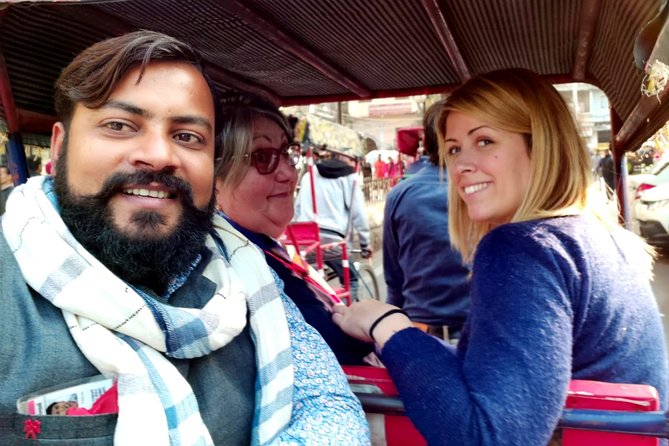
A big reason this tour earns such high scores is the guide approach. The experience is private, yes, but it’s also built around explanation—how the carvings connect to belief, how symbolism works, and how to look at stone with curiosity.
You’ll likely appreciate guides who:
- explain in clear English (with easy-to-follow storytelling)
- adapt to your schedule if you’re timing-sensitive
- offer flexibility if weather or pace changes mid-day
- can handle Spanish when you want the tour in another language (for example, Rajesh guided in Spanish)
Even small “extra mile” touches show up in the way guides support you beyond temple facts. One example from the guide style described is helping with a smooth hotel check-in step if your day needs coordination.
For you, the practical takeaway is simple: tell your guide what you care about most—main erotic carvings, Jain sites, or the old village—and ask questions as you go. With this format, you can get real answers instead of just collecting photos.
Who should book this and who might skip it
Book this if you:
- want a private guide with real explanation, not just a walk-through
- like being active and don’t want to feel stuck in one place all day
- care about seeing both major UNESCO highlights and quieter religious angles like Jain temples
- value a final segment that turns toward local life, not only monuments
You might consider a different style of tour if:
- you’re only interested in the absolute fastest photo route and hate paying additional entrance fees
- you’re not interested in bicycle time and want a purely vehicle-based itinerary
Should you book this private heritage and cultural tour in Khajuraho?
If you want your Khajuraho visit to feel guided, purposeful, and not rushed, this is a strong fit. The combination of Western Group temples, Jain stops at Adinath/Shantinath/Parsvanath, and a walk into the old village gives you a fuller picture than a one-track temple sprint.
Just go in with two expectations clear:
1) you’ll pay extra for temple entrance tickets (₹600 per person) and likely lunch if you add it, and
2) the best experience depends on morning timing in that 7:30 AM to 12:00 PM window and generally good weather.
If that matches your travel style, book it.
FAQ
How long is the private guided heritage and cultural tour in Khajuraho?
The tour lasts about 3 to 5 hours.
Is this tour private?
Yes. It’s a private tour, so only your group participates.
Is pickup offered?
Pickup is offered.
Are bicycles included?
Yes. Bicycle use is included for the tour, on request.
What about transport during the tour?
The tour includes private transport by tuk-tuk. For a single person, a motorbike option can be offered.
Are temple entrance fees included?
Temple entrance fees are not included. The listed temple entrance ticket cost is ₹600 per person.
Is lunch included?
Lunch is not included.
Where does the tour meet and end?
You start at the main entrance of the Western Group of Temples at Sevagram, Khajuraho (471606), and the tour ends back at the same meeting point.
What time does the tour run?
The opening hours are listed as Monday through Sunday, 7:30 AM to 12:00 PM.
What if there’s poor weather?
This experience requires good weather. If it’s canceled due to poor weather, you’ll be offered a different date or a full refund.