REVIEW · KHAJURAHO
Guided Private tour of Khajuraho World Heritage site over 2 days
Book on Viator →Operated by 5 Senses Walks · Bookable on Viator
Stone romance, in daylight, in two days. This private UNESCO Khajuraho temples tour stitches together Hindu and Jain stonework, including the famous erotic panels, plus a guide who helps you make sense of what you’re looking at. It’s a rare mix: big visual impact, and a plan that keeps the experience readable.
I love the pace and focus. Each temple visit is about 1 hour 30 minutes, so you get time to notice details instead of rushing through. I also love the practical setup: hotel pickup, a private car, admission tickets included, and a mobile ticket that keeps things simple.
One thing to consider: $400 per person is a premium for India, so it’s best if you value a private guide and don’t want to manage logistics on your own.
In This Review
- Key highlights from this 2-day Khajuraho temple circuit
- Khajuraho temples in plain sight: why this UNESCO visit feels different
- Day 1 in Khajuraho: Javari, Chausath Yogini, Kandariya Mahadev, Lakshmana
- Javari Temple: an early win with high placement and strong carving work
- Chausath Yogini Temple: 64 shrines and a central idol you can’t miss
- Kandariya Mahadev Temple: a major Chandela story in stone
- Lakshmana Temple: Vaikuntha’s three-headed, four-armed idol
- Day 2 in Khajuraho: Varaha, Dulhadev, Parshwanath Jain, Devi Jagdamba
- Varaha Temple: Vishnu as a boar, carved from head to body
- Dulhadev Temple: Shiva as a bridegroom on the Khodar River banks
- Bhagawan Parshwanath Digambar Jain Mandir: motifs that cover a world
- Devi Jagdamba Temple: Parvati under a pyramidal roof of imagination
- The Kamasutra-style carvings: how to look without turning it awkward
- Private car pickup and included admissions: why logistics matter at UNESCO sites
- Meet Anurag: why a strong guide turns stone into meaning
- Price and value at $400 per person
- Who this private Khajuraho tour suits best
- Should you book Five Senses Tours for Khajuraho
- FAQ
- FAQ
- What time does the tour start?
- Is pickup included?
- Is this a private tour?
- How long is the Khajuraho experience?
- What temples are included across the two days?
- Are admission tickets included?
- Do I get a mobile ticket?
- How much does it cost?
- Can I get a full refund if plans change?
Key highlights from this 2-day Khajuraho temple circuit
- A two-day route across Hindu and Jain UNESCO sights within the Khajuraho temple complex
- Long, temple-by-temple time blocks (about 1.5 hours each stop) so you can actually look at the carvings
- Chandela-era storytelling tied to specific monuments (including details about builders and eras mentioned in the tour descriptions)
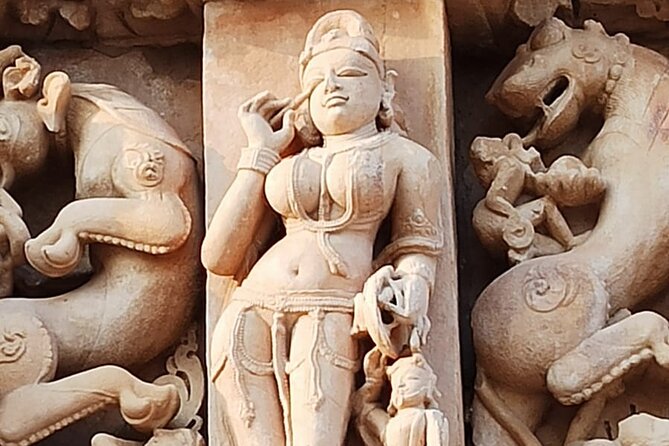
- The erotic Kamasutra-style sculptures explained with context, not just pointed at
- Pickup + private car to keep travel time from eating your temple time
- Admissions included at each stop, so you’re not surprised at the gates
Khajuraho temples in plain sight: why this UNESCO visit feels different
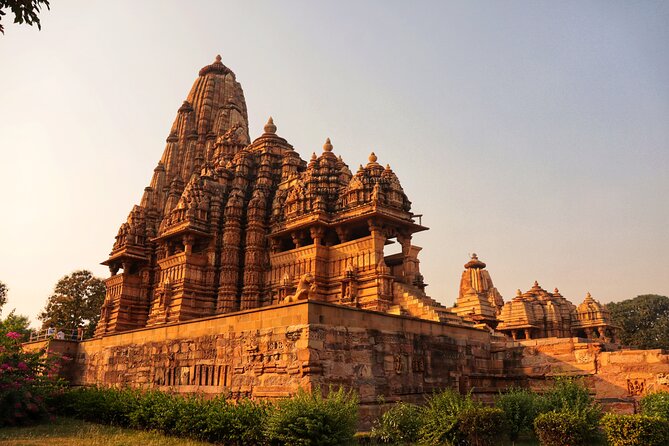
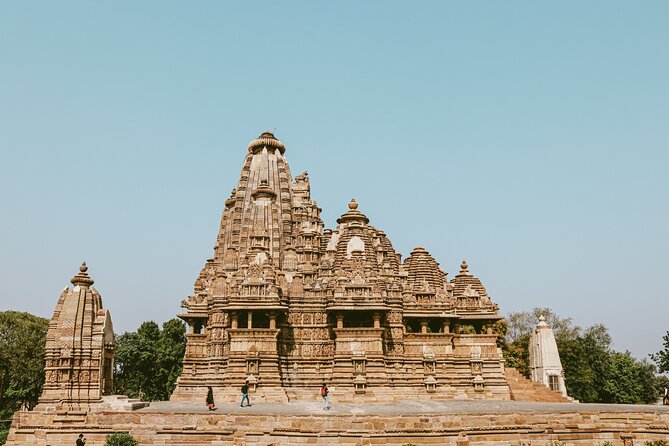
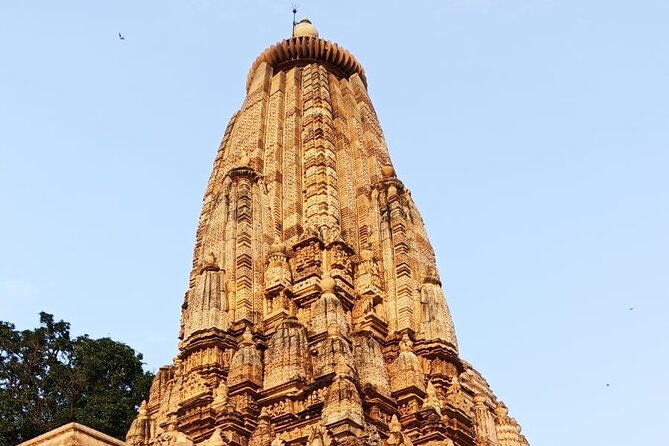
Khajuraho is famous for a reason. The temple complex, with 22 temples in the broader site, is a UNESCO World Heritage place—and the style is so distinctive that it sticks in your mind long after you’ve left. What makes this tour especially appealing is that it doesn’t treat the site like a photo stop.
You get a guided walk through major monuments that represent both Hindu and Jain traditions. And you spend enough time at each site that the carvings stop feeling like decoration and start feeling like communication—myth, ritual, daily life, and symbolism carved into stone.
You can also read our reviews of more tours and experiences in Khajuraho.
Day 1 in Khajuraho: Javari, Chausath Yogini, Kandariya Mahadev, Lakshmana
Day 1 is built for momentum. You start after breakfast, then move from one landmark to the next with admission included and about 1 hour 30 minutes per temple stop.
Javari Temple: an early win with high placement and strong carving work
Javari Temple is a great opener. It sits on a high pedestal, which gives you that immediate “this matters” feeling before you even step closer. The tour highlights both the artistic interiors and the exterior carvings, so you’re not stuck looking at just one side.
This is the type of stop where a guide matters. The difference between seeing carvings and understanding them is often the difference between a cool building and an unforgettable one.
Chausath Yogini Temple: 64 shrines and a central idol you can’t miss
Next comes Chausath Yogini Temple, named for 64 shrines—one for each yogini. The structure includes a central shrine that’s described as the largest, with a huge idol of Lord Sh… (the tour notes the idol is the standout at the center).
If you like temple design that’s intentionally “countable,” this is the stop for you. The layout pushes you to scan, compare, and notice how the shrine system repeats—then escalates at the middle.
Kandariya Mahadev Temple: a major Chandela story in stone
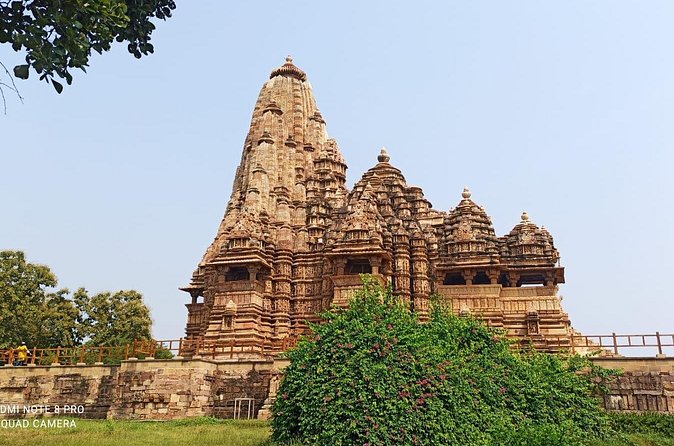
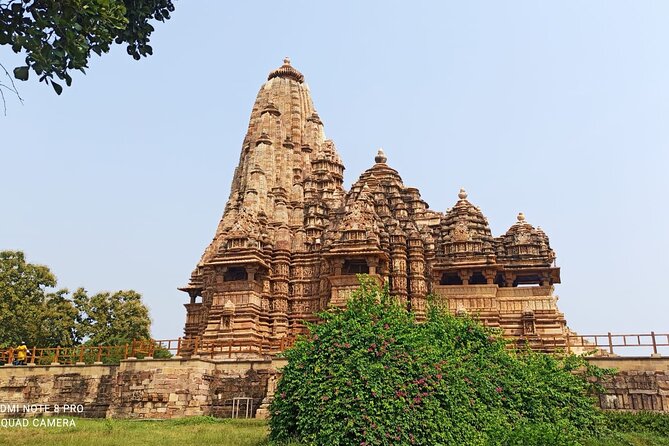
Kandariya Mahadev is where the tour shifts into big monument mode. The description places it in the early 11th century, built by Chandela King Vidyadhara, and it also references a time when Gazni Mahmud invaded and destroyed the region.
On the ground, this gives the building extra emotional weight. You’re not just looking at architecture; you’re looking at reconstruction, survival, and renewed artistry.
Lakshmana Temple: Vaikuntha’s three-headed, four-armed idol
Lakshmana Temple brings a highly specific focal point: the main idol is of Lord Vaikuntha, and the tour notes it has three heads and four arms. It also calls out the stone sculpture as a standout.
This is the kind of stop where you’ll likely want your guide to slow you down. When an idol has distinct features like that, it’s easy to miss them if you’re only half-looking. With the private format, you can spend time on the details that matter.
Day 2 in Khajuraho: Varaha, Dulhadev, Parshwanath Jain, Devi Jagdamba
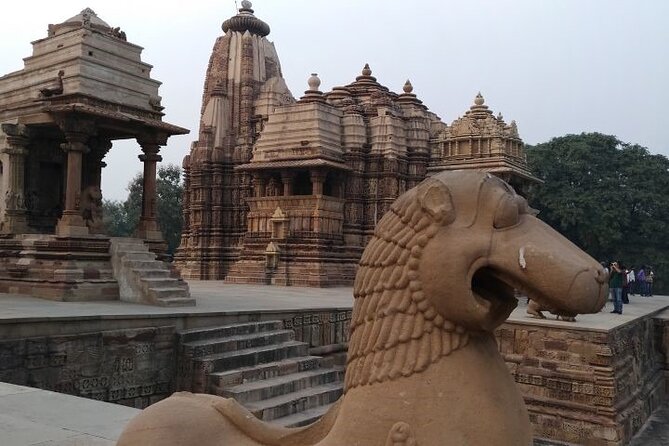
Day 2 keeps the momentum going, again with admission included and about 1 hour 30 minutes per stop. If Day 1 feels like you’re learning the temple language, Day 2 feels like you’re seeing how many dialects exist.
Varaha Temple: Vishnu as a boar, carved from head to body
Varaha is an incarnation of Lord Vishnu with a boar head on a human body and four arms. The tour description notes that the body is filled with carvings, so it’s another stop where you can’t just stare at the face—you’ll end up scanning the whole form.
It’s a good reminder that Khajuraho’s art often rewards patience. The “story” isn’t only in one panel; it’s in the way the entire figure is worked.
Dulhadev Temple: Shiva as a bridegroom on the Khodar River banks
Dulhadev Temple (linked to the idea of Shiva depicted as a bridegroom) is described with a wordplay connection: “dulha” becomes dhuladeo in the temple name. The tour notes it was the last temple built in the group, and it’s situated on the banks of the Khodar River.
Even if you’re not there for linguistic details, the concept matters. It gives the architecture a clear angle: this is Shiva shown through a particular mythic lens, not just another form.
Bhagawan Parshwanath Digambar Jain Mandir: motifs that cover a world
This is your Jain stop: a Digambar Jain Mandir built by Chandela ruler Dhanga in the early 10th century. The tour emphasizes the wall motifs—male and female figures, Gemini, trees and flowers, and water-related imagery like Ganga and Yamuna.
If you’re the type who likes variety in decoration, you’ll probably enjoy this. Jain temple art can feel different in tone from Hindu art, even when the craftsmanship is equally serious.
Devi Jagdamba Temple: Parvati under a pyramidal roof of imagination
Devi Jagdamba Temple houses a statue of Goddess Parvati, and the tour description calls out an intricately designed pyramidal roof. It also notes imaginative figures—like beasts—and myth-themed renditions.
This stop feels like a fitting close to the two-day arc. You’ve gone from temple systems and major Hindu icons to a Jain world of motifs, and then you finish with a Goddess temple that clearly leans into imagination and character.
The Kamasutra-style carvings: how to look without turning it awkward
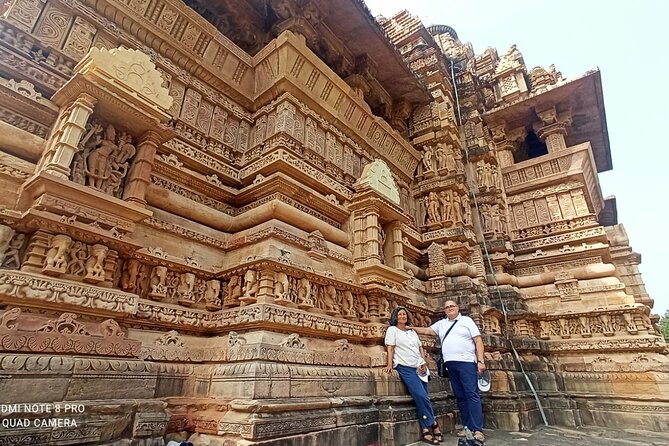
Khajuraho is famous for erotic sculptures, and this tour specifically aims to explain them as part of the broader art program. The tour overview frames it as Kamasutra-style imagery etched in stone—so you can expect the guide to bring context rather than leaving you to interpret everything yourself.
Here’s a practical way to approach it: treat the carvings like storytelling. Start with the figures and their poses, then look for repeated themes, surrounding figures, and how the carving sits in the overall temple space. When you view it as visual language—myth and symbolism—you get more out of it than if you only react to the subject matter.
Private car pickup and included admissions: why logistics matter at UNESCO sites
The big value of a private setup is time control. Start time is 9:00 am, and pickup is offered, so you aren’t guessing how to get from hotel to temple gates. The tour also includes a mobile ticket, which helps reduce friction when you’re juggling a tight two-day window.
Most importantly, admission tickets are included at each temple stop. For a site with multiple monuments, that matters. You’re paying once, then spending energy on the carvings instead of negotiating entrances.
Meet Anurag: why a strong guide turns stone into meaning
A consistent detail in the experience is the guide. In this tour, you’ll be with Anurag, and the descriptions of his approach focus on one key strength: turning intricate carvings into stories you can actually follow.
That sounds small, but it’s huge at Khajuraho. The difference between a frustrating visit and an enjoyable one is usually whether someone helps you connect shapes and symbols to something coherent—temple purpose, mythic references, and why specific scenes appear in certain places.
Add to that the driving and comfort piece. The tour includes a private car that’s described as clean and the driver as well mannered and safe. On long temple days, that kind of straightforward care makes it easier to stay focused on the monuments instead of distracted by getting around.
Price and value at $400 per person
Let’s talk value, not just price. At $400 per person for about two days, this is not a “cheap temples weekend.” But it isn’t just a taxi with a script either.
You’re paying for:
- Private guiding over multiple major monuments
- Hotel pickup and a private car
- Admissions included at each stop
- A mobile ticket system to streamline entry
- Group discounts (useful if your party is large enough)
You’re also paying for a company that explicitly positions itself around local livelihoods by employing local guides and supporting local businesses. That can matter to you if you prefer your tourism money to stay working locally, not floating around a marketing layer.
If your goal is to see Khajuraho with structure and explanation—and you want to avoid the stress of coordinating entry and timing yourself—this price can make sense.
Who this private Khajuraho tour suits best
This is a strong match if:
- You want a private guided experience rather than joining a bigger group
- You care about architecture and carvings and don’t want to rush
- You’re intrigued by the famous erotic sculpture tradition and want context
- You’d rather have a driver + guide handle the flow between monuments
If you’re the kind of person who wants complete freedom to wander without a schedule, this might feel more organized than you want. But if you like structure, this two-day build is one of the easiest ways to hit the major sites without feeling scattered.
Should you book Five Senses Tours for Khajuraho
I’d book it if you want Khajuraho to feel like a guided learning experience with serious time at each temple. The standout strengths are the temple-by-temple pacing, the included admissions, and the way the guide role (with Anurag) is set up to explain what you’re seeing—especially around the Kamasutra-style carvings.
It’s also a solid choice if you’re traveling with a party that can take advantage of group discounts, since the private format scales nicely when you’re splitting the total cost across people.
FAQ
FAQ
What time does the tour start?
The tour starts at 9:00 am.
Is pickup included?
Yes, pickup is offered.
Is this a private tour?
Yes. It’s a private tour/activity, and only your group participates.
How long is the Khajuraho experience?
It’s scheduled for 2 days (approx.).
What temples are included across the two days?
The tour includes Javari Temple, Chausath Yogini Temple, Kandariya Mahadev Temple, Lakshmana Temple, Varaha Temple, Dulhadev Temple, Bhagawan Parshwanath Digambar Jain Mandir, and Devi Jagdamba Temple.
Are admission tickets included?
Yes. Admission tickets are included for the temple visits listed.
Do I get a mobile ticket?
Yes. A mobile ticket is included.
How much does it cost?
The price is $400.00 per person.
Can I get a full refund if plans change?
You can cancel up to 3 days in advance for a full refund. If you cancel less than 3 days before the start time, the amount paid will not be refunded.