REVIEW · SEOUL
Seoul UNESCO Heritage Palace, Shrine, and More Tour
Book on Viator →Operated by I Love Seoul Tour · Bookable on Viator
UNESCO in one tight morning. This Seoul tour strings together Jongmyo Shrine and Changdeokgung Palace with guided time in Bukchon Hanok Village, all with air-conditioned minivan transport from central points. I also like the value: you get a local guide and admission tickets bundled for the big sights.
One trade-off: the pacing is fast. You’ll see a lot in about four hours, but you shouldn’t expect long, slow wandering in each complex.
In This Review
- Key Things to Know Before You Go
- Why This UNESCO Seoul Route Works in Half a Day
- Starting at Myeongdong: Minivan Comfort and a Clear Meeting Point
- Bukchon Hanok Village at the Bukchon Traditional Culture Center
- Jongmyo Shrine: Royal Ancestor Tablets and a Tuesday Swap
- Changdeokgung Palace Complex: The Rear Garden and Royal Design
- Cheongha Korea Ginseng Museum: Cultural Curiosity in a Short Stop
- Guide Quality Makes the Difference: Sam, Leo, Dragon, Jung, and Park
- How to Handle the Tight Timing and Still Enjoy It
- Who This Tour Is Best For (and Who Should Skip It)
- Should You Book This Seoul UNESCO Tour?
- FAQ
- What UNESCO sites are included in the tour?
- How long is the Seoul UNESCO heritage palace, shrine, and more tour?
- Where does the tour start and where do you get dropped off?
- Is hotel pickup included?
- What happens if Jongmyo or Changdeokgung is closed on your day?
- Are meals included?
Key Things to Know Before You Go
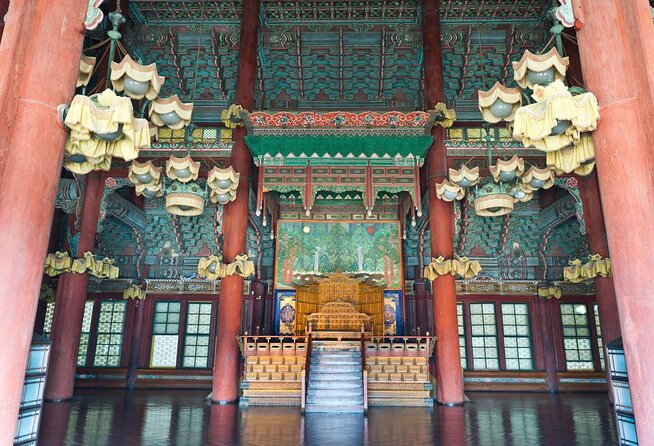
- Two UNESCO World Heritage stops: Jongmyo Shrine plus the Changdeokgung Palace complex
- Bukchon Hanok Village first, with Joseon-era homes and a guide to help you read the place
- Day-of-week plan changes: Jongmyo can shift to Insadong antiques on Tuesdays, and Changdeokgung can shift to Gyeongbokgung on Mondays
- Small-to-medium group size (max 40) for a smoother walk-through pace
- Cheongha Korea Ginseng Museum stop is quick (30 minutes) and admission is listed as free
Why This UNESCO Seoul Route Works in Half a Day
If you’re in Seoul for only a few days, this kind of tour solves a real problem: the UNESCO sites are meaningful, but they’re also spread out enough that self-planning can eat your time. Here, you get a tight loop that connects traditional neighborhoods (Bukchon) with royal heritage (Jongmyo and Changdeokgung). And because it’s structured, you don’t waste the first hour figuring out where to start or how long each place takes.
Price-wise, $34.00 is pretty sensible for what’s included. You’re paying for more than “a guide with a bus ticket.” The tour lists a local guide and air-conditioned minivan transport, and it includes admission tickets for Bukchon Traditional Culture Center, Jongmyo Shrine, and Changdeokgung Palace. The final stop, the Cheongha Korea Ginseng Museum, is listed as free admission. That mix usually makes this cheaper than piecing it together on your own, especially if you value not dealing with ticket lines and logistics.
You can also read our reviews of more tours and experiences in Seoul.
Starting at Myeongdong: Minivan Comfort and a Clear Meeting Point
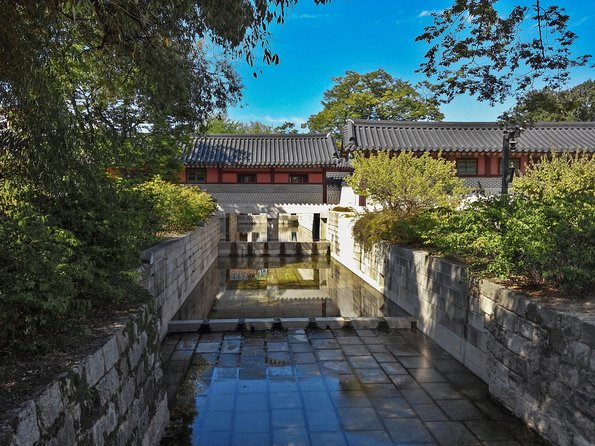
This tour starts at 8:30 am near Myeongdong Station Exit 1061-7 (Chungmuro 2(i)-ga, Jung District). You end back in the Myeongdong area, so it’s convenient if you’re planning lunch right after.
Pickup works like this: hotel pickup is only for centrally located Seoul hotels. If your lodging is tucked behind alleys, the guide meets you in front of the nearest central hotel or at a nearby subway station. That’s a practical approach because it avoids long, slow detours for buses and minivans.
Also note the group size: the cap is 40 travelers. That’s not “private tour” small, but it’s small enough that you should still be able to ask questions and stay aware of where your group is headed.
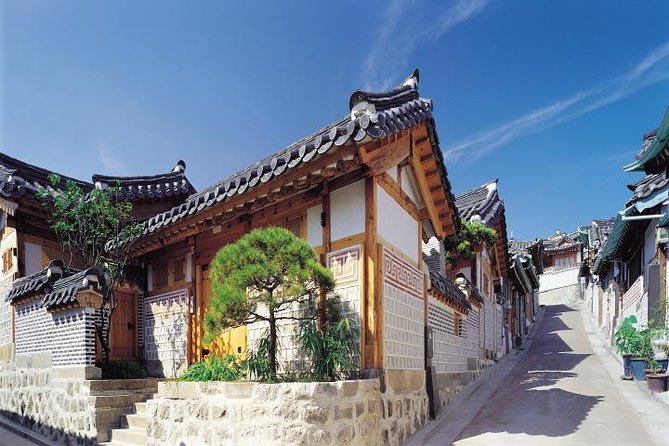
Bukchon Hanok Village at the Bukchon Traditional Culture Center
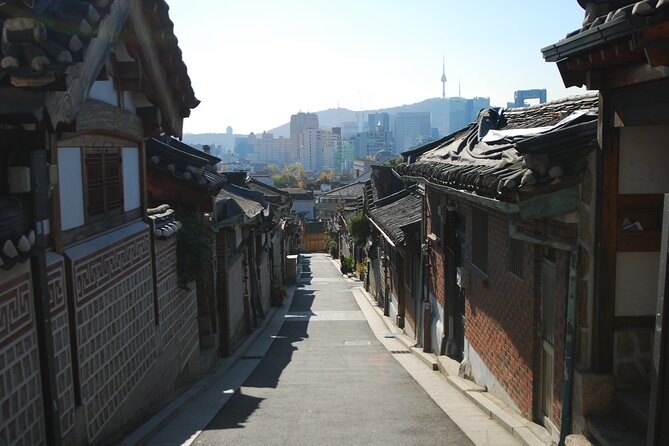
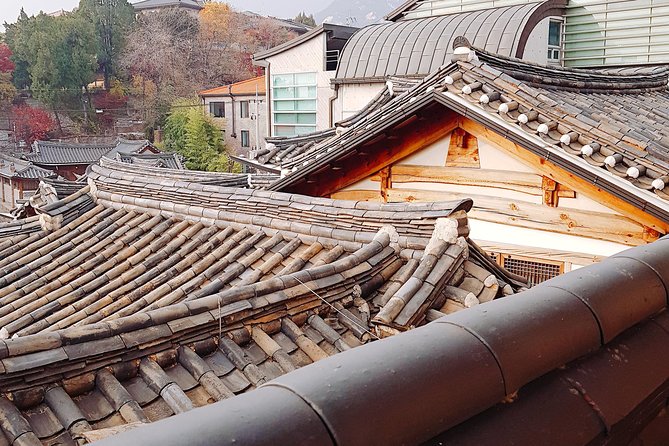
The day kicks off at the Bukchon Traditional Culture Center, with about 40 minutes there. Bukchon is often described as a street museum inside the city core, because the neighborhood still shows how traditional hanok homes relate to each other and to the surrounding streets. With a guide, you’re not just looking at pretty roofs—you’re learning how these homes were designed to fit Korean living, community patterns, and the visual identity of the Joseon era.
You’ll be walking restored and traditional structures, and you’ll have time to get your bearings before moving on to the royal sites. That matters because Bukchon is the “context stop.” By the time you reach Jongmyo and Changdeokgung, Korea’s heritage theme clicks faster.
One day-specific detail to remember: on Sundays, the tour notes that it may swap in Namsangol Hanok Village instead. If you’re traveling on a Sunday, don’t assume it’s the exact same hanok location every time—use the guide’s timing plan as your cue.
Jongmyo Shrine: Royal Ancestor Tablets and a Tuesday Swap
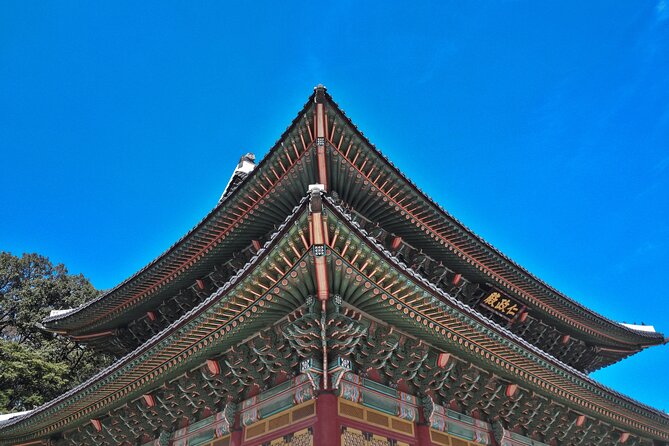
Next is Jongmyo Shrine, also about 40 minutes, with admission included. Jongmyo is famous for the ancestral tablets of the kings and queens of the Joseon Dynasty being enshrined there. It’s tied to the long tradition of the Jongmyo Memorial Service, which has been held for centuries since the dynasty’s establishment.
What makes this stop work for most people is that it’s not just “a shrine building.” With the right explanation, you start understanding why ancestor rituals mattered so much in Joseon governance and daily values. The guide’s job here is to help you connect the physical space to the idea behind it: respect, continuity, and legitimacy.
Here’s the practical wrinkle: Jongmyo Royal Shrine is closed on Tuesdays. When that happens, the tour replaces it with an Insadong Antique shop alley visit. That’s a smart backup because it keeps you in the same cultural orbit (craft, tradition, old-school Seoul browsing) even when the main site is shut.
Changdeokgung Palace Complex: The Rear Garden and Royal Design
The biggest time block is Changdeokgung Palace, with about 1 hour. Admission is included, and this is the stop where many people feel the “UNESCO wow” most clearly.
The palace complex is described as having different zones: a public palace area, royal family residence buildings, and the rear garden. That layout matters. If you only walk the front gates quickly, you miss how the palace functioned as both a formal setting and a private retreat.
The rear garden gets special attention in the tour description: there’s a gigantic tree over 300 years old, plus a small pond and a pavilion. If you like gardens that feel planned but also lived-in, this part is where you usually slow down (even if the overall schedule is tight). It helps that the palace grounds are well-maintained and that the walking routes are built for visitors.
Day-of-week contingency: Changdeokgung is closed on Mondays. If you’re on a Monday tour date, you’ll visit Gyeongbokgung Palace instead. The key point is that your itinerary still keeps you in the royal palace story, even if the specific palace changes.
One more heads-up: some site areas may be under renovation depending on timing. Even when parts are closed off, the guide can still help you focus on the core elements that are open and important.

Cheongha Korea Ginseng Museum: Cultural Curiosity in a Short Stop
The last stop is Cheongha Korea Ginseng Museum, about 30 minutes, with free admission listed. This is the least “palace and shrine” part of the itinerary, but it does connect to a major thread in Korean culture: medicinal plants and herbal knowledge.
The tour information notes that Korean ginseng is discussed as an adaptogenic plant, and it references how ginseng was mentioned in older Chinese texts as a herb used widely across the region. In practice, what you’ll likely get here is a quick intro to how ginseng is viewed and marketed in Korea.
Now, a balanced reality check: this is also the stop that can feel like a hard sell for some people. If you’re sensitive to sales pressure, treat this as a short educational break, not a shopping requirement. If you’re simply curious, you can enjoy it for the cultural angle and then move on with your day.
Guide Quality Makes the Difference: Sam, Leo, Dragon, Jung, and Park
A lot of Seoul tours are “check the box.” This one is more successful when the guide does the connecting work—turning architecture and ritual into something you can remember.
The review examples highlight several guides by name, including Sam, Leo, Dragon, Jung, and Park. Common praise across those guides focuses on friendliness, enthusiasm, and clear explanations of Jongmyo and the Joseon kings behind it. There’s also a practical angle: guides help you take photos and keep you on track, which is useful when you’re moving through sites with timed windows.
One specific helpful moment from the tour experience: there can be restricted access at Bukchon, and the guide needs to rearrange timing to keep the day moving. That flexibility is exactly what you want on a group tour. Also, since some palace/shrine areas may be under renovation, an attentive guide helps you shift your focus to what’s open and meaningful rather than feeling like the whole visit was wasted.
How to Handle the Tight Timing and Still Enjoy It
With a 4-hour structure, you’ll enjoy this tour most if you plan your expectations. It’s designed to cover major highlights efficiently, not to let you linger for long in any one courtyard.
Here’s what helps:
- Wear shoes you can walk in comfortably. The tour involves multiple sites and moving between neighborhoods.
- Bring a small water bottle if you tolerate carrying one. Meals aren’t included, so you’ll likely want a snack option after you finish near Myeongdong.
- When you learn something at Jongmyo or Changdeokgung, ask one follow-up question. Guides are most effective when you turn their stories into your own understanding.
- If your top priority is slow garden time, keep your pace flexible at Changdeokgung. The rear garden is the best place to try to linger, even if only by a few minutes.
Who This Tour Is Best For (and Who Should Skip It)
This tour is a good fit if you:
- Want UNESCO Seoul highlights without building a complex itinerary
- Prefer a guide to explain what you’re seeing at Jongmyo and Changdeokgung
- Like a morning plan that ends with easy access to lunch and shopping in Myeongdong
- Are okay with structured timing and short stops at each location
It’s less ideal if you:
- Want a slow, photo-by-photo roaming pace at each site
- Hate any hint of a sales-heavy visit, because the ginseng museum stop can feel that way for some people
- Are hoping the tour will always avoid renovation closures; parts of sites can be under repair
Should You Book This Seoul UNESCO Tour?
I’d book it if you value efficiency plus explanation. For $34, you’re getting guided time at two major UNESCO sites, plus a hanok context stop that helps the royal heritage land better. The minivan setup and the central meeting point reduce stress, and the day-of-week substitutions keep you from feeling stuck when a shrine or palace is closed.
If you’re booking for the calmest, most unhurried experience, choose your expectations carefully. This is a highlights-and-stories tour, not a long-form wander.
FAQ
What UNESCO sites are included in the tour?
The tour includes Jongmyo Shrine and the Changdeokgung Palace complex.
How long is the Seoul UNESCO heritage palace, shrine, and more tour?
The duration is about 4 hours.
Where does the tour start and where do you get dropped off?
It starts at Myeongdong Station Exit 1061-7 and ends with drop-off in the Myeong-dong area.
Is hotel pickup included?
Hotel pickup is only available for centrally located Seoul hotels. If your hotel is not central, the guide will meet you in front of the nearest central hotel or at the nearest subway station.
What happens if Jongmyo or Changdeokgung is closed on your day?
If Jongmyo Royal Shrine is closed on Tuesday, the tour visits Insadong Antique shop alley instead. If Changdeokgung Palace is closed on Monday, the tour visits Gyeongbokgung Palace instead.
Are meals included?
No. Meals or drinks are not included.