REVIEW · NUR SULTAN
Private History Tour in the City of Kazakhstan
Book on Viator →Operated by TravelWithUs · Bookable on Viator
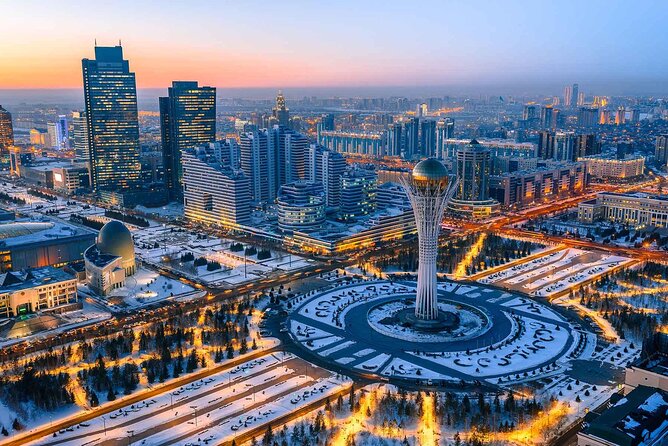
Bayterek Tower hits you fast, then history keeps stacking. I love the private, guide-led pacing that makes the big monuments feel human, and I love that the route shows Kazakhstan’s switch from nomadic past to digital present without turning into a boring lecture. One thing to think about: this is a brisk 3-hour sweep, so you may want extra time later if a site really grabs you.
You’ll start right at the capital’s modern symbol and move through squares, palaces, museums, and religious landmarks that explain how Nur-Sultan grew. The tour includes entrance fees at major stops and bottled water, but you’ll typically need extra money if you want the Kazakh meal stop.
If your plan is to get your bearings quickly in Astana/Nur-Sultan and understand why the city looks the way it does, this is a strong fit. If you want slow travel, long museum time, or heavy detail at every building, you may find the timing a bit tight.
In This Review
- Key highlights
- Bayterek Tower: making a wish in Nur-Sultan’s main symbol
- Khan Shatyr and the Foster-style future
- Photo time at theater facades
- Independence Square and Kazak Eli: 1991 made into a monument
- The pyramid-shaped Palace of Peace and Reconciliation
- The National Museum’s iceberg design
- Hazret Sultan Mosque: the dome focus
- Triumphal Arch: prosperity and a 20-year marker
- Museum of the Energy of the Future: eight levels of alternate power
- Astana Grand Mosque: newest scale of worship in Central Asia
- Saksaul: Kazakh cuisine stop you can add on
- What you’re really buying for $100 per person
- Guide quality: where the tour turns from facts into meaning
- Logistics you can plan around
- Who should book this tour (and who should not)
- Should you book this private history tour?
- FAQ
- What is the duration of the tour?
- Where does the tour start?
- Is pickup offered?
- How much does the tour cost?
- What language will the guide speak?
- Are entrance fees included?
- Do I need to pay extra for food?
- Can I spend time inside Khan Shatyr?
- What if the weather is bad?
- Can I cancel for a full refund?
Key highlights
- Bayterek Tower: go inside and make a wish by the First President’s handprint
- Khan Shatyr: Norman Foster’s tent-like giant, with up to 30 minutes inside if you request it
- Independence Square to the 1991 monument: symbols, measurements, and state storytelling in plain sight
- Museum stops with big concepts: the National Museum’s iceberg form and the Energy of the Future with 8 levels
- Astana Grand Mosque: newest major mosque, opened August 2022, with modern building solutions
- Optional Kazakh food at Saksaul: great chance to try classic dishes, but not included in price
Bayterek Tower: making a wish in Nur-Sultan’s main symbol
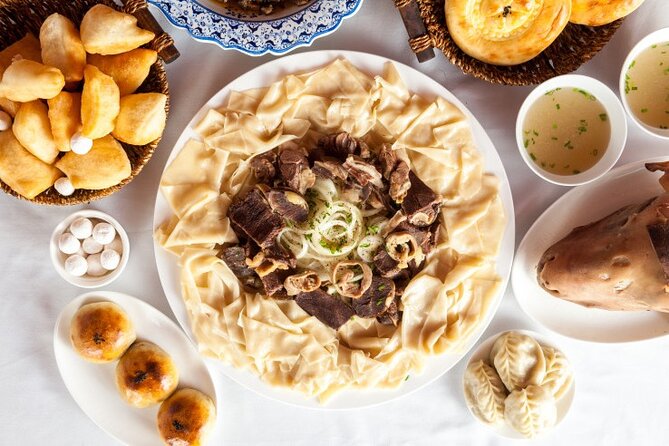
The tour starts at Bayterek Tower, the city’s headline monument and a legend machine. Your guide leads you inside, where you can see the handprint connected to First President N. Nazarbayev. The story goes that you should make a wish there, and the experience leans into that cultural meaning. It’s not just a photo stop; it’s a quick orientation to how Nur-Sultan frames national identity.
Time is about 30 minutes and admission is included, so you’re not left juggling tickets while the group waits. Practical tip: if you’re keen on photos, stand where you can capture both the structure and the interior details, then switch angles once you’ve seen the handprint area.
You can also read our reviews of more tours and experiences in Nur Sultan.

Khan Shatyr and the Foster-style future
Next comes Khan Shatyr, often described as the biggest Shatyr in the world, designed by British architect Norman Foster. This stop is where the tour starts feeling like “capital city” in the most literal way: futuristic design, big scale, and a sense of planned modern life.
You can spend up to 30 minutes inside the venue upon request. That flexibility matters. If you like architecture and want to walk around a bit, you get that. If you’d rather keep moving and save time for the mosques and museums, you can skip the indoor time without derailing the schedule.
Photo time at theater facades
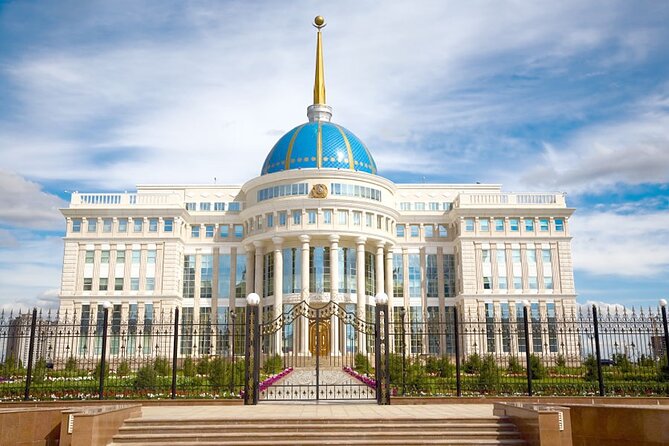
After Khan Shatyr, you’ll hit a theater area known for striking facades. The exact time depends on what you want and where your guide wants to place the photos in the flow. This part is light on facts and heavy on visuals, which is a good breather in the middle of a packed morning/afternoon.
If photography is your thing, this is where you can slow down for a minute and shoot from a few angles. If you’re not into it, stay close to your guide and you’ll still keep the tour moving.
Independence Square and Kazak Eli: 1991 made into a monument
Then you shift into the “state symbolism” zone at Independence Square and the Kazak Eli monument. This is dedicated to Kazakhstan’s independence and freedom and sovereignty. The monument’s height is 91 meters, tied to the year of independence: 1991. Even if you don’t care about monument math, the scale helps you feel how seriously the capital turns key dates into physical landmarks.
You’ll also see the Palace of Independence, described as the main place for holding official government meetings, forums, and conferences. This stop isn’t built for long lingering—plan on about 15 minutes—and admission isn’t included here.
A practical consideration: because this area is tightly scheduled, I suggest you use that time to read the main visual cues (numbers, shapes, placement) rather than trying to do everything at once.
The pyramid-shaped Palace of Peace and Reconciliation
The tour continues to the Palace of Peace and Reconciliation, built prior to the first Congress of the Leaders of World Religions and Traditions in 2006. It’s also known as the Pyramid due to its shape.
This stop works best when you treat it like an idea in architecture form: Kazakhstan projecting a message of dialogue and religious coexistence. You might not spend ages here, but it’s one of those places where the building shape does part of the explanation.
The National Museum’s iceberg design
Next is the National Museum of the Republic of Kazakhstan, described as the biggest museum in Central Asia. It opened in 2014 and has an iceberg-like design shape.
The museum is presented as covering Kazakh history, culture, and traditions from ancient to modern times. That’s a big promise, and you should know that a 3-hour tour doesn’t let you read everything on site. Still, it’s a useful stop because the building itself tells you what the city wants you to remember: Kazakhstan is looking backward and forward at the same time.
If you’re the type who loves to go inside museums at your own speed, you’ll probably want a longer return visit. But as part of this tour, it gives you context for what you’re seeing around the city.
Hazret Sultan Mosque: the dome focus
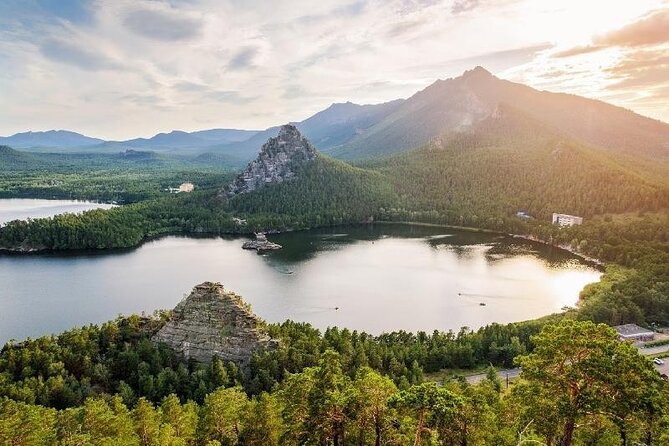
You’ll also see Hazret Sultan Mosque, constructed at the initiative of the First President and dedicated to Khoja Ahmed Yasawi, described as a philosopher and religious enlightener known as the Holy Sultan. The big deal here is the dome—listed as the biggest dome in the world.
Because the tour data doesn’t specify admission time for every religious site, I’d treat this stop primarily as viewing and orientation unless your guide tells you otherwise. Even if you don’t go inside, the scale is the point. This is architecture doing cultural messaging without needing a script.
Triumphal Arch: prosperity and a 20-year marker
The route then includes Triumphal Arch, described as a symbol of prosperity and endless aspiration to a bright future. It’s dedicated to the 20th anniversary of Kazakhstan’s independence.
This kind of monument is useful when you’re trying to understand how Kazakhstan marks time: not just by dates, but by building forms you can walk under or in front of. It also helps you connect earlier independence symbolism to the newer, more future-looking capital vibe.
Museum of the Energy of the Future: eight levels of alternate power
One of the most fun stops on the route is the Museum of the Energy of the Future. It was established in 2017 and served as Kazakhstan’s pavilion at Astana EXPO 2017. The museum is described as having 8 levels, each representing alternative energy sources such as kinetic, water, green, and wind.
This is where the “past, present, and future coexist” idea becomes tangible. You’re standing in a place built to talk about tomorrow, right in the middle of a city that also carries heavy symbols of statehood and tradition. It’s a rare pairing, and it makes the tour feel like more than a photo walk.
Astana Grand Mosque: newest scale of worship in Central Asia
The tour ends with Astana Grand Mosque, opened in August 2022. The information highlights it as the most spacious mosque in Central Asia, with the largest dome, using modern solutions in construction. Admission is included at this stop, and you’ll have about 20 minutes.
This is also the kind of stop where your guide can help you notice what makes it “modern” beyond just size—materials, layout, and how the building is designed to function. If religion isn’t your personal focus, it’s still worth it for the sheer scale and the way it fits into Nur-Sultan’s modern identity.
Saksaul: Kazakh cuisine stop you can add on
The final part is Saksaul, with the option for lunch or dinner and Kazakh dishes, snacks, and drinks. This is 1 hour 30 minutes, but it’s not included in the tour price. Think of it as the payoff block: after monuments and museums, you get to taste the everyday culture.
If you do add it, pick dishes that sound unfamiliar. Kazakh cuisine reflects the nomadic lifestyle in how food is made and served, and that’s part of what this tour is trying to show you—how “culture” isn’t just art and architecture.
A practical note: since meals are extra, consider your budget before you arrive.
What you’re really buying for $100 per person
At $100 per person for about 3 hours, this tour is priced like a private experience with real access, not a bus-and-hope situation. You get private transportation, bottled water, a professional English/Russian speaking guide, and entrance fees (with the one clear exception called out at Independence Square). That matters because entrance costs at major sites can add up fast when you’re doing it on your own.
You’re also paying for time efficiency. This itinerary hits the major symbols and museums in one run, with enough context to connect them. It’s especially good for first-timers who want the big picture without getting lost.
The one caution: if you expect slow, deep museum time at multiple indoor exhibits, the 3-hour window may feel short. In that case, treat this as the “orientation tour,” then plan a second visit later to the one place you can’t stop thinking about.
Guide quality: where the tour turns from facts into meaning
This kind of tour lives or dies by the guide. The format is built for conversation between stops, and it’s where you’ll hear interpretations that you won’t find on a roadside sign.
For example, I’ve seen guides like Didara described as young and Muslim, with a strong grasp of Kazakhstan’s story across centuries. That kind of guide can help you connect the dots between the monuments, religious sites, and futuristic museum themes—turning “what is this building?” into “why does this matter to the country?”
If you want a tour that feels like a helpful local chat plus planned sightseeing, this one fits.
Logistics you can plan around
This is a private tour/activity, so only your group participates. Pickup is offered, which is a big comfort factor in a city where timing matters. The tour operates during a defined window (10/29/2021–06/17/2026), and Monday hours run from 10:00 AM to 9:00 PM.
Good weather is required. If it rains or conditions are bad, the experience may be offered on another date or refunded. That’s important in a city where a chunk of the tour includes outdoor monuments and exterior viewing.
Who should book this tour (and who should not)
This is best for you if:
- You want a first-time Nur-Sultan orientation with context and major sights
- You like architecture and symbols, not just ticket counters
- You’d rather have a guide connect history and modern life than read it alone
- You’re open to a fairly tight schedule
You might skip or adjust if:
- You want long stays inside multiple museums
- You’re sensitive to walking and quick transitions
- You mainly want one site (like only the biggest mosque) and nothing else
Should you book this private history tour?
Yes, if you want the city’s story in one compact run—from Bayterek’s legend, to independence symbolism, to futuristic energy thinking, and finishing at Astana Grand Mosque. The value comes from private transport, a real guide, and included access at key sites, so you’re not spending your energy on logistics.
My decision rule: book it if you’re prioritizing context and efficiency. If you’re only interested in one or two buildings, you’ll probably get better value by picking those stops and exploring at your own speed.
FAQ
What is the duration of the tour?
It runs about 3 hours (approx.).
Where does the tour start?
It starts at Bayterek Tower, described as the capital’s main symbol.
Is pickup offered?
Yes, pickup is offered.
How much does the tour cost?
The price is $100.00 per person.
What language will the guide speak?
The guide is available in professional English/Russian.
Are entrance fees included?
Yes, entrance fees are included. Independence Square specifically notes that an admission ticket is not included.
Do I need to pay extra for food?
Kazakh cuisine at Saksaul (lunch or dinner) is not included and may be available for extra payment.
Can I spend time inside Khan Shatyr?
You may spend up to 30 minutes inside Khan Shatyr upon request.
What if the weather is bad?
The experience requires good weather. If it’s canceled due to poor weather, you’ll be offered a different date or a full refund.
Can I cancel for a full refund?
Yes. You can cancel up to 24 hours in advance for a full refund. If you cancel less than 24 hours before the start time, the amount paid is not refunded.