REVIEW · YOGYAKARTA
Yogyakarta : Colonial Heritage Guide Walking Tour
Book on GetYourGuide →Operated by YKExplore · Bookable on GetYourGuide
Colonial Yogyakarta clicks when you walk it. This 2-hour guided route connects major sights from Tugu Jogja to Titik Nol Kilometer Zero with a story built around Dutch rule and Indonesian viewpoints from 1811–1949. You’ll hear how the same streets that look ordinary today carried political power, propaganda, resistance, and daily survival.
I really like two things: first, the way the guide turns famous buildings into a clear timeline of colonial governance and independence. Second, the storytelling stays practical—some guides even share real-world tips like how to handle busy street crossings—so you finish the walk feeling more confident in the city, not just informed.
One consideration: this is a walking tour and it’s not suitable for people with mobility impairments. Also, food isn’t included, so plan a snack or meal around it.
In This Review
- Key highlights you’ll actually feel
- Walking From Tugu Jogja to Titik Nol: A Colonial Story on Concrete
- Tugu’s Unity, Press Freedom, and the Media That Helped Shape Independence
- Hotels, Monuments, and “Whose Comfort Was It?”
- Ketandan and Pasar Beringharjo: Multicultural Life Under Unequal Rules
- The Ngejaman Clock, Religion, and Benteng Vredeburg’s Heavy Meaning
- Government Buildings, Dutch Residences, and the City’s Power Map
- 1949’s Reoccupation and Why the Tour Ends at a Church
- Guides, Pace, and Real Value for $18
- Should You Book This Colonial Heritage Tour?
- FAQ
- How long is the Yogyakarta Colonial Heritage Guide Walking Tour?
- Where does the tour start and where does it finish?
- What’s included in the price?
- Do I need tickets for the places on the route?
- Is food included on this tour?
- Is this tour suitable for people with mobility impairments?
Key highlights you’ll actually feel
- A guided timeline for 1811–1949: Dutch colonial influence and the independence struggle, placed in order so it’s easier to remember.
- Local narratives alongside colonial-era facts: you’ll hear different interpretations, not just one side.
- Iconic stops with clear “why it matters” explanations: from forts to banks to churches.
- Tugu Jogja to Kilometer Zero: the walk follows the city’s historical spine, not random detours.
- English-speaking guide + water: makes it easy to focus on the stories without scrambling for basics.
- No ticket-line hassle at stops where it applies: “skip the ticket line” is built in.
Walking From Tugu Jogja to Titik Nol: A Colonial Story on Concrete
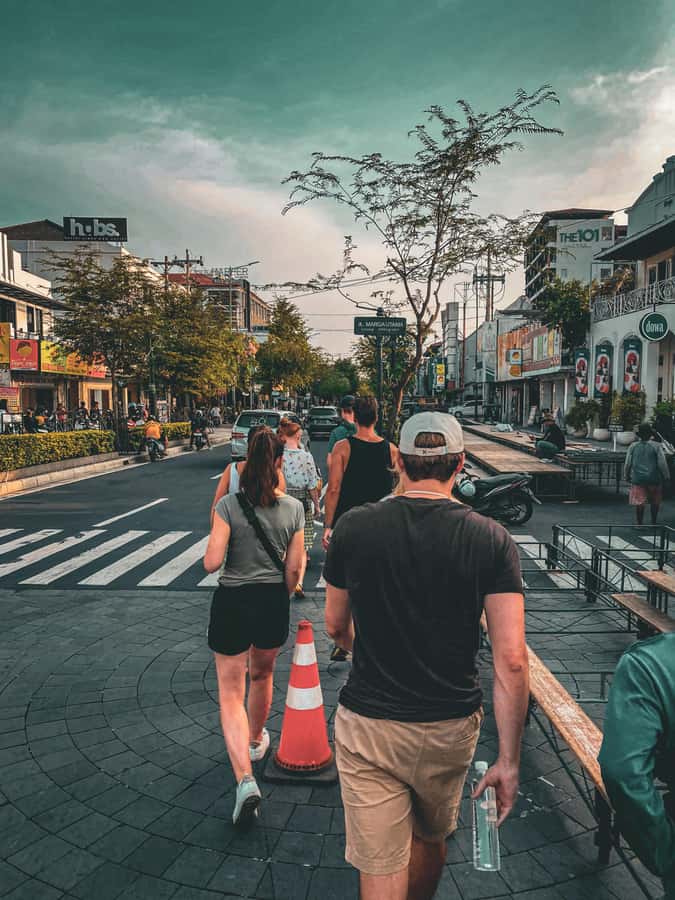
Yogyakarta has a way of making history feel close. Instead of museum-only learning, this tour uses streets as your timeline—starting at the Tugu monument and finishing at Titik Nol (Kilometer Zero). That flow matters because colonial power wasn’t just laws in distant offices; it shaped how people moved, worked, reported news, and worshipped.
The tour is designed around a specific period: 1811–1949. That timeframe is important because it covers big shifts—Dutch control phases, local political dynamics, and the struggle to reclaim sovereignty—so the story doesn’t get stuck on one “era costume.” You’ll leave with a sense of cause and effect, not just a list of sites.
Because the guide includes both Indonesian perspective and broader framing, you may hear accounts that don’t always match what you’ll find elsewhere. Treat that as part of the experience: history here isn’t one single script.
You can also read our reviews of more tours and experiences in Yogyakarta.
Tugu’s Unity, Press Freedom, and the Media That Helped Shape Independence
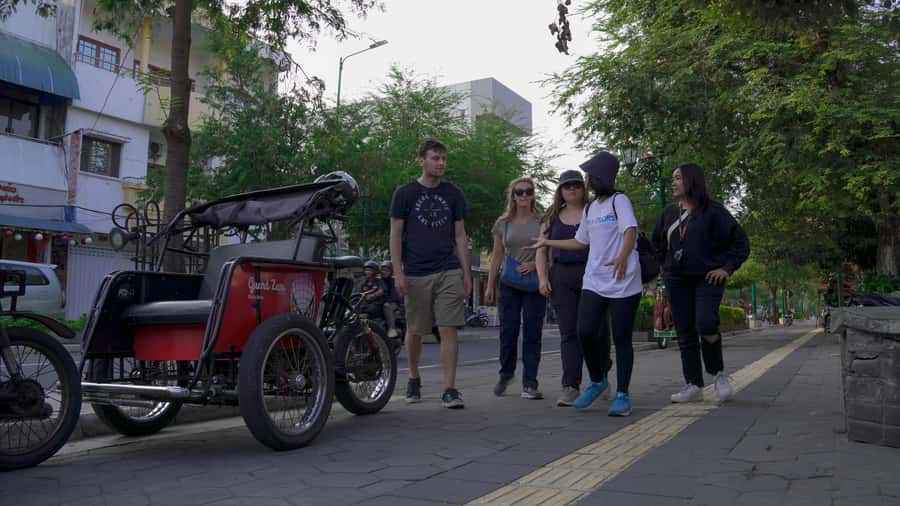
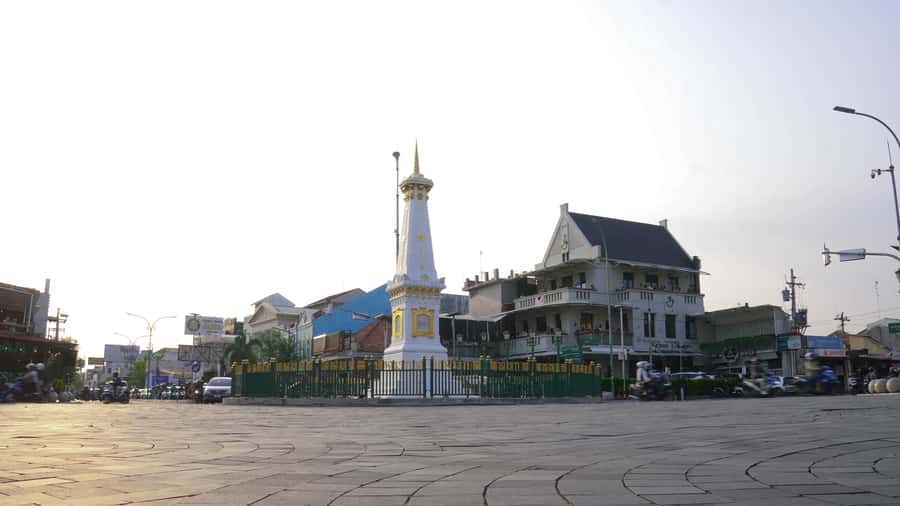
The tour kicks off at Tugu, a monument tied to Sultan Hamengkubuwono I. From an Indonesian perspective, it represents unity and resilience connected to the city’s early foundation. Even if you’ve never studied Yogyakarta before, this starting point helps you understand why later colonial buildings feel so heavy—you’re seeing the contrast between symbolic authority and foreign control.
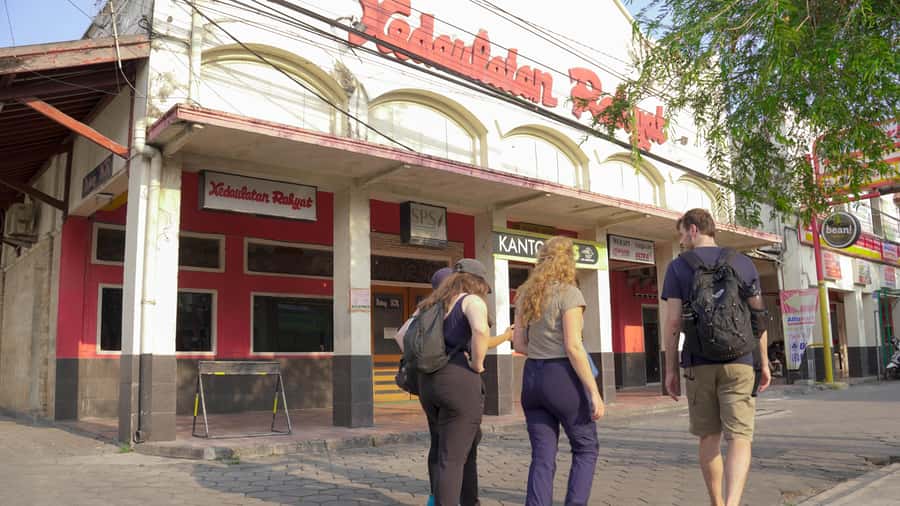
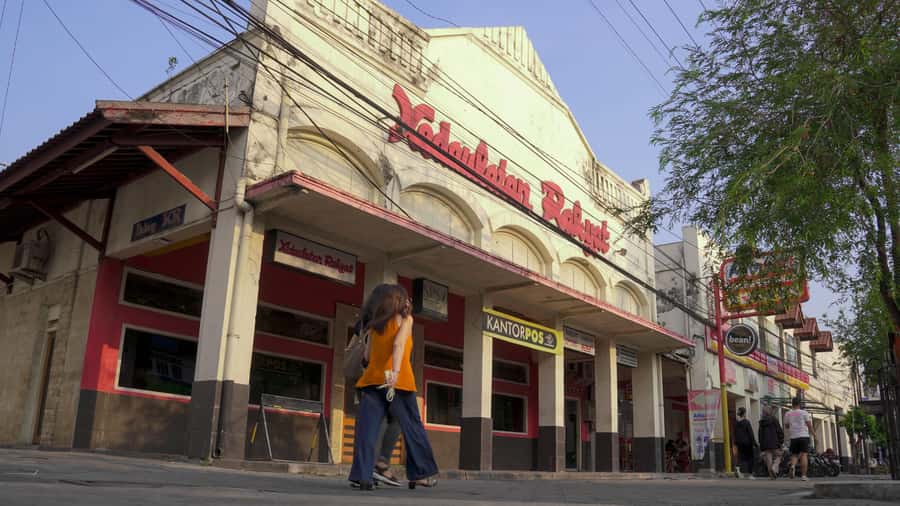
As you walk along Jalan Mangkubumi, you pass Kantor Kedaulatan Rakyat—a site where the press once fought for freedom. I love stops like this because they remind you that independence movements weren’t only battles; they were also arguments, reporting, and public pressure. If you tend to think of “history” as uniforms and dates, this angle gives you a more complete picture.
You’ll also get a strong sense of what the Dutch period looked like at street level: luxury and administration on one side, real limits on everyday life on the other. That contrast keeps the tour from becoming too abstract.
Hotels, Monuments, and “Whose Comfort Was It?”
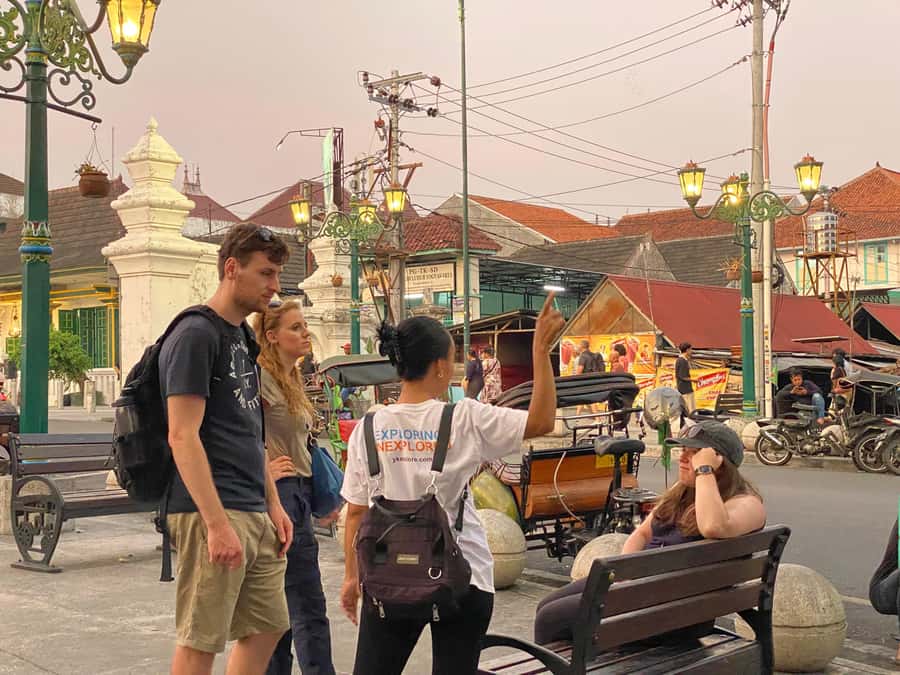
Next comes the kind of detail that makes colonial history feel real: the places built for officials. Hotel Toegoe offers a glimpse of the luxury the Dutch reserved for themselves during occupation. Nearby, the tour highlights Tetengger Yogya Kembali, a monument commemorating Yogyakarta’s role in the struggle against colonial powers.
These aren’t random “pretty points.” They’re anchors for a question: how did power show up visually? When you see a grand hotel next to a freedom monument, you start to notice the emotional geography of the city—what was celebrated, what was suppressed, and what the local community refused to forget.
You’ll also make a stop at Grand Inna Malioboro and learn how Dutch governance structures influenced political life later on. The building stops are useful here because you can actually point and say, “This is where the system looked like.” That’s what good guided tours do: they give you mental handles.
Ketandan and Pasar Beringharjo: Multicultural Life Under Unequal Rules
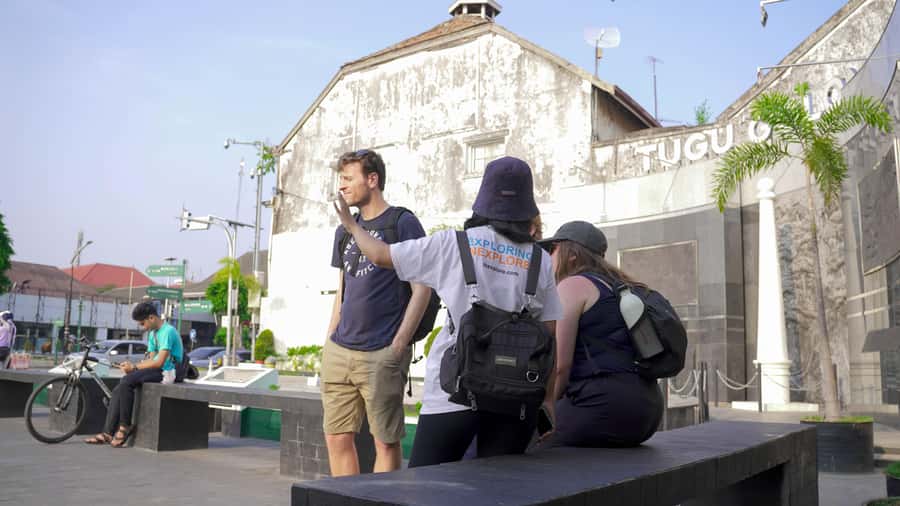
One of the most interesting cultural turns on this walk is around Kampoeng Ketandan. You’ll pass the Paifang (de Poort van Kampoeng Ketandan), a gateway that frames the area as multicultural—especially the Chinese-Indonesian community, whose lives were shaped by Dutch colonial policies. It’s the kind of context that helps you understand Yogyakarta as more than a single ethnic story.
The tour then moves to Pasar Beringharjo, where daily life gets layered with economic history. Market scenes can look timeless, but here you’ll learn how the colonial economic system influenced trade and how local communities adapted and survived. I like this stop because it’s the “okay, so what did it mean to eat, buy, and work?” part of the tour.
If you’re the type who enjoys history that connects to real routines, this section will land well. Even without buying anything, you’ll finish with a better idea of why certain market patterns exist.
The Ngejaman Clock, Religion, and Benteng Vredeburg’s Heavy Meaning
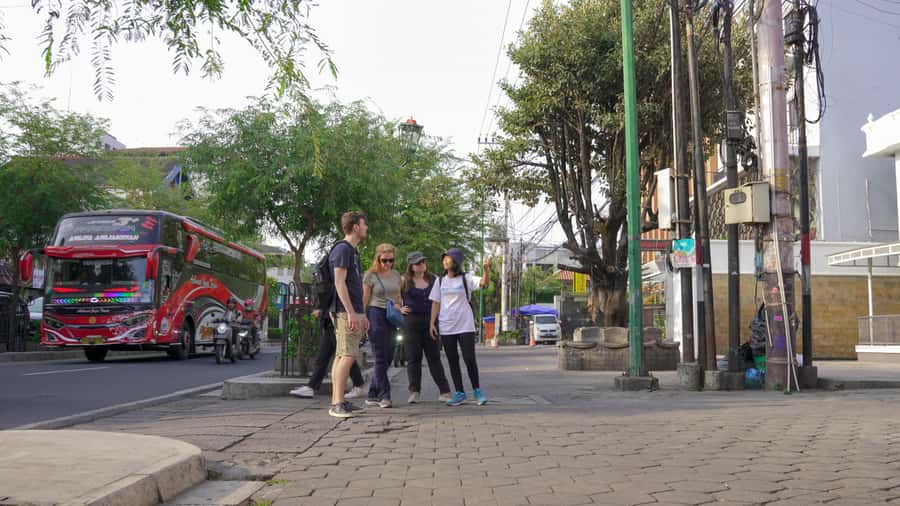
At Monumen Ngejaman—also called Wayah Titiyoni—you’ll hear how the iconic clock is symbolically tied to colonialism and how it has had a mixed reception in local Javanese society. This is one of those stops that changes how you read objects. A clock looks neutral, until someone explains what it represented and why people didn’t all react the same way.
Religion enters the story too, at GPIB Marga Mulya. The guide explains how religion played complex roles in both colonial administration and local resistance. I appreciate this because it avoids the “religion good, empire bad” simplification. In real places, institutions interact with power in complicated ways, and you see that complexity in the way the tour treats the subject.
Then comes Benteng Vredeburg, an imposing fort that started as a structure to monitor the Sultan’s court. Later, it became a symbol of Dutch control over Yogyakarta. Standing in that context makes the architecture feel less like stone and more like surveillance. It’s hard to forget after you hear the intended purpose.
Government Buildings, Dutch Residences, and the City’s Power Map
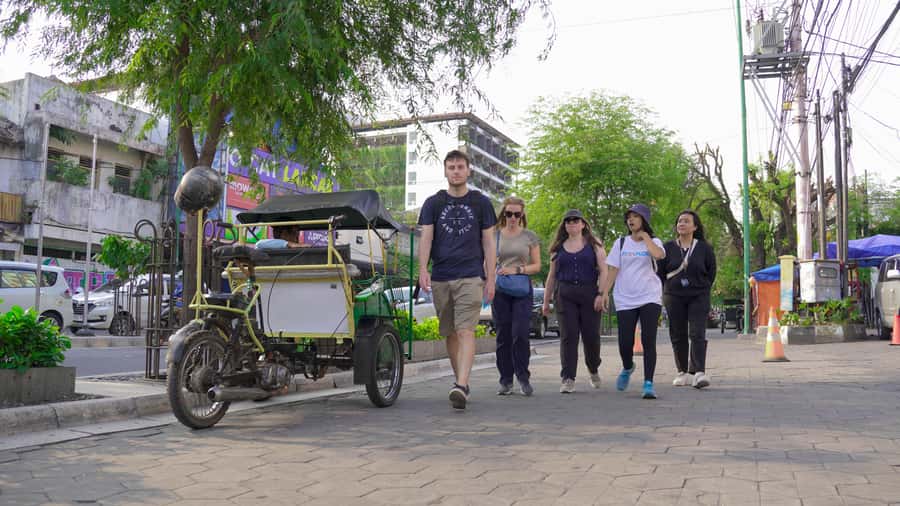
The walk continues with Gedung DPRD and Gedung Negara, where you’ll get explanations about colonial governance. The tour framing is that Dutch administration structures helped shape Indonesia’s political landscape later. That might sound big and distant, but the guide keeps it grounded by pointing to the buildings and linking them to how rule worked on the ground.
Another key stop here is Kantor Pos Besar Yogyakarta and the Bank Indonesia area, where you’ll learn about the economic systems that fueled colonial interests—often at the expense of local prosperity. This is where the tour feels most “systems-minded.” You start to see colonial rule as an economic machine, not just a flag and soldiers.
At BNI Yogyakarta, the theme continues: institutions that look modern or official today were once part of a larger control setup. If you like understanding why cities are built the way they are, this segment gives you the logic behind it.
1949’s Reoccupation and Why the Tour Ends at a Church
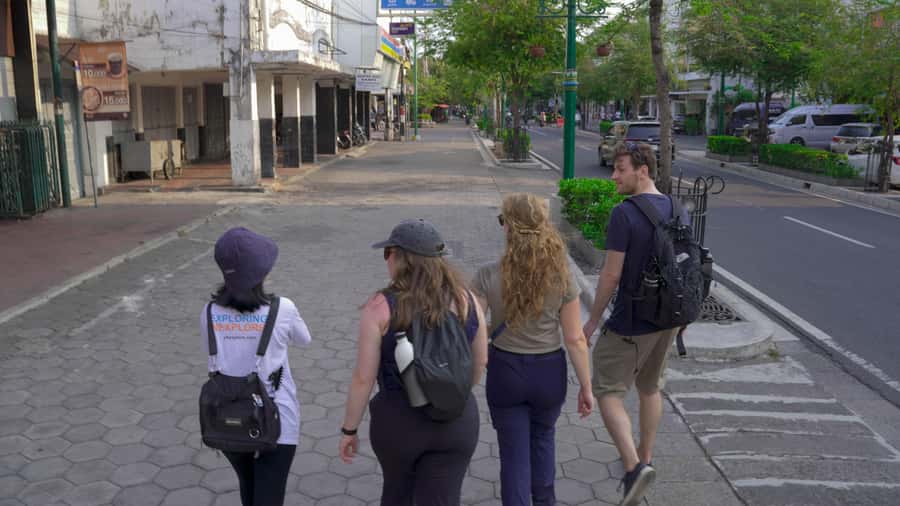
To reach the final emotional turn, the tour includes Monumen Serangan 1 Maret, connected to the Indonesian struggle to reclaim sovereignty during the Dutch reoccupation in 1949. It’s presented as a key turning point in the nation’s path to freedom. I like how this keeps the walk from becoming a “past-only” story. The colonial period doesn’t end quietly—it breaks into decisive moments.
Finally, you wrap up at Gereja Santo Fransiskus Xaverius. The guide frames it as a reminder of Yogyakarta’s diverse colonial legacy, and the overall theme is that history can be read through different lenses. That ending matters because it brings the story from power structures back to community life—religion, buildings, and identity that continued after occupation.
It also helps you connect the full arc: symbolic unity at Tugu, press and governance along the way, the economy and religion shaping daily life, then independence struggles and sovereignty reclaimed.
Guides, Pace, and Real Value for $18
For $18 per person over 2 hours, you’re paying for one thing above all: an English-speaking guide who can connect multiple sites into one story. The tour also includes water, and it’s set up to remove hassle by offering skip the ticket line where applicable. That combo makes it feel like better value than a “do-it-yourself” walk where you’d have to piece context together on your phone.
Pace-wise, plan on a steady walk and frequent stops for explanations. It’s not meant to be a slow meander where you linger for photos without interruptions, so wear comfortable shoes and expect to stay engaged. Food isn’t included, so if you’re doing this during a long day, eat before or plan a snack after.
This tour fits best if:
- You want a fast historical orientation without getting lost in dates.
- You like seeing how power shows up in real city buildings.
- You’re interested in how Indonesian perspective changes the story, not just the Dutch part.
It’s less ideal if you need step-free access, because it isn’t suitable for mobility impairments.
One extra plus: the guides are described as strong at clear English and storytelling. You might even get a guide like Hendra, Dora, Hery, or Ophan, who have been praised for delivering the colonial history clearly and adding useful context. Some guides also share practical city tips (like safe street-crossing habits), which is the kind of help that makes the rest of your day easier.
Should You Book This Colonial Heritage Tour?
Yes, if you want Yogyakarta’s colonial past explained in a way that feels connected to the streets you’re standing on. The Tugu to Kilometer Zero structure gives you a satisfying sense of direction, and the focus on 1811–1949 keeps the timeline from turning into a confusing blur.
Book it if:
- You’re a first-time visitor and want context fast.
- You like history that includes media, markets, religion, and economics—not just battles.
- You enjoy learning from different perspectives, even when interpretations vary.
Skip it if:
- Walking for 2 hours with frequent stops is hard for you.
- You only want modern highlights and don’t want to spend your time on colonial-era architecture and themes.
If you’re curious how colonial rule reshaped politics, money, and everyday life—and how people resisted and remembered—you’ll likely feel like the price is fair for what you get.
FAQ
How long is the Yogyakarta Colonial Heritage Guide Walking Tour?
The tour lasts 2 hours.
Where does the tour start and where does it finish?
It starts at the TOKIO DISTRICT meeting point (look for the YKExplore Meeting Point sign) and finishes at Titik Nol Yogyakarta (Kilometer Zero).
What’s included in the price?
It includes an English-speaking live guide and water.
Do I need tickets for the places on the route?
The tour includes skip the ticket line, where ticketing applies at the stops.
Is food included on this tour?
No, food and drinks are not included.
Is this tour suitable for people with mobility impairments?
No, it is not suitable for people with mobility impairments.