REVIEW · QUEDLINBURG
Quedlinburg UNESCO World Heritage Group Tour (private)
Book on GetYourGuide →Operated by Die freundliche Quedlinburger Stadtinfo · Bookable on GetYourGuide
Quedlinburg compresses centuries fast. In a focused private tour, you walk the UNESCO World Heritage old town and climb up to the Schlossberg for views and landmarks tied to more than 1,100 years of local story.
I especially like two things: the route keeps you moving through the town’s key stops (town hall, churches, and the half-cave museum) without you needing to guess what to see next, and the guide’s storytelling makes the half-timbered sights feel personal, including famous Quedlinburg personalities.
One thing to consider: the tour runs in German, and the pace of speaking can be fast. If you’re sensitive to speed or pronunciation, you may need to concentrate more than you would on an English tour.
In This Review
- Key things to know before you go
- Starting at the green city office: how the tour gets you oriented fast
- The medieval core: town hall, St. Benedikti, Schuhhof, and Blasii Church
- Half-timbered streets with context (not just pictures)
- Up to the Schlossberg: Klopstock House, Lyonel-Feininger Museum, and castle gardens
- St. Servatii Collegiate Church: what you get, and what you don’t
- How the guide’s German storytelling changes the walk
- Included extras that actually help: food recommendations and skipping ticket lines
- Price and value: $117 per group up to 12
- Practicalities: weather, cobblestones, and the Schlossberg climb
- Who this private Quedlinburg tour is best for
- Should you book this Quedlinburg UNESCO private tour?
- FAQ
- How long is the private Quedlinburg UNESCO tour?
- How much does it cost?
- Where do we meet the guide?
- What language is the tour guide?
- What are the main areas included on the route?
- Is St. Servatii Collegiate Church included inside?
- Does the tour run in bad weather?
Key things to know before you go
- Meet right at the Quedlinburger Stadtinformation on the market square (the green office), so you start with zero wandering.
- Two-part route: historic old town first, then the Schlossberg with major church and museum stops.
- Half-timbered views are the star, but you’ll also cover churches, medieval streets, and distinctive local sites like the half-cave museum.
- St. Servatii interior is not included, so you’ll see the collegiate church area from the outside on this tour.
- Private group up to 12 people means questions are realistic and the pace is easier to manage.
- Cobblestones plus a steeper Schlossberg section means good shoes matter.
Starting at the green city office: how the tour gets you oriented fast
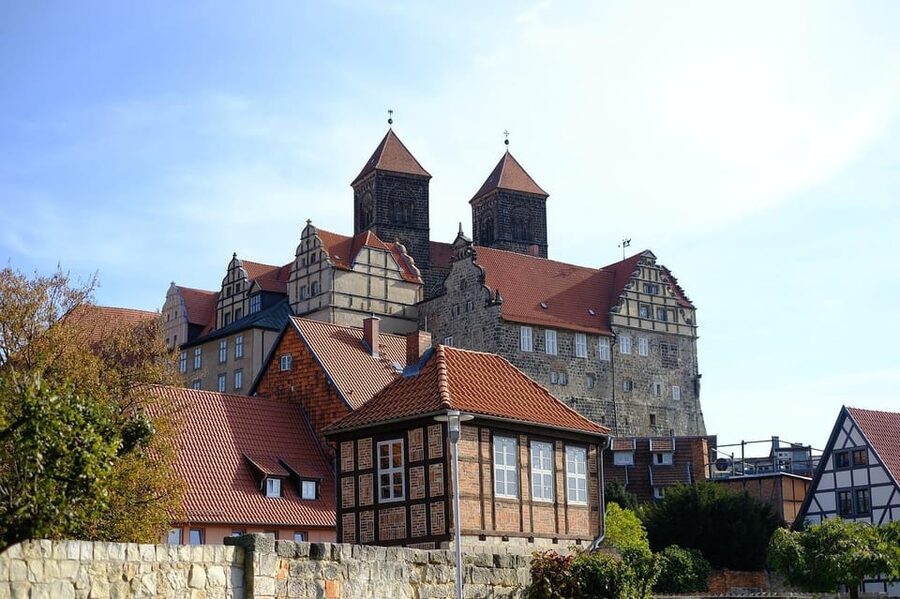
Your tour begins at the Quedlinburger Stadtinformation right by the market square, in front of the friendly green office. That detail matters more than it sounds. You get a clear starting point and a local guide immediately, instead of trying to map the old town on your own while figuring out which corners are worth your time.
From there, the plan is to guide you through Quedlinburg’s most recognizable historic fabric: the classic medieval streets, the town’s big public buildings, and the church landmarks that help structure the city’s layout. Even if you only have two hours, this setup helps you avoid the common problem of seeing a few pretty facades but missing the why behind them.
I like that the first stretch sets context early. It’s easier to understand what comes next on the hill once you’ve already walked the town’s core.
The medieval core: town hall, St. Benedikti, Schuhhof, and Blasii Church
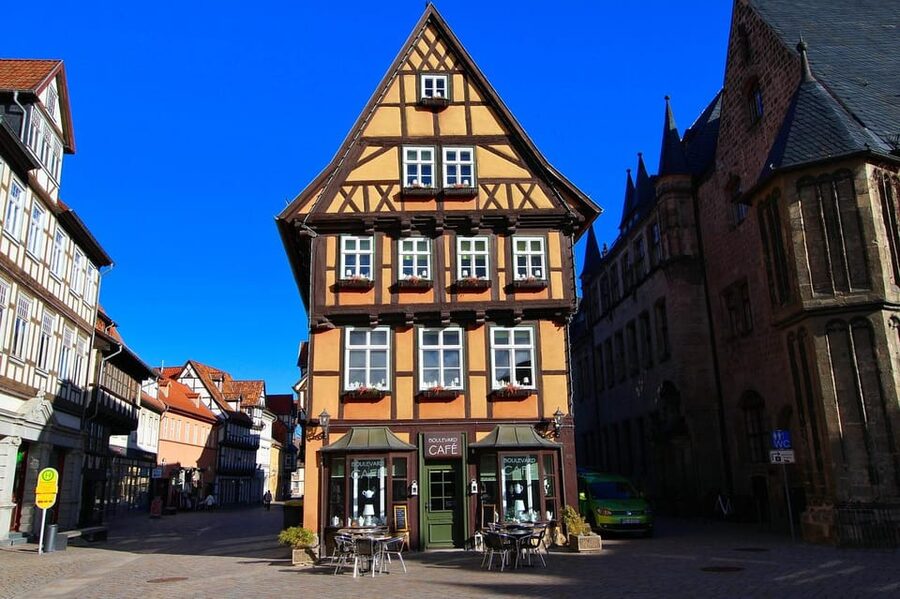
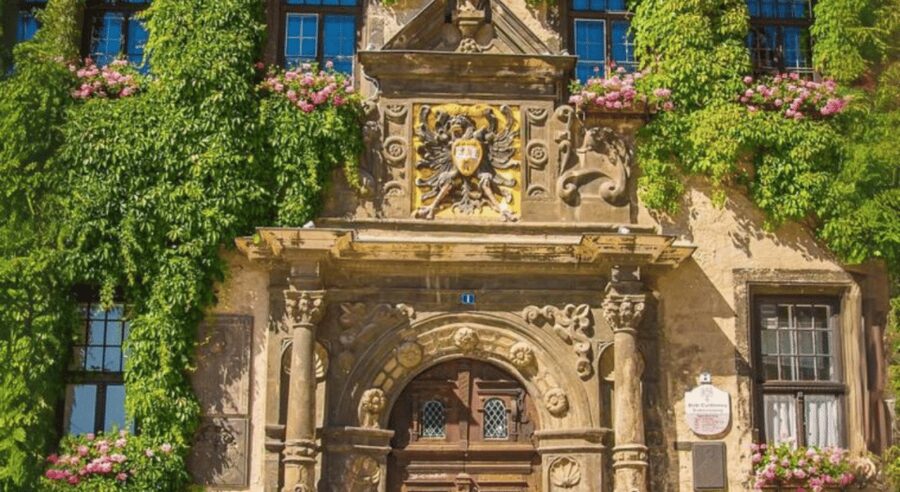
The old town portion includes the town hall and the market church of St. Benedikti, plus stops that highlight the everyday medieval city texture. You’ll pass through areas like the Schuhhof and the Blasii church, and you’ll also visit the half-cave museum.
Here’s what these stops do for you:
- The town hall gives you a sense of how the city functioned as a civic center, not just a pretty backdrop. It’s a good anchor point because it sits in the part of town where you can quickly connect buildings to streets.
- St. Benedikti helps you read the city’s shape. Churches in old towns aren’t random stops; they often line up with how neighborhoods formed and how people moved around.
- Schuhhof and the Hölle area (as listed on the route) keep the tour grounded in the kind of lanes and corners that make places like Quedlinburg feel lived-in, even centuries later.
- Blasii church adds another major religious landmark so you can compare scale and placement rather than treating each church as a one-off photo stop.
- The half-cave museum is a useful “pause” in the walking rhythm. A stop like this tends to shift the focus from only facades to how people adapted to the area.
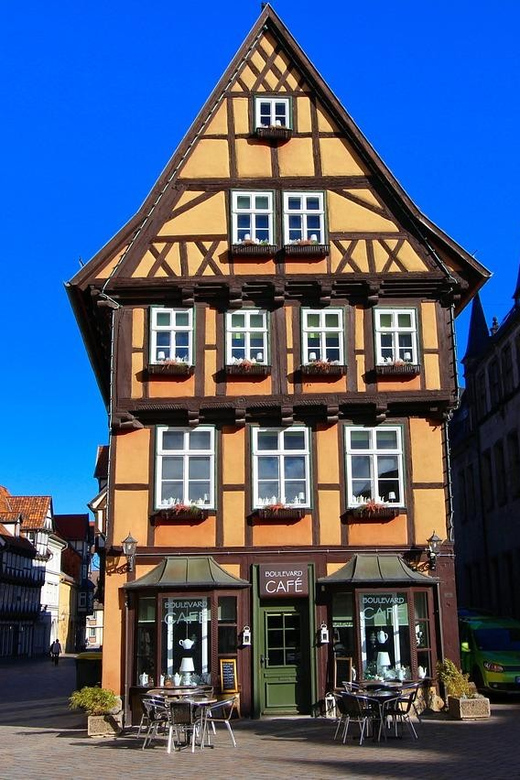
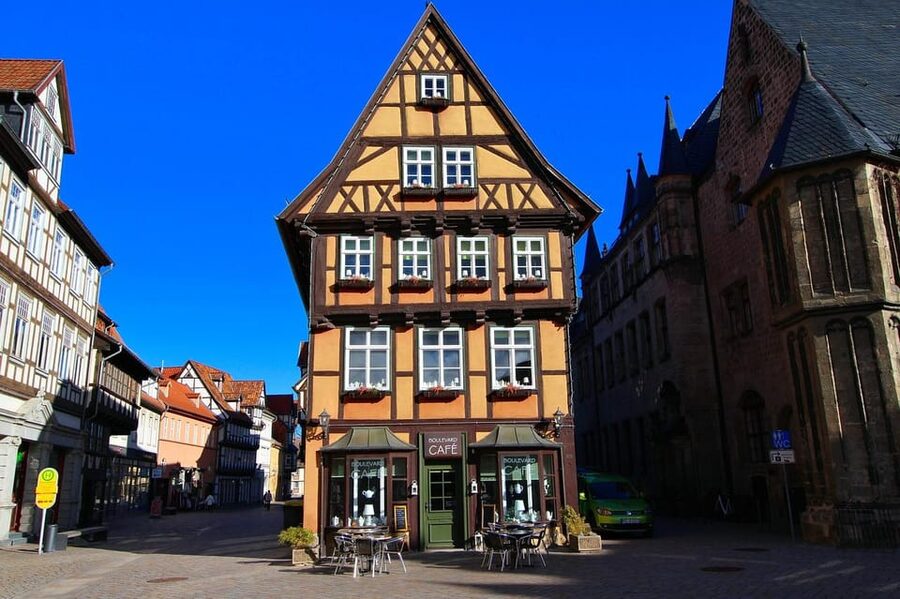
You’ll also be in the thick of Quedlinburg’s UNESCO identity: half-timbered architecture. The tour doesn’t just point at it. It helps you notice variety—how the style shows up across different streets and building types, and how it blends into the wider old town scene.
Half-timbered streets with context (not just pictures)
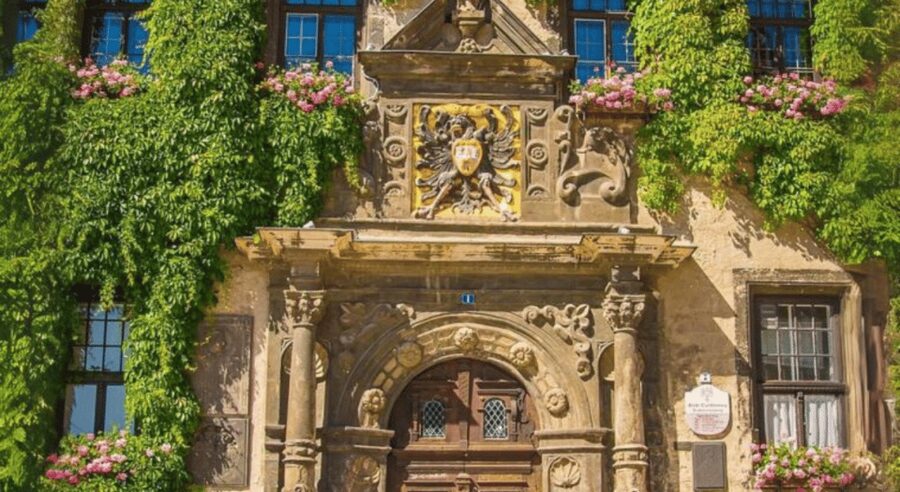
Half-timbered towns can trick you into thinking it’s all the same visual theme. This tour fights that. The guide’s job is to connect what you see—wood-framed patterns, historic buildings, and street layouts—to the stories behind them, including famous personalities from Quedlinburg.
This is also where a private format really helps. You’re not stuck listening from the back of a group while your attention wanders. In a small group, you can actually keep up with the details and then look around right away with better understanding.
One extra advantage: at least some guides are known for telling lots of small, memorable stories. That’s the kind of add-on that makes a short tour feel longer and more meaningful, because you leave with mental images beyond a handful of exterior photos.
Up to the Schlossberg: Klopstock House, Lyonel-Feininger Museum, and castle gardens
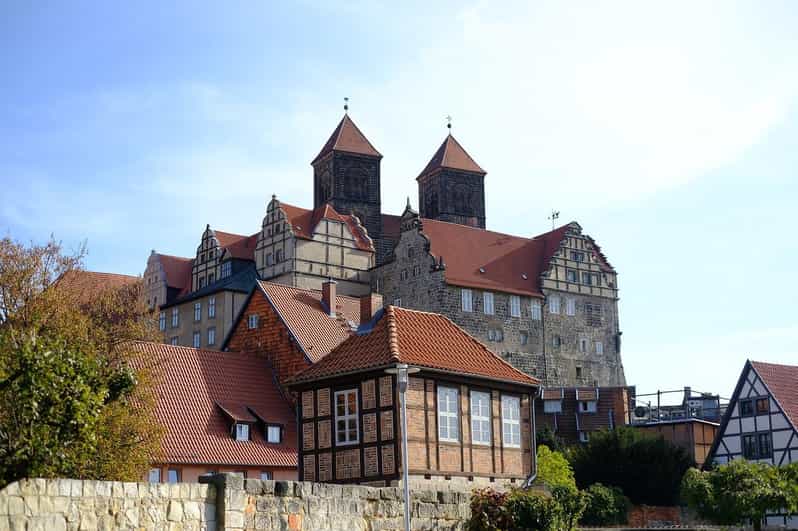
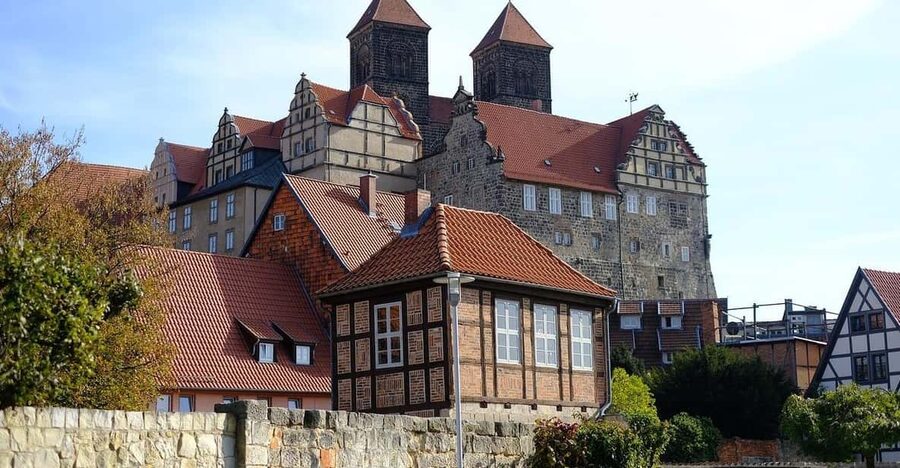
After the old town, the tour shifts to the Schlossberg—the highlight, because that’s where the major collegiate church sits. This part of the itinerary is the “wow and wow again” segment: you go from medieval street-level views to a higher vantage point where you can better appreciate how Quedlinburg’s historic core sits on a dramatic setting.
But be realistic: you’ll encounter cobblestones and a steeper section on the climb. Wear shoes you trust. If you have mobility issues, go in with eyes open that this isn’t flat-city strolling.
On the Schlossberg, you’ll visit:
- Klopstock House
- Lyonel-Feininger Museum
- castle gardens
- and the area around St. Servatii Collegiate Church
What these stops are good for:
- Klopstock House brings a named historic figure into the story, so you’re not only absorbing architecture—you’re also getting the personal human thread.
- Lyonel-Feininger Museum is a cultural checkpoint. Even if you don’t go deep inside on your own, seeing where the museum fits in the Schlossberg setting helps you understand why this hill matters.
- Castle gardens act like a breather. They give you a transition between buildings and views, so you can catch your breath and reset your eyes before the last church area.
The Schlossberg sequence also works well because it builds momentum. Each stop answers a different question: who/why here, what culture lives here, and how the space is meant to be seen.
St. Servatii Collegiate Church: what you get, and what you don’t
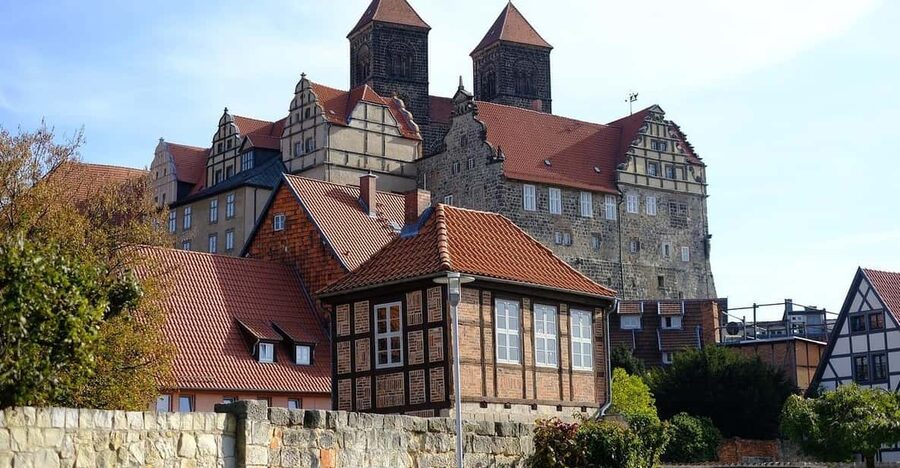
This tour includes the Schlossberg tour along with the St. Servatii Collegiate Church as a major landmark. The itinerary lists the church as a highlight, but the interior visit is not included.
So plan your expectations like this: you’ll get the church as part of the overall Schlossberg experience—its role in the setting, its visual importance, and the surrounding context. If you specifically want to go inside, you’ll need to arrange that separately.
That limitation isn’t automatically a deal-breaker. For many people, the real payoff is the combination: walking the hill, seeing the church from the right angles, then connecting it back to the old town below. Still, if church interiors are a must for you, don’t book this assuming you’ll get full access.
How the guide’s German storytelling changes the walk
This is a live guided tour in German. That’s great if you speak the language or you don’t mind your ears working a bit. It’s also part of why the tour can feel more like a curated conversation than a scripted route.
In one experience, the guide’s knowledge and enthusiasm came through strongly, with lots of small stories that made the city feel animated. In another, the pacing and pronunciation were criticized, and one person also felt it wasn’t especially kid-friendly. That range is worth admitting because private tours can vary based on the guide assigned.
If you’re traveling with children, decide based on your group’s tolerance for language speed and the way your kids handle listening on their feet. This is two hours, so the listening time is real, but so is the walking.
Included extras that actually help: food recommendations and skipping ticket lines
A small tour can still be high value when it saves you time and helps you make smarter choices. This one includes:
- a presentation of culinary hotspots & recommendations
- and skipping the ticket line
The food piece is practical. After you finish walking historic streets and museums, you don’t want to spend your energy hunting for a decent meal in a city you only just learned. Even basic local recommendations can steer you toward places that match your tastes and your remaining energy level.
As for skipping ticket lines, this helps most when the sites you pass include ticket-controlled areas. Even without exact details on which stops always have lines, the key is that you’re less likely to lose time waiting around.
Price and value: $117 per group up to 12
The price is $117 per group, for up to 12 people, for a total duration of about 2 hours. On paper, that can look low or high depending on how you travel.
Here’s the practical value logic I’d use:
- If you’re traveling as a small family or a couple of friends, you’re paying for convenience: a clear route, a guide, and less decision fatigue in a UNESCO town where it’s easy to overplan.
- If you have a larger group (near that 12-person ceiling), the cost per person drops fast, and you also get the benefit of everyone hearing the same explanations for shared landmarks.
- Kids and young people up to 16 years old are free, which can make the tour much more family-friendly than many private tours.
The other hidden value is time. Two hours is short, but a guided route means you can still leave with coherent impressions rather than scattered snapshots.
Practicalities: weather, cobblestones, and the Schlossberg climb
This tour runs in all weather conditions—rain or shine. Plan for it. Bring a light rain layer or compact umbrella depending on your style, because the walking parts continue either way.
Also note the cobblestone paths and the steeper section on the Schlossberg. This matters for comfort more than anything else. If you wear soft, grippy shoes, you’ll enjoy the viewpoints more because you aren’t spending mental energy guarding your footing.
Finally, the tour is German-language and a private group format. That combination usually works well for people who want a more human pace than big group tours, but it does assume you’re okay with some level of language immersion.
Who this private Quedlinburg tour is best for
This tour makes the most sense if you want:
- a structured route through Quedlinburg’s UNESCO core without spending your time researching every stop
- a guide who connects half-timbered architecture to people and place
- a climb to the Schlossberg that you’d otherwise half-plan and half-miss
It’s also a solid choice for:
- couples who want a high-quality overview
- families with older kids who can sit through listening time
- small groups sharing the $117 cost for better value
It might be less satisfying if:
- you need an interior church visit as part of the main package
- your group struggles with fast German listening
- you strongly prefer flat walking routes
Should you book this Quedlinburg UNESCO private tour?
I think it’s worth booking if you want a guided “greatest hits” route in a short time window—especially because you get the UNESCO old town and the Schlossberg highlight in one plan, plus food recommendations after you’re done sightseeing.
Book it with confidence if half-timbered architecture, historic churches, and the hilltop setting of Quedlinburg excite you. I’d hesitate only if your top priority is going inside St. Servatii Collegiate Church, or if German speaking speed is a deal-breaker for your group.
If you do book, go in with comfortable shoes and a willingness to listen closely for two hours. You’ll likely come away with a clearer mental map of Quedlinburg and stories that stick longer than the photos.
FAQ
How long is the private Quedlinburg UNESCO tour?
The tour lasts 2 hours.
How much does it cost?
It costs $117 per group, up to 12 people.
Where do we meet the guide?
You meet at the Treffpunkt in front of the Quedlinburger Stadtinformation (the green city information office) shortly before the tour begins, and the guide receives the group there.
What language is the tour guide?
The live tour guide speaks German.
What are the main areas included on the route?
You cover the historic old town and landmarks like the town hall, St. Benedikti, the Schuhhof, Blasii church, and the half-cave museum, then you go to the Schlossberg with stops including Klopstock House, the Lyonel-Feininger Museum, castle gardens, and St. Servatii Collegiate Church.
Is St. Servatii Collegiate Church included inside?
No. The tour includes the church area, but the inside visit is not included.
Does the tour run in bad weather?
Yes. The tour operates in all weather conditions, rain or shine.