REVIEW · ROME
Ancient Rome: Archeological area Largo Argentina
Book on GetYourGuide →Operated by TOURISTATION · Bookable on GetYourGuide
A murder site and temple ruins, right in town. Largo di Torre Argentina is one of Rome’s most striking “layers of time” stops. I like how the setting mixes the quiet of archaeology with the drama of the Ides of March.
You’ll also enjoy that the visit includes a reserved entrance plus a 30-minute multimedia video that helps you picture what you’re seeing. One thing to consider: the archaeological area is small, and parts of the site can be seen from outside, so if you want a long, guided walking tour, this may feel brief.
In This Review
- Key things to know before you go
- Largo Argentina’s “small space, big story” layout
- The 30-minute multimedia video that makes the ruins make sense
- Reserved entry at Largo Argentina: what it adds (and what it doesn’t)
- The four temples (4th to 1st centuries BC) and why they matter
- Curia of Pompey remains and the assassination link to 44 BC
- How demolitions (1926–1930) helped reveal the layers you see today
- Medieval age structures: Rome didn’t stop at antiquity
- What the included audioguide and app support helps you catch
- Price and value: is $23 worth it?
- Timeline of your visit, without the fluff
- Who should book this Largo Argentina visit
- Quick practical notes so your visit runs smoothly
- Should you book this Largo Argentina tour?
- FAQ
- Where do I redeem my voucher?
- How long is the experience?
- What’s included with the ticket?
- Is there a live guided tour included?
- What language is the audio available in?
- What do I need to bring, and what’s not allowed?
Key things to know before you go
- Reserved entry to the Largo Argentina excavations saves hassle once you arrive
- 30-minute multimedia video gives quick context before you’re in front of the ruins
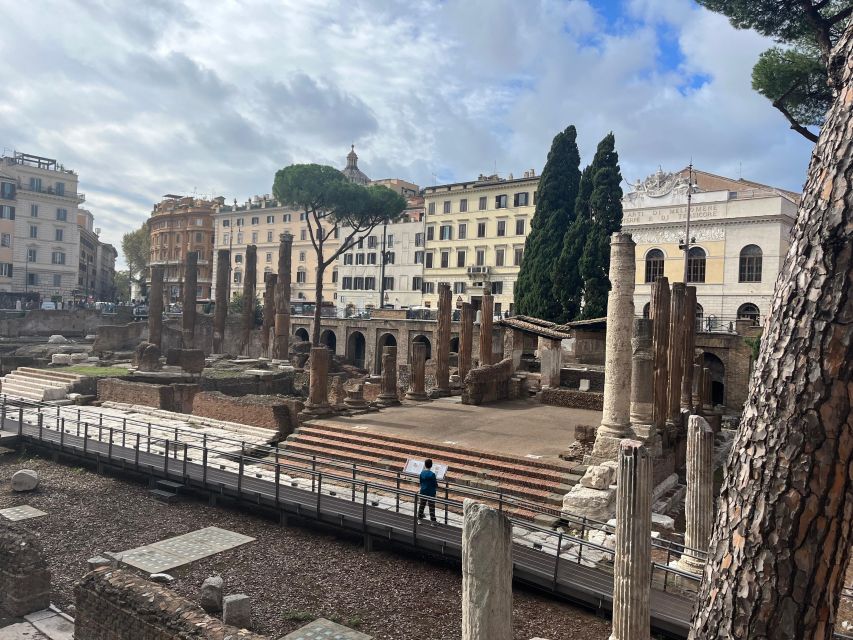
- Four temples (roughly 4th to 1st centuries BC) show early Rome’s sacred architecture
- Caesar’s assassination area is tied to remains linked to the Curia of Pompey
- Over 2,000 years of layers are visible, from ancient phases to medieval traces
- Audio support in English helps you connect details on-site fast
Largo Argentina’s “small space, big story” layout
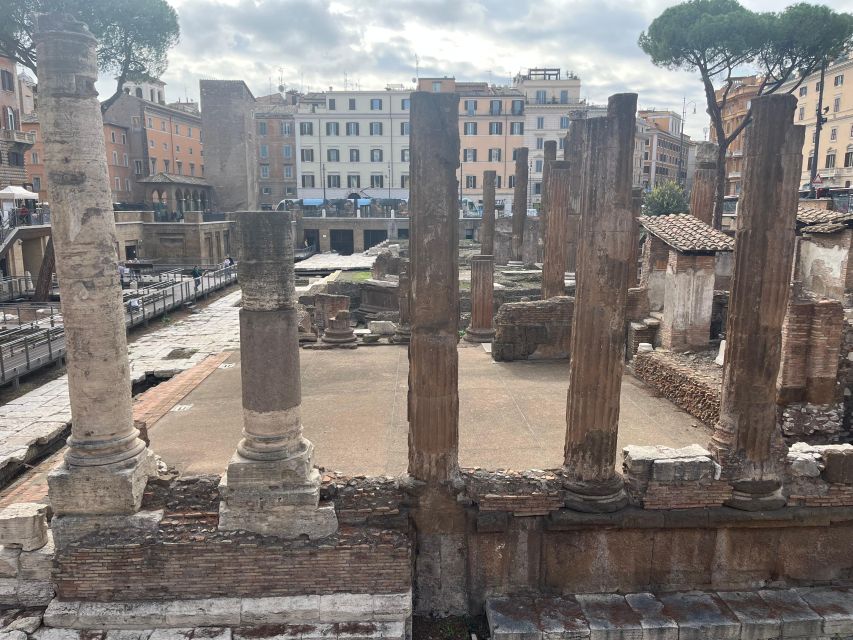
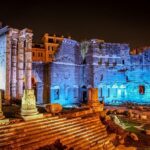
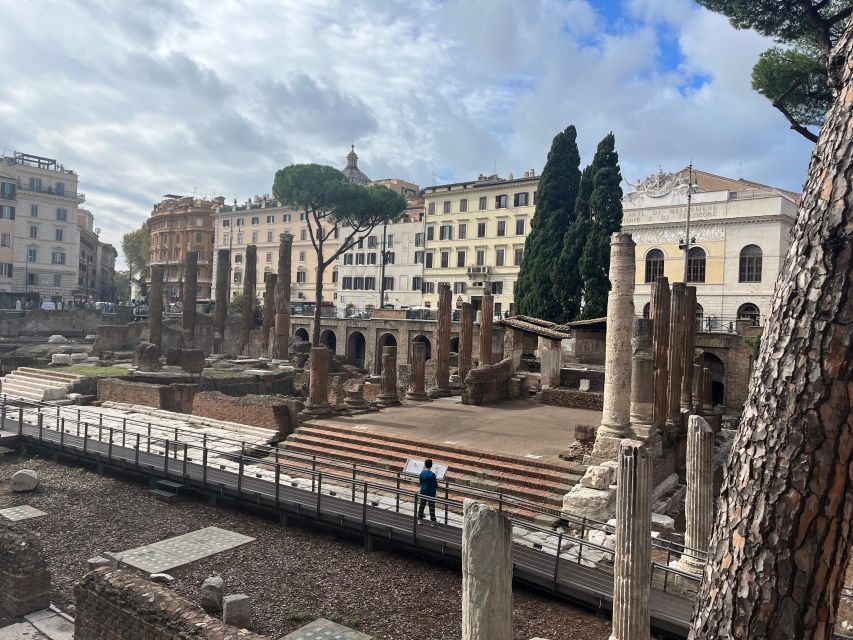
Largo di Torre Argentina is the kind of Roman site that feels unfairly dramatic. You’re in the middle of modern Rome, and yet you’re standing on an archaeological pocket that stretches back for more than two thousand years. The area’s charm comes from two things at once: the oldest building remains in this part of the city and one of the darkest political moments in ancient Rome.
If you’re a history person, you’ll love the way the ruins force you to slow down and look carefully. The temples are not just pretty leftovers; they’re evidence of how sacred spaces evolved. And then there’s the association with Julius Caesar’s assassination—because even when you’re not hunting for “battle reenactment” vibes, the site’s meaning is hard to ignore.
The other reason this spot works so well in a short visit is clarity. The key pieces are close together: temple remains, excavation layers, and the area connected to Caesar’s death. In about an hour, you can go from understanding the setting to reading the ground like a timeline.
You can also read our reviews of more tours and experiences in Rome.
The 30-minute multimedia video that makes the ruins make sense
Your selected time slot refers to the start at the Touristation office in Piazza d’Aracoeli 16. That matters because the experience begins indoors with a 30-minute ancient Rome multimedia video. For me, this is the smartest part of the package. It sets up what you’re about to see so you don’t spend your time guessing.
The video acts like a visual translator. You’re shown how the excavations and demolitions from the 1926–1930 period revealed structures and layers that weren’t visible before. It also helps you understand why the ruins are arranged the way they are, and why the site preserves evidence of continuous life, from ancient religious use into later periods.
Practical tip: if you’re the type who tends to tune out short videos, try this one actively. Watch for the moments that connect buildings to dates. When you move outside, those same ideas should click quickly.
Reserved entry at Largo Argentina: what it adds (and what it doesn’t)
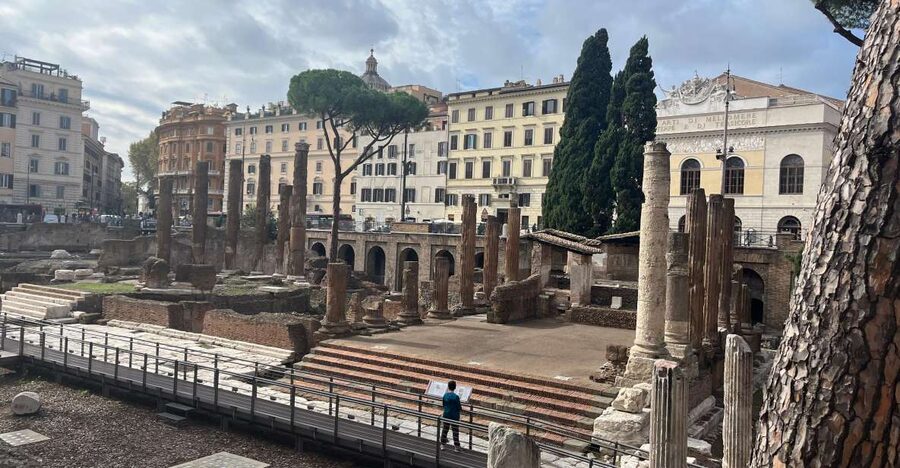
This ticket includes entrance reserved for the Largo Argentina excavations, plus assistance at the meeting point. There’s also a “skip the ticket line” promise attached to the experience. Here’s the balanced reality: Largo Argentina isn’t a giant attraction like the Colosseum, so you won’t be stuck for hours. But reserved entry can still be worth it during busy hours because it reduces decision-making in the moment.
One theme from on-the-ground feedback is that you may feel the site doesn’t strictly require a ticket if you’re only after outside views. That’s true in the sense that you can spot a lot of the architecture from the public area. But the real value of reserving entry is access to the archaeological excavations and the chance to connect what you see to the deeper layers described in the included materials.
So I’d frame it like this: if you want the site’s archaeology as your main event, the entry helps. If you just want a quick photo and a glance, you may decide you don’t need the package.
The four temples (4th to 1st centuries BC) and why they matter
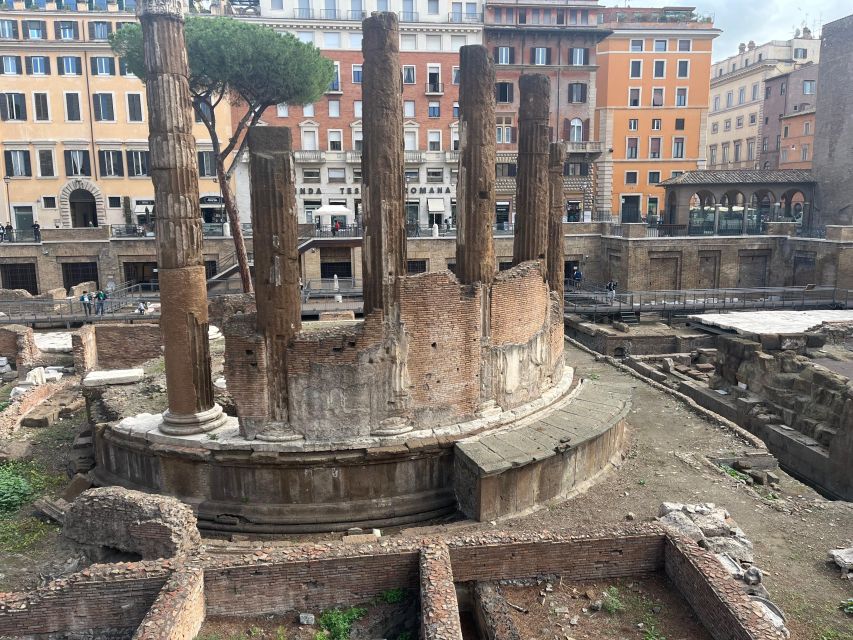
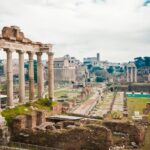
The sacred area includes four temples, dating roughly between the 4th and 1st centuries BC. That date range isn’t just trivia. It helps you see Rome’s shift from early urban sacred spaces toward more developed, state-influenced architecture.
These temples aren’t all the same kind of “thing.” Instead, they work together as a set: they show how religious buildings were planned, rebuilt, and reused across generations. Even when you’re looking at partial remains, the shapes and bases still carry the logic of Roman sacred design.
What I like about this part is that you get to compare and mentally separate what belongs to different eras. A short visit can still feel satisfying if you focus on how the site’s layout reflects changing needs over time. Look for the structure of the sacred zone rather than chasing every single stone.
Also, remember that archaeology here isn’t a single snapshot. The sacred space preserved testimony of uninterrupted life for over 2,000 years, including later phases that built on what came before. That’s why the temples feel less like “ruins in a field” and more like a layered monument.
Curia of Pompey remains and the assassination link to 44 BC
The most famous story attached to Largo Argentina is the assassination of Emperor Julius Caesar on the Ides of March in 44 BC. The experience highlights the remains that guard the tuff base of the Curia of Pompey, which is reported by ancient sources as the site of Caesar’s killing.
This is where the site’s atmosphere becomes unusually intense. You’re not inside a museum diorama. You’re standing in a real urban space where the ground itself is the evidence. The tuff base is key because it’s the sort of material detail that turns legend into something more concrete.
A useful way to approach this: don’t treat it like a scripted reenactment. Instead, treat it like an archaeological puzzle with a historical anchor. The goal is to understand what the remains are telling you, and why historians connect this area to that famous moment.
If you like “how do we know?” questions, this stop will hold your attention. Even if you don’t memorize dates, you can still recognize the logic: ancient political space + documented assassination story + surviving material evidence.

How demolitions (1926–1930) helped reveal the layers you see today
One of the most important background points is that the key archaeological visibility came after excavations and demolitions between 1926 and 1930. That detail changes the way you should interpret the site.
It means the current view is not just “Roman ruins that time left alone.” It’s the result of modern intervention that exposed earlier structures. That’s not a downside—it’s often the only reason you can see anything meaningful today. But it does mean you should expect a mix of things: ancient construction, ancient foundations and bases, and later traces that were uncovered and preserved.
The multimedia video and the on-site setup are designed to connect those dots. You’re looking at a sacred area that once functioned continuously, then later got buried under layers, and finally became accessible again through 20th-century archaeological work.
Medieval age structures: Rome didn’t stop at antiquity
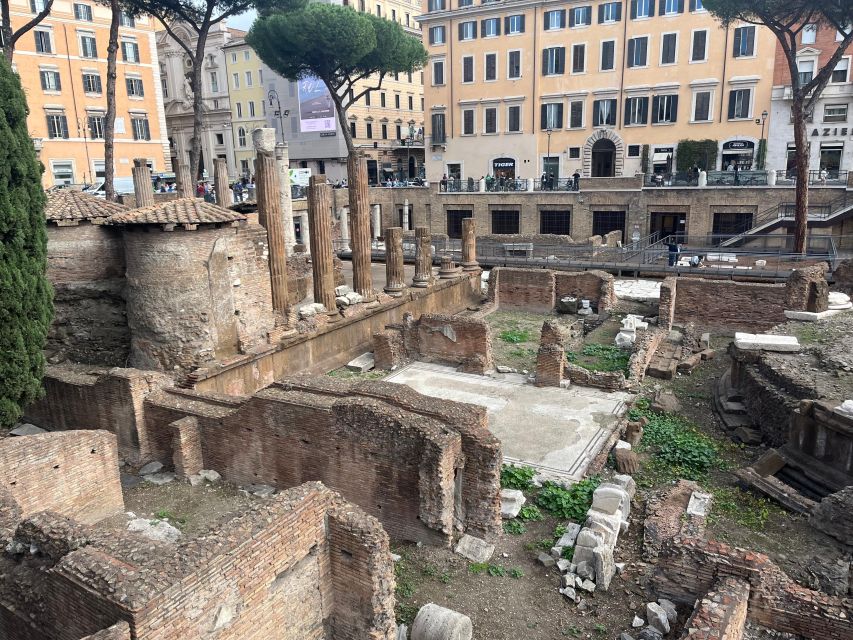
What makes Largo Argentina especially compelling is that it preserves more than ancient temple remains. The sacred area also contains testimonies of life that continued through later periods—specifically, medieval age structures and the imperial phases of the temples.
This is the part that many people underestimate when they book a “Caesar site.” Yes, the Caesar connection is the headline. But the medieval traces remind you that Rome kept reusing and reinterpreting its own space. In other words, the site wasn’t a museum backyard for 2,000 years. It was part of real life, then real history, and then archaeology.
If you’re short on time in Rome, I like stops that give you more than one era. Largo Argentina does exactly that. In a compact space, you get the feel of how Rome stacked eras on top of each other.
What the included audioguide and app support helps you catch
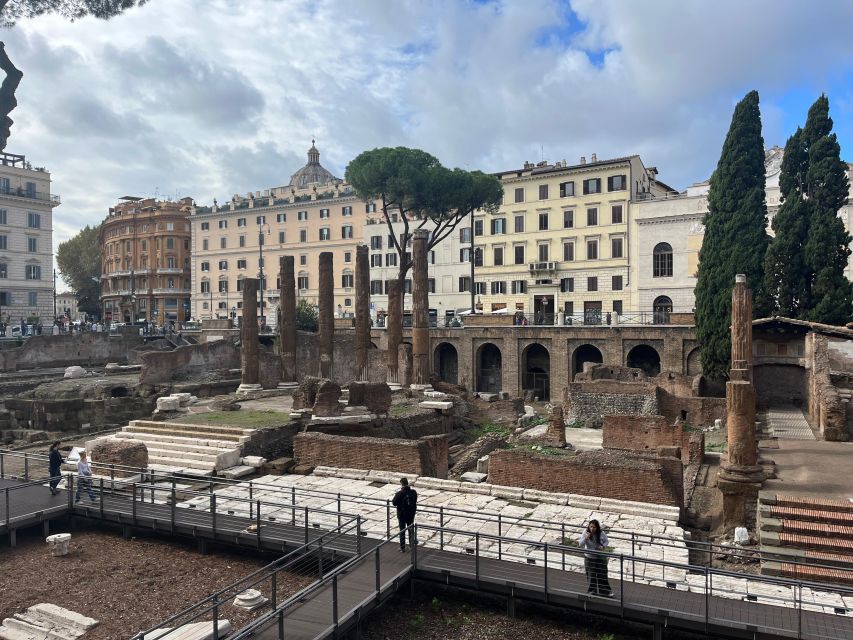
This experience includes an app Audioguide of Rome (English) and also provides paper city map and WiFi. The audio guide is what helps you connect the “what” (temple remains, base materials, structural fragments) to the “why” (dates, phases, and meaning).
In practical terms, the audioguide helps you avoid the common Rome problem: standing in front of something ancient and realizing you don’t have the story loaded into your brain. With audio, you get a path through the area, which is especially valuable for a one-hour format.
My advice: use the audio as a tool for selecting what to look at. Don’t try to listen word-for-word while walking. Instead, pause long enough to match the story to the exact structure you’re seeing. That’s how you turn a quick visit into one that actually sticks.
Price and value: is $23 worth it?
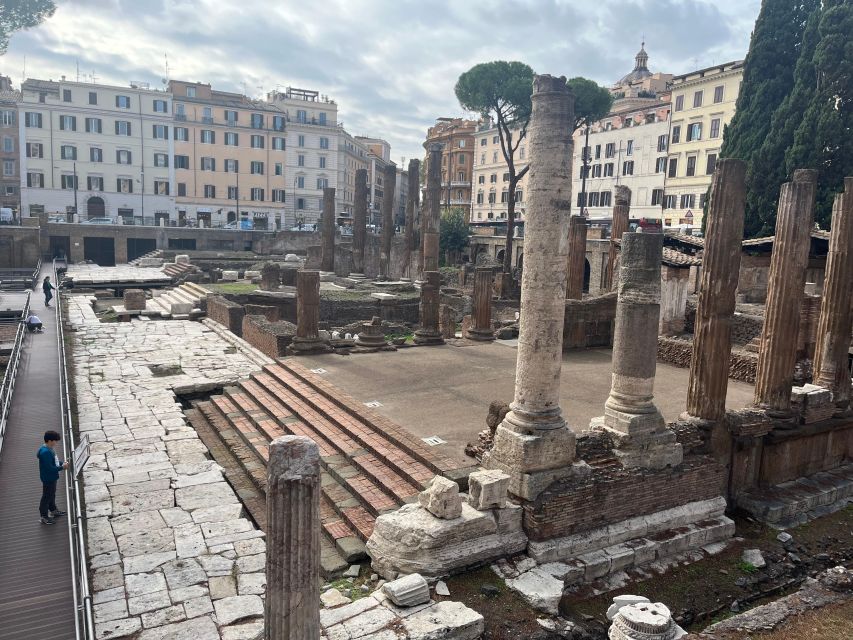
At about $23 per person for a 1-hour experience (with a multimedia start), the value depends on what kind of Rome traveler you are.
Here’s the honest checklist of what you get:
- 30-minute multimedia presentation at the Touristation office
- Reserved entrance access to the Largo Argentina excavations
- English audio guide support via app
- Assistance at the meeting point
- Paper map and WiFi
What you don’t get:
- A live guided tour
- Transport
- Food and drink
So for value, the question is: do you want the entrance plus guided explanation through audio and multimedia, or do you mainly want the outside view?
If you enjoy learning but don’t necessarily want a person with a microphone, this format can be a great compromise. The multimedia gives structure, and the audio helps you stay oriented at the site. If you already have your own Rome plan and only want a fast stop for photos, you might decide the outside views are enough.
Timeline of your visit, without the fluff
This is a short experience designed to be efficient.
1) Start at the Touristation Aracoeli in Piazza d’Aracoeli 16. You’ll redeem your voucher at the office (look for the fountain and orange flags out front).
2) You watch the 30-minute multimedia video that frames what you’ll see outside.
3) You access the Largo Argentina archaeological area via the reserved entrance.
4) You use the English audioguide to connect temples, excavation layers, and the Curia of Pompey tuff base story to the larger history.
Because the time slot refers to the Touristation office, you should plan on that hour as part museum-intro, part site-focused visit. If you’re the type who likes time buffers, give yourself extra minutes around the meeting point area so you don’t feel rushed.
Who should book this Largo Argentina visit
This works best for:
- First-time Rome visitors who want a compact “ancient Rome essentials” stop
- People who like archaeology and want to connect it to a major historical story
- Travelers who prefer learning through multimedia and audio instead of a live guide
- Anyone who’s curious about how sacred spaces changed from the 4th to the 1st centuries BC and beyond
It may not be your best choice if:
- You want a long guided walk with lots of movement and viewpoints
- You’re looking for a big, museum-like experience with many rooms
- You already plan to cover this area just by strolling and looking from outside
Quick practical notes so your visit runs smoothly
A couple of things can affect your day:
- Bring your passport (it’s listed as required).
- Pets are not allowed.
- No glass objects, and avoid alcohol and drugs.
- Don’t bring luggage or large bags.
Also, the “skip the ticket line” promise is there, but I treat reserved entry as the real win. If you arrive during peak time, having reserved access can reduce friction.
Should you book this Largo Argentina tour?
I’d book it if you want the Caesar story plus the temple archaeology in one efficient, well-supported hour. The multimedia start is a real help, and the reserved entrance gets you into the excavations rather than just the outside view.
Skip it (or keep your expectations modest) if your priority is a quick photo stop or you’re hoping for a long guided tour. In that case, you may prefer to see the area informally and save money for something bigger and more immersive.
If you’re trying to understand Rome without spending half your day in logistics, this is a solid choice. It’s compact, meaningful, and easy to pair with a broader ancient Rome walk around central sights.
FAQ
Where do I redeem my voucher?
You redeem your voucher at TOURISTATION ARACOELI, Piazza d’Aracoeli 16. A fountain and orange flags are in front of the office entrance.
How long is the experience?
The duration is listed as 1 hour. The selected time refers to the timing at the Touristation office.
What’s included with the ticket?
It includes a 30-minute ancient Rome multimedia video, reserved entrance for the Largo Argentina excavations, an app audioguide of Rome (English), assistance at the meeting point, a paper city map, and WiFi.
Is there a live guided tour included?
No. A guided tour is not included.
What language is the audio available in?
The audio guide is included in English.
What do I need to bring, and what’s not allowed?
Bring your passport. Pets, glass objects, luggage or large bags, and alcohol and drugs are not allowed.