REVIEW · RIGA
Riga: Jewish History and Heritage Tour
Book on GetYourGuide →Operated by Armands Latvia Guide · Bookable on GetYourGuide
A lot of Riga feels beautiful right up until you hit the Jewish history. This tour connects Peitav Shul and the surviving traces of Jewish community life with the hard reality of Nazi-era losses, including the Maskavas neighborhood and major memorial sites. I especially like how it balances places that still function today with sites that force you to slow down. One consideration: key stops can close on Shabbat and other Jewish holidays, and the timing can shift a bit with street traffic.
You’ll be with a small group (limited to 4), guided in English or Russian by Armands Latvia Guide, and you’ll cover both Old Town landmarks and the former Jewish areas within about 3.5 hours. If you want Riga history that goes beyond architecture and really explains why people stayed, built, studied, and suffered here, this is a strong fit.
In This Review
- Key highlights worth your time
- Riga’s Jewish heritage is written into the streets
- A 3.5-hour small-group format that keeps the story moving
- Peitav Shul: Riga Synagogue and the survival story
- Great Choral Synagogue to Rumbula Memorial: when architecture becomes a marker
- Maskavas suburb: wooden houses, institutions, and continuity
- Mikhail Eisenstein’s Riga and Isaiah Berlin’s home
- Rumbula, Biķernieki Forests, and the ghetto museum’s preserved houses
- Price and value: $82 for a focused, guided circuit
- When to go, what to wear, and how to prepare mentally
- Should you book this Riga Jewish History and Heritage tour?
- FAQ
- How long is the tour?
- What does the price include?
- What’s the group size?
- What languages are offered?
- Where does pickup happen?
- Is the tour in the Old Town?
- Which sites are closed on Shabbat and Jewish holidays?
- What should I wear?
- What if I need to cancel?
Key highlights worth your time
- Peitav Shul (Riga Synagogue): still in use, with stories about how Torah scrolls were saved
- Great Choral Synagogue site + memorial: where memory of Nazi cruelty is marked
- Maskavas suburb wooden housing: the historical Jewish square and a rare sense of everyday continuity
- Rumbula and Biķernieki Forest memorials: places for contemplation tied to mass murders
- Ghetto Museum walls: names of more than 70,000 Holocaust victims engraved in the museum
- Local connections to major thinkers: architecture linked to Mikhail Eisenstein and the home of Isaiah Berlin
Riga’s Jewish heritage is written into the streets
Riga is the largest city in the Baltics, and it carries that old-European mix of styles—medieval houses, guild-era buildings, Baroque wealth, and then Art Nouveau neighborhoods linked to Jewish architect Mikhail Eisenstein. That matters on this tour because you’re not only looking at monuments. You’re watching history show up in the built environment.
You also get a human scale to the story. You’ll hear about prominent Jewish philosophers tied to Riga, including Yeshayahu Leibovich and Sir Isaiah Berlin. And you’ll also connect famous names you might recognize—like filmmaker Sergej Eizenstein, chess champion Mikhail Tal, and photographer Philippe Halsman—to this city’s broader cultural gravity. It helps the history feel less like a list and more like a place where real lives unfolded.
The emotional tone is serious—there are tragic chapters here. But what I find most useful is that the tour points out both “before” and “after”: community institutions that existed, and the brutal rupture that destroyed them.
A 3.5-hour small-group format that keeps the story moving
This is a practical tour length: about 3.5 hours. Long enough to see multiple major sites, short enough that you won’t spend your whole day in transit.
Because it’s a small group (max 4) and includes a guide with car, you’re not stuck waiting for a big crowd to shuffle forward. Pickup is included from any place in Riga, which is handy when you’re staying outside the tightest Old Town core.
One small timing reality: the tour duration depends on street traffic. That’s normal for Riga, and it’s worth keeping a little buffer in your schedule. If you’re pairing it with another timed reservation, give yourself some slack.
Also, no meals are included. You’ll want to eat either before you go or after, especially since the stops include memorial areas that naturally slow your pace.
Peitav Shul: Riga Synagogue and the survival story
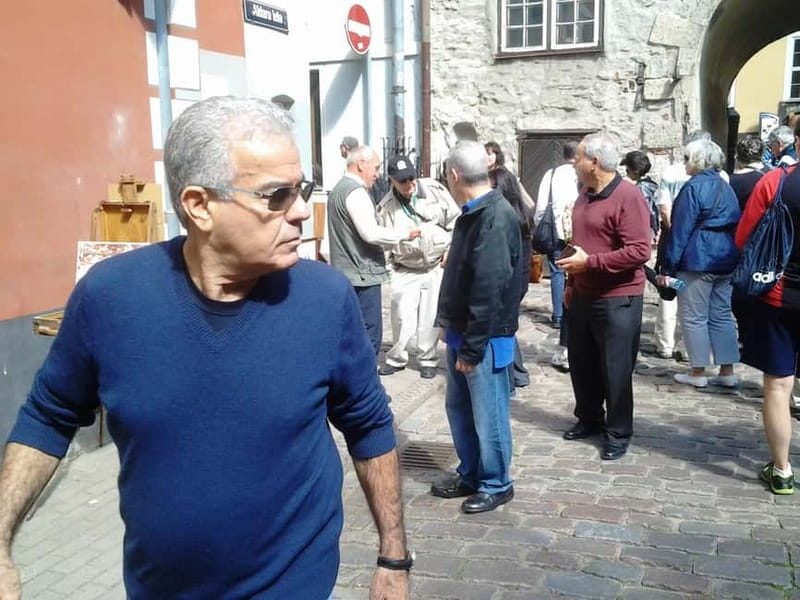
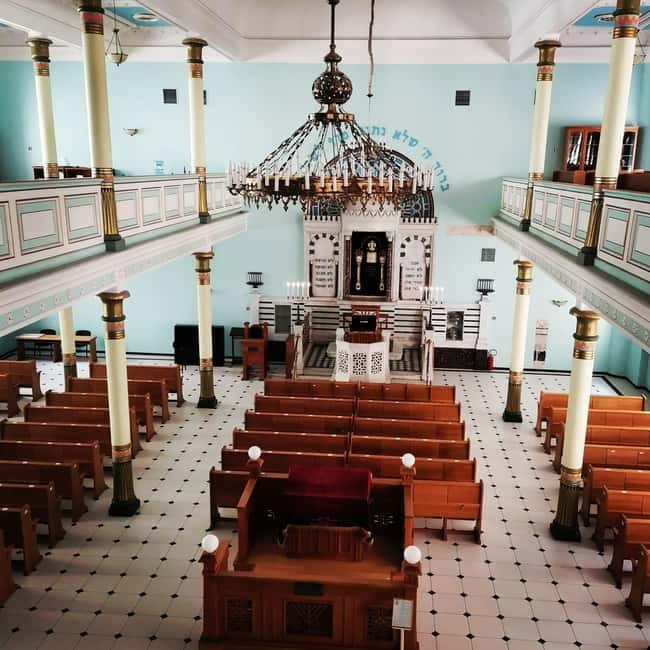
Your Old Town walking portion includes a visit to the Riga Synagogue, Peitav Shul (the tour also refers to it as the only surviving synagogue from the Nazi period and still in use today).
What makes this stop more than a photo opportunity is the specific kind of story you’re told here: how Torah scrolls were saved. That detail gives the visit a clear focus—this isn’t only about architecture or age. It’s about resilience carried through objects, practices, and people.
You’ll also feel the contrast with memorial sites later on. In places like Peitav Shul, Jewish life is present and ongoing. In other stops on the route, Jewish life is remembered through the absence it left behind. That emotional “flip” is one reason the order and the variety of stops work so well.
Practical tip: check whether your day includes Shabbat or a Jewish holiday. On those days, the synagogue visit can be closed, and the itinerary changes.
Great Choral Synagogue to Rumbula Memorial: when architecture becomes a marker
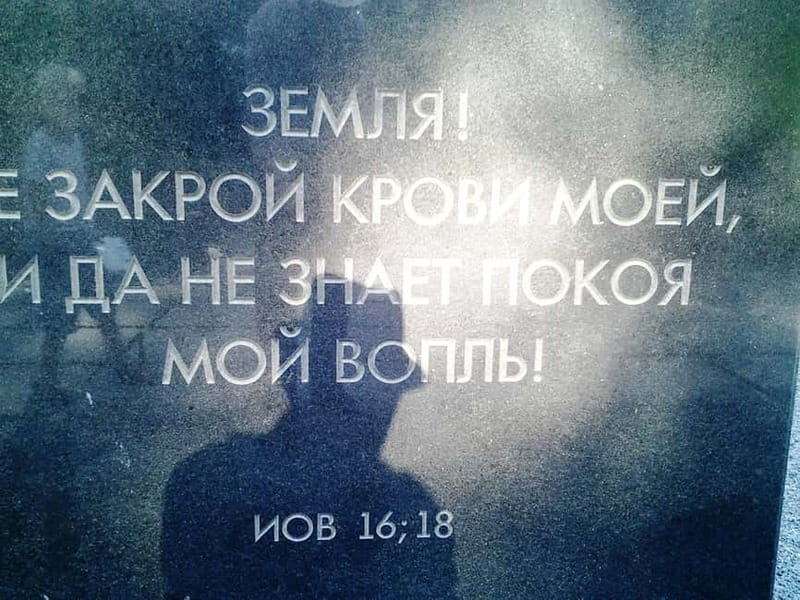
Next you’ll encounter the site of the Great Choral Synagogue (also referred to on the tour with names like Die Greise Hor Shul and Gogol Shul). Today, that place is a memorial site.
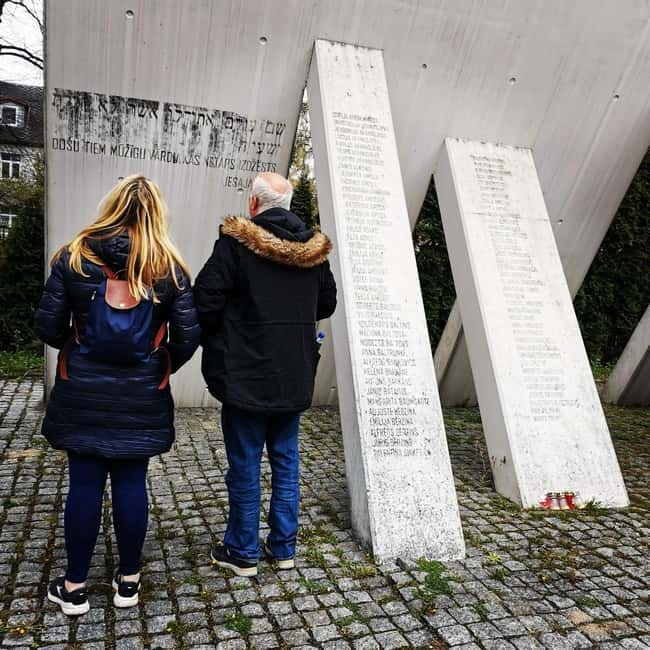
This stop is important because it shows how a community landmark can become a record of loss. The tour ties the memorial to evidence of Nazi inhumanities and the memory of people who helped save Jewish lives. That emphasis on rescuers matters. It keeps the story from becoming only tragedy without human choices and courage.
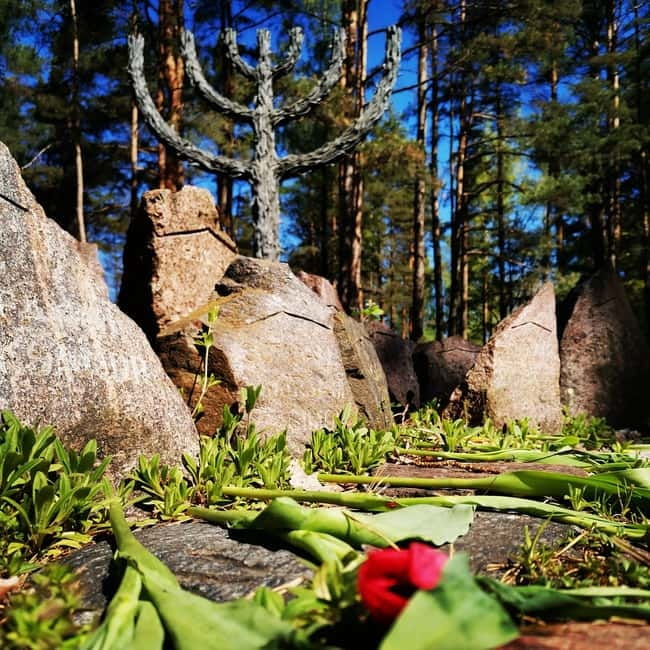
From there, the tour also includes the Rumbula Memorial in the broader arc of remembrance. Riga’s Holocaust story isn’t just one event—it includes mass murders carried out in places like the old Jewish cemetery at Rumbula and in the Biķernieki Forests. Seeing these named places helps you understand the geography of suffering, not just the headlines.
Be ready for the emotional weight here. You don’t need to force any feelings. But I do recommend you give yourself a few quiet minutes where the memorials ask you to stop and look.
Maskavas suburb: wooden houses, institutions, and continuity
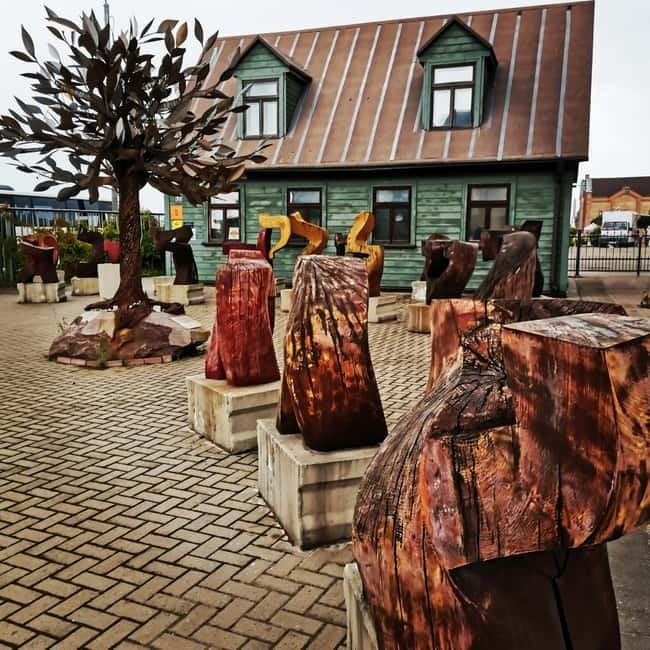
This is one of the strongest parts of the tour because it steps into daily life.
You’ll walk through the Maskavas suburb, described as the historical Jewish square. A key fact you’ll hear: it wasn’t a ghetto before the Nazi years, and it became the main area of Jewish settlement in the 19th century. That shift—from stable neighborhood to forced confinement—changes how you understand everything you’ll see later.
The buildings here are distinctive for one reason you can’t miss: unique wooden housing. That visual detail helps your brain understand what “community” looked like in practice—homes, streets, and the physical texture of everyday living.
Even more convincing is what still exists from the historical period. The first Jewish secular school is now operating as a private Jewish school. And the historical Jewish hospital Bikur Holim is still in use. Those two details keep the story grounded in continuity, which I find more meaningful than only thinking about what was destroyed.
One possible drawback: if you’re sensitive to heavy topics, the tour moves between beauty, community, and tragedy fairly quickly. The guide’s job is to keep the facts clear, but your own pacing matters too. If you need a slower moment, take it.
Mikhail Eisenstein’s Riga and Isaiah Berlin’s home
Riga’s Jewish legacy isn’t only about sacred buildings and memorials. It’s also about big minds and major contributions to arts and ideas.
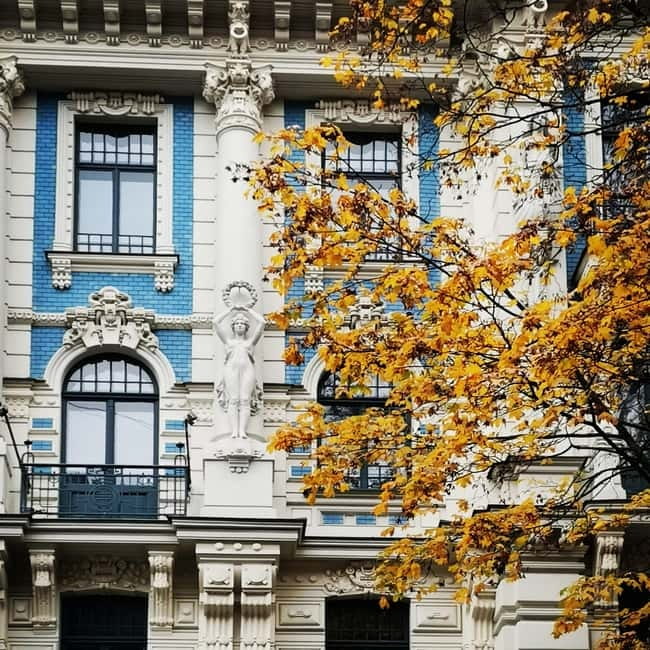
The tour highlights the beautiful architecture designed by Mikhail Eisenstein—the kind of Art Nouveau work that helps Riga compete with the well-known European cities people compare it to. When you connect those buildings to the people who lived and worked in Riga, the architecture stops being “just pretty.” It becomes evidence of who shaped this city.
You’ll also visit the house where philosopher Isaiah Berlin lived (1909–1997). Even without a long lecture, it’s a powerful kind of stop because Berlin is a globally known thinker. Seeing his connection to a particular Riga address makes the city feel less like a set piece and more like a real home for real people.
If you like walking and noticing building details—rooflines, facades, proportions—this part of the tour will feel especially satisfying.
Rumbula, Biķernieki Forests, and the ghetto museum’s preserved houses
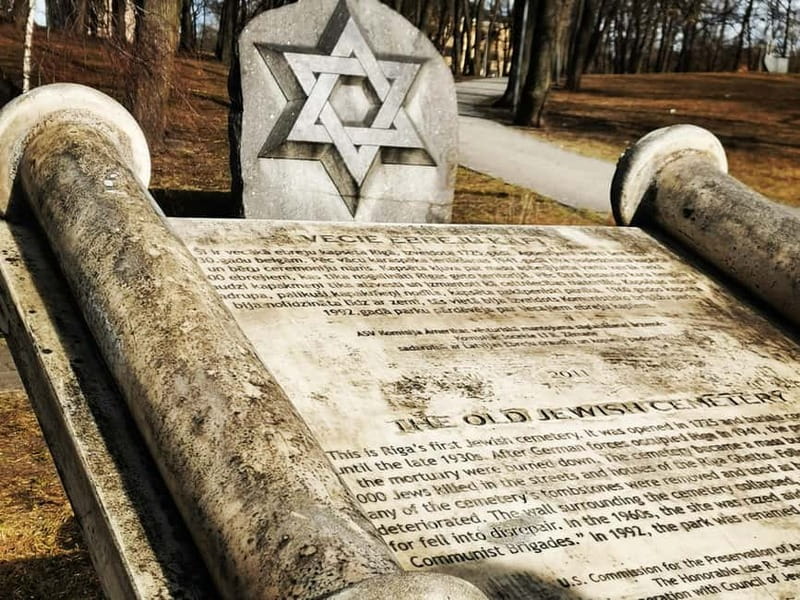
The later part of the experience brings you into the memorial landscape: Rumbula and the Biķernieki Forests, where mass murders were carried out. These places are now memorials, and they’re designed for contemplation.
This is where the tour’s structure matters. It doesn’t treat the Holocaust as only a museum story inside four walls. You also get the geographic markers tied to what happened. That helps you connect names, dates, and places into something your memory can actually hold.
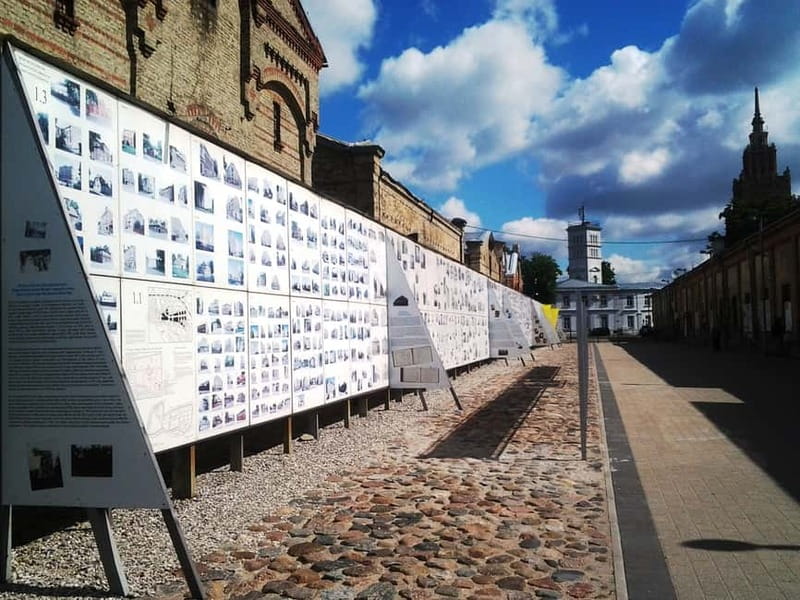
Then you reach the Riga Ghetto Museum, located on the border of the former ghetto territory. One of the standout facts here is that it’s described as one of the rare places in Europe that experienced no architectural changes, with small wooden houses where people lived still standing.
Inside the museum, you’ll find the names of more than 70,000 Holocaust victims engraved in the walls. That kind of specific scale is hard to absorb quickly. I’d treat this as a “slow down” stop rather than a “see it fast” stop. Look up. Read. Take breaks if you need them.
Again, plan around religious closures: on Shabbat and other Jewish religious holidays, the Riga Ghetto Museum is closed.
Price and value: $82 for a focused, guided circuit
The tour costs $82 per person for about 3.5 hours. No meals are included, but you do get a live guide and a car for the transport portion.
For this topic, the value isn’t only in how many stops you visit. It’s in the way the guide connects what you’re seeing—synagogues, neighborhoods, memorials, and preserved museum spaces—into one coherent story. And the small group size helps. You’re more likely to hear clearly and ask questions without feeling like the guide has to sprint for the next photo.
If you’re comparing options, I’d weigh this this way: you’re paying for context and time with a guide, plus transport coverage across multiple key sites. That’s often where day tours either feel worth it or feel like a rushed bus ride. Here, the format is built to avoid that.
When to go, what to wear, and how to prepare mentally
You don’t need special gear. The only real guidance is simple: dress according to local weather conditions.
But there’s also a non-clothing kind of preparation. This tour deals with tragic history and memorial sites. Plan to treat it as one of the day’s main activities, not a casual stroll squeezed between shopping. If you’re taking photos, consider asking yourself what you actually want from your pictures—documentation, context, or a way to remember. The memorials are not built for entertainment, and your attitude will shape your experience.
One more scheduling note: the synagogue and the Riga Ghetto Museum close on Shabbat and other Jewish religious holidays. If you’re traveling around the Jewish calendar, check dates so you don’t end up with a different set of stops than you expected.
Should you book this Riga Jewish History and Heritage tour?
I think you should book it if you want Riga history that’s grounded in real places—living synagogues, neighborhood institutions like the Jewish school and Bikur Holim hospital, and memorial sites that map the Holocaust onto the city.
It’s also a great choice if you like a compact format. 3.5 hours plus car transport plus a small group makes it easy to fit into a Riga itinerary without feeling overloaded.
I’d skip or reconsider only if you’re traveling on days when the key sites close (Shabbat/holiday timing) and you’d be disappointed by itinerary changes. Or if you know you don’t handle heavy memorial topics well, because this route includes Rumbula and Biķernieki memorial areas.
If you do book, go with a mindset of respect and curiosity. You’ll leave with a much clearer understanding of how Jewish life in Riga existed in buildings and neighborhoods—and how it was shattered, remembered, and rebuilt through memory.
FAQ
How long is the tour?
The tour duration is about 3.5 hours.
What does the price include?
It includes a live guide and car transport. Meals are not included.
What’s the group size?
The group is limited to 4 participants.
What languages are offered?
The live tour guide is available in English and Russian.
Where does pickup happen?
Pickup is included from any place in Riga.
Is the tour in the Old Town?
Yes, it includes an Old Town walking tour portion that visits the Riga Synagogue.
Which sites are closed on Shabbat and Jewish holidays?
On Shabbat and other Jewish religious holidays, the synagogue and the Riga Ghetto Museum are closed.
What should I wear?
Nothing special is needed—just dress according to local weather conditions.
What if I need to cancel?
You can cancel up to 24 hours in advance for a full refund.