REVIEW · ALMATY CITY
Tanbaly Gorge: Ancient Petroglyphs UNESCO Site Day Tour
Book on GetYourGuide →Operated by NEOmad · Bookable on GetYourGuide
Petroglyphs in Kazakhstan hit different. This day tour through Tanbaly Gorge takes you to a UNESCO site packed with ancient rock carvings and burial mounds, including a very dense stretch of engravings in the main canyon. I especially like the sheer concentration of petroglyphs and how the site specialists turn the images into real stories. One thing to think about: it’s a long day with a couple kilometers of walking over uneven ground.
You start with a hotel pickup in Almaty and use a comfortable, air-conditioned vehicle for the long ride out and back. The payoff is a UNESCO World Heritage experience that still feels light on crowds, with time for you to take in the details without a tourist stampede.
In This Review
- Key points worth knowing
- Tanbaly Gorge: why this UNESCO petroglyph site feels special
- The 8-hour structure from Almaty (and what it means for your day)
- Arriving at the museum-reserve complex: your orientation moment
- The petroglyphs themselves: what you’re actually looking for
- Walking the central canyon: where the best viewing happens
- Guides and communication: English that actually helps you see
- Transportation and pacing: comfortable ride, active site time
- Price and value: is $146 per person fair for what you get?
- What to bring (and what can trip you up)
- Who should book, and who should skip this day tour
- Should you book the Tanbaly Gorge UNESCO petroglyph tour?
- FAQ
- FAQ
- How long is the Tanbaly Gorge day tour from Almaty?
- How much walking is involved?
- Is the tour guided in English?
- What does the tour include in the price?
- Are meals included?
- Is it a private group tour?
- Is it refundable if I cancel?
Key points worth knowing
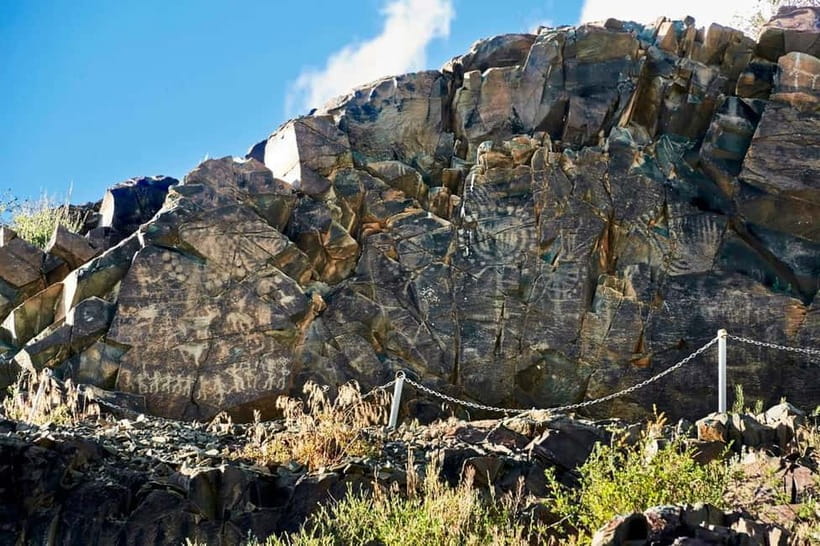
- UNESCO museum-reserve setting: You’re not just seeing rocks; you’re entering an archaeological complex with carvings, settlements, and burial grounds.
- Very dense central canyon: The densest engravings are concentrated where the walk goes, so the best “wow” is right in the middle.
- Long time span of art: Carvings date from the XIV–XIII BC period to the 18th century AD.
- English guide + on-site specialist: Your main guide handles the story, and an expert on site helps you understand what you’re looking at.
- 8-hour schedule with a big drive: Expect roughly 2.5 hours each way, then about 3 hours guided exploration on site.
- Moderate hiking demands: Plan for about 2 km of walking plus uneven hiking between groups of engravings.
Tanbaly Gorge: why this UNESCO petroglyph site feels special
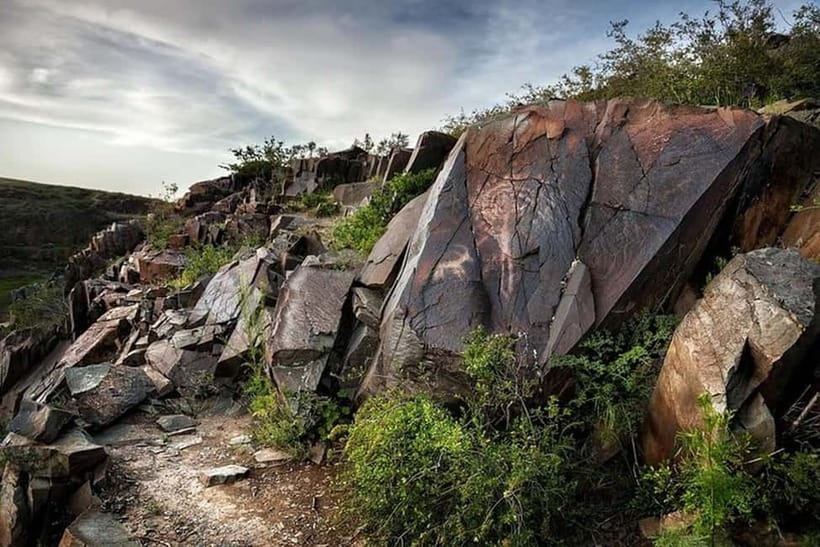
Tanbaly Gorge isn’t just another “look at the rocks” stop. It’s a whole archaeological landscape built around pastoral peoples—places tied to daily life, social organization, and rituals. When you stand in the canyon area, you can see why this UNESCO World Heritage Site is considered one of the most unique and dense petroglyph concentrations.
Two things make this tour stand out right away. First, the petroglyphs aren’t scattered in a single photo-friendly spot. They’re distributed among multiple complexes tied to settlements and burial grounds. Second, the site includes areas thought to function like altars for sacrificial offerings—so the carvings feel linked to meaningful events, not random decoration.
The drawback is straightforward: the site is outdoors, and you walk. If you’re not used to uneven canyon footing, you’ll want to move slowly and wear real grip shoes.
The 8-hour structure from Almaty (and what it means for your day)
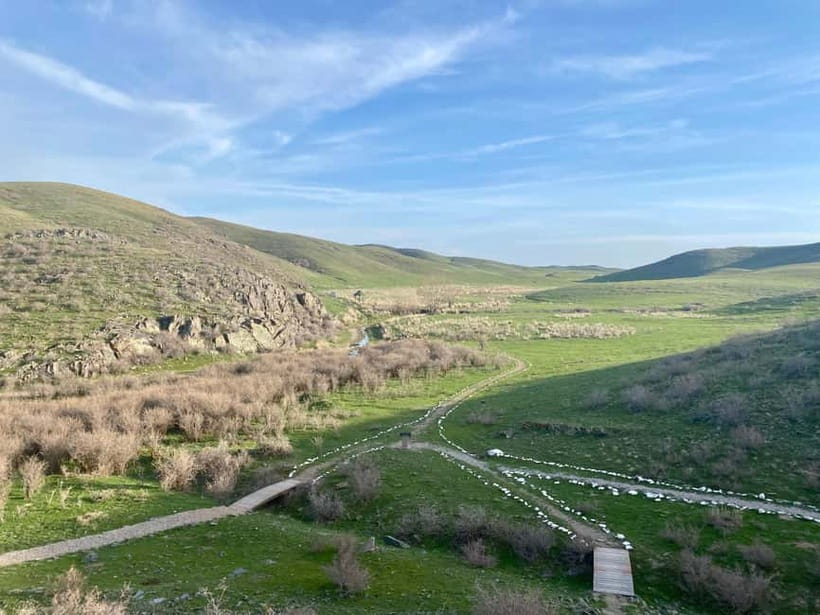
This is an all-day commitment, but it’s built to make the long distance manageable. You’ll be picked up in the morning in Almaty, then head out by road toward the Chu-Ili mountains region where the gorge sits. The one-way drive is about 2.5 hours, so half your day is travel time.
Once you arrive, you get guided exploration on site for about 3 hours. That’s a good length: long enough to understand the place and not just “pass through,” but not so long that you feel rushed. Then you return to Almaty, finishing the day with you back where you started.
Practical tip: use the drive time to set expectations for the site. Petroglyphs can look similar if you only glance. When your guide starts explaining the context—who carved them, what periods they represent, and why the canyon matters—you’ll notice details faster once you’re standing close.
Arriving at the museum-reserve complex: your orientation moment
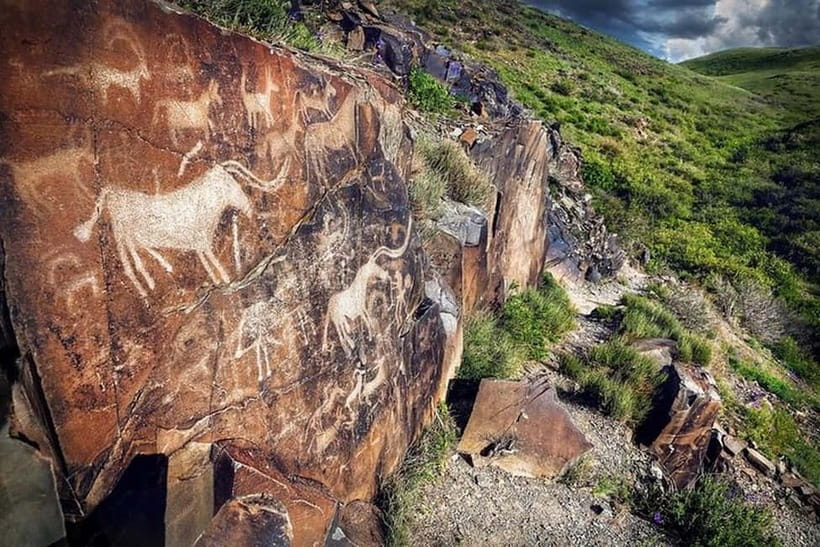
On arrival, the first “real” step is the museum-reserve area. This matters more than it sounds. A petroglyph site is easy to misunderstand if you don’t have a mental framework, because you’re looking at marks made across centuries.
Here’s what you’re aiming to grasp. The complex is an archaeological reserve with a remarkable concentration of rock carvings dating from the XIV–XIII BC era to the 18th century AD. That timeline tells you something important: this wasn’t a one-time carving project. The canyon seems to have continued holding meaning for long periods.
You’ll also hear how the carvings are distributed across multiple complexes with associated settlements and burial grounds. In plain terms: you’re not viewing isolated art. You’re reading clues in an environment where communities lived, practiced rituals, and buried their dead.
If you’re the type who likes learning how to “see,” the museum-reserve stop is where that starts.
The petroglyphs themselves: what you’re actually looking for
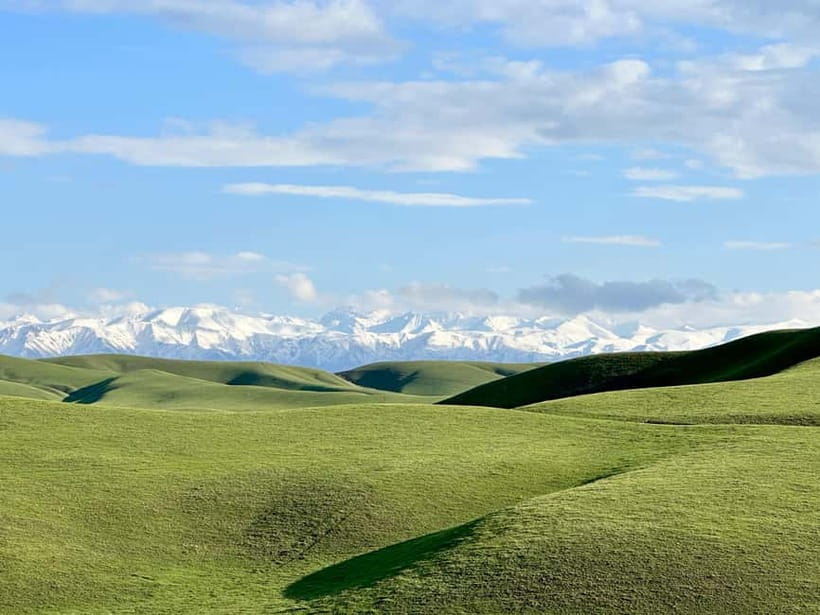
The petroglyphs at Tanbaly Gorge are tied to pastoral life. Your guide should help you connect what you see in stone to husbandry, social organization, and ritual behavior of pastoral peoples. Even when carvings are hard to interpret at first glance, the context helps you stop treating them like abstract doodles.
What makes this UNESCO site especially compelling is the density and variety of what appears across the central canyon and related areas. You’re dealing with a concentration of engravings that can feel overwhelming in the best way. Instead of hunting for one perfect carving, you’ll experience the site as a layered record of repeated human presence.
A key focus during your walk is the central canyon, where the densest concentration of engravings is found. You’ll also hear about areas believed to be altars—places connected with sacrificial offerings. That interpretation changes how you look at the carvings. You start thinking about ceremony, not just decoration.
Walking the central canyon: where the best viewing happens
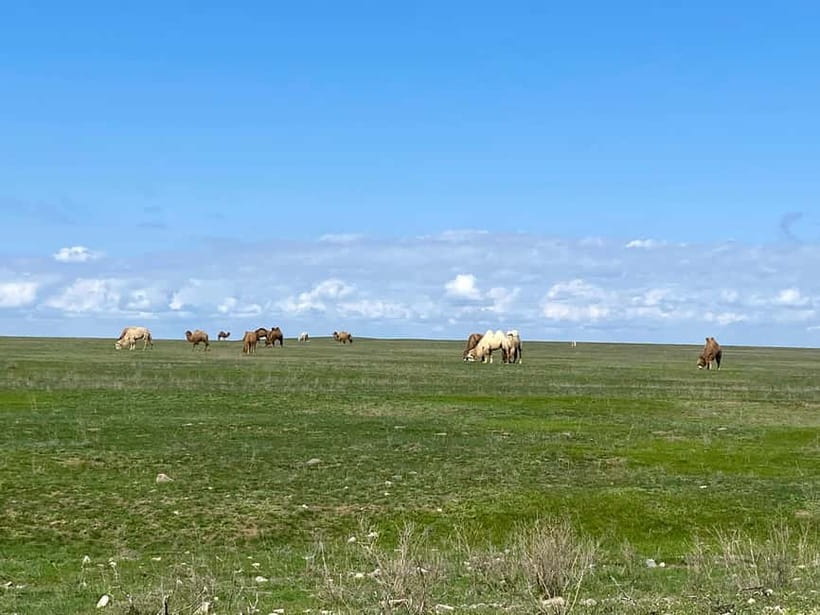
The tour includes around 2 km of walking and some hiking between areas with petroglyphs. This isn’t a smooth stroll. Expect uneven ground, changing footing, and moments where you pause to look closely at rock carvings rather than just moving on.
The reward is that the central canyon is where you’ll see the densest engravings. That’s where the tour’s “wow” tends to hit hardest, because you get a stronger sense of concentration—more carvings in less space, and more visual material to compare.
If you get a guide who takes time with interpretation, this section becomes more than physical exercise. You’ll get help with how to look at carvings: where to focus first, what context clues your guide uses, and how different areas may relate to ritual spaces. Some groups also have an extra site specialist at this stage, which can add clarity when you’re trying to connect images with real-world practices.
Comfort note: bring comfortable shoes with grip. If you want to spend the whole time looking closely, stable footing matters.
Guides and communication: English that actually helps you see
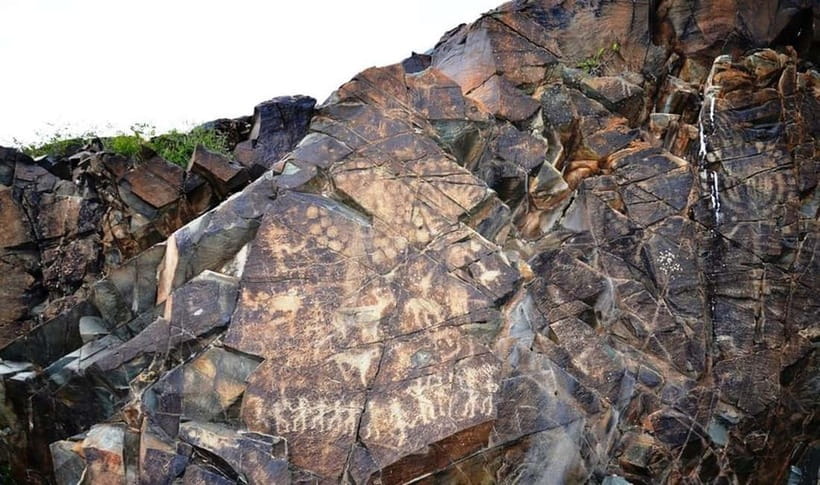
This is an English-guided experience, and that language support is a big part of the value at a petroglyph site. Rock carvings can be frustrating if the explanation stays vague. The best guides do the opposite: they help you understand what you’re seeing and why it matters here, not just anywhere.
In past groups, names like Nursultan and Minara have come up, with strong feedback for friendly, organized explanation and practical tips for understanding Kazakhstan beyond the gorge. You might not get the same guide, but the tour’s structure supports a guided experience, and the on-site specialist component can sharpen the details once you’re in the canyon.
My advice to you: ask your guide one question early—something like what to notice first on the rocks or how the altars idea is explained on site. Then you’ll spend the rest of the walk looking with a purpose.
Transportation and pacing: comfortable ride, active site time
The tour includes an air-conditioned vehicle and bottled water, which is a welcome combo for a long drive in an arid mountain region. You’re out about 8 hours total, and the transport does the heavy lifting so you don’t waste energy on logistics.
What takes effort is the site time. You’re outdoors, and the walking is part of understanding the carvings. Plan your energy for the canyon section, not the first moments. If you pace yourself—short pauses to look, then moving to the next set—you’ll enjoy it more and feel less rushed.
Also, this is a private group. That usually means you can move at a sensible pace without feeling like you’re being herded.
Price and value: is $146 per person fair for what you get?
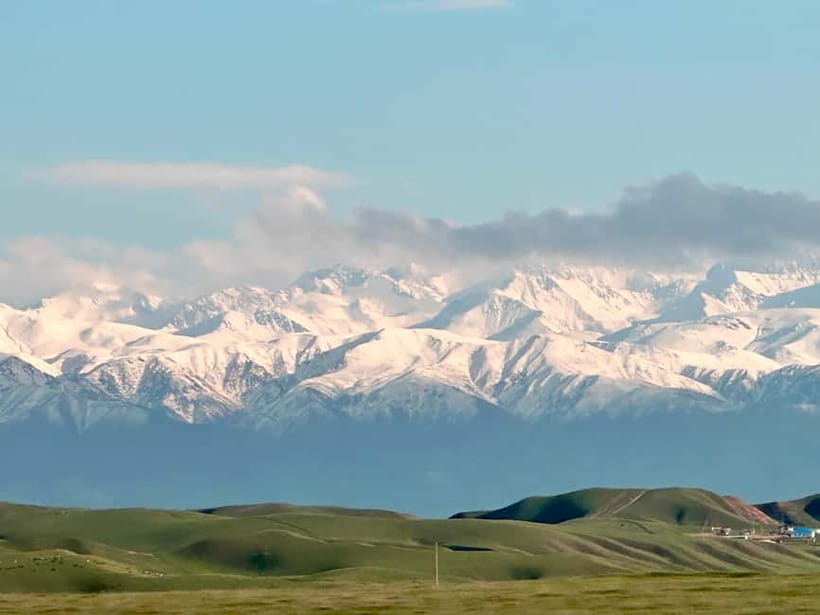
At $146 per person, this is not a cheap impulse buy, but it also isn’t overpriced for what’s included. You’re paying for:
- hotel pickup and return in Almaty
- a full-day vehicle ride (about 2.5 hours each way)
- a guided excursion with professional guide service
- entrance tickets
- bottled water
Add the fact that you get English interpretation and a UNESCO site that’s still not heavily crowded, and the value becomes easier to justify. The biggest factor for cost is time: a long road trip plus guided learning takes effort and planning to deliver well.
Where the price can feel steep is if you’re only interested in a quick photo stop. This tour rewards curiosity and patience. If you like understanding context—why carvings are grouped a certain way, how ritual spaces are inferred, what the long time range means—you’ll feel like you got your money’s worth.
Meals aren’t included, so you’ll want to plan around that. If you’re hungry mid-day, you’ll be glad you brought snacks if your schedule allows.
What to bring (and what can trip you up)
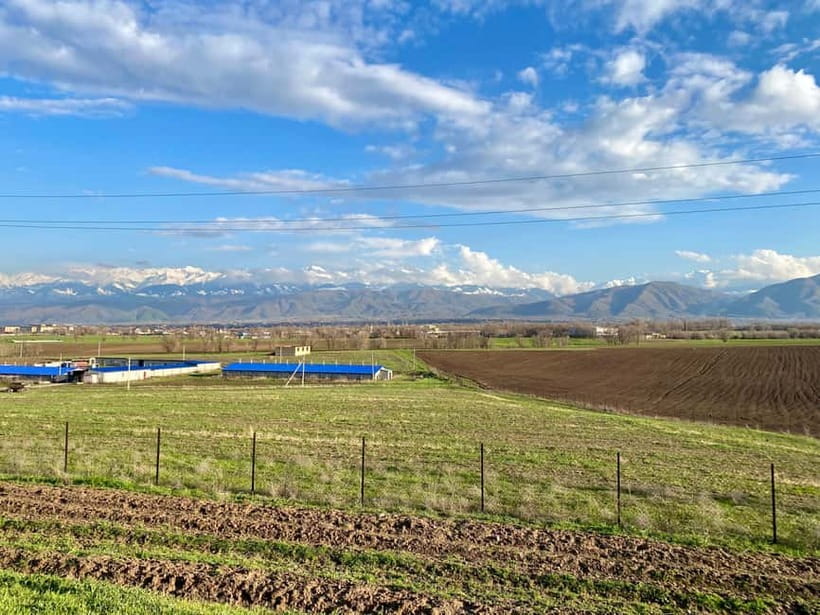
The essentials are simple and practical. Bring comfortable shoes because there’s about 2 km of walking and some hiking between petroglyph areas.
Beyond that, think like a canyon walker, not like a city sightseer:
- Dress in layers, since outdoor conditions can shift during the day.
- Wear footwear with grip.
- Keep your hands free so you can manage pauses and look-ups comfortably.
Bottled water is included, which helps. Still, if you run hot or get thirsty easily, you’ll feel better with your own hydration strategy too—just keep it compatible with the day’s schedule.
Who should book, and who should skip this day tour
This tour fits best if you:
- want an uncrowded UNESCO petroglyph experience
- enjoy learning how to interpret historical sites
- can handle a few kilometers of walking over uneven ground
- appreciate English-guided storytelling and on-site expert help
It may not be the right choice if you have mobility impairments or use a wheelchair, and it’s not suitable for people over 75 or with low fitness levels. The walking and hiking between petroglyph areas are part of the experience, not optional extras.
If you’re in good shape and you like slower, meaningful site time over rushing through checklists, Tanbaly Gorge is a strong match.
Should you book the Tanbaly Gorge UNESCO petroglyph tour?
I’d book it if you want something rare: a dense petroglyph site with an archaeological reserve feel, guided in English, and still not jammed with tour groups. It’s a long day from Almaty, but the structure—orientation at the museum-reserve, then focused time in the central canyon—helps you actually understand what you’re seeing.
Skip it if you can’t comfortably handle walking and uneven canyon footing. Also skip it if you only want a short stop for photos; this works best when you’re willing to spend time looking closely at stone carvings and learning why they’re placed where they are.
FAQ
FAQ
How long is the Tanbaly Gorge day tour from Almaty?
The total duration is 8 hours, with a guided tour portion of about 3 hours on site. The drive from Almaty to the gorge takes around 2.5 hours one way.
How much walking is involved?
The tour includes around 2 km of walking and some hiking between petroglyph locations.
Is the tour guided in English?
Yes. The live tour guide provides interpretation in English.
What does the tour include in the price?
It includes a guided excursion at Tanbaly Gorge, professional guide service, an air-conditioned vehicle, entrance tickets, and bottled water.
Are meals included?
No. Meals are not included.
Is it a private group tour?
Yes. This experience is listed as a private group.
Is it refundable if I cancel?
The tour offers free cancellation up to 24 hours in advance for a full refund. You can also reserve now and pay later, depending on availability.