REVIEW · BUCHAREST
The Jewish heritage of Bucharest – half day walking tour
Book on GetYourGuide →Operated by Razvan Trancu · Bookable on GetYourGuide
Bucharest remembers in small, specific places. This half-day Jewish heritage walk strings together the Jewish Quarter’s surviving architecture with major memory stops like the Holocaust Memorial, plus a guide who keeps the story lively. I especially like how Razvan Trancu connects dates and politics to street-level reality, and how the route balances religious sites with community history. One thing to plan for: key stops can close for major Jewish holidays and even for temporary safety reasons.
You’ll be moving mostly on foot through the city fabric where the past is still visible, even when the surroundings have changed. The tour focuses on what remains: a museum housed in a former temple, the Great Synagogue area, the Jewish State Theater, the Coral Temple, and the memorial that anchors the whole narrative.
It’s a tight 3 hours, and that’s both a plus and a timing challenge. If you’re the type who hates rushing inside, you’ll want to arrive with comfortable shoes and a calm pace in mind.
In This Review
- Key things you’ll love about this Bucharest Jewish heritage walk
- Entering Bucharest Jewish history on narrow streets
- Meeting at Starbucks and getting your bearings fast
- Jewish Museum of Bucharest: history housed in a former temple
- The Great Synagogue: major landmarks plus Holocaust context
- Teatrul Evreiesc de Stat and the cultural thread in the city
- Laude-Reut Educational Complex and nearby landmarks
- Avraham Kosher break: practical, local snacks time
- Coral Temple: Neo-Mudejar style and restoration you can see
- Holocaust Memorial finale: where the walk lands
- Price and value: what $318 per group really means
- Timing, hours, and closures you must plan around
- Who this tour is best for (and who might skip it)
- Should you book this Bucharest Jewish heritage half-day walk?
- FAQ
- How long is the Jewish heritage of Bucharest walking tour?
- Where is the meeting point?
- How big is the group?
- What languages are offered?
- Is the tour wheelchair accessible?
- Are entrance fees included?
- Which days or holidays might affect opening hours?
- Do I need cash?
Key things you’ll love about this Bucharest Jewish heritage walk
- Guided context from Razvan Trancu, with his knack for connecting Jewish history to Romanian history and everyday life
- Former-Jewish-quarter streets, where older structures meet today’s communist-era apartment blocs
- Jewish Museum in an ex-temple, a practical way to understand how community memory is preserved
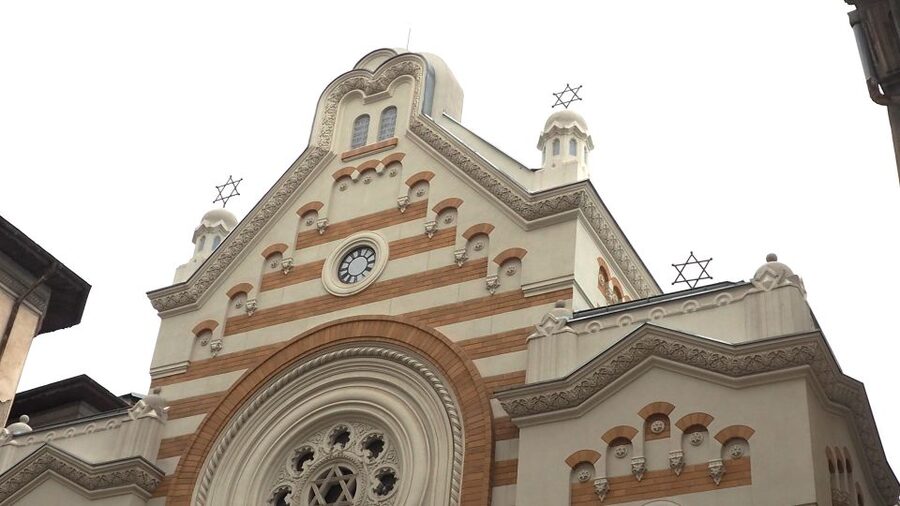
- Iconic synagogue stops, including the Great Synagogue and the restored Coral Temple (when open)
- A clear ending at the Holocaust Memorial, so the story doesn’t just stop at architecture
- A break at Avraham Kosher for snacks, giving you a taste of local life without derailing the schedule
Entering Bucharest Jewish history on narrow streets
This tour works because it doesn’t treat Jewish life as a museum piece. You walk through a neighborhood that’s changed over time, but still shows traces: shape, spacing, and a few architectural survivors that make the past feel physical.
That street-level approach is one of the biggest wins. You’re not only learning names and dates; you’re learning how a community lived in a specific place, with its own institutions—religious, educational, and cultural.
And then there’s the guide factor. Razvan Trancu’s style stands out in the way he makes connections without turning the walk into a lecture, and he’s also known for using photos on an iPad to help you picture what the area used to look like.
You can also read our reviews of more tours and experiences in Bucharest.

Meeting at Starbucks and getting your bearings fast
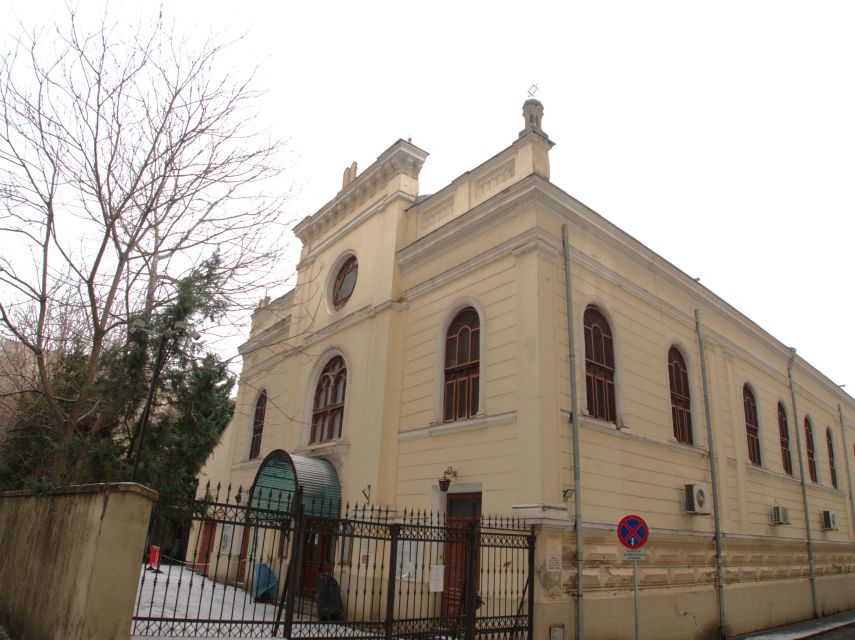
You start at the Starbucks entrance door, a simple meet point that keeps things straightforward. From there, you begin with an Old Town orientation pass, then the walk tightens into the Jewish Quarter route.
That early orientation matters. Bucharest is not a city where everything is labeled for first-timers, so a little structure at the start helps you track where you are and why each stop sits where it does.
The tour is designed to move steadily for a 3-hour experience, with a small group size (it’s limited to 7 participants). That size is part of the value: it’s easier to ask questions, and the guide can pace the conversation rather than rushing everyone along.
Jewish Museum of Bucharest: history housed in a former temple
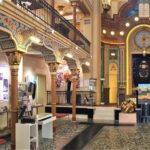
One of the route’s most important stops is the Jewish Museum of Bucharest, currently hosted in an ex-temple. That setting changes how you experience the collections, because you’re not just looking at artifacts—you’re inside an older community structure.
What I like about this part is that it connects architecture and memory. You can see how the Jewish community’s presence remained meaningful even when the neighborhood landscape shifted, including under Romania’s political changes during the Communist regime.
Plan for a guided museum visit that’s about 30 minutes. It’s enough time to get your bearings and understand the big arc of the story, but not so long that you’ll feel stuck inside while the rest of the walk is waiting outside.
The Great Synagogue: major landmarks plus Holocaust context
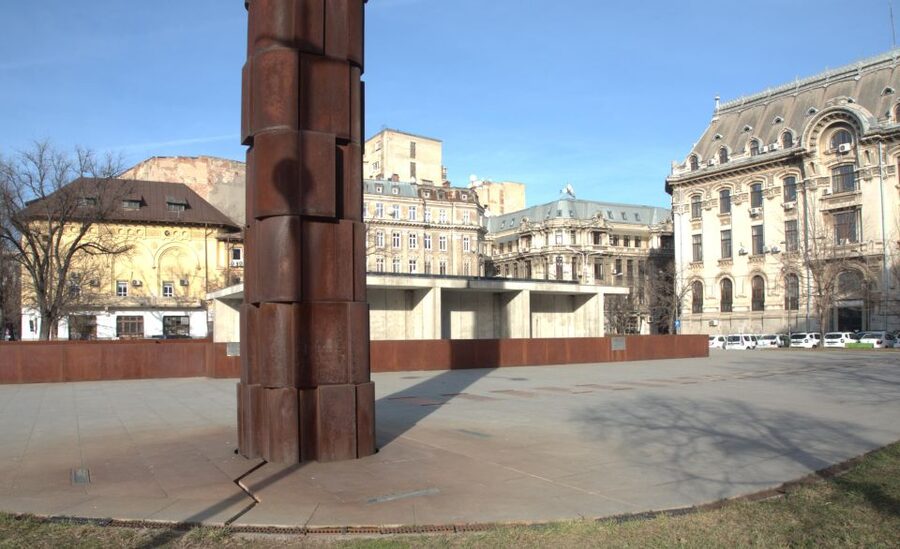
Next up is the Great Synagogue, with a guided visit time of about 30 minutes. This is a key moment because it combines religious significance with the history of the Romanian Holocaust.
Even if you’re not focused on architecture first, this stop helps you understand why remembrance is built into Bucharest’s Jewish sites. The synagogue is not just a building; it’s a marker of community life before the war and the historical rupture that followed.
Two practical notes matter here. First, opening schedules can change with high temperatures and special circumstances, so it’s smart to plan for that on your travel day. Second, during major Jewish holidays—including Rosh Hashana, Pesach, Shavuot, Yom Kippur, and Sukkot—the Coral Temple and the Great Synagogue are closed, so your route may shift depending on the date.
Teatrul Evreiesc de Stat and the cultural thread in the city
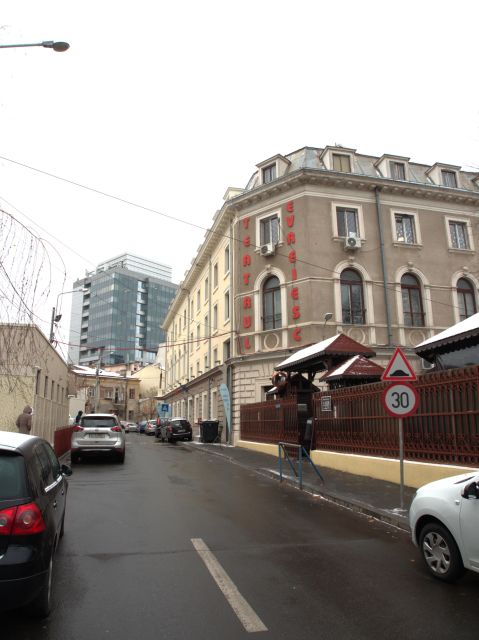
The walk then moves to the Teatrul Evreiesc de Stat (Jewish State Theater), also about 30 minutes. This is one of those stops that people often skip on history days, but it adds a lot.
Why? Because Jewish life wasn’t only religious practice. It also included cultural institutions that shaped public life, and the theater is a strong symbol of that cultural thread.
I like that the tour keeps returning to the idea that community history includes art and education, not only tragedy. You’ll feel that balance continue as the route passes by other educational spaces too.

Laude-Reut Educational Complex and nearby landmarks
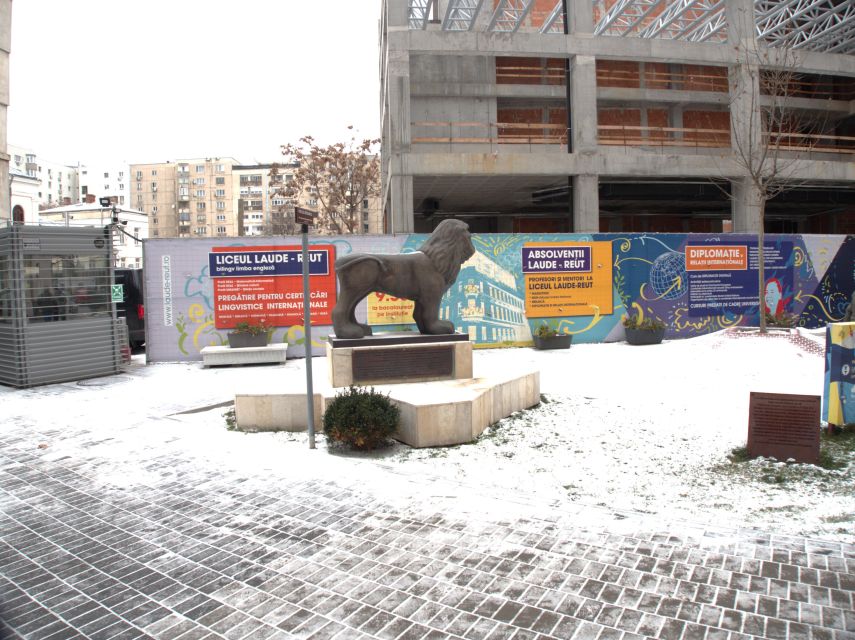
You’ll also pass by the Laude-Reut Educational Complex and then by Jerusalem Lion Square. These are lighter stops compared to the museum and synagogues, but they help you understand the neighborhood as an ecosystem: schools, public space, and community networks.
The quick “pass by” format is efficient. It saves time for the indoor stops, while still giving you the geography so the bigger sites make sense in context.
If you like to photograph street views, this is where you can get shots without feeling like you’re sprinting. The streets around this area are narrow, and the contrast between older Jewish-quarter traces and today’s communist-era apartment blocks is the kind of visual you can’t get from a single museum stop.
Avraham Kosher break: practical, local snacks time
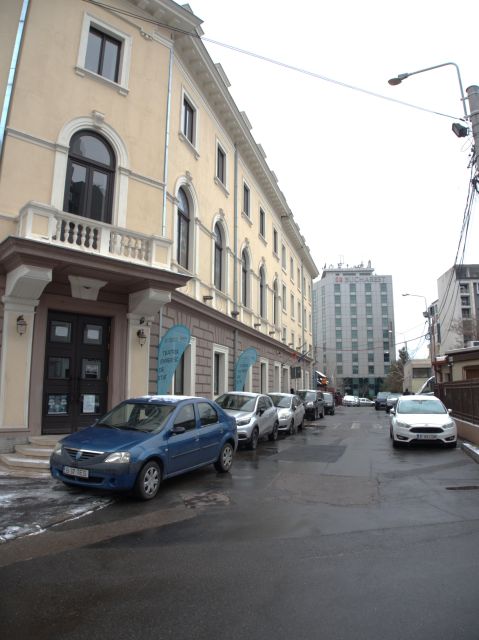
A 30-minute break is scheduled at Avraham Kosher for local snacks. Snacks are not included, but this is a built-in pause that keeps the tour from becoming a constant march.
I find this part useful because it gives you a chance to reset while still staying on schedule. Also, if you want to buy water or something small for later, this is a good moment to do it without interrupting the flow.
Given Bucharest’s heat in summer, this break can feel like a small life saver. One review highlighted that the guide is thoughtful about wellbeing in extreme temperatures, and having a planned pause helps make that practical.
Coral Temple: Neo-Mudejar style and restoration you can see
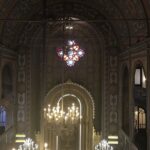
The Coral Temple is a standout architecture stop. You’ll visit for about 20 minutes, and it’s described as splendid, Neo-Mudejar in style, and recently restored, with over 150 years of history.
This is the kind of stop where time is short but impact is high. Even in a brief visit, you can spot why restoration matters: it keeps the community’s physical footprint visible, and it gives you a better sense of continuity rather than only disruption.
Just be very mindful of closures. During the same major holiday list—Rosh Hashana, Pesach, Shavuot, Yom Kippur, and Sukkot—the Coral Temple is closed. Visiting hours are also time-bound: Mon–Thu 9:00–14:00 and Fri 9:00–12:00.
If you’re traveling during high-heat or holiday periods, ask ahead and don’t assume every stop will be open.
Holocaust Memorial finale: where the walk lands
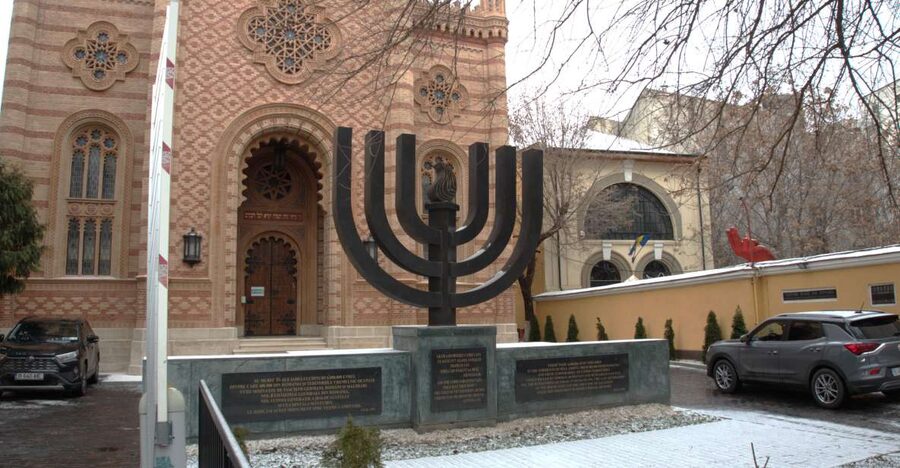
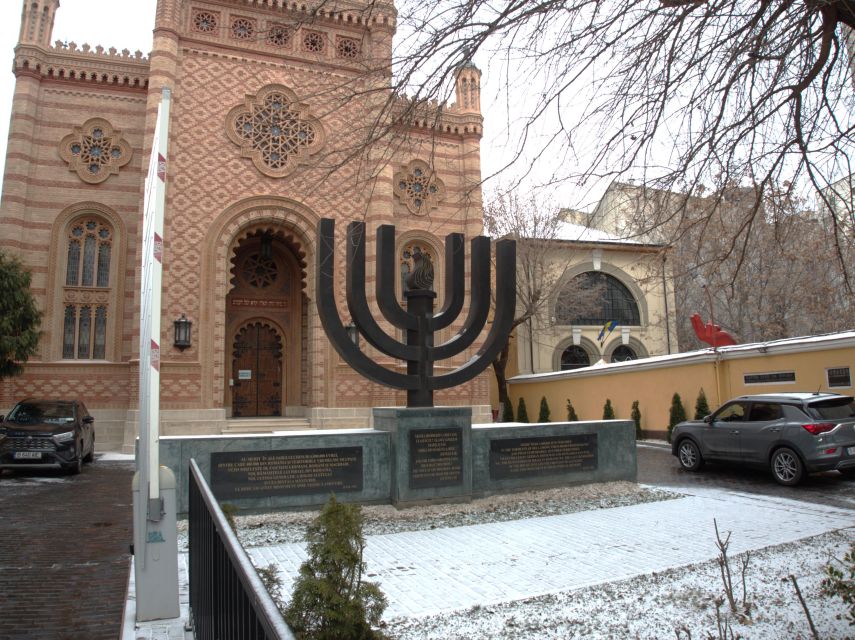
The tour ends at the Holocaust Memorial, with an about 20-minute visit. This final stop is important because it anchors everything you’ve seen into one clear message: memory is not optional, and it belongs in the physical space of the city.
What I like about ending here is the emotional pacing. You’ve seen community sites, educational and cultural institutions, and synagogues tied to Romanian history. Then the walk resolves into a dedicated remembrance space, which feels appropriate and not rushed.
It also makes the overall experience easier to carry afterward. When you finish at a single, focused memorial, the day has a satisfying shape: setup, learning, architecture, and then remembrance.
Price and value: what $318 per group really means
The price is listed as $318 per group (up to 12 participants) for a 3-hour tour. In practice, the group is limited to 7 participants, which affects your per-person value.
Here’s how I think about it: if you only have a handful of people, you’re effectively paying for more direct guide time. If the group fills closer to the higher end, the cost spreads out better.
Entrance fees can add up because there’s an additional 30 lei per person in each location when open. Since the route includes multiple sites where entry fees may apply, it’s smart to budget for cash on hand. The tour itself includes the guided walk through the Jewish Quarter, but not the entries or snacks.
Bottom line: this isn’t a “quick photo tour.” It’s a guided history-and-geography route where the value comes from context, pacing, and the ability to ask questions in a small group.
Timing, hours, and closures you must plan around
You’ll get the most out of this tour by treating opening hours like part of the itinerary. Synagogues and temples operate on a schedule: Mon–Thu 9:00–14:00 and Fri 9:00–12:00. The Jewish Community Museum is closed on Fridays.
And then come the holiday closures. During Rosh Hashana, Pesach, Shavuot, Yom Kippur, and Sukkot, the Coral Temple and the Great Synagogue are closed. If your trip overlaps those dates, you should plan for the route to change.
Safety and security can also affect access. The tour info notes that given events in Israel, some locations might close for visitors for safety reasons. On top of that, high temperatures might affect opening schedules.
My advice: if you’re booking close to a holiday window or you’re traveling in peak heat, email or inquire before committing so you know what you’ll realistically be able to see.
Who this tour is best for (and who might skip it)
This walk is a strong fit if you want Jewish history tied to real places: synagogues, a museum in an ex-temple, cultural institutions, and a clear Holocaust remembrance ending. If you like your history with city geography—how institutions connect to streets—this tour matches that style well.
It’s also a good choice if you value a small group and a guide who answers questions rather than just delivering a script. The guide’s reported fluency in English and the ability to use visuals like iPad photos can help if you prefer story explanations over reading labels.
You might want to choose something else if you only want broad overview photos. The best experience here comes from paying attention to details and letting the walk build meaning step by step.
Should you book this Bucharest Jewish heritage half-day walk?
If your goal is to understand Bucharest’s Jewish community through the city itself, I’d book it. The combination of street-level context, key synagogue and temple sites (when open), a museum set in an ex-temple, and a thoughtful finish at the Holocaust Memorial makes the 3 hours feel purposeful.
Just book smart. Bring cash for entrance fees where applicable, check hours if you’re visiting on Fridays, and be alert to holiday closures—especially for the Great Synagogue and Coral Temple. If your dates line up well, this is one of the most meaningful ways to spend a half day in Bucharest.
FAQ
How long is the Jewish heritage of Bucharest walking tour?
It lasts about 3 hours.
Where is the meeting point?
Meet at the Starbucks entrance door.
How big is the group?
It’s a small group limited to 7 participants.
What languages are offered?
The live tour guide speaks Italian and English.
Is the tour wheelchair accessible?
Yes, it’s wheelchair accessible.
Are entrance fees included?
No. There is an entrance fee of 30 lei per person in each location, when open.
Which days or holidays might affect opening hours?
The Great Synagogue and Coral Temple are closed during Rosh Hashana, Pesach, Shavuot, Yom Kippur, and Sukkot. The Jewish Community Museum is closed on Fridays. Some sites may also close for safety reasons, and high temperatures can affect schedules.
Do I need cash?
Yes. The tour asks you to bring cash.