Coventry’s best stories hide in plain sight. This 2-hour-45-minute walk connects Lady Godiva, the City of Tomorrow plan by Donald Gibson, and the people who shaped modern tech and industry. I loved how it turns everyday street views into clear, human stories about Coventry and innovation.
My other favorite part is the pace: a small group (max 12) moving about just over two miles, mostly flat, with short stops that keep things lively. One thing to consider: a few sights have admission that is not included, so you may want to decide ahead of time whether you’ll pop inside or just enjoy the explanations from outside. Also, the start can be easy to miss if you’re just staring at a pin—aim for the square by the Godiva statue.
In This Review
- Key Highlights
- Why Coventry, and Why This Walk Works
- Price and Walking Logistics (and How Not to Miss the Start)
- Broadgate’s City of Tomorrow: Lady Godiva and Donald Gibson’s Plan
- From Ribbon Weaving to Cathedral Walls: New Buildings and St Mary’s Edge
- Sir Frank Whittle: The Jet Engine Story in Plain Sight
- Lady Herbert’s Garden, Bicycles, and the City Wall That Had a Job
- The Coventry Ring Road (A4053): Engineering You Can Walk Past
- Millennium Place and the Motor City Cycle: Rise, Peak, and Near Disappearance
- Palmer Lane and the Places Locals Don’t Always Notice
- Old Grammar School, Public Art, and Poet-Linked Names
- Belgrade Theatre: Ira Aldridge and Women Who Changed the Arts
- Bond’s Hospital and the Craft of Staying Useful
- St John the Baptist and the Phrase Sent to Coventry
- Historic Spon Street: Dying Trades, Watchmaking, and What Isn’t Obvious
- Coventry Market, Bull Yard, and Shelton Square: Small Stops With Big Connections
- Cheylesmore Manor House, Greyfriars Spire, and Fords Hospital
- Ending in Hertford Street: What to Look for After the Tour
- Who Should Book This Walking Tour
- Should You Book the Jigsaw of History Tour?
- FAQ
- How long is the Jigsaw of History Tour?
- Where does the tour start and end?
- Is the tour in English?
- What’s the group size limit?
- How far do you walk?
- Is the route flat?
- Do I need to buy admission tickets at each stop?
- Do I need a mobile ticket?
- Is there anything about Sundays?
- Are service animals allowed?
Key Highlights
- City of Tomorrow (Donald Gibson) explains how Coventry rebuilt after destruction
- Sir Frank Whittle connects the city to the invention of the jet engine
- Bicycles and Alfred Herbert come up in one of the tour’s most surprising stories
- Engineering lessons in the Coventry Ring Road (A4053) and the city wall’s purpose
- Belgrade Theatre links Coventry’s stage legacy, including Ira Aldridge
Why Coventry, and Why This Walk Works
Coventry can feel like a city you pass through fast. This tour flips that. In under three hours, you get a sense of how the city repeatedly reinvented itself: rebuilding, inventing, manufacturing, and then recovering when industries faded.
What makes it work is the way the guide uses sightlines. You stop at monuments, building edges, and street corners—not just big-ticket landmarks. That approach turns the city into a timeline you can actually walk through. You’ll also notice a practical storytelling style: short scenes, then the why behind them. It’s not a lecture hall. It’s more like street-level history with context.
If you like places where tech meets everyday life, you’ll enjoy this. Expect recurring themes: industry (weaving, motor making, bicycles), engineering (ring roads, city walls), and cultural landmarks (theatre, churches, hospitals).
Price and Walking Logistics (and How Not to Miss the Start)
The tour costs $17.05 per person, and that matters for value. Most stops are outside and have free admission tickets tied to the points along the way, so you’re mostly paying for the guiding and the connections between places. A handful of stops list admission as not included, which is your cue that you may want to bring a little extra flexibility if you plan on going inside those locations.
Time-wise, it runs about 2 hours 45 minutes and covers a little over two miles. The route is mostly flat, with some inclines and ramps, plus a small patch of cobbles. If you’re comfortable with normal city walking (and you won’t mind a bit of uneven pavement), you’ll be fine.
Group size is capped at 12 travelers, so the guide can actually track the flow—helpful when you’re stopping often for explanations. It’s offered in English, and you use a mobile ticket.
One more practical point from my perspective: the meeting location matters. Don’t rely on a vague pin. Plan to start at Sky Blue City Walks on Broadgate, Coventry CV1 1NE, and orient yourself near the Godiva statue in the square. That’s the spot you want to be standing at when the tour begins.
Broadgate’s City of Tomorrow: Lady Godiva and Donald Gibson’s Plan
You kick off around the Lady Godiva statue in the middle of Broadgate. From there, the tour frames the area using Donald Gibson’s masterplan for Coventry’s post-war reconstruction—often described as Coventry’s City of Tomorrow.
This is a smart way to begin. Lady Godiva is the recognizable hook, but the real value is what comes right after: you learn how the city’s rebuilding decisions shaped the look and feel of the streets around you. Instead of treating post-war rebuilding as a vague era, the guide ties it to an actual plan and shows you why it changed what you see today.
Right near the start, you get an idea of the tour’s rhythm: a short stop, then movement. The walk doesn’t drag. It keeps you looking outward, not downward at a phone screen.
From Ribbon Weaving to Cathedral Walls: New Buildings and St Mary’s Edge
Next, you shift into industry and survival mode. You’ll hear about the rise and fall of ribbon weaving in the city center, using the last surviving former ribbon weaving factory as your reference point.
This isn’t just nostalgia. The tour pairs the factory story with another nearby anchor: the surviving wall of the original Coventry Cathedral, St Mary’s. Seeing the two together helps you understand how Coventry’s industrial growth and its major religious/architectural identity occupied the same geography. Even if you don’t know the details, you can feel the contrast in materials, scale, and what each place represents.
The time here stays short. You’re not stuck at a single spot long enough to lose attention, but you come away with a clearer sense of what industries meant locally—and what changed when those industries couldn’t keep going.
Sir Frank Whittle: The Jet Engine Story in Plain Sight
At the Sir Frank Whittle statue, you get one of the tour’s biggest “wait, Coventry did that?” moments. The guide connects the city to Earlsdon-born engineer and RAF officer Sir Frank Whittle and his role as the inventor associated with the jet engine.
Even if you only know Whittle’s name in passing, this stop makes the connection feel real. You’re not reading about breakthroughs in a textbook. You’re standing near the city’s tribute to one of the 20th century’s game-changing inventions.
And because this walk is built from multiple industries and engineering stories, it helps the Whittle moment land. It doesn’t sit alone. You’ll see similar themes later—how Coventry’s technical work translated into manufacturing identity.
Lady Herbert’s Garden, Bicycles, and the City Wall That Had a Job

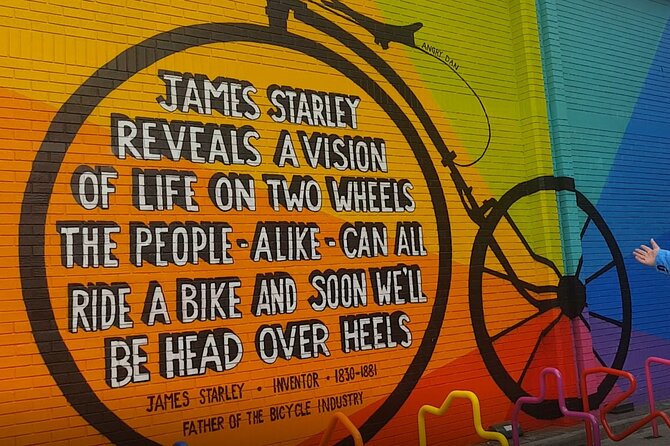
This part surprised me with how much ground it covers. In and around Lady Herbert’s Garden, you hear about the birth of the bicycle industry and how the modern bike came into being. It’s a great reminder that today’s everyday tech often started as messy, incremental improvements to real problems people faced.
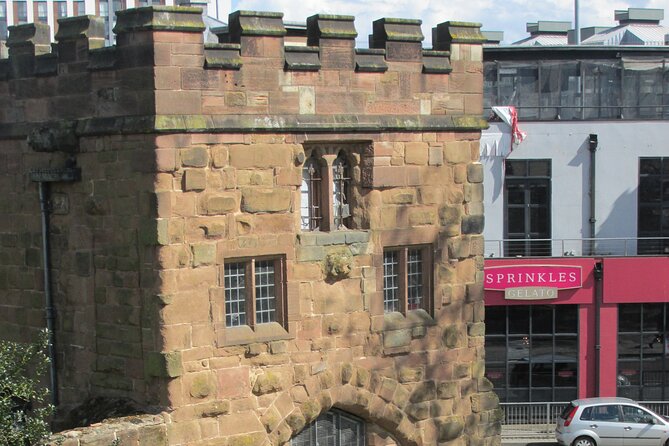
Then you pivot to the Coventry City Wall, specifically its best preserved section. The story includes why industrialist Alfred Herbert saved the wall from destruction. That detail matters because it turns preservation into a person’s choice, not just a government decision.
The tour also explains how, at one point, the wall was needed—and it connects that episode to the claimed true beginning of the English Civil War. You don’t have to treat it like a history textbook verdict. The value for you is learning that the wall wasn’t only symbolic. It had purpose, and locals have stories about what happened when the city faced danger.
The Coventry Ring Road (A4053): Engineering You Can Walk Past
After bikes and walls, the tour moves into one of the most practical pieces of engineering you’ll encounter: the Coventry Ring Road, A4053.
You spend only a few minutes here, but the point is big. Ring roads are the kind of infrastructure you usually take for granted. Hearing the story while standing near it helps you understand why it was built the way it was and how it shaped how people move through the city.
It’s one of those stops where the tour earns its name. You’re not just collecting landmarks—you’re seeing the connected parts of a working city system.
Millennium Place and the Motor City Cycle: Rise, Peak, and Near Disappearance
Near Millennium Place, you get the Coventry motor industry story and how the city became the motor city of England, with car manufacture on a global scale. Then the guide brings it home to the modern reality: how much of it almost disappeared forever.
This section is next to the Coventry Transport Museum, which makes it easier to keep your mental picture anchored. Even if you don’t go inside the museum, the tour’s framing helps you connect what you see around you with what the city built—and what it lost or transformed.
In practical terms, this is one of the stops that makes the whole walk feel cohesive. Earlier you heard about ribbon weaving. Then jet engines. Then bicycles. Now it’s motors—an industrial identity with huge cultural weight.
Palmer Lane and the Places Locals Don’t Always Notice
At Palmer Lane, the tour takes you off the most obvious tourist line. You’ll see a few things in the heart of the city that many locals don’t know are there, which is exactly the kind of detour that turns a normal walk into a true finding mission.
This stop works best if you like texture: smaller street scenes, unexpected angles on a bigger city story, and the feeling that you’re learning what to look for once you’re left on your own again.
Even though the time is brief, it shifts your mindset. After this, the tour makes more sense. You start paying attention to details you’d normally skip.
Old Grammar School, Public Art, and Poet-Linked Names
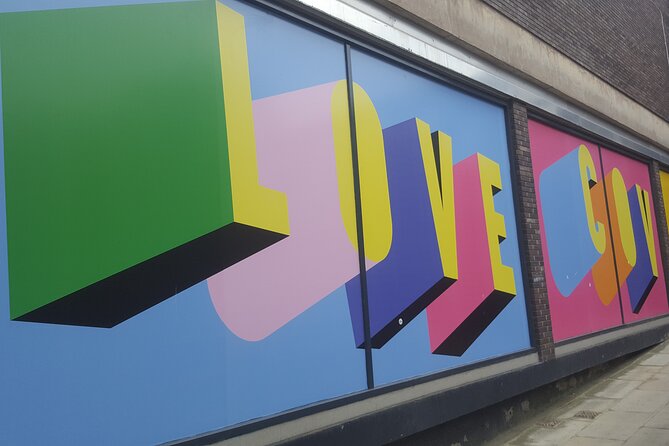
You’ll come to the Old Grammar School corner, but with a twist: it’s a building people shouldn’t call the old grammar school, and the guide uses it to talk about Coventry’s motor industry artwork and building names after a famous poet from the city.
This stop is a good example of how the tour treats signage, naming, and public art as part of history. You’re not just seeing buildings. You’re learning how cities label themselves and what those labels preserve (or get wrong).
It’s also a quick breather in the rhythm of frequent stops, since the explanations stay short.
Belgrade Theatre: Ira Aldridge and Women Who Changed the Arts
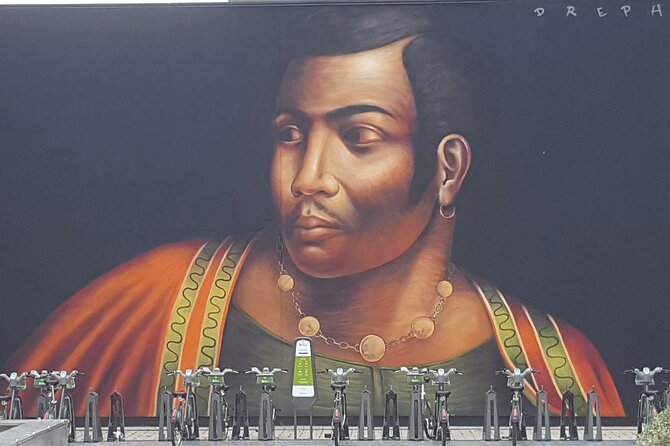
Outside the Belgrade Theatre, you’ll notice artworks used to help tell the theatre’s story and why Coventry became known for plays. The guide adds key people from that legacy, including Ira Aldridge—the performer who became the first Black man to play the leading character about 200 years after Othello was written.
You also hear about three prominent women of the arts in Coventry’s history. The specific names aren’t listed in the tour info you provided, so I won’t pretend they are. But the important part for you is this: the theatre isn’t treated like a building. It’s treated like a cultural engine that shaped what Coventry valued.
If you love theatre, art, and stories of representation, you’ll enjoy how this stop expands the tour beyond factories and infrastructure.
Bond’s Hospital and the Craft of Staying Useful
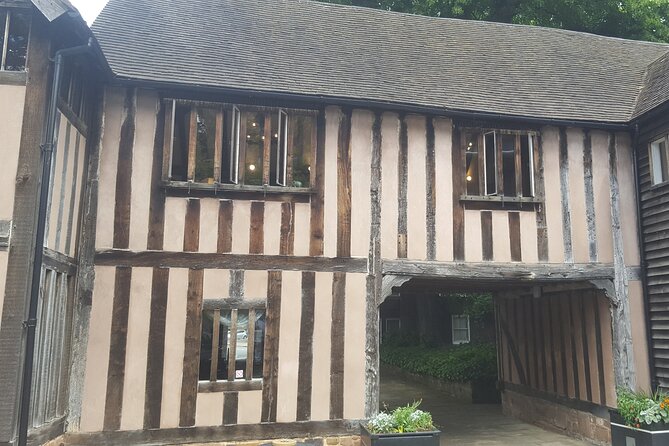
At Bond’s Hospital, you spend time looking at a building built in 1505 by Thomas Bond—and the fact that it’s still used for the same purpose today, over 500 years later.
That’s the kind of detail you remember. It doesn’t just say something survived. It shows that the original idea still works in the present.
Even if you don’t go inside (admission isn’t included at this stop), the exterior view and the explanation give you enough to understand why this building matters.
St John the Baptist and the Phrase Sent to Coventry
Outside the Parish Church of St John the Baptist, the guide explains the claim about the origin of the phrase Sent to Coventry—and ties it to the idea of a private church built for the richest in the city.
This is another “story hiding in a phrase” moment. The expression is common, but the context isn’t. Here, you get the location anchor for the language you already hear in everyday life.
Historic Spon Street: Dying Trades, Watchmaking, and What Isn’t Obvious
At Historic Spon Street, you learn about older industries—tanning, watchmaking, bicycles, and other trades that declined or shifted over time. The guide also talks about how Spon Street was a major road for centuries in the country.
Then you get a helpful warning: while not everything is as it may first seem in the area. That line is exactly why I like this sort of walking tour. It trains your eyes to notice what’s changed, what stayed, and what you’re being shown versus what the place once was.
You’ll spend a longer stretch here than some stops (around 20 minutes), which gives you time to take in the street and the explanations without feeling rushed.
Coventry Market, Bull Yard, and Shelton Square: Small Stops With Big Connections
You’ll have a quick pop into the Coventry Market Shopping Centre—not on Sundays. It’s brief, but it keeps the walk grounded in how the city lives today.
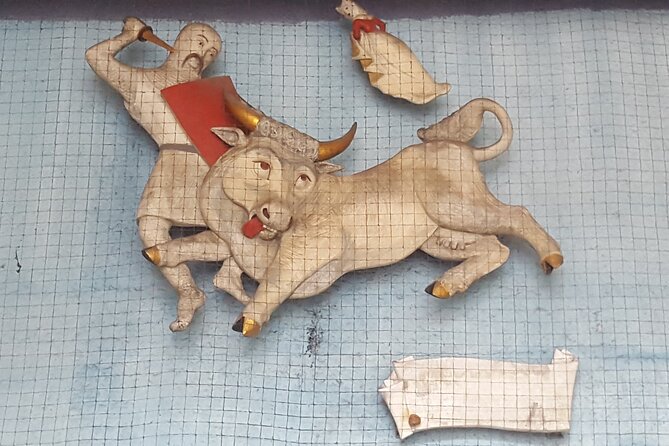
Then comes Bull Yard and Shelton Square, where the guide ties the story back to the City of Tomorrow theme and explains the stories behind eclectic public artworks in the area, plus what the neighborhood had been in days gone by.
These stops help you connect past and present. The artworks aren’t just decoration; they’re a way the city narrates itself while you’re walking through it.
Cheylesmore Manor House, Greyfriars Spire, and Fords Hospital
The tour finishes with several of Coventry’s more “pay attention” stops.
- Cheylesmore Manor House: you learn about a 700-year-old Royal Palace in the heart of the city. Admission is not included here, so you may view from outside unless you decide to add entry.
- New Union Street: you hear the story of Greyfriars Spire, Coventry’s survivor that shows up when you least expect it.
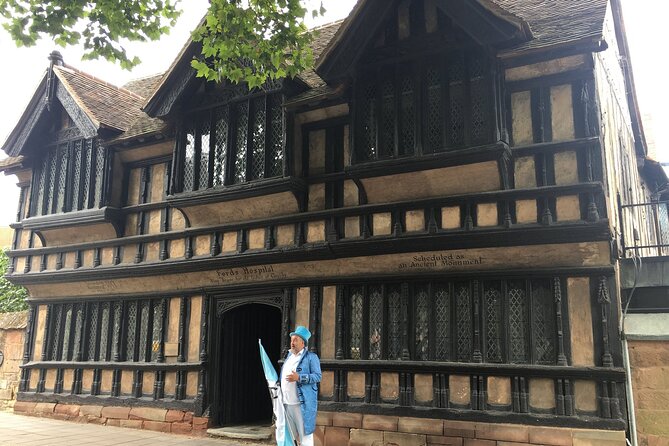
- Fords Hospital: you pause for a quote from a travel writer in 1902, describing the building in high praise. I like this stop because it shows how Coventry looked to visitors at the turn of the last century, not just how locals remember it.
These are perfect for the last third of the walk. You get a mix of architecture, survivals, and cultural notes—enough closure that the earlier tech and industry stories feel more like one connected picture.
Ending in Hertford Street: What to Look for After the Tour
You wind up with a couple of minutes around Hertford Street and return to the starting point. That final stretch matters because it helps you translate everything you’ve heard into a practical skill: spotting story behind street design.
When you leave, you’ll probably catch yourself looking at monuments, wall remnants, and street names differently. That’s the real payoff of the Jigsaw of History Tour. It gives you the mental pieces to keep solving Coventry long after you’ve left the group.
Who Should Book This Walking Tour
Book it if:
- you like tech and industry stories tied to real places (jet engine, bicycles, motors)
- you want a small-group walk that stays active and doesn’t drag
- you’re visiting Coventry for the first time and you want a sense of the city’s rebuild-and-reinvent pattern
- you enjoy theatre and phrase origins as much as engineering
Skip it (or at least prepare differently) if:
- you only want inside access at major attractions—some stops list admission as not included
- you’re very sensitive to short sections of uneven pavement (there’s a small cobble area)
- you’re arriving without a clear plan for the meeting point near the Godiva statue
Should You Book the Jigsaw of History Tour?
If you’re looking for value, this one makes sense. For $17.05, you get a guided walk that stitches together Coventry’s major identity threads—City of Tomorrow, engineering, changing industries, and cultural landmarks—mostly through free outdoor stops. It’s also compact: max 12 people, about two miles, and short stops so you stay engaged.
My main advice is simple: decide whether you want to add any optional indoor admissions at the stops marked as not included. If you’re happy sticking to the view-and-learn mode, you’ll likely feel like you got a lot for your money.
If the weather turns ugly, plan to stay flexible—this is a walking tour, and guides often adjust the experience to keep it going.
FAQ
How long is the Jigsaw of History Tour?
It runs for about 2 hours 45 minutes (approx.).
Where does the tour start and end?
It starts at Sky Blue City Walks, Broadgate, Coventry CV1 1NE, UK, and ends back at the meeting point.
Is the tour in English?
Yes, the tour is offered in English.
What’s the group size limit?
The tour has a maximum of 12 travelers.
How far do you walk?
The walk is just over two miles.
Is the route flat?
It’s mostly flat with some inclines and ramps, plus one small area of cobbles.
Do I need to buy admission tickets at each stop?
Most stops have admission ticket free. A few stops list admission as not included (Old Grammar School, Bond’s Hospital, Parish Church of St John the Baptist, and Cheylesmore Manor House).
Do I need a mobile ticket?
Yes, it uses a mobile ticket.
Is there anything about Sundays?
The Coventry Market Shopping Centre stop is not on Sundays.
Are service animals allowed?
Yes, service animals are allowed.