REVIEW · LUXOR
Valley of the Kings & Hatchepsut temple and Back into Egypt’s ancient history
Book on Viator →Operated by Luxortourguide · Bookable on Viator
Time flies on Luxor’s West Bank. You get a clean route through the Valley of the Kings and the Temple of Hatshepsut, with an Egyptologist guide helping you connect names, symbols, and burial ideas to what you’re actually seeing.
I really like the day’s practical pacing: hotel pickup and drop-off plus air-conditioned transport makes the hot, dusty West Bank feel manageable. One thing to consider: entrance fees aren’t included, and the Tutankhamen area typically needs an extra ticket (so budget for it upfront).
In This Review
- Key highlights you’ll care about
- Why Luxor’s West Bank hits harder than you expect
- Meeting your Egyptologist guide and getting oriented
- Valley of the Kings: Tutankhamen and the tucked-away tomb maze
- Temple of Hatshepsut at Deir el-Bahari: terraces, Punt, and Amun’s daughter story
- Colossi of Memnon: the Amenhotep III leftovers you can see in 20 minutes
- Timing, comfort, and what the 5 hours really feel like
- Price and logistics: is $50 worth it in Luxor?
- Who should book this private West Bank day
- Should you book Valley of the Kings and Hatshepsut?
- FAQ
- What sites are included in this Luxor tour?
- Is this tour private?
- How long is the tour?
- Are hotel pickup and drop-off included?
- Is food included?
- Are entrance fees included?
- Do I need an additional ticket for Tutankhamen?
- Does the tour use air-conditioned transport?
- Is the Colossi of Memnon stop free?
- Is the guide an Egyptologist?
Key highlights you’ll care about
- Qualified Egyptologist guidance (you’ll be able to place what you see instead of guessing)
- Valley of the Kings access to multiple tombs in a time-smart route
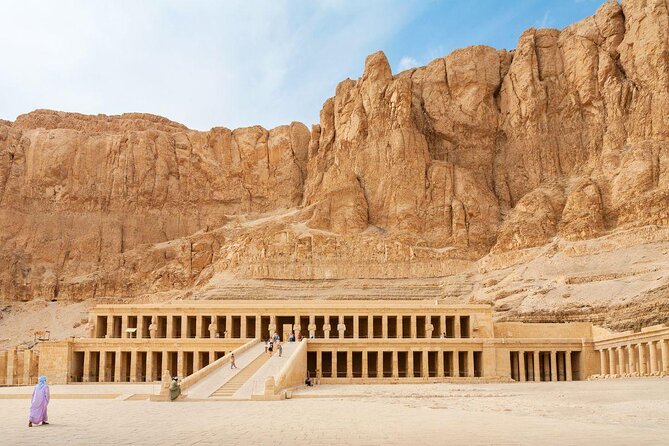
- Temple of Hatshepsut at Deir el-Bahari with terraces, Punt trade stories, and her divine-birth narrative
- Colossi of Memnon stop for the big “what remains” moment at Amenhotep III’s former temple site
- Private format for your group only, which helps you move without stress and ask more questions
Why Luxor’s West Bank hits harder than you expect
Luxor’s temples and tombs don’t work like a museum. They work like a story told in stone, burial passages, and carefully arranged views. This tour is built for that effect. You visit the Valley of the Kings first—where the New Kingdom rulers designed the afterlife in private—and then you shift to Deir el-Bahari, where a queen used temple architecture to explain her legitimacy.
What makes this day feel satisfying is the balance. You get the suspense of entering tombs, then you get open-air scale at Hatshepsut and a quick, iconic stop at the Colossi of Memnon. It’s not the kind of day where you rush from one random wall to another. You get a rhythm.
And yes, you’ll get that Luxor feeling: morning heat fading into softer light as you cross the Nile West Bank and start seeing why ancient Egyptians treated the landscape like a giant sacred map.
Meeting your Egyptologist guide and getting oriented
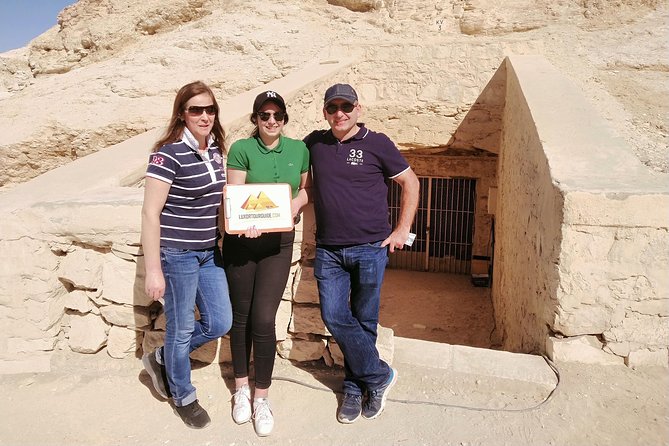
The biggest quality-of-life upgrade here is having a private Egyptologist guide with you. That matters because Luxor’s sites are full of details—names of pharaohs, religious ideas about kingship, and artistic choices that look similar until someone points out what’s different.
Before you enter tombs, your guide can set you up with a simple way to look:
- What the tomb is trying to do
- Who ruled and when, in plain terms
- What to watch for inside—painted walls, burial chambers, and layout clues
In a place like the Valley of the Kings, orientation helps. Without it, you can stand in front of a doorway and think you should feel something dramatic… but you mostly feel confused. With guidance, you start noticing patterns fast: where the story begins, what’s preserved, and why certain royal names carry so much attention even now.
Valley of the Kings: Tutankhamen and the tucked-away tomb maze
The Valley of the Kings is the West Bank’s headline. Here, you’re talking about burial sites for 64 ancient Egyptian rulers—a staggering number that gives you an immediate sense of how serious these people were about the afterlife.
On this tour, you visit three tombs. Those tombs are chosen to give you a mix of well-known royal stories and the wider New Kingdom burial approach. The big name you’ll hear constantly is Tutankhamen. His burial chamber is here, but it’s worth knowing the ticket angle: the Tutankhamen tomb/area is typically a separate admission, so you should expect an add-on.
A few practical tips that will make this stop better:
- Go in with realistic expectations. Tombs are small and intimate. You don’t get a grand “walk through.” You get corridors, chambers, and a lot of looking.
- Wear something comfortable. You’ll spend time standing and moving slowly.
- Expect rotation and schedule changes for tomb openings. The Valley is managed to help protect the painted surfaces, so access can vary.
The payoff is huge. Even when you’re not a self-proclaimed history person, tomb art does something to your brain. Color that old still survives. Scenes still carry meaning. With a guide explaining what you’re seeing, you stop treating it like a random underground room and start recognizing it as a planned religious experience.
Temple of Hatshepsut at Deir el-Bahari: terraces, Punt, and Amun’s daughter story
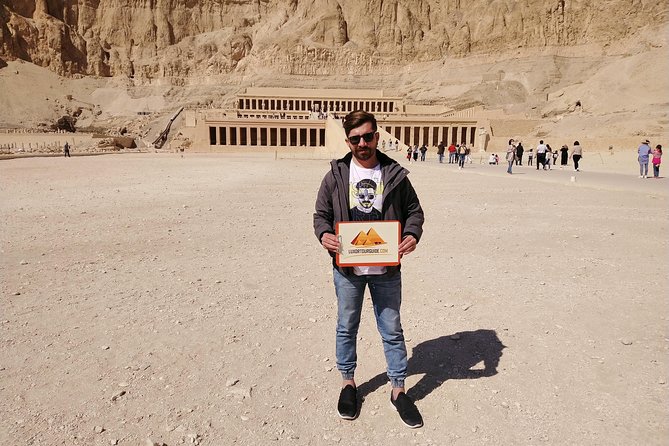
From the Valley’s claustrophobic feeling, Deir el-Bahari opens up the day. The Temple of Hatshepsut at Deir el-Bahari rises out of the desert plain in terraces, so you naturally get a sequence of views—before you even walk in deep.
This is where the day turns from tomb drama to royal theater. Hatshepsut is Egypt’s best-known female ruler, and the temple is basically her argument made in stone. Your guide helps connect the big themes:
- her role as a divine ruler
- her divine-birth narrative
- how she tied herself to Amun, the principal god tied to Luxor
One of the most interesting parts here is the story of the trading mission to the land of Punt (often associated with parts of modern-day Somalia in the usual references). Even if you don’t catch every detail, you’ll understand the point: the temple isn’t just a memorial. It’s a public claim about power, resources, and legitimacy.
What to watch for at Deir el-Bahari:
- the terrace design and how it frames your sightlines
- the way the temple layout reinforces the idea of sacred ascent
- the narrative scenes that make Hatshepsut’s authority feel scripted and intentional
A note for planning your energy. This stop is outside and exposed. Plan for sun and heat, and keep water handy (food and drinks are not included unless your booking specifies otherwise).
Colossi of Memnon: the Amenhotep III leftovers you can see in 20 minutes
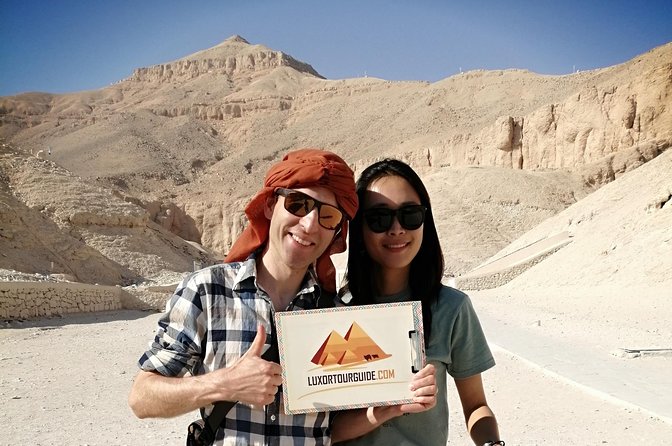
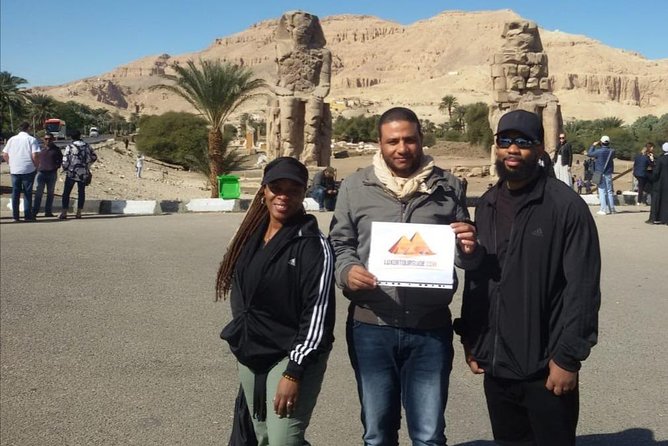
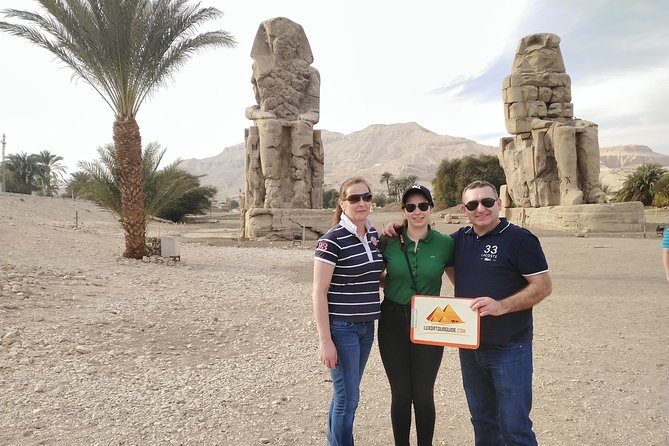
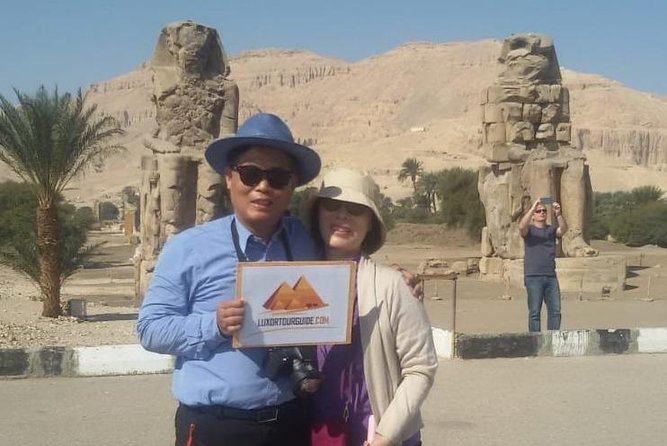
Then you close with a quick, satisfying landmark: the Colossi of Memnon. These two giant statues mark the site of the funerary temple of Amenhotep III. What’s striking is how much scale those statues still have, even after time has stripped away the rest of the complex.
This stop is short, about 20 minutes, and admission is free here. The best way to do it is to treat it like a pause in the story rather than a separate “mini museum.” Stand back enough to see the full height, then walk around to take in the mass and proportions.
You’ll also feel the shift in atmosphere. After the tombs and temple narrative, these statues give you that “end-of-something” feeling—ancient power reduced to two monumental remnants, still insisting on relevance.
Timing, comfort, and what the 5 hours really feel like
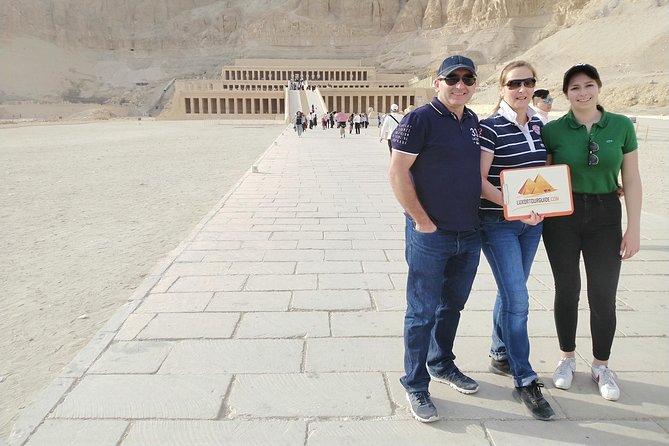
The tour is about 5 hours total. That sounds tight until you realize the West Bank sites are clustered by travel patterns: you cross the Nile, then you hit the main West Bank targets without backtracking all day.
Comfort matters because Luxor heat can turn even a short walk into a sweaty chore. The day includes air-conditioned vehicle transport, plus hotel pickup and drop-off, so you’re not trying to figure out taxis or negotiating while your patience is melting.
It also helps that this is a private format. Your group moves as one unit, and you can ask questions without feeling like you’re interrupting a packed schedule.
Still, one consideration is realistic timing with tomb access. The Valley of the Kings is managed carefully, so entrances can be rotated and controlled. That’s not something you control, but it’s part of why a guide helps—your route stays coherent even if specific access arrangements change.
Price and logistics: is $50 worth it in Luxor?
At $50 per person for a 5-hour private West Bank day, this tour sits in the “good value if you want guidance” category. What makes that value real is what you actually receive:
- qualified Egyptologist guidance
- air-conditioned transport
- pickup and drop-off
The trade-off is that entrance fees aren’t included, and Tutankhamen access is typically an additional ticket. Also, food and drinks aren’t included unless specified. If you plan ahead—budget for entry, bring water, and maybe eat before you go—you’ll avoid the common “surprise math” at the ticket windows.
On balance, this is a solid deal if you want the most famous West Bank hits in one organized day, and you want someone to explain them clearly enough that you remember the names and themes later.
Who should book this private West Bank day
This works especially well if:
- you want a quick, focused West Bank day without guessing your way through the Valley
- you prefer a guide who can explain why tombs and temples were built the way they were
- you’re traveling with family or a mixed-history group and want a smooth pace
- you like photography and time to position yourself without feeling rushed (the private format helps)
If you’re the kind of traveler who wants to spend most of the day wandering slowly, you might find the day short. But if you want key places plus an explanation that turns them from sights into stories, you’ll likely feel satisfied when you return to your hotel.
Should you book Valley of the Kings and Hatshepsut?
Yes—if your goal is to see the Valley’s most famous tomb area (with the understanding that Tutankhamen is extra), then pair it with Hatshepsut’s Deir el-Bahari temple, and finish with the Colossi of Memnon.
Book it if you:
- want the West Bank’s top sites in one day
- value Egyptologist guidance for naming, symbolism, and context
- like organized pickup/drop-off so the day feels simple
Skip or plan carefully if you:
- don’t want to pay separate entrance fees
- are very heat-sensitive and haven’t planned for sun and hydration
- are expecting food included in the price
Bottom line: this is a well-paced, guided Luxor West Bank combo that makes the Valley of the Kings and Deir el-Bahari easier to understand—and easier to enjoy.
FAQ
What sites are included in this Luxor tour?
You’ll visit the Valley of the Kings, the Temple of Hatshepsut at Deir el-Bahari, and the Colossi of Memnon.
Is this tour private?
Yes. It’s described as private, with only your group participating.
How long is the tour?
The duration is listed as about 5 hours.
Are hotel pickup and drop-off included?
Yes, hotel pickup and drop-off are included.
Is food included?
Food and drinks are not included unless specified.
Are entrance fees included?
No. Entrance fees to the sites are not included.
Do I need an additional ticket for Tutankhamen?
The burial chamber of Tutankhamen requires an additional ticket, since it’s not included in the listed admission.
Does the tour use air-conditioned transport?
Yes. Transport is provided by air-conditioned vehicle.
Is the Colossi of Memnon stop free?
Yes. Admission for the Colossi of Memnon is listed as free.
Is the guide an Egyptologist?
Yes. The tour includes a qualified Egyptologist guide.