REVIEW · SHENZHEN
200-year-old Hakka Residence Tour +Ancient Buddhist temple
Book on GetYourGuide →Operated by Fantasia Tours · Bookable on GetYourGuide
Time slows down on a Shenzhen back road. I love how this tour pairs a 200-year-old Hakka residence with a 1000-year Buddhist temple—both feel real, not staged. It’s a quick trip that still lets you see how people lived, prayed, and ate hundreds of years ago.
The other thing I really liked was the long, quiet stretch along the Longgang River wetland area, where the scenery matches the story: a polluted river brought back toward nature. Your guide, Jimmy, makes history fun without turning it into a lecture.
One thing to plan for: it’s a walking tour (comfortable shoes are non-negotiable), and there’s no water or meals included.
In This Review
- Key points you’ll care about
- Leaving Shenzhen Skyscrapers: A Day That Moves Like a Story
- Step Inside the 200-Year-Old Hakka Residence Complex
- What makes the residence feel special (and not just old walls)
- A real-world drawback to know
- A 1000-Year Buddhist Temple Where the Quiet Does the Work
- Why I think this stop is worth it
- Practical note
- Longgang River Wetlands: The View with an Environmental Ending
- What you should do during the river portion
- Price and Logistics: Is $47 a Good Deal for 2.5 Hours?
- What you’ll want to budget outside the tour
- Who This Tour Is Best For (And Who Should Skip It)
- Should You Book This Hakka Residence and Temple Tour?
- FAQ
- Where is the meeting point?
- How long is the tour?
- How much does it cost?
- What’s included in the tour price?
- What’s not included?
- Will there be an English guide?
- How large is the group?
- Is it a walking tour?
- Is the tour suitable for pregnant women?
- Can I cancel and get a refund?
Key points you’ll care about
- Small group of up to 5 people means you can ask questions without shouting over a crowd
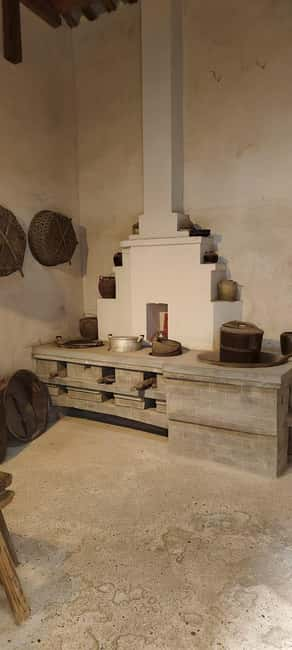
- Hakka residence details like original room layouts, old furniture, a preserved kitchen, and Confucian classroom spaces
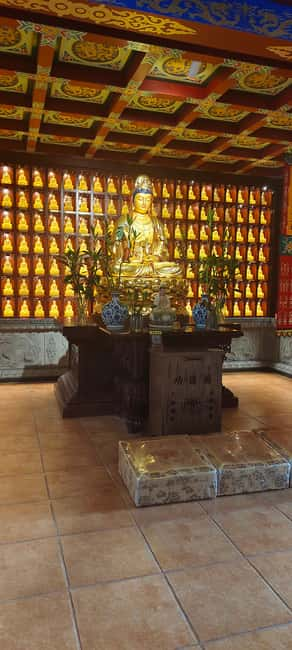
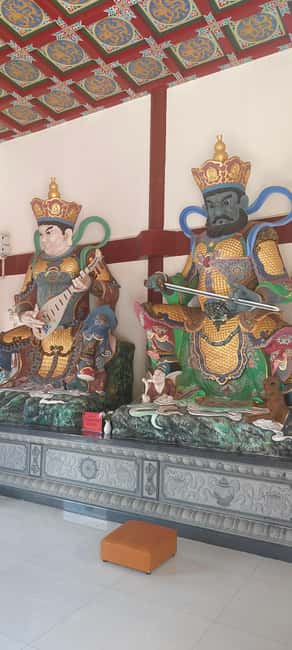
- A 1000-year Buddhist temple complex with multiple structures, including a pagoda tied to the Lady god
- Longgang River wetland views that connect what you see with Shenzhen’s environmental recovery story
- English live guide (Jimmy) who keeps the tone light while still explaining what matters
Leaving Shenzhen Skyscrapers: A Day That Moves Like a Story
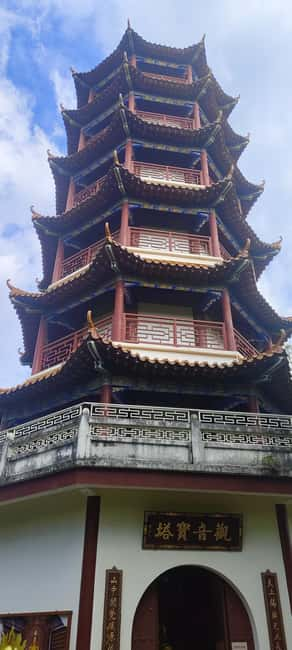
Shenzhen has changed fast. Over the last few decades, the city grew from something small into a modern powerhouse—and that speed means a lot of older places vanished. What I liked about this tour is that it doesn’t pretend Shenzhen’s history is just photos on a screen. It actually sends you to surviving sites that still show daily life and belief.
You’re starting from Nanlian Metro station (Line 3), Exit C1, at 2:00 pm. That timing is useful if you don’t want to burn a whole day traveling. If you’re coming from the Luohu area, you can think of it as about a 60-minute MTR ride, then you switch gears from tech city to old-world quiet.
This is also a short-format experience at 2.5 hours total, so it works best as a focused afternoon plan. You’ll walk between the sites, learn as you go, and still be back in the city before evening.
Step Inside the 200-Year-Old Hakka Residence Complex
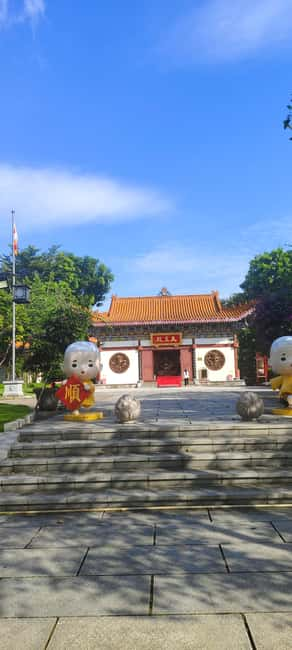
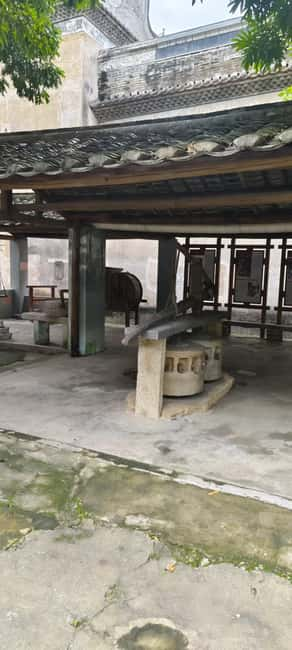
The highlight here is the Hakka ancient housing complex, built by the Luo Clan about 200 years ago. The Hakka are known for migration—people moving from central China toward places like the Shenzhen region. Based on what the guide shares, that migration story goes back roughly 500 years.
You’re not visiting one room and moving on. This residence complex is described as one of the largest ancient housing complexes in China, spanning over 25,000 square meters with more than 300 rooms. Even if you don’t see all of it in one afternoon, the scale changes how you understand it. These weren’t “vacation homes.” This was a community designed for long-term living.
What makes the residence feel special (and not just old walls)
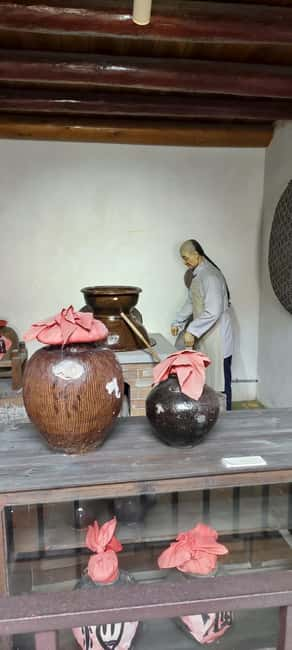
This is where the tour gets practical. You can still see the original layout and old furniture, which helps you picture how movement worked inside the compound. The guide also points out the historic kitchen, and it’s not just a sign behind glass—you get to see the space and what it implies about everyday work. That matters, because kitchen life is where history becomes concrete.
You’ll also hear about the classroom spaces where kids studied Confucianism. That detail is important: it reminds you that education wasn’t a modern add-on. In these compounds, learning and household life were tied together.
A real-world drawback to know
Because this is an outdoor-and-indoor walk through older structures, expect surfaces that aren’t designed for comfort in the modern sense. Wear comfortable shoes, and don’t count on the space being stroller-friendly. The tour is labeled as not suitable for pregnant women, so if that applies, skip this one and look for a different style of visit.
A 1000-Year Buddhist Temple Where the Quiet Does the Work
After the residence, the mood changes. You move into the tranquil environment of a Buddhist temple complex with structures that date around 1,000 years old. This part isn’t about rushing from point to point. It feels more like slow walking and watching how people pray and move through space.
The temple area includes many structures that come together to form the monastery setting. One specific feature is a pagoda dedicated to a Lady god. The guide explains that locals make wishes here, praying for luck and fortunes. Even if you’re not coming for religious practice, it gives you a window into what people need from the world—and how temples function as community anchors.
Why I think this stop is worth it
Temples are common in China, sure. But the value here is the contrast: you just spent time in a compound built for daily household rhythm and learning. Now you’re in a spiritual space that shows another layer of life—hopes, luck, family meaning, and the social role of prayer.
You can also take your time with photos and just absorb the restoration details. One of the best parts is that the area feels calm enough that you’re not fighting crowds for a moment.
Practical note
This is still part of a walking tour, so keep your energy for the afternoon. Bring something for sun protection if it’s warm when you go, since older compounds and temple grounds tend to mix shaded and open sections.
Longgang River Wetlands: The View with an Environmental Ending
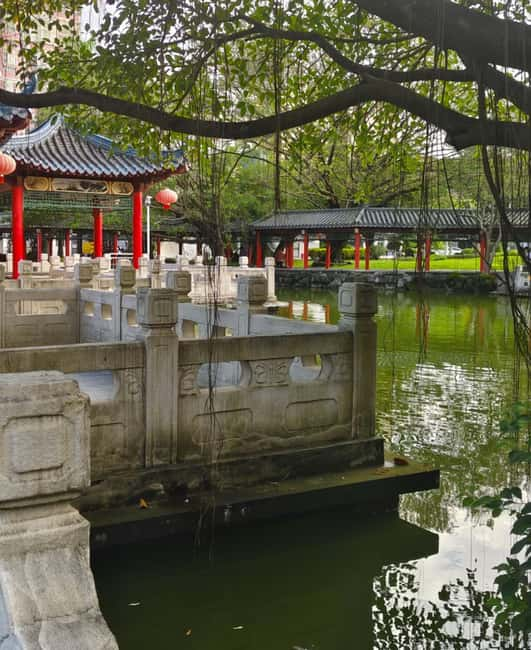
Then you get to the part that ties the day together: Longgang River and the wetland rehabilitation story. The tour describes the river as a natural waterway that connects into the Shenzhen River, the one that separates Hong Kong and Shenzhen.
Here’s the context the guide brings into focus: Longgang River was once one of the most polluted rivers in Shenzhen. In the last decade, it was rehabilitated toward a more natural state by creating wetlands that help filter pollution.
What I like about including this is that it turns your sightseeing into a place-based lesson. You’re not just looking at scenery; you’re watching the result of environmental planning. Wetlands are a practical solution, and seeing the river in that “repaired” framing makes the whole day feel less like nostalgia and more like living change.
What you should do during the river portion
Keep your eyes open for how the water and edges look different from what you might expect. Even if you don’t get a detailed science explanation, you’ll feel the difference in atmosphere. Take a breath. This is the stop where the tour’s pace gives you a small mental reset.
Price and Logistics: Is $47 a Good Deal for 2.5 Hours?
The price is $47 per person for 2.5 hours, with a guide and transportation between sites included. There’s no food and no water included, so you’ll want to plan around that.
So is it worth it? For me, yes—if you like experiences that go beyond “photo stops.” You’re paying for two major structures with strong historical framing (the residence and the temple), plus time at a river setting tied to Shenzhen’s environmental recovery story. And because the group is kept small (up to 5), the guide can answer questions properly, not just rush through set talking points.
If you’re thinking of this as a low-cost add-on, it might feel short. But if you’re aiming for quality and clarity—someone guiding you through what to notice—this is the right size.
What you’ll want to budget outside the tour
- Meals (not included)
- Water (not included)
- Any snacks you want between the two main stops
Who This Tour Is Best For (And Who Should Skip It)
This is a great fit for you if:
- You enjoy small-group walking tours where you can ask questions
- You like seeing how ordinary people lived—inside household spaces, not just grand monuments
- You care about how Shenzhen changed, and you want proof you can stand next to
It’s also a smart choice if you’re traveling through Shenzhen and want a different side of the city. This tour takes you away from the skyline and into a calmer, older rhythm.
If you should skip it:
- If you’re pregnant, because it’s not suitable for that group
- If you have trouble with walking on uneven or older surfaces
- If you want a full-day itinerary with food stops, because meals and water aren’t provided and the total time is 2.5 hours
Should You Book This Hakka Residence and Temple Tour?
I’d book it if you want an afternoon that feels grounded in place. The combination of the Hakka residence (with the kitchen, classroom spaces, and original layout) and the 1000-year temple (including the pagoda to the Lady god) gives you two different lenses on life: home and worship. Add the Longgang River wetland viewpoint, and you end with a story about real change, not just old architecture.
One more reason to feel good about choosing it: the guide experience. Jimmy runs the tour with humor and patience, and the English level is described as strong, so you’re not stuck guessing what you’re looking at.
If your travel style is “fast photos only,” this may feel too slow. But if you want to understand what you’re seeing and leave with clear mental images, this is a very solid pick.
FAQ
Where is the meeting point?
Meet at 2:00 pm at Nanlian Metro station (Line 3), Exit C1 in Chinese: 南联站 C1出口.
How long is the tour?
The tour duration is 2.5 hours.
How much does it cost?
The price is $47 per person.
What’s included in the tour price?
It includes a guided tour and transportation between sites.
What’s not included?
Meals and water are not included.
Will there be an English guide?
Yes, there is a live English tour guide.
How large is the group?
The group is small, limited to up to 5 participants.
Is it a walking tour?
Yes, it’s a walking tour, so you should wear comfortable shoes.
Is the tour suitable for pregnant women?
No, it is not suitable for pregnant women.
Can I cancel and get a refund?
Yes, it offers free cancellation up to 24 hours in advance for a full refund.