REVIEW · ATHENS
Biblical Ancient Corinth Canal Epidaurus Nafplio Private Tour
Book on Viator →Operated by Yomadic.Tours & Transfers · Bookable on Viator
One day can hit a lot harder than you expect. I like the private pacing and the air-conditioned comfort, plus you get history that actually connects the places. One thing to consider: site entrances in Greece are not included, so your final cost will be a bit higher than the base price.
This is built for a full, organized sweep of the Argolid and Corinth area, with pickup and drop-off so you’re not stuck on schedules. You can also ask for small changes to the plan, which matters when you’re traveling with different ages, energy levels, or heat tolerance.
At $240.93 per person, the value is strongest when you want a one-day hit list with less hassle than a DIY bus-and-train day. If you’re happy navigating on your own, you might spend less—but you’ll also lose the convenience and smooth logistics.
In This Review
- Key things to know before you go
- A private Athens-to-Peloponnese day: what the timing feels like
- Corinth Canal: the 2,000-year shortcut idea
- Ancient Corinth and the Corinth museum: Paul, Romans, and city life
- Temple of Apollo and Acrocorinth: quick monuments, big views
- Epidaurus: the theater trick that still works
- Sanctuary of Asclepius: an ancient medical retreat
- Nafplio: seaport charm with castles and photo time
- The Bavarian Lion and Palamidi’s views: worth the stairs
- Akronafplia and Bourtzi: wrap up with old-town edges and a harbor castle
- Price and value: what you’re really paying for
- What to ask your driver and how to get the best day
- Tips for a smooth, comfortable day
- Should you book this private Corinth, Epidaurus, and Nafplio tour?
- FAQ
- How long is the tour?
- Is this a private tour?
- Where do you get picked up?
- Is the tour in English, and is transportation comfortable?
- Are entrance fees included for museums and archaeological sites?
- Which sites have free entry within the schedule?
- What is the cancellation policy?
Key things to know before you go
- A private vehicle, not a group bus: sedan for 1–3 people, mini van for 4–7, all with WiFi, A/C, and bottled water
- Corinth Canal isn’t just a photo stop: it links two seas, and the plan explains the 2,000-year dream behind it
- Ancient Corinth is paired with the museum: you see the ruins and then get context from the on-site collection
- Epidaurus focuses on performance and medicine: the theater acoustics and the sanctuary of Asclepius are both part of the story
- Nafplio adds variety: castle views, a waterfront photo moment, and time for coffee or shopping in town
A private Athens-to-Peloponnese day: what the timing feels like
This tour runs about 8 hours 30 minutes, and it’s structured to cover a big geographic triangle: Corinth first, then Epidaurus, then Nafplio. That means a lot of driving, but also a lot of “wow per hour” if you like history, viewpoints, and the occasional sensory break.
You’re picked up from your Athens hotel, Airbnb, or the port/airport area (with a sign at the pickup point). The tour is private, so you’re not waiting for strangers, and your driver can adjust timing to fit your pace.
Because it’s in an A/C vehicle and includes bottled water, the heat becomes manageable. Still, bring practical expectations: you’ll be moving between ruins, walking paths, and viewpoints, not just sightseeing from a single platform.
You can also read our reviews of more tours and experiences in Athens.

Corinth Canal: the 2,000-year shortcut idea
Your first stop is the Corinth Canal, the waterway that cuts through the narrow isthmus to connect the Gulf of Corinth and the Saronic Gulf. It’s a physical reminder of how much travel time matters: before this canal existed, ships had to sail around the Peloponnese, adding about 185 nautical miles.
Even though the canal’s construction happened in the late 19th century, the idea goes back far earlier. The history here is the fun part: it’s believed Periander (the tyrant of Corinth, 602 BC) conceived the dream, but the technology wasn’t there yet.
So instead, Periander built the diolkos, a stone road that let ships be transferred overland on wheeled platforms. It’s the kind of detail that makes a quick scenic stop feel meaningful.
One practical note: the canal visit is short (about 20 minutes), so use that time for photos and a quick read of what you’re looking at, rather than planning a long wander.
Ancient Corinth and the Corinth museum: Paul, Romans, and city life
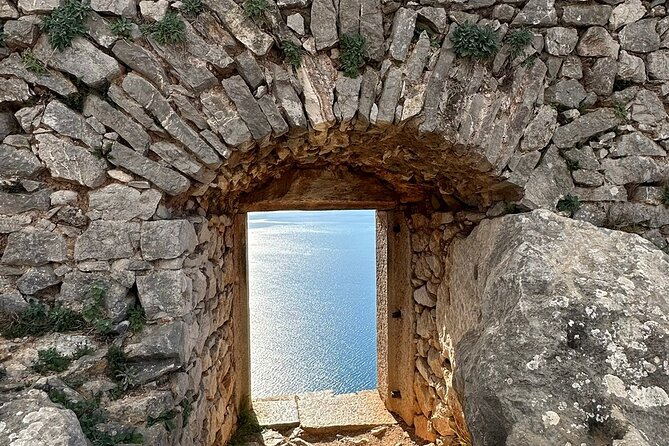
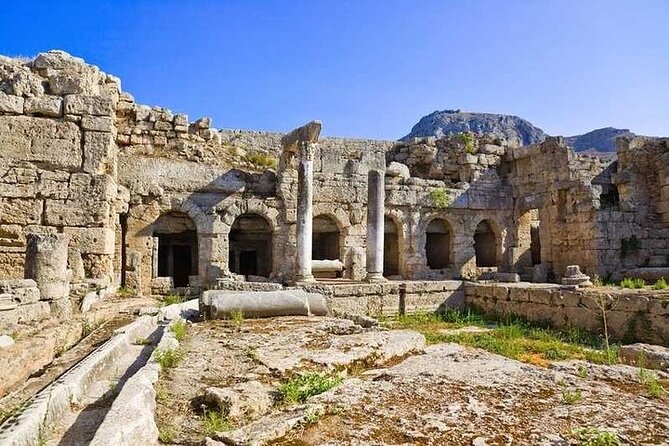
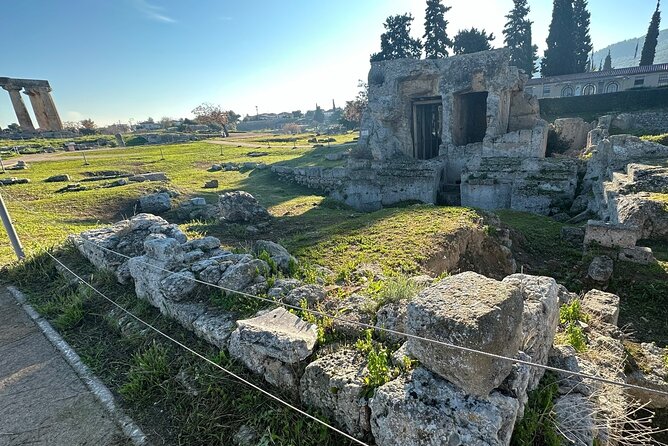
Next you shift from engineering history to human history at Ancient Corinth. Corinth sat on the Isthmus of Corinth—basically the middle pinch-point between Athens and Sparta—and it became a major city-state with real economic power.
For a Christian-history angle, Corinth shows up in Saint Paul’s two letters (First and Second Corinthians) and in Acts as part of Paul’s missionary travels. Corinth also appears in Pausanias’ Description of Greece, which is useful context when you’re trying to understand how later writers viewed the place.
This area is also a Roman story. Ancient Corinth was huge for its time (population estimates reach around 90,000 in 400 BC), then it faced destruction in 146 BC, followed by a new Roman-era city and later provincial importance.
You then move into the Archaeological Museum of Corinth, which is closely tied to the excavations. A museum stop is a big value-add here because it helps you connect scattered ruins with named features—things like the Fountain of Peirene, Lechaion Road, the Agora, Stoa, and other elements within the site.
The drawback: you won’t get everything. The stops are timed, and you’re working within a full-day schedule, so if you love museums, plan to skim intelligently—prioritize what connects directly to what you saw outside.
Temple of Apollo and Acrocorinth: quick monuments, big views
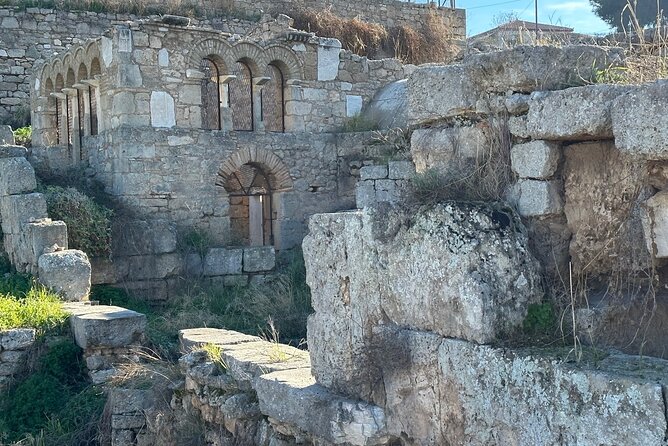
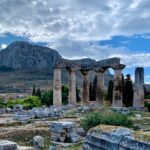
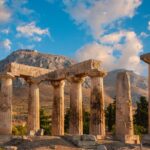
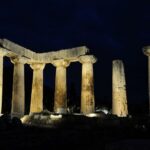
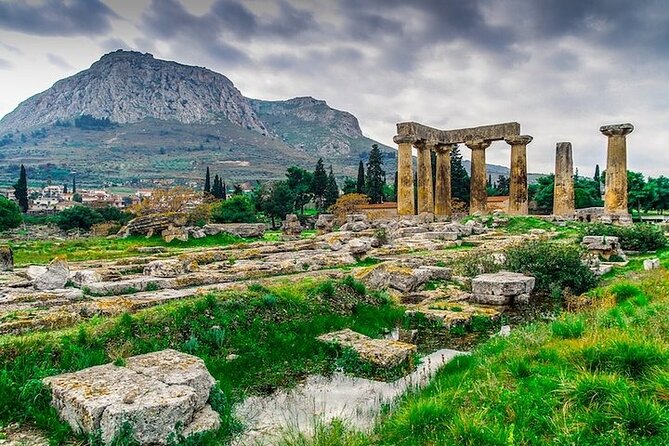
After museum context, you see the Temple of Apollo at Corinth, built around 550 BC and known as one of the earlier Doric temples in the wider region. The description includes the use of monolithic columns, which is a rare feat in many ancient contexts.
The point of this stop isn’t long reading. It’s a rapid “anchor” moment—your eyes lock onto the scale and the age, and then you climb toward the fortress view.
Then comes Akrokorinthos (Acrocorinth), the high rock that served as Corinth’s acropolis. This fortress wasn’t just for decoration; it controlled the land approach to the Peloponnese because it sat over the Isthmus.
The practical payoff is the perspective. From up there, the geography makes sense fast: you can see why a defensive position here mattered so much over centuries. The main consideration is time on uneven terrain and stairs, so wear supportive shoes and pace yourself.
Epidaurus: the theater trick that still works
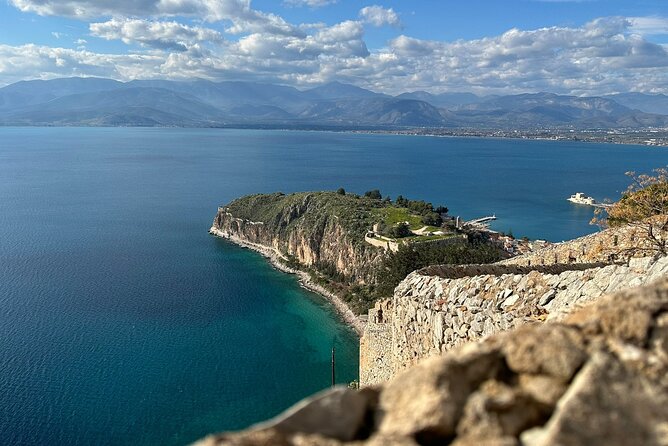
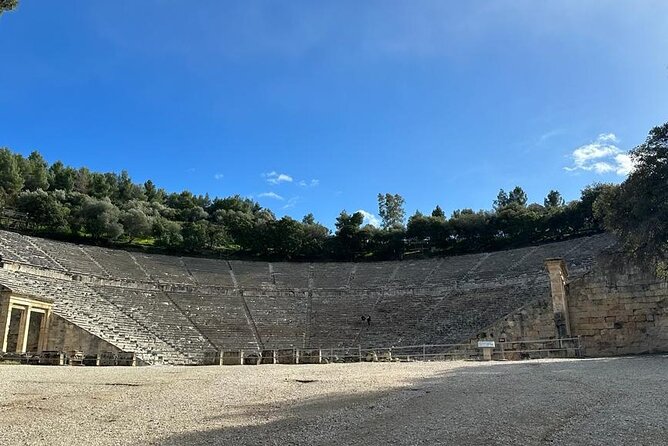
At Epidaurus, the tour shifts from city power to art and healing. The star is the Ancient Theatre of Epidaurus, famous for Greek construction and for acoustics that are almost unfair.
The classic moment is knowing the theater’s reputation: if you drop a coin or a pin on the stage, it can be heard even from the last seats. That’s the kind of detail you don’t forget once you experience it, because it reframes the whole space from “historic seating” to an instrument designed for performance.
You also get a look at the Epidaurus Archaeological Museum, which focuses on reconstructed temples and columns with inscriptions. Even if you’re not a super-detail museum person, those reconstructions help you visualize what you’re standing next to later.
Time-wise, you’ve got around 1 hour for the Epidaurus cluster including the museum and sanctuary stops, plus a separate 30 minutes at the Epidaurus museum. That structure helps, because you can compare what you see in person with what the museum explains.
If you want maximum understanding, you may find it worthwhile to hire a licensed guide on site. The tour driver provides historical storytelling, but archaeological sites can benefit from an official explainer who can point out what you might miss on your own.



Sanctuary of Asclepius: an ancient medical retreat

The Sanctuary of Asclepius is the healing piece of Epidaurus. Asclepius was the demi-god of medicine, and this sanctuary was a major holy site in the ancient world, often compared to other top cult centers.
The temple there is described as built in the early 4th century BC. The historical note about how things changed in the late Roman period is also part of the context—if the temple was still in use into the 4th century AD, it could have been shut during persecutions when non-Christian worship was restricted.
This stop is not about modern medicine. It’s about how ancient people built a place where healing, ritual, and belief were connected. If you like understanding the meaning behind architecture—why it was designed the way it was—this part lands well.
Nafplio: seaport charm with castles and photo time
After Epidaurus, you land in Nafplio, a seaport town on the Argolic Gulf. It expanded up the hillsides near the northern end of the gulf and carried importance through medieval periods and royal successions connected to Argos and Nauplia.
Nafplio also matters historically to modern Greece. It was the capital of the First Hellenic Republic, and later of the kingdom of Greece at the start of the Greek Revolution period.
Then you get what makes Nafplio feel different from a straight ruins day: it’s time for lunch/coffee, browsing, and shopping. That break is smart because it resets your brain before the castle climbs and waterfront viewing.
The Bavarian Lion and Palamidi’s views: worth the stairs
One standout in Nafplio is the Lion of the Bavarians, carved into the rock above Michael Iatrou Street. The monument is large and dramatic, with a small park beneath it.
The story is tied to German sculptor Christian Ziegel, commissioned by King Louis. It memorializes Bavarian soldiers who died in Nafplio in 1833 from a typhoid epidemic. Locals even have an unofficial nickname idea based on the food people blamed—so you’ll likely hear the story told with a bit of local humor.
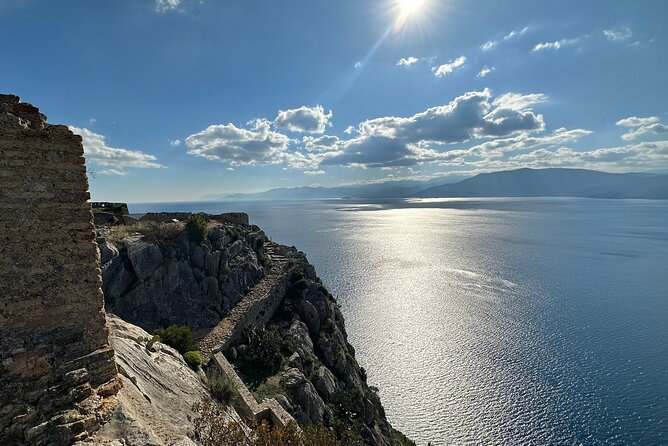
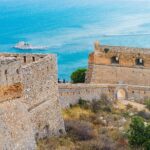
Next is Palamidi Castle, one of the best-preserved fortresses in Greece. It was built by the Venetians during their second occupation of the area (1686–1715), and it sits on a hill about 216 meters high.
The castle comes with the big warning label: stairs. The plan notes 913 steps to reach the fortress, while locals say it’s over a thousand and sometimes joke about 999. Either way, plan your energy. If you’ve got mobility limitations, you’ll want to think carefully about how much uphill you can do today.
The payoff is the view: loopholes, routes inside, and that high-command perspective over the Argolic Gulf and the city. Even if you don’t climb every path, the first look at the harbor geography makes it feel worth it.
Akronafplia and Bourtzi: wrap up with old-town edges and a harbor castle
You also stop at Akronafplia, the oldest part of Nafplio. Until the 13th century it was its own town, and then the Venetians and Franks turned it into part of the fortifications. Later it was used as a prison, and eventually the views became the point for tourism.
Finally, you reach Bourtzi, the Venetian castle sitting in the middle of Nafplio’s harbor. This is a short stop, but it’s built for photos from the harbor side.
If you’re trying to keep the day comfortable, this is one of the easier ends to the schedule: you get the scenic payoff without needing another long climb.
Price and value: what you’re really paying for
The base price is $240.93 per person, and the most important value isn’t only “transport.” It’s that the day is managed end to end: pickup, modern first-class vehicle, WiFi, A/C, bottled water, and fuel/tolls included.
Then there’s the private part. With a private setup, you don’t have to bargain with timing the way you would on public transport. The stops are packed, but you also get flexibility, and the driver can roll with reasonable changes.
What you should factor in: entrance fees and site admissions are not included. The provided costs include:
- Ancient Corinth (Archaia Korinthos): €15
- Palamidi Castle: €20
- Archaeological Site of Epidaurus: €20
- Archaeological Museum of Corinth: not included
- Epidaurus Archaeological Museum: not included
Some segments are free for your access (like the canal area and Asclepius sanctuary time slots noted as free), but you’ll still likely spend extra on the major ticketed sites.
My practical take: this tour is a strong value if you want a one-day sweep with comfort and a driver who explains what you’re seeing. If you’re budget-focused and don’t mind planning and timing everything yourself, DIY can be cheaper—but it’s more work.
What to ask your driver and how to get the best day
This is where private tours pay off. When your driver is flexible, you can shape your time around what matters to you.
I’d ask two things:
- Can we spend a bit more time at the place you care about most (museum, views, or town break)?
- If we’re running behind, what would you cut first so we keep the best parts?
The best runs with guides like Giannis, Themos, or Chris show a pattern: they drive carefully, give context on the routes, and don’t rush. In the kinds of experiences that get the top scores, the guide also helps with practical needs like pointing you to a good lunch spot and adjusting stops to match your interests.
Also remember: the tour includes an expert English-speaking driver, but it does not include a licensed guide for inside all archaeological sites. If you want extra depth at Ancient Corinth and Epidaurus, you can decide on the spot whether you want to add an official site guide or use audio options where available.
Tips for a smooth, comfortable day
Start with the obvious: wear walking shoes. Akrokorinthos and Palamidi both involve real terrain, and Palamidi’s stair count is no joke.
Plan for heat even with A/C. Your time outdoors still exists, especially at viewpoints and theater areas. You’ll appreciate the bottled water, but bring your own small water strategy too if you’re the type who drinks constantly.
For tickets, go in with a clear mental checklist. Some key sites will cost extra at the door, so don’t assume everything is covered.
Finally, give yourself permission to enjoy the breaks. Nafplio’s lunch/coffee and shopping time isn’t filler. It’s what keeps a long day from turning into a blur.
Should you book this private Corinth, Epidaurus, and Nafplio tour?
Book it if you want a high-structure day: Corinth Canal engineering history, Ancient Corinth context, Epidaurus art and healing sites, then a real-town finish in Nafplio with castle views. The A/C vehicle, WiFi, bottled water, and pickup/drop-off reduce stress, and the private setup gives you room to adjust your pace.
Consider skipping or modifying if you’re determined to minimize entrance fees, or if you know you can’t handle steep climbs like Palamidi’s steps. In that case, you could still plan a lighter day—maybe just Corinth and Nafplio—or hire a guide specifically for one site so you’re not rushing through multiple ticketed stops.
If you like seeing how geography shapes history—canals, fortresses, and cities positioned for control—this is an efficient way to learn the story in one long day.
FAQ
How long is the tour?
It lasts about 8 hours 30 minutes (approximately).
Is this a private tour?
Yes. It’s fully private, and only your group participates.
Where do you get picked up?
Pickup is offered from an Athens hotel or Airbnb residence, and also for port/airport pick-ups. Your driver meets you in the lobby or at the entrance/gate point as described.
Is the tour in English, and is transportation comfortable?
Yes, it’s offered in English. You travel in a modern private vehicle with WiFi, A/C, and bottled water.
Are entrance fees included for museums and archaeological sites?
No. Entrance fees for Ancient Corinth, the Corinth Archaeological Museum, Palamidi Castle, and the Archaeological Site of Epidaurus are not included.
Which sites have free entry within the schedule?
The tour information notes free entry for Corinth Canal (listed as free) and for the Asclepius sanctuary time slot (listed as free). Other museums and sites are not included.
What is the cancellation policy?
You can cancel for a full refund up to 24 hours in advance. If you cancel less than 24 hours before the start time, you don’t get a refund. The experience requires good weather, and if it’s canceled due to poor weather, you’ll be offered a different date or a full refund.