REVIEW · HUANGSHAN
3-Day Yellow Mountains, Hongcun Village and Tunxi Ancient Street Private Tour
Book on Viator →Operated by Trippest Travel · Bookable on Viator
Cloud seas, sunrise, and ancient lanes. That mix is why this 3-day private plan feels so good—one day is for Huangshan and two classic heritage stops in town. I particularly like the human touch: you get a professional English-speaking guide and driver, with pickup that meets you with your name on a sign.
I also like that the tour builds in choices. You can pick your hotel level (4-star or 5-star mountain stays), and you can hike at your pace across the peaks, canyons, and viewpoints. The downside to keep in mind is simple: Yellow Mountain is stair-heavy and timed for sunrise, so you’ll want solid shoes and realistic expectations if your legs are easily tired.
In This Review
- Key things I’d circle before you go
- Why Huangshan plus Hongcun plus Tunxi feels like the right combo
- Price and what’s actually included (and what costs extra)
- Day 1: Hongcun Ancient Village, Tunxi Old Street, and Hu Kaiwen Ink Factory
- Hongcun Ancient Village
- Tunxi Old Street
- Hukaiwen (Hu Kaiwen Ink Factory)
- Day 2: Yungu Cableway, Shixin Peak views, and the West Sea Grand Canyon hike
- Getting up the mountain: Yungu Temple and cable car
- Shixin Peak (Begin-to-Believe Peak)
- Xihai Great Canyon and the pine trail
- Guangmingding (Bright Summit) for the sky-sea idea
- Flying-over Rock, then back to your mountain hotel
- Hotels on the mountain: Beihai vs Xihai New Wing
- Day 3: Sunrise at the terraces, Dawn Pavilion, Stone Monkey, and Lion Peak
- Refreshing Terrace and first light
- Dawn Pavilion (曙光亭)
- Refreshing Terrace (清凉台) and panoramic calm
- Stone Monkey Watching the Sea
- Lion Peak and the final viewpoint
- Cable car down and transfer onward
- What to expect from the walking and what to pack
- A practical packing approach
- Private guiding: why it matters more on Huangshan than you’d expect
- Who this tour fits best (and who should rethink it)
- Should you book this 3-day private Huangshan and Hongcun tour?
- FAQ
- How long is the tour?
- Where do you get picked up from?
- What about hotels—can I choose the level?
- Is breakfast included?
- What are the entrance fees like?
- How much walking and climbing is involved?
- Do I need to carry my luggage on the mountain?
- Is this a private tour?
Key things I’d circle before you go
- A true private setup: only your group, with a guide plus a driver handling transfers and timing
- Huangshan by cable car plus on-foot viewpoints: Yungu Temple area up top, then walking between iconic spots
- Sunrise plan that starts early: early mornings around 5–6 a.m. for first light at the terraces and pavilions
- Heritage stops after the mountain: Hongcun (800-year-old village), Tunxi Old Street, plus Hu Kaiwen Ink Factory
- Mountain hotel included for two nights: you’re not racing back and forth in one day
Why Huangshan plus Hongcun plus Tunxi feels like the right combo
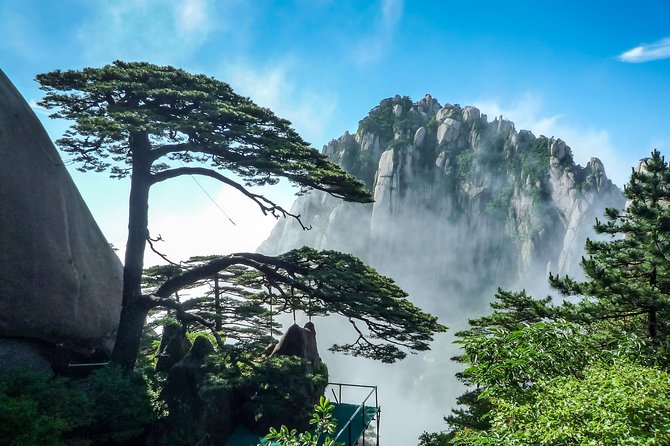
Huangshan (Yellow Mountain) has a specific kind of magic: misty ridgelines, sea-of-cloud views, odd rock shapes, and the feeling that the mountain is always changing. This tour leans into that by giving you a full day on the mountain, then a sunrise morning, rather than treating it like a quick stop.
Then you switch gears. Hongcun Ancient Village is the 800-year-old counterpoint—old architecture and a slower pace that makes sense after steep climbs. And Tunxi Old Street adds one more layer: old shopfronts and crafts in the center of the old city of Tunxi, including the Hu Kaiwen Ink Factory.
If you want a trip that doesn’t force you to choose between nature and heritage, this is a clean match. You get the big mountain moment, plus the human-made places that make Huangshan region travel more than just photos.
Price and what’s actually included (and what costs extra)
At $513 per person, the price can look “high” at first glance—until you see what you’re buying.
You get:
- 2 nights on the mountain (with hotel level chosen at booking): Beihai Hotel for 4-star, or Xihai Hotel New Wing for 5-star
- Breakfast (included)
- Hotel pickup and drop-off, plus round-trip private transfer from/to the airport or train station
- A professional English-speaking private guide
- Bottled water every day
On top of that, the itinerary uses the Yungu cable car for up-and-down access, which usually saves time and energy compared with going fully on foot.
What’s not included:
- Entrance fees are listed as about $66 per person for all entrance tickets. (The day-by-day notes also mark some specific sites with admission listed as included, but you should still budget for the overall entrance fee.)
My practical advice: this tour is best value when you treat it as a “managed mountain experience.” If you’re willing to plan every transfer, buy every ticket, and time sunrise by yourself, you can potentially do it cheaper. But if you want less stress on a tight timeline—and you want the sunrise and the hiking sequence to make sense—this price starts to feel fair.
Day 1: Hongcun Ancient Village, Tunxi Old Street, and Hu Kaiwen Ink Factory
Day 1 is the easy “arrive and reset” rhythm—heritage first, then ink, then you’re ready for the mountain.
Hongcun Ancient Village
Your day starts with pickup from Huangshan Airport, Train Station, or Bus Station, with your guide and driver meeting you with a sign that shows your name. That’s a small detail, but it matters after a flight or long ride.
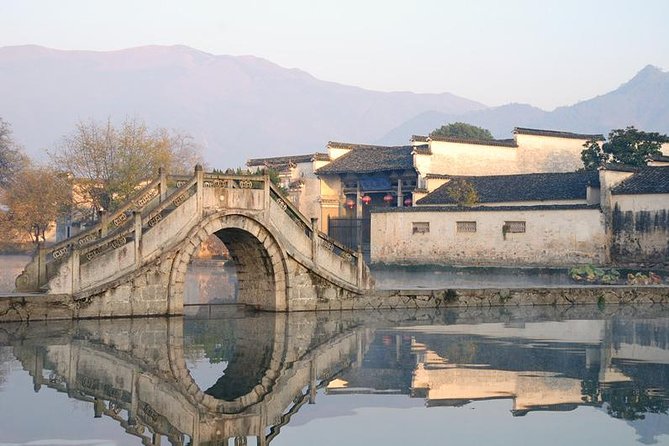
From there, you spend time in Hongcun Ancient Village, known as an 800-year-old village. It’s the kind of place where a guided walk helps you notice what’s worth slowing down for—old layouts, architecture, and the village logic that makes it more than just buildings in a photo grid.
A note on value: Hongcun is also a good “warm-up” for your day 2 walking. You’re not on steep stairs yet, but you’re building the habit of moving at a comfortable pace.
Possible consideration: admission isn’t listed as included for this stop, so keep entrance fees in mind.
Tunxi Old Street
After Hongcun, you shift to Tunxi Old Street, where you can wander through old but well-preserved rows of shops. The listing describes the vibe as simple and elegant—exactly what you want after sitting in a vehicle.
There’s free time built in for a leisurely walk (about an hour). This is where you can slow down and pick up small items, snacks, or gifts without the pressure of a strict schedule.
Hukaiwen (Hu Kaiwen Ink Factory)
Then you get one of the most interesting practical-cultural add-ons: Hu Kaiwen Ink Factory. The tour frames it as a traditional Chinese ink workshop established centuries ago, and you’ll spend about 30 minutes here.
This stop is a smart choice if you like craftsmanship. Even if you don’t buy anything, you’ll see the heritage side of the region’s writing-and-ink culture in a place that’s focused on making ink, not just selling souvenirs.
Good to know: the listing marks both Tunxi Old Street and Hu Kaiwen as having free admission.
Day 2: Yungu Cableway, Shixin Peak views, and the West Sea Grand Canyon hike
Day 2 is your “big legs, big views” day. It starts with travel up from Huangshan City to the mountain area, and then it becomes a sequence of viewpoints and walks.
Getting up the mountain: Yungu Temple and cable car
You drive roughly one hour from central Huangshan City to the foot of Mt. Huangshan. Then your day’s mountain route begins from the Yungu Temple area, where the plan uses the Yungu cable car to lift you into the scenic zone.
This matters because Yellow Mountain can drain you fast if you try to brute-force it. Cable access keeps you focused on the walking you actually want—between key viewpoints—rather than spending your best energy on pure ascent.
Shixin Peak (Begin-to-Believe Peak)
After you’re up top, you walk to Shixin Peak (1668m). The point of this stop is the horizon look: the itinerary highlights stretching your eyesight over cloud seas to far distance.
If the clouds cooperate, this is often where your sense of place clicks. If not, it’s still a nice orientation moment—like reading the map of the mountain with your own eyes.
Xihai Great Canyon and the pine trail
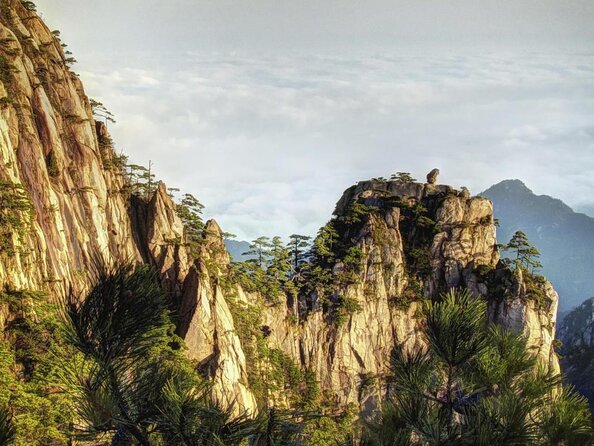
Then you move toward Xihai Great Canyon. Along the way, the tour notes Umbrella Pine and Black Tiger Pine—two tree types you’ll want to pay attention to because they’re part of what makes Huangshan feel biologically different from other hiking regions.
The schedule sets aside a substantial block (about 4 hours for this stop), which is good. Canyon viewpoints take time. You also want breaks to catch your breath and reset before you continue.
Possible consideration: the mountain is stair-heavy. One of the guides’ strengths in high season is pacing you so you don’t burn out early, and the experience notes multiple uphill/downhill sections.
Guangmingding (Bright Summit) for the sky-sea idea
Next comes Guangmingding, and the plan suggests exploring the Sky Sea Scenic Area if you still have energy. It specifically mentions watching the sunset from Bright Summit, and notes Bright Summit’s height as 1840 meters.
Even if you aren’t chasing sunset, this is the type of area where you can feel the “cloud sea” effect even without perfect light. The key is timing and staying patient for changes.
Flying-over Rock, then back to your mountain hotel
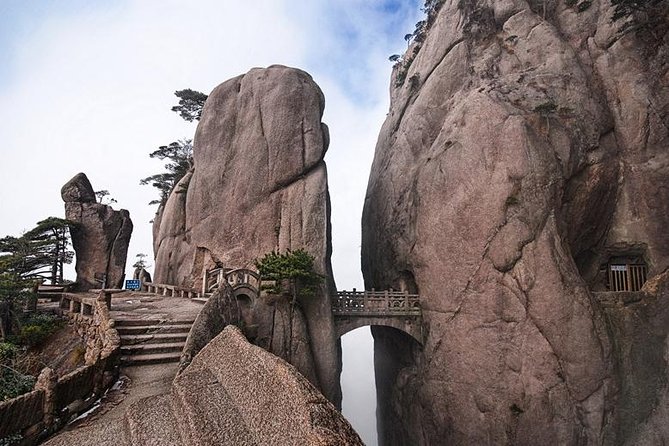
The day ends with Flying-over Rock and then retreat to your mountain hotel for rest.
One listing detail is especially helpful: Flying-over Rock is marked as having admission included. That means less ticket fuss during the day.
You’ll be thankful for the hotel timing here. Mountain travel works best when you sleep inside the experience rather than sprinting out at the end of the day.
Hotels on the mountain: Beihai vs Xihai New Wing
You stay two nights on the mountain, and you choose between:
- Beihai Hotel (4-star option)
- Xihai Hotel New Wing (5-star option)
Staying overnight is one of the biggest “this is worth paying for” factors. It lets you catch sunrise without wasting a half-day in transit.
Also, the sunrise spots are planned as walkable from the hotel area. Day 3 mentions the Refreshing Terrace as a quick walk from Beihai Hotel, which shows the route is designed around where you sleep.
If you care about convenience and comfort, the 5-star option may be worth it. If you’re mostly there for views and don’t plan to hang out much indoors, the 4-star option still makes the schedule work.
Day 3: Sunrise at the terraces, Dawn Pavilion, Stone Monkey, and Lion Peak
Day 3 starts with the hard part: getting up early. The plan calls for waking around 5 to 6 a.m. so you can aim for sunrise.
Refreshing Terrace and first light
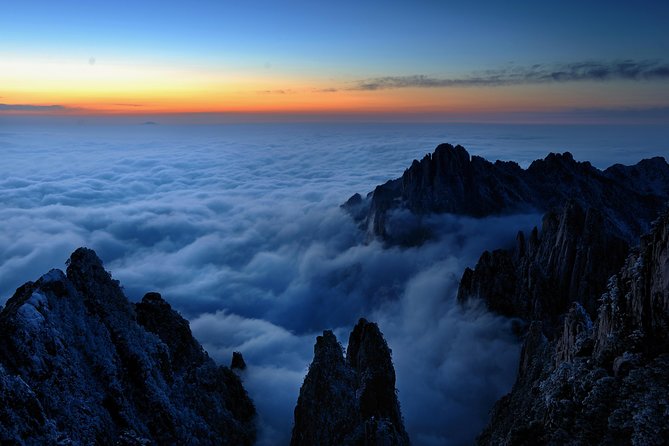
Your morning begins near the Refreshing Terrace. The tour points out that on clear days you can see the sun’s golden rays cutting through the distance. That’s the payoff you came for—the way the mountain turns from dark silhouettes into glowing edges.
The walk is described as short from the Beihai Hotel area, so you aren’t spending the best part of sunrise lining up long transfers.
Dawn Pavilion (曙光亭)
Next you visit the Dawn Pavilion, described as a famous spot for sunrise views and photos.
Even if you’re not a photo person, this is one of those “you feel it in your bones” viewpoints. Sunrise also slows people down, which makes the mountain feel less like a tourist checklist and more like a place you’re allowed to watch.
The itinerary marks admission for Dawn Pavilion as included.
Refreshing Terrace (清凉台) and panoramic calm
Then you visit 清凉台 (Refreshing Terrace) again, now framed as a serene panoramic viewpoint. You’re not just repeating the location; it’s a second chance to experience the same sunrise season from slightly different angles.
Admission here is listed as included.
Stone Monkey Watching the Sea
After that comes Stone Monkey Watching the Sea. This isn’t an animal encounter; it’s a rock formation that resembles a monkey looking over the cloud sea. The point is natural form + viewpoint timing, and it’s the kind of stop where your guide’s timing matters.
Admission is listed as included for this stop too.
Lion Peak and the final viewpoint
Finally, you reach Lion Peak, known for its shape like a crouching lion. From there, you get sweeping views of the surrounding peaks and valleys.
Again, admission is listed as included.
Cable car down and transfer onward
Once the mountain part is finished, you take the Yungu Cableway back down. Then your guide helps you retrieve your luggage and gets you back to the vehicle for transfer to the airport or train station.
This “end-to-end” flow is why the private format works. It reduces the chance you lose time at the top figuring out where to go next.
What to expect from the walking and what to pack
This tour isn’t a couch-to-couch ride. It’s a mountain hike plan, with a note that comfortable shoes are required.
The additional info says the tour involves around 5 km of easy walking plus some climbing up a small hill at your will. That wording is helpful because it hints you’re not being forced into a single pace.
Still, expect stairs and uneven steps. One guide’s style—like Suki or April, both named in the experience feedback—seems to matter because it’s not just “where to go,” it’s how to manage fatigue during transfers between viewpoint areas.
A practical packing approach
Bring:
- Comfortable walking shoes (non-negotiable)
- A small bag for your overnight stay on the mountain
- A light layer for early morning temps (the mountain mornings can feel colder, and sunrise schedules make that obvious even if you don’t have weather forecasts)
The tour also notes big-luggage handling: your guide can help store your suitcase in Tunxi, and you can collect it on the way back. Storing luggage at the foot of the mountain is listed at about CNY20 (US$4) per piece, if you use that option.
Private guiding: why it matters more on Huangshan than you’d expect
On a big scenic site like Huangshan, most of the frustration comes from timing: getting to viewpoints before crowds cluster, moving between areas without wasting energy, and knowing what to watch for when the cloud conditions change.
This tour tries to solve that by giving you a private guide plus a driver. That means your schedule can stay coherent even if you move slower than average.
The feedback I saw also highlights guides by name—Suki and April—as strong communicators with clear explanations and organized pacing. Even if you don’t get the same person, you can treat that as a clue about what quality looks like here: calm planning, good English, and keeping you from feeling lost when stairs and paths multiply.
Who this tour fits best (and who should rethink it)
This private 3-day plan is best for you if:
- You want sunrise on Huangshan without trying to figure out logistics alone
- You like a mix of nature and heritage, not just one or the other
- You’re okay with stairs and early mornings in exchange for the payoff
You might want to rethink it if:
- You get wiped out by uphill/downhill stair walking
- You don’t want any structured timing (sunrise days require you to follow the plan)
Should you book this 3-day private Huangshan and Hongcun tour?
Yes—if your priority is getting the mountain right and you value convenience.
The core reason is simple: two nights on the mountain plus a sunrise-focused morning sequence is the hard part to DIY. Add the private guide, the ordered viewpoint routing, and heritage stops like Hongcun and Tunxi Old Street, and the experience becomes more than a checklist.
Before you book, do one quick reality check: bring shoes, plan for stair legs, and be ready for an early start. If you’re good with that, this tour has the right blend of structure and freedom to make Huangshan feel truly worth the effort.
FAQ
How long is the tour?
It runs for 3 days (approximately).
Where do you get picked up from?
Pickup is offered from Huangshan Airport, Train Station, or Bus Station.
What about hotels—can I choose the level?
Yes. You select 4-star or 5-star mountain accommodations when booking. The itinerary lists Beihai Hotel for 4-star and Xihai Hotel New Wing for 5-star.
Is breakfast included?
Yes. Breakfast is included.
What are the entrance fees like?
Entrance fees are not included in the price. The tour notes an entrance fee of about $66 per person for all entrance tickets.
How much walking and climbing is involved?
You should expect comfortable shoes, with around 5 km of easy walking and some climbing up a small hill depending on your choice. The mountain also involves stairs.
Do I need to carry my luggage on the mountain?
Bring a small bag for the overnight stay. Your guide can help with storing your larger suitcase in Tunxi, and you can collect it on your way back. Luggage storage at the foot of the mountain is listed at about CNY20 per piece.
Is this a private tour?
Yes. It’s private, and only your group participates.