REVIEW · SPLIT
SPLIT-History Tour of Diocletian’s Palace & Old Town with Daniela
Book on Viator →Operated by Split Walking Tour with Daniela · Bookable on Viator
Split’s palace feels like a time machine. It’s one of the few places where Roman walls still shape how you walk, shop, and meet. This tour also adds something extra through Daniela’s storytelling and that memorable klapa singing moment.
You’ll get two big wins right away: a licensed guide, Daniela, and a route that hits the palace’s defining spaces without turning it into a rushed checklist. The pacing is built for real understanding, from the preserved substructures to the peristyle’s open-air feeling.
One thing to weigh: some major sights along the way have optional entrance tickets, and the tour depends on good weather—so pack for walking, and expect a couple of paid add-ons if you want everything.
In This Review
- Top reasons this tour works
- Daniela’s local lens inside Diocletian’s Palace
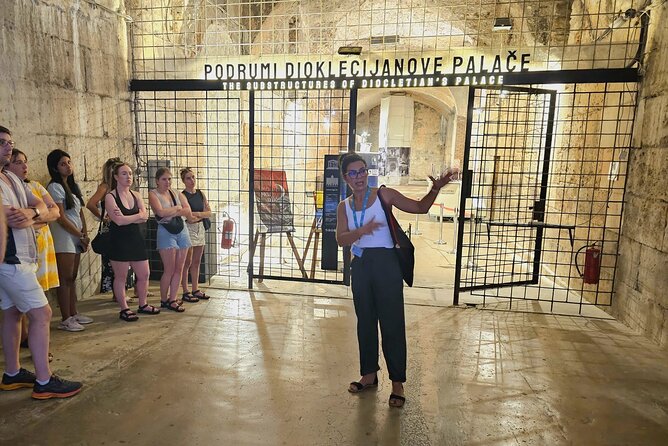
- Start at the palace substructures: the preserved core
- Vestibulum and klapa singing: when culture meets architecture
- The Peristyle: central space, real open-air atmosphere
- Saint Domnius and the shift from Roman rule to Christian space
- Temple of Jupiter area: the Roman sacred zone, later repurposed
- Golden Gate and palace entrances: the drama of power
- Grgur Ninski and Ivan Meštrović: art anchored in public memory
- Split Synagogue: an active pocket of European history
- Narodni Trg and Fruit’s Square: squares that explain how Split functions
- The City Clock and the Riva finale: wrap with waterfront ease
- Price and what you truly get for $25
- How to plan your day around optional tickets
- Who this tour fits best in Split
- Should you book the Split Palace and Old Town tour with Daniela?
- FAQ
- How long is the Split-History Tour of Diocletian’s Palace & Old Town with Daniela?
- How much does the tour cost?
- Is the tour in English?
- What’s included in the price?
- Are entrance tickets included?
- What is the group size?
- Where do we meet for the tour?
Top reasons this tour works
- Daniela’s local lens on palace life, Croatian identity, and what you’re seeing behind the stones
- Klapa singing in the Vestibulum, not just sightseeing but a cultural moment
- A smart route through Diocletian’s “main rooms”: Golden Gate, Peristyle, and key sacred spots
- Icon stops that connect art and place, including Grgur Ninski and Ivan Meštrović
- Old Town structure in under two hours, with squares and the Riva waterfront finish
- Small groups (max 15) that keep questions answerable and the pace human
Daniela’s local lens inside Diocletian’s Palace
If you’re the type who likes history that you can actually picture, Daniela’s approach helps a lot. The tour is built around the idea that Diocletian’s Palace isn’t a museum you stand beside—it’s a framework you move through. You start with the palace’s most tangible parts, then keep “unlocking” how the space evolved as religions and daily life changed.
What makes the experience feel special is the way Daniela ties details together with personality. From what I saw described in the way she guides, she uses humor and energy to keep the story flowing, and she stays ready for questions. She also adapts when someone needs a slower moment, which matters if you’re traveling with a child, a stroller, or you just want to breathe.
The tour runs in English, and the group size tops out at 15. That means you’re not shouting over 50 people while you try to look up at carvings.
You can also read our reviews of more tours and experiences in Split.

Start at the palace substructures: the preserved core
You begin in the Diocletian Palace substructures, which are often the best-preserved slice of the complex. This is where the “Roman machine” feeling really clicks. Substructures are the layered building parts that supported and protected the life above—think sturdy, practical architecture, not just decorative stone.
You’ll spend about 20 minutes here, and admission tickets for this area are not included. That’s a key planning point: you can still enjoy the exterior and the explanation, but if you want the full access that can come with the cellars/substructures experience, you’ll likely add that on.
This first stop is also a clever psychological move. You get oriented early, so later when you’re crossing the palace spaces that visitors usually rush through, you’ll know what you’re looking at and why it matters.
Vestibulum and klapa singing: when culture meets architecture
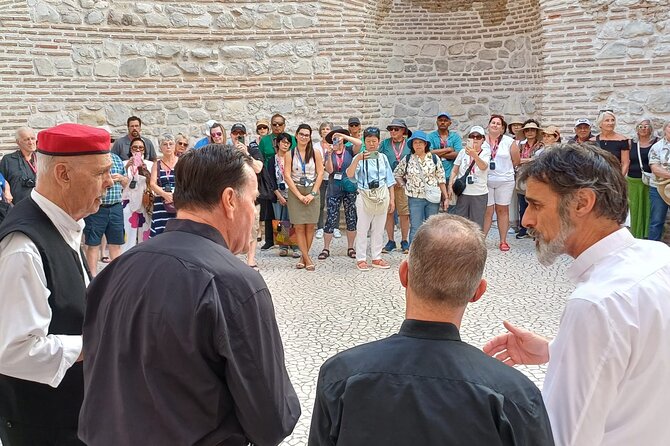
Next you step into the vestibulum of Diocletian’s Palace. The time here is short—around 10 minutes—but it has an emotional payoff. The vestibulum stop is tied to an authentic klapa singing experience, which adds sound to the story.
This is more than entertainment. When you hear klapa in a space with Roman scale, the setting stops feeling like a static ruin. You start thinking about how the built environment can carry culture across centuries, even when the original purpose is gone.
Also, because this moment isn’t just visual, it helps the tour avoid the common problem of palace tours becoming a single long lecture. Your brain gets a break.
The Peristyle: central space, real open-air atmosphere
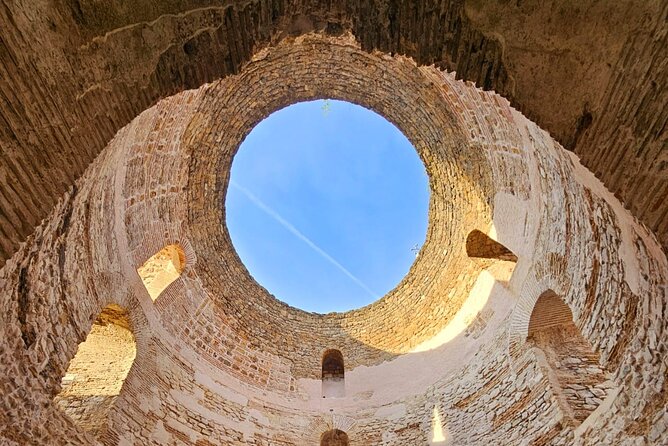
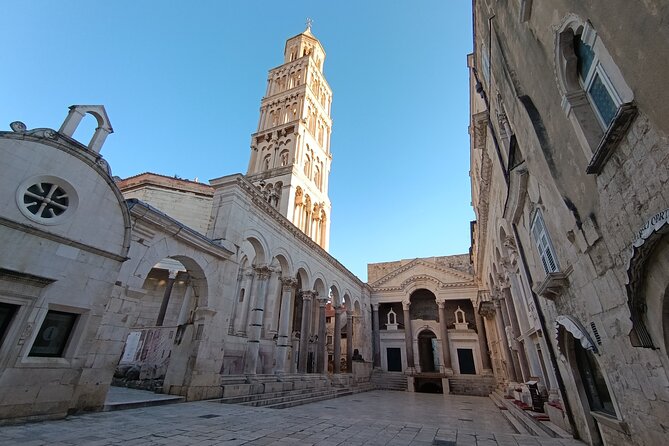
Then you reach the peristyle, the central square in the palace heart. You’re only in this area for about 10 minutes, and many people treat it like a photo stop. In Daniela’s hands, it becomes a spatial anchor: you understand how the palace’s central open area shaped movement and social life.
The peristyle is where you can feel the difference between living space and ceremonial space. Even if you don’t memorize every detail, you’ll leave with a stronger sense of the palace’s internal “map.”
If you’re traveling with kids or just want something less intense, this stop is a nice reset because it’s open, and you can look around instead of only looking down at stonework.
Saint Domnius and the shift from Roman rule to Christian space
One of the quickest stops is the Cathedral of Saint Domnius, scheduled for around 5 minutes. It’s described as the smallest and oldest Christian Catholic cathedral in the world, and that alone makes it worth a pause.
The cathedral stop is free in the basic flow, but tickets for the cathedral and bell tower are optional. If you’re the sort who likes interiors and views, plan for extra time and a paid add-on. If you’re happy with the exterior and the guide’s explanation, you can keep the trip lean.
What I like about including this here is the narrative rhythm. You move from Roman palace organization straight into Christian continuity. The palace doesn’t just sit in the past; it becomes a setting for new traditions.

Temple of Jupiter area: the Roman sacred zone, later repurposed
Another quick sacred stop is the Temple of Jupiter area, about 5 minutes. Today it’s used as the Baptistry of Saint John, which is the kind of transformation that makes history feel less like a straight line and more like a chain of re-use.
This stop is marked as not included for admission tickets. So again: you can appreciate the story without paying, but you’ll pay if you want full access.
This is also one of the moments where Daniela’s explanation can help you look at Roman elements through a later lens. You’re not just counting ancient temples—you’re seeing how religious spaces get reinterpreted when power and belief change.
Golden Gate and palace entrances: the drama of power
Next comes the Golden Gate, the main and most impressive entrance to Diocletian’s palace. You’ll spend around 10 minutes here, and it’s a free stop.
This is the part you’d expect: monumental entry, strong proportions, and a feeling that you’ve reached a key threshold. But what makes it worthwhile on this tour is that the guide doesn’t leave it as a pretty facade. You learn to connect the gate to how someone would have experienced arrival and authority in the palace.
If you’re short on time in Split, the Golden Gate is still the kind of landmark where you can confidently say yes, this is worth seeing in person.
Grgur Ninski and Ivan Meštrović: art anchored in public memory
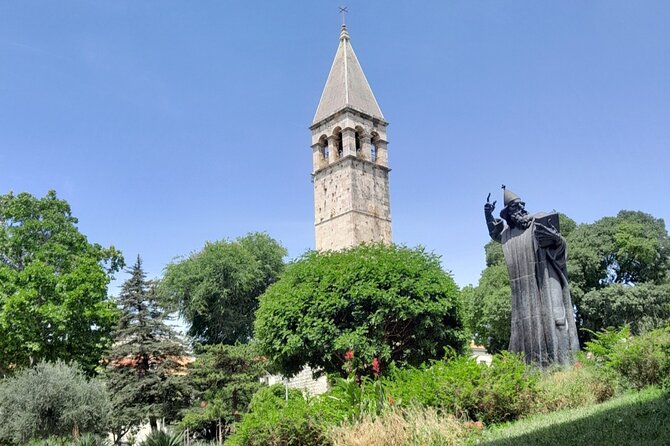
After you pass through the palace spaces, you meet Grgur Ninski Statue, scheduled at about 5 minutes. It’s free to see, and it’s tied to the work of the famous Croatian sculptor Ivan Meštrović.
This stop is a good reminder that Old Town isn’t only ancient. Public art in Split tells you which people the city chooses to remember and honor.
Even if sculpture isn’t your main interest, this one helps you “read” the city more like a living culture rather than an old-city theme park.
Split Synagogue: an active pocket of European history
The tour also includes Split Synagogue, again about 5 minutes. It’s noted as one of the oldest active synagogues in Europe, and admission tickets here are not included.
This is one of the smaller stops that can leave a big impression, mainly because it’s not a ruin. It’s a current, working site, so it grounds the whole day in real continuity. You’re not just looking at what’s disappeared; you’re seeing what’s still part of the present.
If you want to go inside, you’ll need to budget optional tickets. If you don’t, you’ll still get context from the guide.
Narodni Trg and Fruit’s Square: squares that explain how Split functions
Once you move into the Old Town streets, you hit Narodni Trg, the medieval People square in the heart of the area, about 10 minutes. It’s free and it helps you reconnect palace history with everyday city life.
After that, the tour goes to Fruit’s Square (Trg Brace Radic), another 10-minute stop. This is where baroque palace presence and the Venetian fortress vibe meet a statue of Marko Marulić, a key name in Croatian literature.
These squares are practical for you as a traveler. They’re also where you orient yourself for the rest of your trip. If you return later for coffee or dinner, you’ll recognize the geometry and the landmark points.
The City Clock and the Riva finale: wrap with waterfront ease
A short but fun stop is the City Clock at the western entrance to the palace, around 5 minutes and free. A Renaissance clock might sound like a tiny detail, but it gives you a sense of timekeeping and civic life layered over earlier eras.
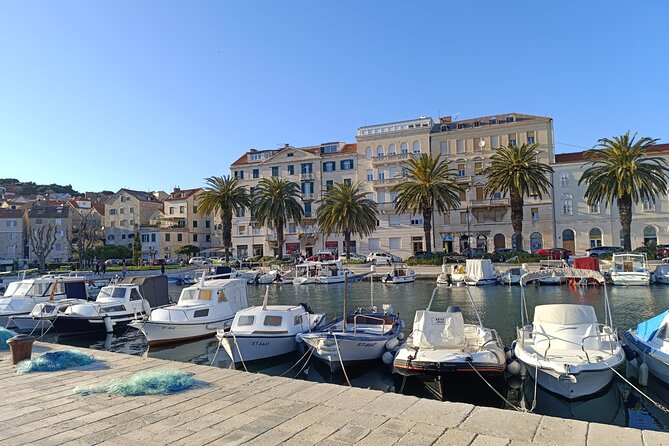
Then you end at the Riva Harbor promenade, which lasts about 25 minutes. This is free, and it’s the right ending. You’re done with the stone-heavy portion, and you get open space by the water where you can decompress.
Riva is where Split’s energy becomes visible without needing a ticket. It’s also a great place to decide what you want to do next—another museum visit, a long lunch, or just sitting and watching boats move.
Price and what you truly get for $25
At $25 per person for about 1.5 to 2 hours, this is the kind of value that depends on your priorities. You’re paying mostly for two things: a licensed guide and a curated route through spaces you’d otherwise see only superficially.
The price includes tour organization and the guide, and you get a mobile ticket. It does not include optional admissions for some areas (notably cellars, cathedral, bell tower, and the Jupiter Temple). You should treat those as add-ons, not surprises.
For the money, the biggest advantage is that you’re not paying extra time to figure things out alone. The route includes the main palace geometry, plus cultural stops like klapa singing and the synagogue context. If you’d normally wander without a plan, Daniela’s structure saves you a lot of mental effort.
This is also a good deal if you’re on a cruise day or any day you can’t spend half of your waking hours wandering. The tour length is short enough to keep your day flexible.
How to plan your day around optional tickets
Because several entrances are optional, I suggest you decide in advance what kind of visit you want.
If you care about interiors and extra access, you’ll likely add tickets for places like the cellars and possibly the cathedral/bell tower and the Jupiter Temple area. That will stretch the day slightly, but it can make the story feel more complete.
If you mainly want the big picture and the outdoors, stick to the free components and use the guide’s explanations as your “ticket.” This keeps the tour in the promised 1.5 to 2 hours range.
Either way, bring comfortable shoes. You’re walking through an old city and a palace complex, so your feet matter more than your schedule.
Who this tour fits best in Split
This tour makes sense for couples, solo travelers, and families. One reason I’d recommend it to families is how the guide handles real-world needs; the tour is organized and short enough to work even when someone needs a little extra patience.
It also fits first-timers. You’ll walk away with a mental map of Diocletian’s Palace and the Old Town’s key civic spots. If you’re staying only a short time, this approach helps you understand what you’re seeing instead of just collecting photos.
And if you like cultural moments, the klapa singing stop is the kind of detail that turns the day from informative into memorable.
Should you book the Split Palace and Old Town tour with Daniela?
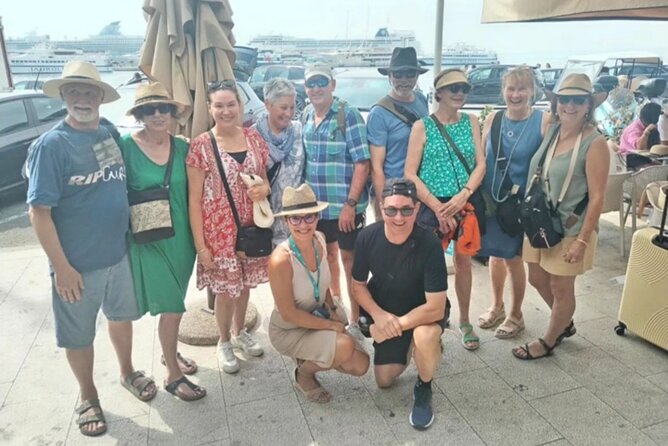
Yes, you should book this tour if you want Diocletian’s Palace plus Old Town context in a tight package. The guide experience is the heart of it: Daniela blends palace structure, Croatian cultural pride, and story-driven explanations, and she keeps the energy moving.
Book it especially if you hate aimless wandering. The route is efficient, the group size stays small, and you finish at Riva Harbor where you can immediately transition into the rest of your day.
I’d skip or at least budget differently if you strongly prefer fully ticket-included tours or you don’t want to pay extra for interiors. Also keep an eye on weather, because the tour is designed for good weather.
FAQ
How long is the Split-History Tour of Diocletian’s Palace & Old Town with Daniela?
Plan on about 1 hour 30 minutes to 2 hours.
How much does the tour cost?
The tour costs $25.00 per person.
Is the tour in English?
Yes. The tour is offered in English.
What’s included in the price?
You get a licensed tour guide and tour organization. You also receive a mobile ticket.
Are entrance tickets included?
No. Entrance tickets for cellars, the cathedral, the bell tower, and the Jupiter Temple are optional.
What is the group size?
The tour has a maximum of 15 travelers.
Where do we meet for the tour?
The meeting point is Obala Hrvatskog narodnog preporoda 22, 21000, Split, Croatia, and the tour ends back at the meeting point.