REVIEW · OLYMPIA GREECE
Ancient Olympia Entry Ticket & Virtual Reality Audio Tour
Book on GetYourGuide →Operated by SIGHTS OF ATHENS-GRAY LINE · Bookable on GetYourGuide
Olympia feels surprisingly close-up. This VR-on-your-phone experience, paired with a 9-language audio guide, turns the archaeological site into something you can follow step by step without needing a live lecturer. I especially like the prebooked access that helps you move through security and into the place with less fuss.
Here’s the trade-off to know upfront: this is self-guided and there’s no live guide or guaranteed staff waiting to handhold you. And if you expect a physical VR headset, your experience may feel less futuristic than the wording suggests.
In This Review
- Key things that make this work
- Prebooked Olympia: why a timed museum slot matters
- How the VR app and audio guide actually fit together
- Temple of Hera: the stop that puts the Olympic Flame in context
- Temple of Zeus and the statue you can almost picture
- Stadium and Bouleuterion: where the games and decisions lived
- Museum time: where the ruins get their meaning
- Price and value: what you’re paying for
- Timing rules you should plan around
- What can go wrong (and how to prevent it)
- Who this tour suits best
- Should you book this Olympia VR audio tour?
- FAQ
- How long is the Ancient Olympia Entry Ticket & Virtual Reality Audio Tour?
- Do I need a specific entry time for the museum?
- Can I enter the archaeological site whenever I want on my booked day?
- What languages are available for the audio guide?
- What should I bring to use the tour?
- Is it wheelchair accessible?
Key things that make this work
- Prebooked museum time slot so you can plan your day and reduce uncertainty
- Smartphone VR app + audio in 9 languages for an easier match between narration and ruins
- Express security check that can save real time during peak hours
- Unlimited time at the archaeological site on your booked date so you’re not rushed
- You must keep your phone ready (headphones and a charged device are part of the plan)
Prebooked Olympia: why a timed museum slot matters
Olympia can feel like a place where you either glide in cleanly, or you spend your morning wrestling with timing. This ticket-style setup gives you a specific date and a specific entry time for the Archaeological Museum of Olympia, which is where the story of what you’re seeing starts to click.
What I like about that structure is simple: the museum slot stops the day from becoming one long guessing game. You know when you’ll be inside, and you can build a reasonable route from there to the outdoor site. It also pairs well with the reality that the museum can be the more tiring stop if you’re not prepared—having a fixed start time means you can pace yourself.
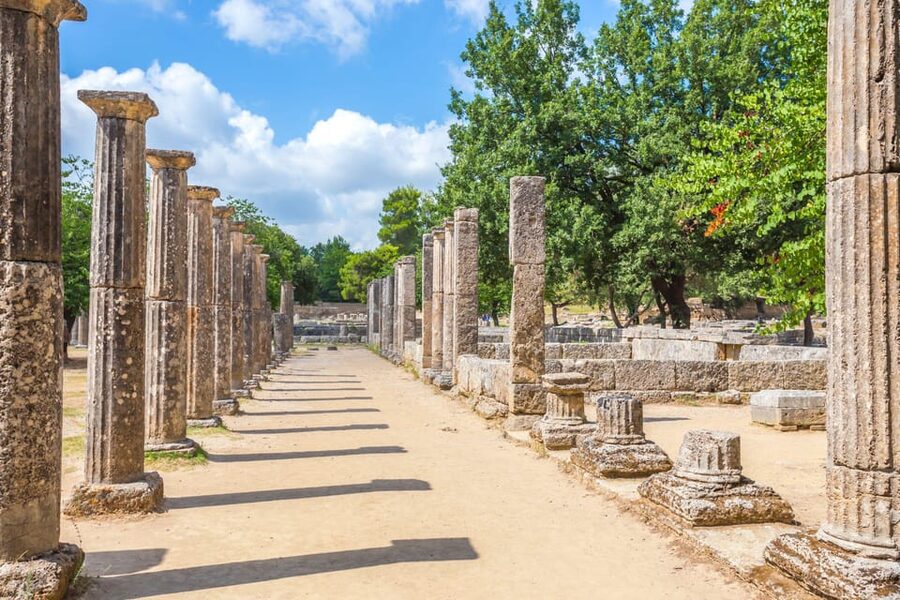
On the outdoor side, you get unlimited time at the archaeological site on the date you booked. So instead of rushing through the ruins like they’re a checklist, you can slow down at the stops you care about. That matters at Olympia, because the layout is big and the details are easy to miss if you’re moving too fast.
How the VR app and audio guide actually fit together
This experience is built around a self-guided flow: you use a virtual reality application and a built-in audio guide in English, German, Spanish, Chinese, Polish, Portuguese, Russian, Italian, and French. The key practical point is that this is designed for your phone. You’re not just buying admission—you’re buying a guided interpretation that you control.
You’ll also want to understand the rhythm. The narration gives instructions, and the VR component helps you connect what the grounds once looked like with what you see now. That’s a big deal at Olympia because so many structures survive in partial form. Without help, your brain has to do too much reconstruction work. With the app and audio, you get that reconstruction effort on rails.
Two practical tips I’d treat as non-negotiable:
- Bring headphones so you can hear the guide without competing with site noise.
- Keep your phone charged. The experience only works as long as your device does.
Also, don’t assume the app runs the same way as a standalone VR headset. Based on real on-site expectations, you may experience this more like a smartphone-assisted guide than a full, head-mounted VR show. If that’s what you want, plan accordingly and focus on the story aid rather than expecting Hollywood-level immersion.
Temple of Hera: the stop that puts the Olympic Flame in context
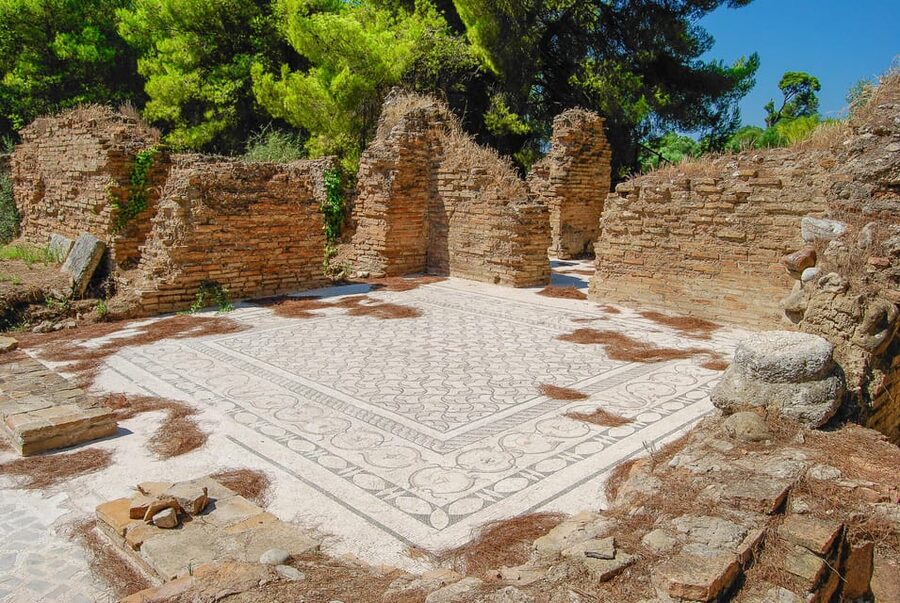
Olympia is famous for the modern Olympic Flame, but it’s the ancient setting that makes the idea feel real. At the Temple of Hera, you’re in the area where the tradition connects to the site’s religious purpose, not just the spectacle.
Here’s what I find valuable: Olympia isn’t just about big-name buildings. It’s about where ceremonies and meanings were anchored. The narration helps translate that. Instead of seeing a ruin and moving on, you’re more likely to notice spatial relationships—what faces what, where people would have gathered, and why this was a focal point.
If you like architecture, symmetry, and “how did people experience this space,” this is a strong start. It also works well as an early win because you’re still fresh and the app guidance is easier to follow before you’ve walked too many kilometers.
A small caution: if the visuals the app shows don’t match your exact position, slow down and re-check where you are before you move on. This kind of location mismatch can happen in large, open sites, and your progress improves if you take 30 seconds to get your bearings.
Temple of Zeus and the statue you can almost picture
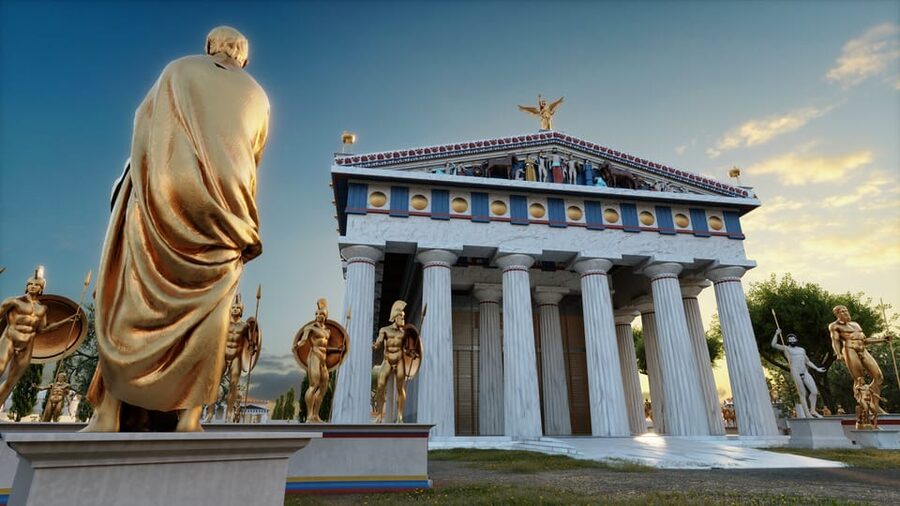
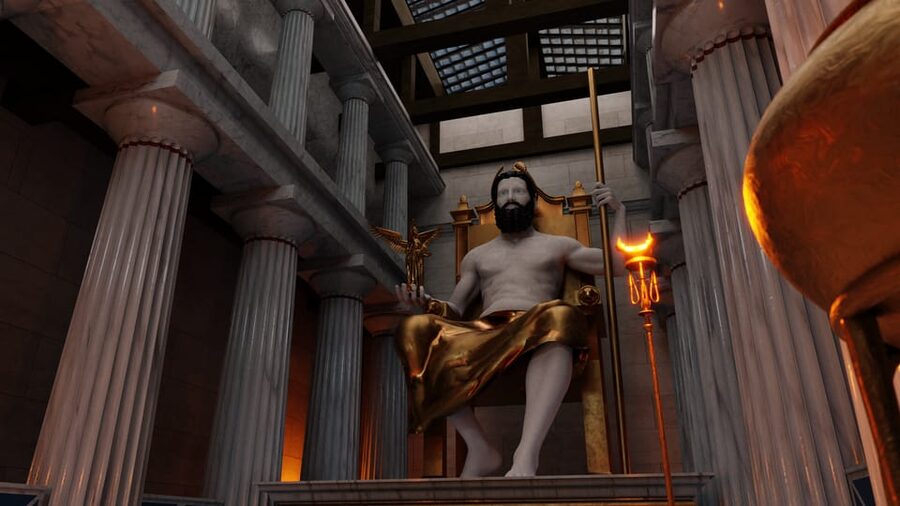
One of the most powerful moments at Olympia is the Temple of Zeus area. This is where the story connects to one of the Seven Wonders: the massive Golden and Ivory statue of Zeus.
Even if you’ve read about Zeus before, the magic here is the mental step from text to space. With the VR/audio setup, you’re not just learning that the statue existed. You’re trying to imagine how scale and placement would have felt when the temple was whole and people were moving through it with purpose.
What to watch for while you’re here:
- Notice where you stand relative to the temple remains.
- Let the audio guide lead you through the logic of what you’re seeing.
- Take the stop slow enough that the story and the ruin actually meet in your head.
One thing to keep in mind: if you close or interrupt the browsing/app session mid-visit, the experience can fall apart. A simple habit—keep your device session running—can protect you from a lot of frustration.
Stadium and Bouleuterion: where the games and decisions lived
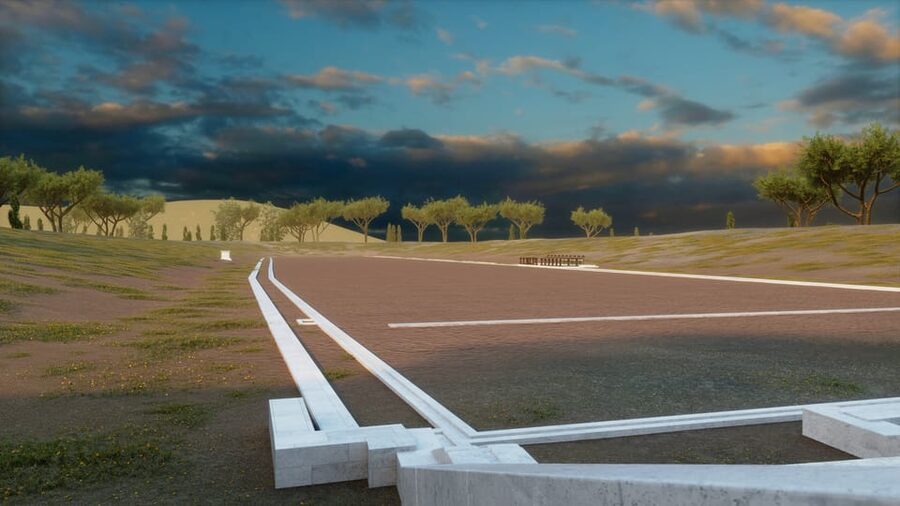
Olympia wasn’t only for religious ceremony. It was also a place for athletics and for civic/religious administration.
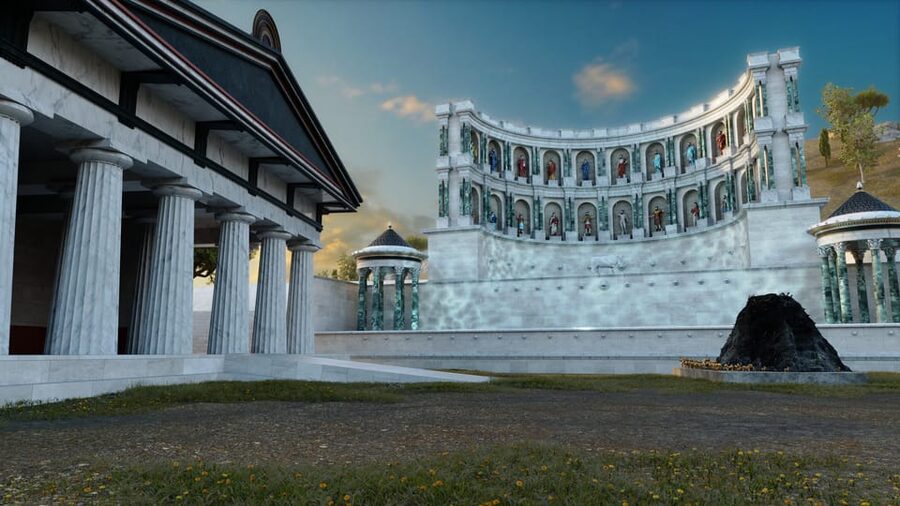
The original stadium and the Bouleuterion (the space connected to council-style activities) are where you see the site’s dual nature: competition and governance tied together in the same sacred complex. The app’s value here is that it helps you visualize functions that are hard to infer from stones alone.
If you enjoy “how systems worked” rather than just “what was famous,” this part can be especially satisfying. You start to understand that the famous games didn’t happen in a vacuum. There were roles, schedules, and spaces built for people to run events, manage rules, and support the religious side of everything.
Practical note: don’t cram this part at the end of the day when you’re tired. The site is open-air, and your brain needs a little bandwidth for mapping narration to location.
Museum time: where the ruins get their meaning
The Archaeological Museum of Olympia is included, with your entry tied to a chosen time slot. This matters because Olympia can be emotionally confusing at first: you see fragments, foundations, and partial remains, and your mind wants the missing pieces.
The museum helps you provide those missing pieces with artifacts and explanations. It’s not just “bonus viewing.” It’s often the moment where the outdoor visit starts to make more sense, because you’re no longer guessing what the site looked like or what objects meant.
From a logistics standpoint, the museum slot is also a pacing tool. You can plan the day as:
1) Start the outdoor exploration when it’s still comfortable to walk.
2) Hit the museum at your timed entry.
3) Return to the site on your booked date with clearer context.
Also, you’ll likely appreciate the practical clarity of how the experience is presented through the voucher materials. Some people find the inclusion of photo-style identification helpful for matching directions to the right spot, which can be a lifesaver at a complex archaeological setting.
Price and value: what you’re paying for
At $36 per group (up to 1), you’re not just paying for two entries. You’re paying for:
- Site entry and museum entry
- The virtual reality app
- The multilingual audio guide
- Access structure designed to reduce friction, including an express security check
Is that worth it? For me, it depends on what you want out of Olympia.
If your goal is the absolute cheapest day possible and you’re happy reading signs slowly, you might feel like you could DIY it with standard admissions. But if you want interpretation that ties directly to what you’re looking at—especially across multiple key locations—then paying a small premium can feel fair.
One reviewer-style reality I’d encourage you to factor in: at Olympia, the difference between buying admission only and buying admission plus an app guide can be small in total cost, but big in effort saved. The app doesn’t just explain. It tries to connect narrative to place, which is exactly where self-guided visits often struggle.
Timing rules you should plan around
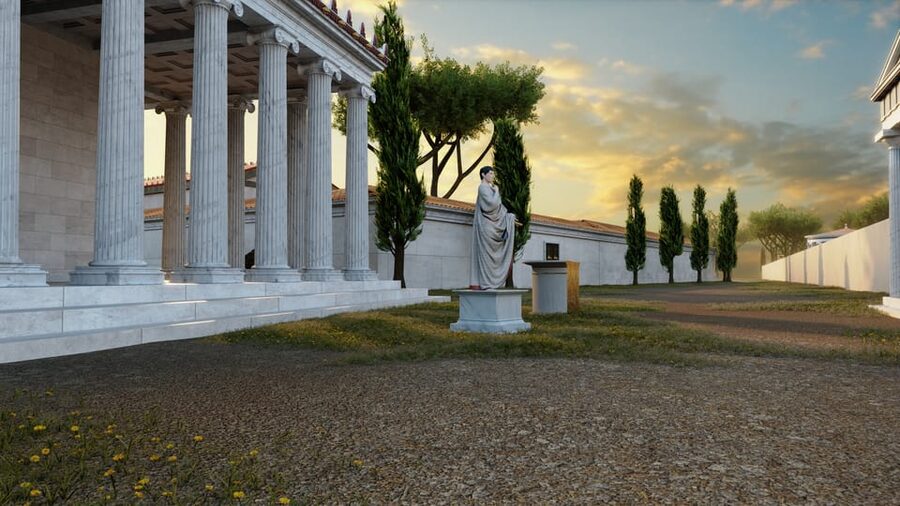
The experience lasts about 4 hours, and your museum entry time is fixed for your chosen date. The rest of the plan is flexible on-site within that date.
A couple timing rules that matter:
- High season (April–Oct): daily 8:00–20:00
- Low season (Nov–Mar): daily 8:30–15:30
- Last admission: 15 minutes before closing
- Museum entry requires the exact time you booked, and you can’t change it after booking.
- Site entry is on that date, and you can enter any time during the booked day.
So here’s the practical play: build in buffer time. Olympia can be sunny and tiring, and you may want extra minutes at the Temple of Zeus area or the stadium footprint. If you’re cutting it close to closing time, you’ll have less patience for app troubleshooting, and you’ll be more likely to feel rushed.
What can go wrong (and how to prevent it)
This experience is designed to be easy, but Olympia is a place where small assumptions cause big frustration.
Here are the most common issues I’d treat as checklists:
- No live guide: You’re self-guided by design. Don’t rely on staff being at a meeting point. Make sure you understand what your ticket voucher instructs you to do before you arrive.
- Phone and audio readiness: You must have a charged smartphone and headphones. If either fails, your experience becomes a standard admission visit, not a guided one.
- App session continuity: If you accidentally close the browser/app session, the guidance can break. Keep the app running and avoid power-saving modes that stop audio or connectivity.
- Location alignment: If the visuals don’t match where you are, pause and re-orient before walking forward. Large archaeological sites can confuse GPS.
Also: pets aren’t allowed. So if you’re traveling with animals, plan for alternatives.
Finally, if you arrive and something doesn’t seem to match expectations (like instructions or voucher acceptance), your best move is to slow down and check your ticket details carefully before buying anything else. This activity is priced and structured around included entry, so it should work smoothly when your voucher matches the venue rules.
Who this tour suits best
This is a strong fit if:
- You want to visit Olympia without joining a bus-sized group.
- You like structure but still want control over pacing.
- You prefer a guide that works in your language, with narration timed to major stops.
- You’re visiting with kids and want explanation that keeps them engaged, not just stones.
It’s less ideal if:
- You expect staff to meet you like a traditional guided tour.
- You’re looking for actual VR headsets being handed to you onsite.
- You want a totally sign-only, zero-phone experience.
Because it’s wheelchair accessible, it can also work for visitors who need a more controlled, audio-led approach—just plan for slower movement across uneven areas.
Should you book this Olympia VR audio tour?
Book it if you want a smarter Olympia day. The combination of prebooked access, express security, and self-guided audio plus VR app is built for people who want meaning attached to what they see, not just sightseeing.
Skip it or reconsider if you’re the type who doesn’t want to manage a phone while walking, or if you’re expecting a physical VR headset experience. In that case, you may still enjoy Olympia, but the value may feel weaker because you’ll miss the “guided interpretation” part.
If you do book, come prepared: charged phone, headphones, and the patience to pause if the app’s directions need a moment to align with where you stand. That tiny bit of effort is often what turns this from a ticket purchase into an actual guided day.
FAQ
How long is the Ancient Olympia Entry Ticket & Virtual Reality Audio Tour?
The experience lasts about 4 hours, depending on the time slots and how long you spend at the museum and site.
Do I need a specific entry time for the museum?
Yes. You must select a specific date and time for entry to the Archaeological Museum of Olympia, and that timing cannot be changed after booking.
Can I enter the archaeological site whenever I want on my booked day?
Yes. You can enter the archaeological site at any time on the date you booked, but only on that specific date.
What languages are available for the audio guide?
The audio guide is available in English, German, Spanish, Chinese, Polish, Portuguese, Russian, Italian, and French.
What should I bring to use the tour?
You should bring headphones and a charged smartphone.
Is it wheelchair accessible?
Yes, the experience is wheelchair accessible.