REVIEW · ATHENS
Acropolis, Parthenon and Ancient Agora Guided Tour with entrances
Book on Viator →Operated by Athens Walks Tour Company · Bookable on Viator
Stepping onto the Acropolis feels like time travel. What makes this tour special is that it links the big-name monuments with the everyday political and commercial Athens of the Ancient Agora, with entrance tickets included and a guide who keeps the story clear as you walk.
I especially love the small group size (max 20). I also love the included hearing devices, which help a lot when you’re outside, moving around, and trying to catch every detail without leaning in.
One thing to consider: it’s not a flat stroll. Even with a reasonable pace and built-in pauses, the Acropolis climb is still a climb, so pack for cooler mornings or heat and plan for some uphill walking.
In This Review
- Key things I’d plan around
- Why this Acropolis + Agora tour works better than doing it alone
- Meeting point details: starting at 9:00 near Porinou
- Acropolis stop: your 30 minutes start strong
- Odeon of Herodes Atticus: the Roman theater you can still feel
- Theatre of Dionysus: the stage behind Greek drama
- Parthenon time: make those 30 minutes count
- Ancient Agora transition: from sacred heights to public life
- Temple of Hephaestus and the Stoa of Attalos: the Agora’s best teachers
- Pace and comfort: small group energy plus hearing tech
- What you get for $129.75: value that’s mostly about time saved
- Who this tour suits best (and who should pick a different style)
- Should you book this tour?
- FAQ
- How long is the Acropolis, Parthenon and Ancient Agora guided tour?
- What time does the tour start?
- How much does it cost?
- Is the tour offered in English?
- What’s the group size limit?
- Which stops are included on the tour?
- Are entrance fees included?
- Do you get hearing devices?
- Is pickup or drop-off included?
- What happens if weather is poor or you need to cancel?
Key things I’d plan around
- Entrance tickets included means fewer lines and less fiddling once you arrive.
- Hearing devices keep the guide’s explanations easy to follow on busy paths.
- A tight 3.5-hour flow connects Acropolis highlights to the Agora’s political and marketplace core.
- More than the Parthenon: you also see the Odeon of Herodes Atticus and the Theatre of Dionysus.
- Ancient Agora time (1h 15m) is long enough to actually absorb the Stoa and Temple area, not just glance.
- Guides who adjust the pace helped visitors who needed mobility support and made the tour feel organized.
Why this Acropolis + Agora tour works better than doing it alone
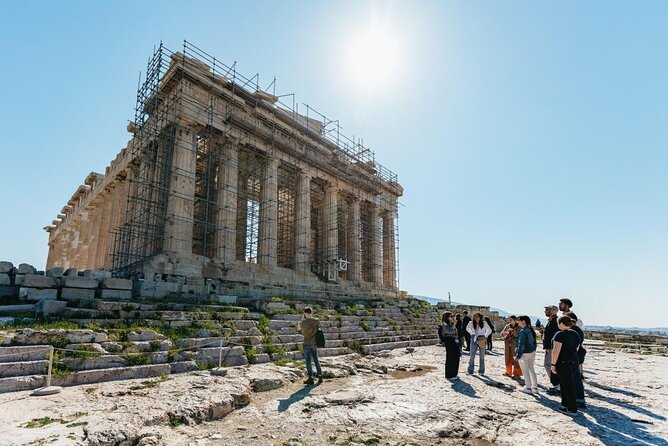
This is one of those Athens tours that feels like a guided route, not a rushed stamp-collecting mission. You start high on the Acropolis—where the Parthenon and the theater landscape shape what you understand about Greek culture—and you finish back down in the Agora, where you see how daily civic life actually functioned.
The best part is that the tour’s structure mirrors how Athens made sense to the ancients: sacred space up on the hill, and public life below. With entrances included and a guide steering you between stops, you spend less time figuring things out and more time reading the stones with context.
And it’s not just about seeing famous ruins. The guide brings the why behind them—how the big buildings relate, what the theaters were for, and why the Agora mattered for decisions, gatherings, and commerce.
You can also read our reviews of more tours and experiences in Athens.


Meeting point details: starting at 9:00 near Porinou
The tour starts at 9:00 am at Porinou, Athina 117 42, Greece. It ends at the Ancient Agora of Athens (Athens 105 55, Greece), which is convenient because your last stop is also where you’re likely to keep exploring afterward.
Because the meeting point is near public transportation, you don’t have to build your entire day around finding a taxi or a complicated connection. I also like that the tour is designed to move—your time is structured across the sites rather than waiting around.
If you’re used to Athens going slowly, this one has a clear tempo. That can be great for most people, but if you know you need extra time on steep paths, you’ll want to go in expecting pauses and a bit of patience.
Acropolis stop: your 30 minutes start strong
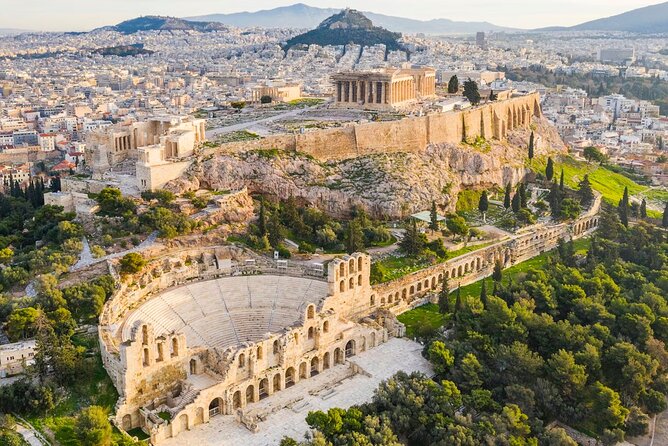
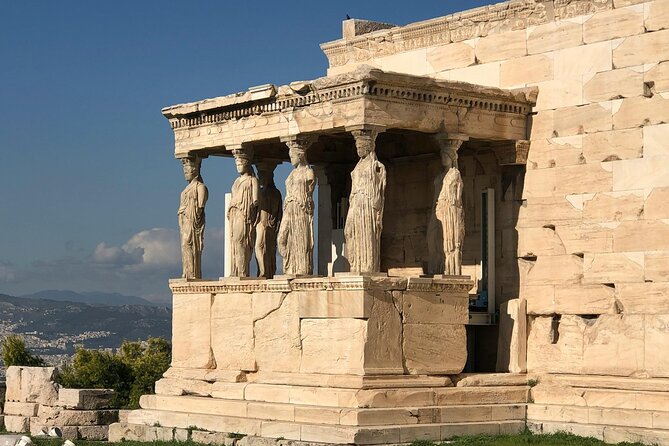
The first major stop is the Acropolis, the ancient citadel perched above Athens, packed with major structures and the remains of key buildings. You get about 30 minutes there, and that’s enough time to understand the layout and to focus on what makes the Acropolis more than a scenic viewpoint.
The Acropolis is dramatic because it was built to dominate the city visually, but also because the buildings were meant to communicate power, religion, and identity. Even if you’ve seen photos, having a guide reframe what you’re looking at helps the place click faster.
A practical note: this is where your legs will learn you’re in Athens. Expect uphill walking and uneven ground. On a cold or windy day, you’ll also feel that exposed height, so bring a layer you can actually move in.
Odeon of Herodes Atticus: the Roman theater you can still feel
Next you move to the Herod Atticus Odeon, a stone theater on the southwest slope of the Acropolis. It was built in 161 AD by the Roman senator Herodes Atticus and originally had a wooden roof; today it’s still used for concerts and performances.
You only get 10 minutes here, but that short window is smart. The theater tells a story about continuity: Greeks built civic and sacred spaces, and later empires adapted those forms for their own cultural life. Even if you don’t sit down for a performance, you can still grasp why this kind of venue mattered.
This stop also helps you connect the Acropolis buildings to performances and public gatherings. It’s one of those “I get it now” moments where the ruins start feeling like venues, not only architecture.
Theatre of Dionysus: the stage behind Greek drama
After that, you head to the Theatre of Dionysus on the south slope of the Acropolis hill. This theater is tied to the sanctuary of Dionysus Eleuthereus and represents the deep Greek roots of theater—right where audiences gathered to experience stories tied to religion and civic culture.
You get about 15 minutes at this stop. That’s long enough to take in the slope, the idea of viewing from below, and the relationship between theater and sacred space.
If you care about Greek drama—even if you only know the basics—this is a valuable add-on. It turns the Parthenon into part of a larger picture: not just a temple, but a whole cultural landscape.





Parthenon time: make those 30 minutes count
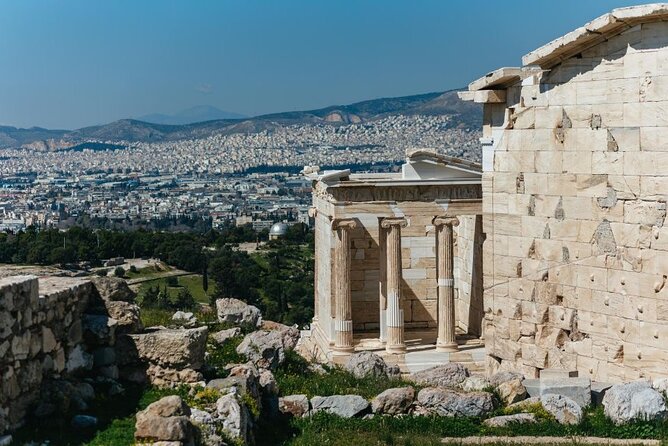
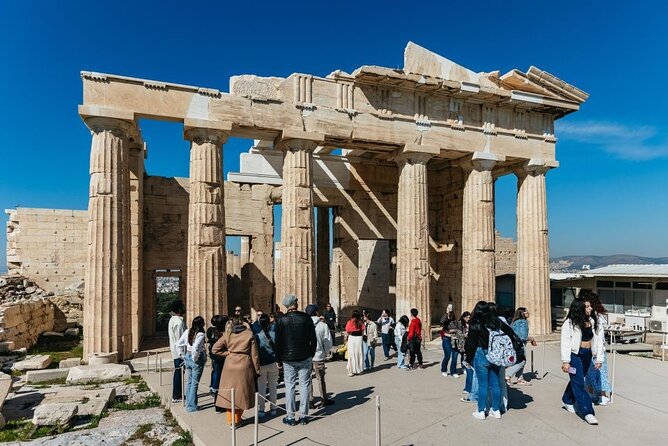
Then it’s time for the Parthenon, dedicated to Athena and often treated as the symbol of classical Greece. The tour gives you about 30 minutes here, including time to appreciate the sculptural emphasis and the design logic behind the building’s lasting fame.
This is the stop where many people rush. Don’t do that. Instead, use the time to understand what you’re looking for: the Parthenon’s role in Athenian identity and the way its art was meant to communicate meaning, not just decoration.
I’ve found that a good guide changes how you notice details. When your guide explains what the carvings and proportions were doing, the building stops being just impressive and becomes understandable.
And yes, it’s busy. Going earlier is helpful for both light and crowd rhythm. One of the most practical takeaways from past tour experiences: mornings help you escape the heat and the heavier crowds.
Ancient Agora transition: from sacred heights to public life
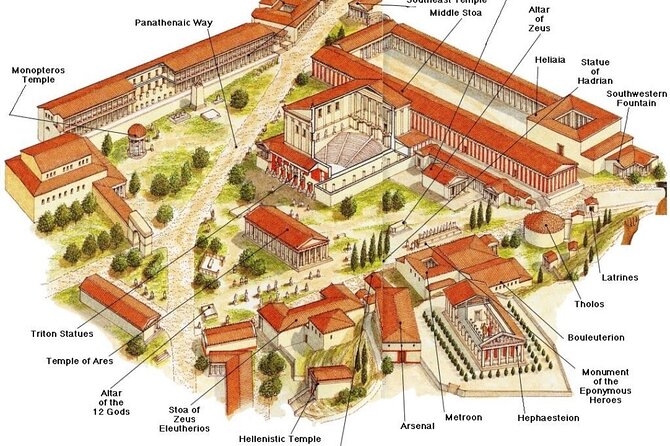
Once you come off the hill, the tour shifts from monumental symbolism to how Athens functioned day to day. The Ancient Agora is where people gathered for assembly, commerce, and community decisions—so it’s the place that makes the whole day feel grounded.
In this tour, you spend 1 hour 15 minutes in the Ancient Agora of Athens. That extra time matters. If you only get a quick peek, the Agora can feel like scattered ruins. With real time, you start to see the structure of movement: where people would have walked, met, and conducted business.
This is also where the tour’s value really shows for first-timers. You’re not only looking at the famous landmarks; you’re learning what the landmarks were tied to in daily life.
Temple of Hephaestus and the Stoa of Attalos: the Agora’s best teachers
Within the Agora segment, you visit a couple of key points that do a lot of explaining.
First is the Temple of Hephaestus, one of the best-preserved ancient Greek temples. It’s dedicated to Hephaestus (god of fire and craftsmanship) and was built around 449 BC during Athens’ height. The design is Doric and the setting gives you a strong sense of how a major religious building anchored a public space.
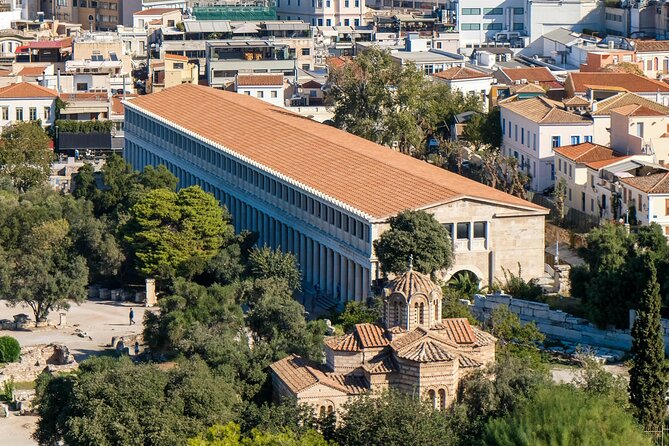
Next is the Stoa of Attalos, a two-story colonnaded building built in the 2nd century BC by Attalos II of Pergamon and restored in the 1950s. It now houses the Museum of the Ancient Agora. The stoa originally served as a covered walkway and a place for shopping and public activity—so it connects the Agora’s civic life to everyday routines.
You get about 15 minutes at each of these stops. That’s just right if you want to understand the essentials without getting stuck in one area while the rest of the tour stays behind.
If you’re the type who likes to see how people lived, these two stops are worth your attention. A temple shows beliefs; a stoa shows behavior.
Pace and comfort: small group energy plus hearing tech
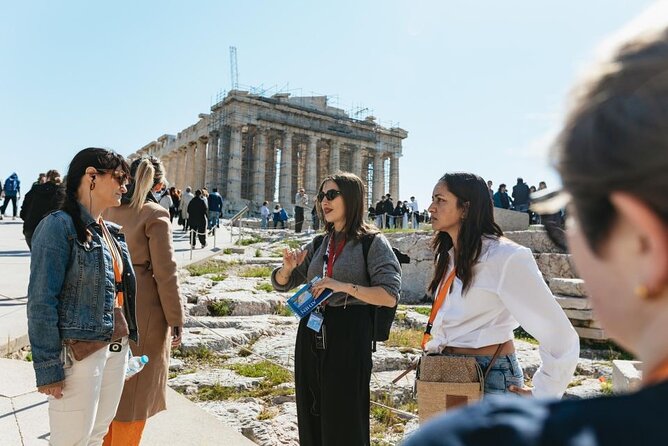
This tour runs with a maximum of 20 travelers, which changes the feel. You’re not lost in a giant crowd, and your guide can answer questions without the whole group stretching into a single line that never moves.
Another smart inclusion: hearing devices connected to the guide’s microphone. Athens outdoor sites can be windy, noisy, and full of echoes. The devices make it easier to catch explanations while you keep your eyes up on what you’re seeing.
From past tour experiences with specific guides like Laura, Angeliki (Angel), Demos, Hermes, Elaina, Elena, and Stevie, the common thread is that the tour pace is manageable and the guides do respond to the group. On the Acropolis portion, expect some uphill effort and plan on rest stops. Even on a cold day with wind, the guides seemed to keep things moving without losing the human side of the tour.
What you get for $129.75: value that’s mostly about time saved
At $129.75 per person, the headline cost can look steep until you break down what’s included. You’re paying for a guided route across multiple sites, plus entrance fees for both the Acropolis monuments and the Ancient Agora.
If you were to book entrances on your own and also try to figure out what to prioritize, you’d spend your time doing planning and queue juggling. Here, the structure reduces that friction. You also get hearing devices and a licensed tour guide—meaning you’re buying explanation, not just access.
Is it cheap? No. Is it good value for what you get? For most visitors, yes—especially if it’s your first time in Athens and you want the connections between sites rather than reading everything off placards.
Who this tour suits best (and who should pick a different style)
This is best for you if you want a guided walk through the key monuments with enough time to actually understand them. It’s also a strong pick if you don’t want to spend your morning comparing maps, figuring out ticket timing, or choosing which stops matter most.
It also suits history-minded travelers who like stories tied to place. The Odeon and Theatre of Dionysus stops are great for anyone who even lightly enjoys Greek drama and public life.
It might be less ideal if you want minimal walking. The tour calls for moderate physical fitness, and the Acropolis section is an uphill climb. Still, the route seems to work well when you’re realistic about the pace and you communicate needs early.
Should you book this tour?
Yes, if you want the best Athens “first-day effect”: Acropolis on one side, the Agora on the other, with entrances handled and a guide tying it together. I’d especially recommend it if you’re visiting in the morning and want to avoid the worst crowd rhythm while your energy is still high.
Consider a different option if you’re very sensitive to steep climbs or prefer a slow, self-paced museum style day. But for most people, the combination of small group size, hearing devices, and a route that goes beyond only the Parthenon is exactly how you get more than just photos.
FAQ
How long is the Acropolis, Parthenon and Ancient Agora guided tour?
It lasts about 3 hours 30 minutes.
What time does the tour start?
The start time is 9:00 am.
How much does it cost?
The price is $129.75 per person.
Is the tour offered in English?
Yes, it is offered in English.
What’s the group size limit?
The maximum group size is 20 travelers.
Which stops are included on the tour?
You visit the Acropolis, Herod Atticus Odeon, Theatre of Dionysus, Parthenon, Temple of Hephaestus (listed as Temple of Aries in the stop list), Stoa of Attalos, and the Ancient Agora of Athens.
Are entrance fees included?
Yes. Entrance fees for both the Acropolis monuments and the Ancient Agora are included.
Do you get hearing devices?
Yes. Hearing devices are included and connect to the guide’s microphone.
Is pickup or drop-off included?
No. Pick up or drop off is not included.
What happens if weather is poor or you need to cancel?
You can cancel for a full refund up to 24 hours in advance. The experience requires good weather; if it’s canceled due to poor weather, you’ll be offered another date or a full refund.